India is renowned for its rich textile traditions, with every region boasting its own style of weaving, dyeing, and embroidery. Among these crafts, Kantha embroidery stands out for its simplicity and warmth. It is one of the oldest forms of embroidery practised in eastern India, particularly in West Bengal and Bangladesh. Unlike many other decorative crafts, Kantha began as a practical household activity. Women created it not for commerce, but for everyday use at home. Over time, this simple running stitch evolved into a beautiful art form that reflects the creativity and emotions of the women who practised it.
Kantha embroidery began many years ago in rural Bengal. In traditional households, old cotton saris and dhotis were never discarded. Instead, women carefully layered these worn-out fabrics and stitched them using small running stitches. This process transformed soft, used cloth into comfortable quilts and covers. The word “Kantha” itself refers to these layered and stitched quilts. They were commonly used as blankets, bedspreads, baby wraps, and cushion covers.
For many families, making Kantha was also a way to reuse fabric and avoid waste. Women usually worked on Kantha during their free time. It was a slow and patient process, sometimes taking weeks or even months to complete one piece. Mothers and grandmothers often made Kantha quilts for their children or prepared them as gifts for special occasions like weddings or childbirth.
The Designs of Kantha
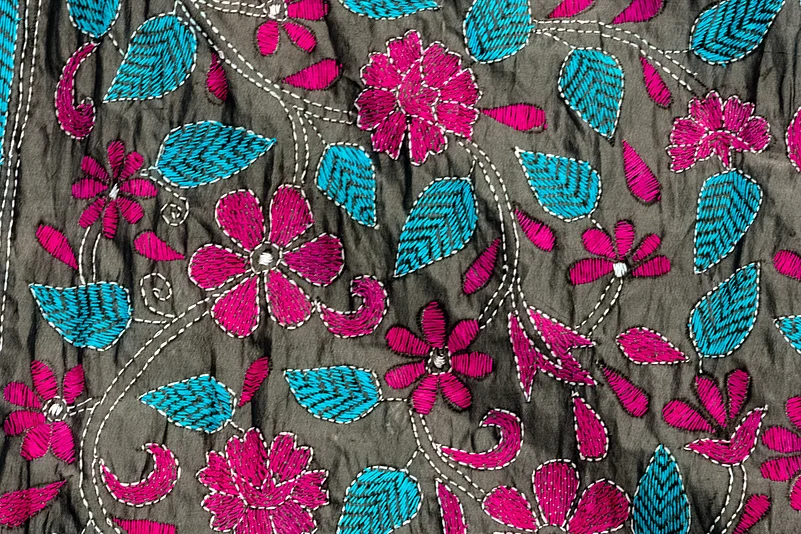
One of the most interesting aspects of Kantha embroidery is its designs. The patterns are usually inspired by nature and everyday life. Flowers, leaves, birds, fish, and animals are common motifs. Occasionally, artisans also create geometric shapes and circular patterns that enhance the beauty of the fabric. Many traditional Kantha pieces feature a central design surrounded by smaller decorative patterns. The lotus flower is often placed in the centre, symbolising harmony and balance. Around it, the artisan fills the space with intricate patterns that create a lively and visually appealing composition.
Unlike modern embroidery, these designs were rarely drawn beforehand. Women often stitched directly onto the cloth, allowing the pattern to develop naturally as they worked. This made every Kantha piece unique. In some cases, the embroidery also depicts scenes from village life. It is common to see images of people working in the fields, animals, or simple daily activities stitched into the fabric. For this reason, Kantha textiles often resemble visual stories of rural life.
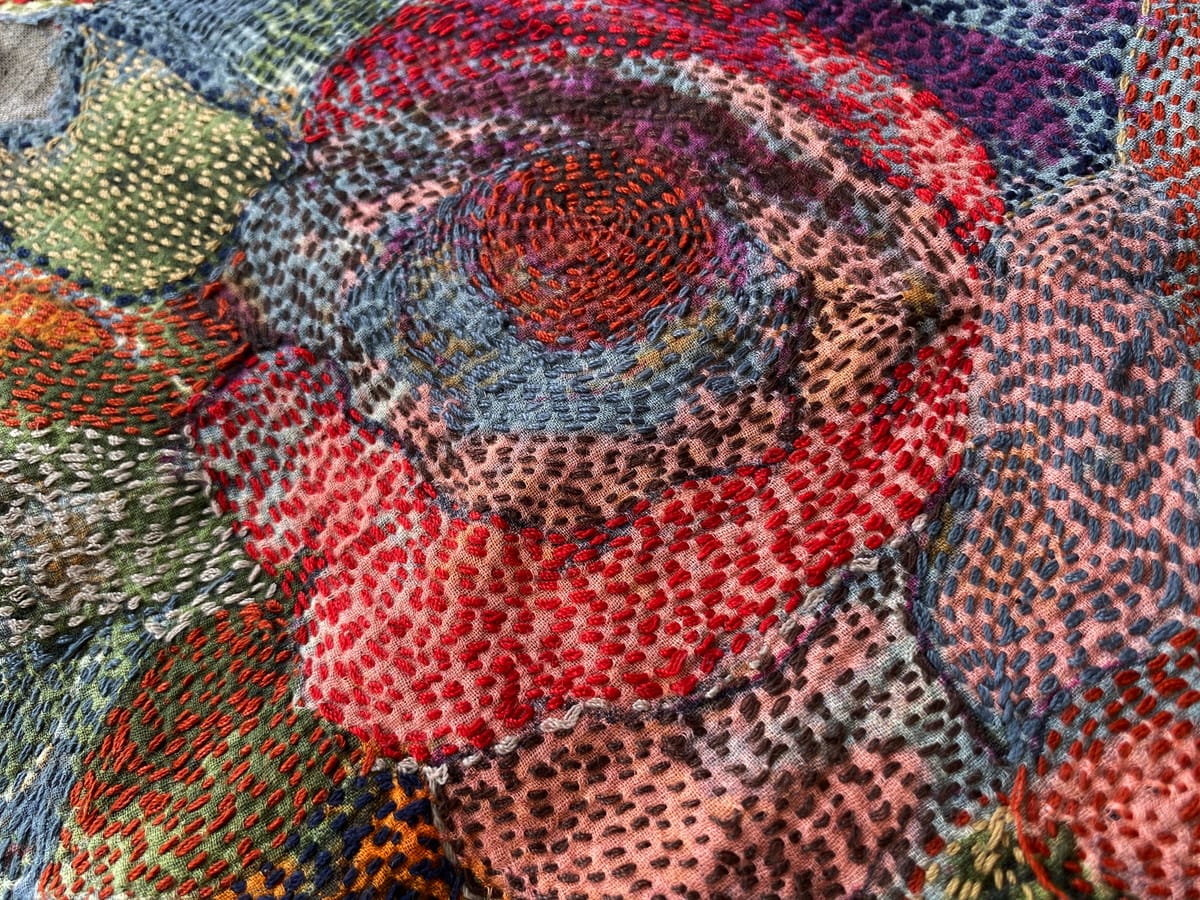
The technique used in Kantha embroidery is surprisingly simple. The entire design is created primarily with the running stitch, one of the most basic forms of embroidery. However, the stitches are placed so closely together that they form beautiful patterns and a subtly wavy texture on the fabric. Traditionally, the threads used for stitching were taken from old sari borders. These colourful threads added brightness to the fabric. Artisans often used shades such as red, yellow, blue, and green, which stood out against the plain cotton background.
Even though the stitch itself is simple, the finished result appears detailed and artistic. The repeated lines of stitching give the fabric a soft and slightly wrinkled texture, which is very characteristic of Kantha work. Over the years, Kantha embroidery has moved beyond village homes and gained popularity in the worlds of fashion and design. Designers and craft organisations have played a key role in bringing this traditional embroidery to wider markets.
A Textile Rooted in Tradition
Today, Kantha work can be seen on sarees, dupattas, scarves, jackets, handbags, and even home décor items such as bedspreads and cushion covers. Many designers combine traditional Kantha stitching with modern styles, making the craft appealing to younger generations. Another reason for Kantha’s popularity today is its association with sustainability. Since the craft originally began by reusing old fabrics, it naturally supports the principles of reducing waste and valuing handmade products. Most importantly, Kantha embroidery continues to provide employment for many rural artisans, particularly women. Through craft cooperatives and fair trade initiatives, artisans are able to earn an income while preserving their traditional skills.
Kantha embroidery is more than mere decoration on fabric. It represents creativity, patience, and the cultural heritage of Bengal. What began as a simple way of reusing old saris has evolved into a respected craft admired worldwide. Even today, every Kantha piece carries the personal touch of the artisan who created it. The stitches convey stories, memories, and everyday experiences. In a world where most textiles are produced by machines, Kantha reminds us of the beauty and significance that handmade crafts can bring into our lives.