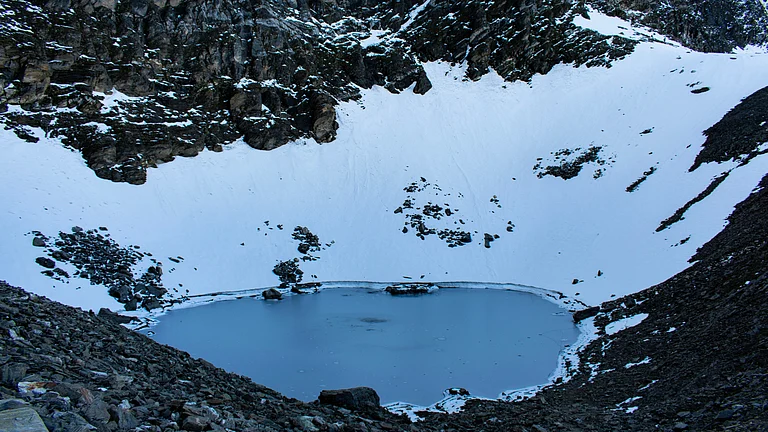
If a painter kept changing their mind mid-canvas, you might get something like this. At the summit of Mount Kelimutu, colour is not a fixed idea. It drifts, darkens, brightens, and sometimes disappears altogether, leaving behind a landscape that feels slightly unreal even in broad daylight.
Rising to about 1,639 metres on Flores Island, far east of Bali and Lombok, Kelimutu is situated within Kelimutu National Park. At the top, three crater lakes occupy separate hollows, divided by narrow ridges of rock.
They are close enough to be seen in a single frame, yet each behaves differently. Their colours shift over time—sometimes gradually, sometimes without warning—moving through shades of turquoise, green, red, brown, and near-black. Even regular visitors cannot predict what they will look like on any given day.
Where Exactly Is Kelimutu And How Do You Get There
The closest base is Moni, a small village surrounded by rice fields and low hills. It sits roughly one to one-and-a-half hours by road from Ende and about three hours from Maumere.
You can arrive via Bali or Jakarta, flying into Ende or Maumere before continuing by road. The final stretch winds through forested slopes and farmland, a gradual climb that gives little away until the very end.
The Three Lakes And What They Represent
Tiwu Ata Bupu — Lake Of Old People
Set a little away from the others, this western lake usually shows up in deep blues that can slip into near-black. In softer light, the water looks thick, almost solid. Locally, it is believed to be where the souls of the elderly come to rest, tied to a life that has run its full course.
Tiwu Ko'o Fai Nuwa Muri — Lake Of Young Men And Maidens
The middle lake tends to carry brighter shades—turquoise, jade, or a vivid green that stands out sharply against the surrounding rock. It is associated with younger souls, those whose lives ended early. On clear mornings, this is often the most visually striking of the three.
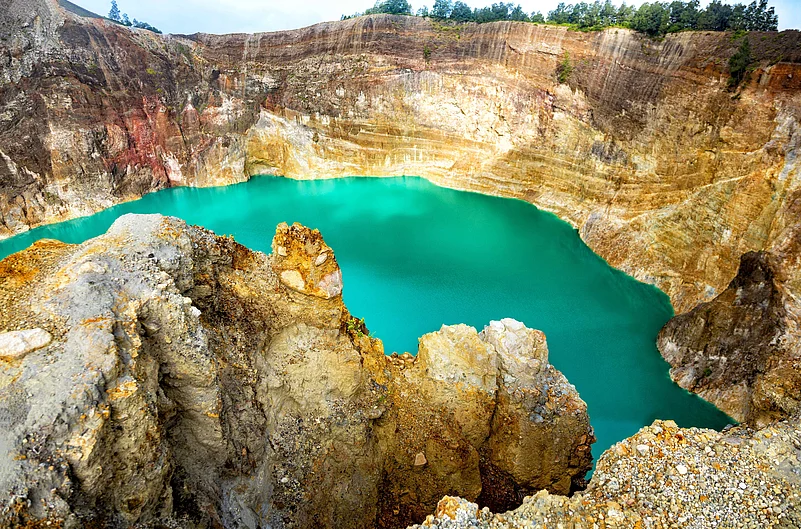

Tiwu Ata Polo — Lake Of Bewitched Or Evil Spirits
The eastern lake is the most unpredictable. It has been recorded in shades of red, rust, chocolate brown, dark green, and even blue. The colour can look heavy, almost metallic at times. Locally, it is linked to restless or troubled spirits, and its shifting palette has long fed that reputation.
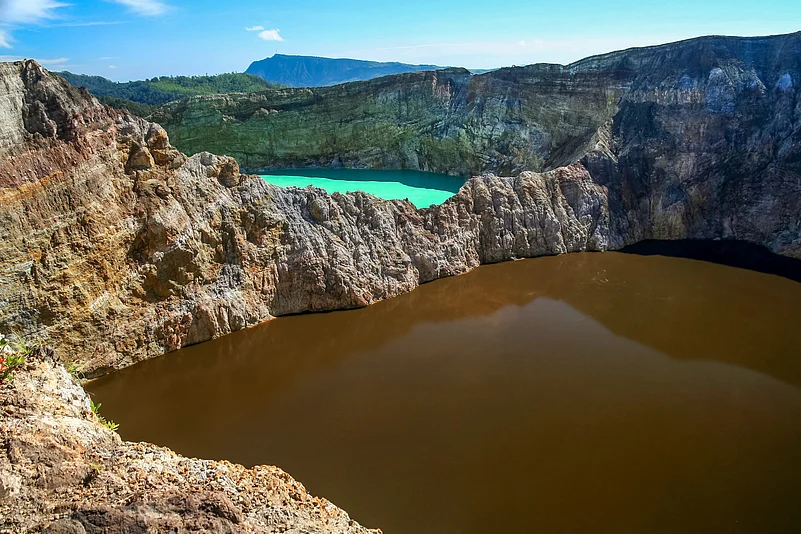
What makes Kelimutu unusual is not just the range of colours, but the lack of coordination. One lake may darken while another brightens. Two may briefly mirror each other before diverging again. There is no pattern that holds for long.
Why The Colours Keep Changing
From a scientific perspective, the lakes are a chemical system in motion. Minerals such as iron, manganese, and sulphur dissolve in the water, while volcanic gases rise from below. When these elements interact with oxygen and sunlight, they alter the lake’s appearance.
Each crater connects differently to underground vents and groundwater, which explains why the lakes shift independently rather than together.

For the Lio community living around Kelimutu, the explanation is less technical. The lakes are believed to receive the souls of the dead, divided by age and character. Changes in colour are read as signs of movement or unrest in the spirit world.
Offerings of food and betel nut are still made, and small markers—coins, flowers, simple shrines—appear along the trail. Visitors are expected to keep their voices low and treat the area with care.
The Walk To The Crater
Reaching the viewpoint does not require serious trekking. Vehicles can go up to a parking area within the park. From there, a paved path and a series of stone steps cover about 1 to 1.5 kilometres, taking roughly 30 to 45 minutes.
The route is clearly marked, with railings along steeper sections. Most reasonably fit travellers can manage it without difficulty. The real challenge is the timing rather than the terrain.
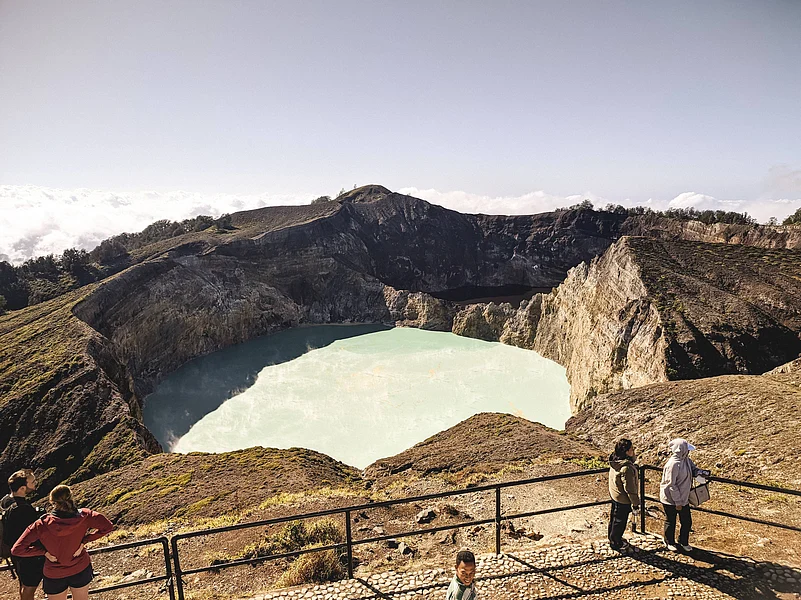
Arriving before dawn changes the experience completely. Around 5:00 to 5:30 AM, the sky begins to lift, and the lakes come into view slowly rather than all at once. Their colours deepen as the light strengthens, shifting in tone over the course of minutes.
Clouds often move up from the valleys, spilling into the craters before thinning out again. When the wind drops, the water turns still, reflecting the changing sky.
Later in the day, visibility can improve as fog clears, but the light becomes sharper. Sunset visits are possible, though visitors must leave before dark due to park regulations.
The Information
Planning A Trip From India
The most straightforward route is via Bali or Jakarta, with onward flights to Ende or Maumere. From either town, the drive to Moni takes around three to four hours.
You can pair Kelimutu with a broader itinerary across Flores, including Labuan Bajo and Komodo National Park, or follow it with time by the sea near Maumere.
Moni remains the most practical base, especially for early starts. Staying here cuts down travel time to the park entrance, which matters when the day begins before sunrise. Ende and Maumere provide more facilities but require a much earlier departure.
Best Time To Visit Kelimutu
The dry season, from May to October, generally brings clearer skies and more reliable sunrise conditions. May and September strike a good balance, with fewer visitors and greener surroundings.
The wet season, from November to April, can still be rewarding, though cloud cover and rain may affect visibility and trail conditions. Planning at least two mornings in Moni improves your chances of seeing the lakes clearly.
Entry Fees And Timings
Kelimutu falls within a national park, so entry fees apply. Recent estimates place tickets for foreign visitors at around 150,000 Indonesian rupiah (approximately INR 800–900), along with small parking charges.
The park opens early enough for sunrise access and closes in the evening. No separate trekking permit is typically required.
What To Pack For The Visit
Despite Indonesia’s tropical climate, the summit can feel cold, especially before sunrise. A light jacket, covered shoes, and a cap are useful. A torch or headlamp helps on the pre-dawn walk. Carry water and a few snacks, as facilities near the top are minimal.
Kelimutu suits travellers who enjoy unusual landscapes, early starts, and places that carry both geological and cultural significance. It appeals to photographers, casual hikers, and anyone willing to travel beyond the usual Bali circuit.
FAQs
1. Where is Mount Kelimutu located?
Mount Kelimutu is located on Flores Island in Indonesia, within Kelimutu National Park, east of Bali and Lombok.
2. Why do the Kelimutu lakes change colour?
The lakes change colour due to chemical reactions involving minerals like iron and manganese, along with volcanic gases and oxygen.
3. What are the three Kelimutu lakes called?
The three lakes are Tiwu Ata Bupu, Tiwu Ko’o Fai Nuwa Muri, and Tiwu Ata Polo, each associated with different local beliefs about the afterlife.
4. What is the best time to visit Kelimutu?
The best time to visit is during the dry season from May to October, especially early morning for sunrise views.
5. How do you reach Mount Kelimutu from India?
Travellers usually fly to Bali or Jakarta, then take a connecting flight to Ende or Maumere, followed by a road journey to Moni village.