Some journeys lead you to a place on the map. Others lead you somewhere far more meaningful—back to yourself. My recent visit to Kashi was undeniably the latter. The experience began long before I reached Varanasi. Somewhere between Prayagraj and Kashi, at around 5:30 in the morning, I awoke in my train berth and looked out of the window.
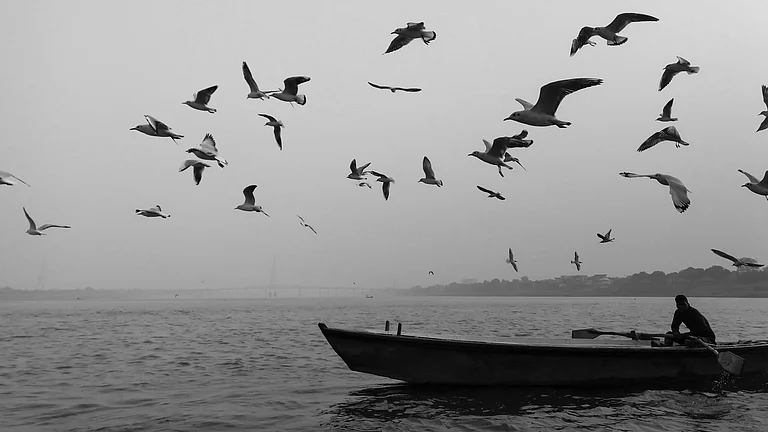
The train was crossing a bridge as the first rays of the sun painted the horizon in shades of molten gold. The river below shimmered silently, and the world seemed suspended between darkness and light. As I watched the sunrise unfold, I felt an inexplicable sense of calm. It was as though Kashi was already beginning its work on me. As I reflect on it now, that sunrise felt less like a departure towards a destination and more like an invitation to turn inwards.
Into The Labyrinth Of Kashi
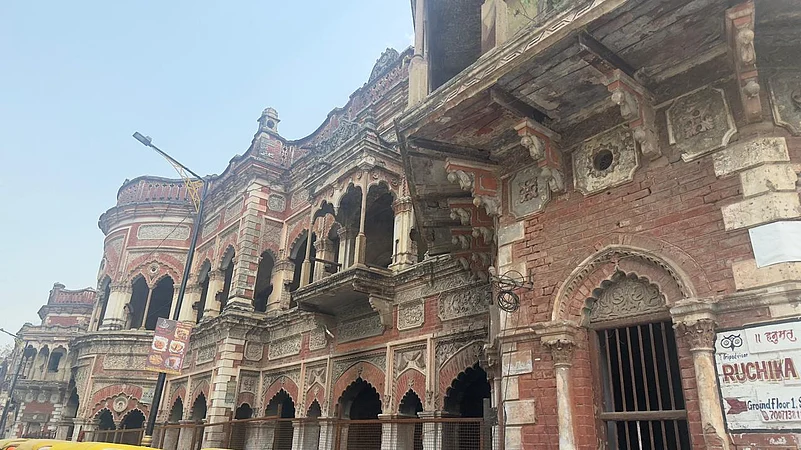

My hotel was tucked deep within the narrow lanes of old Kashi, barely a hundred metres from the sacred precincts of the Kashi Vishwanath Temple. These lanes are living corridors of history. You can see priests walking past carrying flowers. You may spot a cow occupying the centre of the pathway with regal confidence. Shopkeepers call out offerings of rudraksha, sweets and sandalwood and pilgrims from every corner of India flow through these ancient arteries.
After a quick bath and some much-needed rest, I stepped into the spiritual circuit that many locals insist completes a Kashi pilgrimage.
First came the darshan of Vishalakshi Mata, one of the revered Shakti Peethas. Then Nagar Kotwal Kal Bhairav, the guardian deity of Kashi, followed by Chintaman Sakshi Ganesh. An elderly devotee smiled and reminded me, “If you come to Kashi and miss these temples, your yatra remains incomplete.” Whether one believes such statements literally or not, there is something deeply comforting about participating in traditions that have guided pilgrims for centuries.
Amid explorations of the city’s temples, I indulged in Banaras’ iconic lassi. Served chilled in an earthen kulhad, its creamy richness made it feel more like a satisfying meal than a simple refreshment.
A VVIP Audience With Mahadev

One of the best decisions I made before arriving in Kashi was booking the Sugam Darshan slot online well in advance. At exactly 2 PM, I entered the Kashi Vishwanath Temple and was pleasantly surprised by the seamless experience. With virtually no queue, I found myself standing before the sacred Jyotirlinga within minutes, able to savour a rare sense of calm and unhurried devotion that is often difficult to find at India’s most visited temples. Although the darshan itself lasted barely ten minutes, I spent much longer exploring the temple complex. I wandered through its expansive corridors, admiring the architecture, photographing the soaring shikharas, and watching the saffron dhwaj flutter against the sky.
Nearby stood the elegant statue of Devi Ahilyabai Holkar, the visionary queen whose efforts played a pivotal role in restoring both the temple and many of Kashi’s historic ghats—a contribution to India’s spiritual heritage that deserves far greater recognition.
From the Ganga Dwar viewpoint, I caught my first elevated glimpse of the Ganga, flowing serenely below with a timeless grace that seemed untouched by the centuries of history unfolding along her banks. Equally impressive were the temple’s modern facilities, including escalators, secure locker systems, footwear counters, and efficient crowd management measures that have made the pilgrimage considerably more comfortable for visitors. For those planning a visit, it is worth using the official facilities within the complex rather than handing over valuables to local vendors outside, who often encourage pilgrims to do so while selling flowers and offerings.
When The River Becomes A Theatre
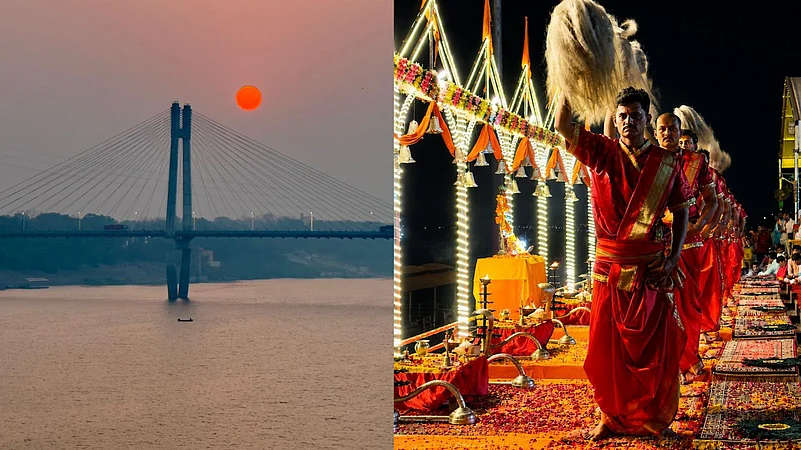
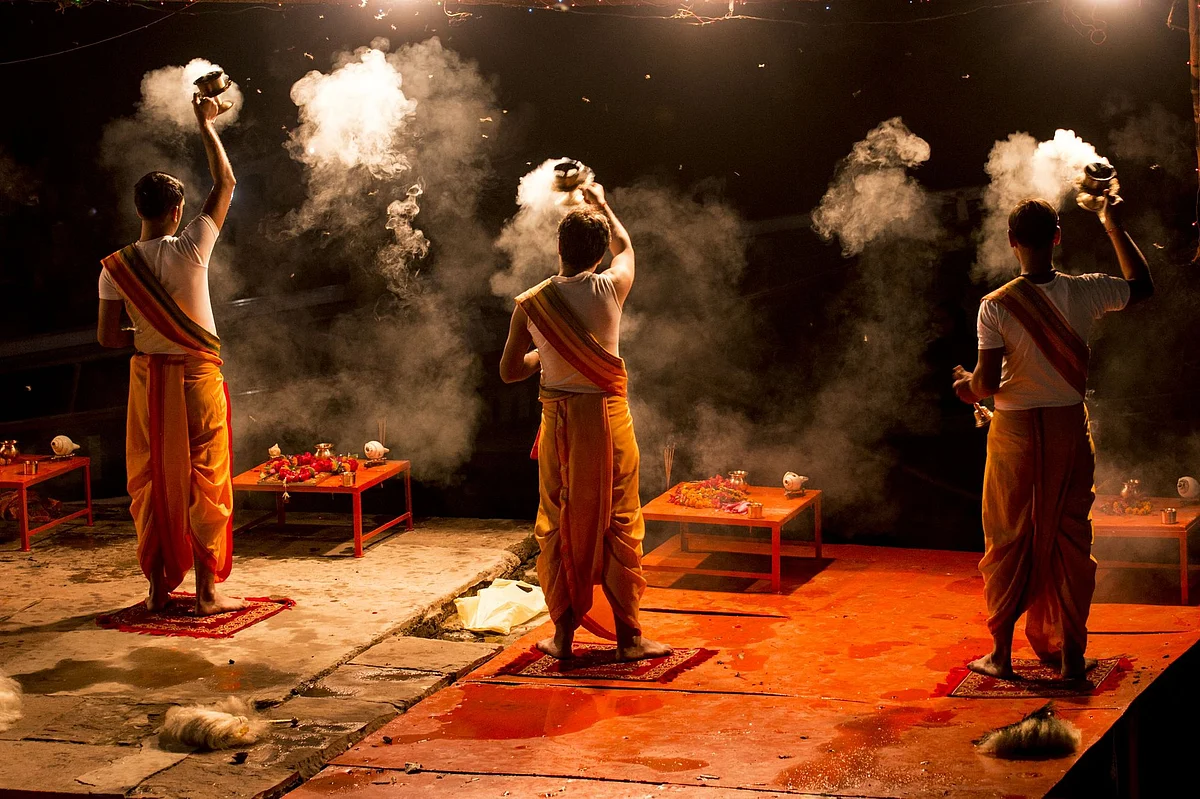
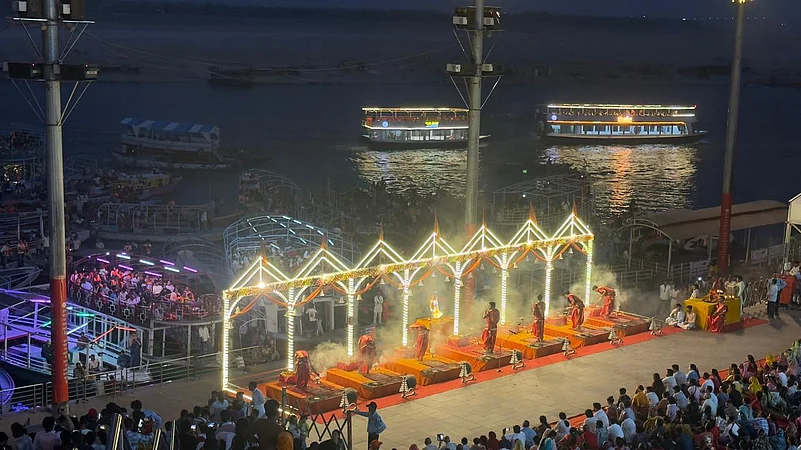
After a short afternoon rest, I made my way to Dashashwamedh Ghat for the famed Ganga Aarti. As dusk settled over the river, thousands gathered along the steps, including families, foreign tourists, ascetics, students, photographers, pilgrims, and boatmen. Together, they created a crowd that felt like a microcosm of India itself. Soon, the ceremony began, with young priests moving in perfect synchronisation as they offered lamps, incense, and prayers to the river.
The rhythm of the ritual was slow, deliberate, and deeply hypnotic. Many visitors chose to watch the aarti from boats floating directly before the ghat, and while that certainly has its charm, I found that observing from a little distance offered a grander perspective. From there, it was possible to appreciate not merely the ritual itself but the entire canvas of devotion unfolding against the backdrop of the Ganga. As if the evening needed another flourish, a laser show followed, projecting stories and visuals across the ghats and temple walls. It was a striking example of modern technology serving ancient faith, and somehow the combination worked beautifully. Dinner that night consisted of Banaras on a plate, with tamatar chaat, pani puri, and a late coffee before returning to the hotel. The day, however, was far from over in spirit, as my alarm had already been set for 1:30 AM.
The Night That Belongs To Mahadev
Most cities sleep at two in the morning; Kashi, however, wakes up. Having booked the Mangala Aarti online, I rose in the dead of night, bathed and joined the queue shortly after 2 AM. It began barely fifty metres from my hotel, but within minutes the line had lengthened dramatically. Around me stood people from every age group, united by a single purpose: to greet Shiva before dawn. Armed with bel leaves, dhatura flowers, milk, and garlands, we slowly moved forward until the time for the Mangala Aarti arrived.
The atmosphere inside the sanctum is difficult to describe and must truly be experienced to be understood. The chants, the ringing bells, the fragrance of incense, the anticipation in the air, and the collective sense of surrender combined to create something deeply moving. When my turn came, I was able to perform pujan at the Shivling despite the crowd. Walking out of the temple after the aarti, I found a vendor selling tea in kulhads. Perhaps it was the hour, perhaps it was the setting, or perhaps Kashi simply has a way of elevating ordinary experiences, but that cup of tea remains one of the finest I have ever tasted.
Banaras At Breakfast
After a short nap, I ventured out again. Breakfast in Banaras deserves a chapter of its own, with hing kachori, bread-makkhan, and steaming chai transforming simple foods into lasting culinary memories. Refuelled and energised, I set out to explore the ghats, moving from Scindia Ghat to Ganga Mahal Ghat, and from Bhonsle Ghat to Ganesh Ghat, now also famous as a filming location for "Kesariya Tera Ishq". Each ghat possessed a distinct personality and charm of its own.
The painted walls of Bundi Parkota Ghat were especially captivating, with murals of Shiva and other deities transforming the riverfront into an open-air gallery. Even the most reluctant social media user would struggle to resist taking photographs there. At Gau Ghat, I found the house associated with the film "Raanjhanaa", and for a fleeting moment, standing in those narrow lanes, it was easy to imagine Dhanush’s character emerging from around a corner. Further ahead lay Namo Ghat, modern, spacious, and dramatically different from the older ghats. Together, they illustrated Kashi’s remarkable ability to remain ancient while continuously reinventing itself.
The University & The Temple Of Knowledge
That evening, I visited the sprawling campus of Banaras Hindu University. Within its grounds stands the New Vishwanath Temple, a striking structure whose story is intertwined with education, nationalism, and spiritual aspiration. The contrast with old Kashi was fascinating. While one represented timeless antiquity, the other embodied modern India’s confidence. Yet both seemed united by the same spiritual current.
Subah-e-Banaras
If there is one experience that should be compulsory for every visitor, it is Subah-e-Banaras at Assi Ghat. At 4 AM, while most of India slept, I was already making my way towards the river. Temple bells echoed through the dawn, mantras drifted across the water, bhajans floated softly through the cool air, and rows of lamps flickered in the darkness. Then, slowly, the sun emerged behind the Ganga.
The experience was magical in a way that no photograph can capture, and no video can reproduce. Some moments simply have to be lived. After the ceremony, I sipped lemon tea by the riverside before boarding a boat to the sandy banks opposite Assi Ghat. There, I performed Ganga Pujan and Deep Daan before taking a holy dip. Whether viewed spiritually or symbolically, standing waist-deep in the sacred river at sunrise evokes a profound sense of renewal. For a brief moment, it genuinely feels as though Mother Ganga has called you to her side.
The River’s Storytellers
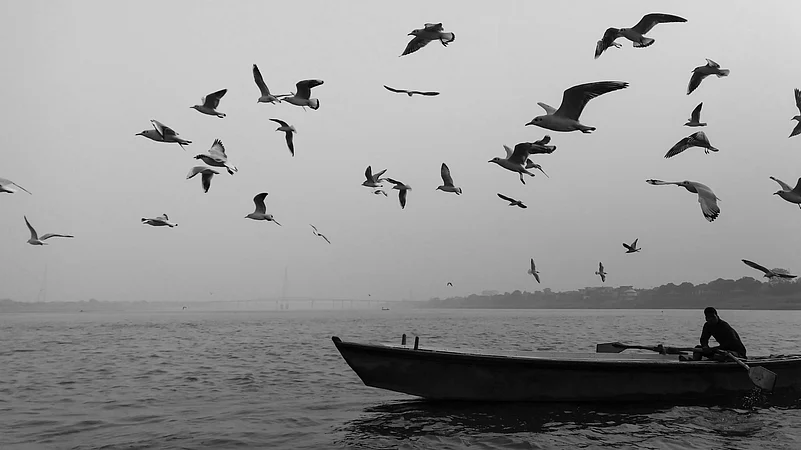
The long boat ride from Assi Ghat to Namo Ghat became one of the highlights of my trip and is something every visitor should experience, preferably while wearing a life jacket. As the boat glided along the river, the boatman gradually transformed into a storyteller, sharing tales of Kashi’s many names, its legends, kings, saints, temples, ghats, myths, and realities. With every story, the city unfolded like a living epic, while the river remained its constant narrator.
Pizza In Banaras?
One of the surprises of the journey was breakfast at a historic pizzeria near Assi Ghat, often described as among the oldest of its kind in India. There I tasted an apple pie unlike any I had encountered before. The following evening, I returned for a wood-fired pizza and a refreshing mint drink. It was a reminder that Banaras refuses to be confined to stereotypes, offering sacred rituals before dawn and outstanding pizza after sunset with equal ease.
Sarees, Markets, And Life Lessons
No visit to Banaras is complete without exploring its markets. I purchased Banarasi sarees for my mother, sister, and wife, although the experience comes with an important cautionary note. A little knowledge of fabric and weaving techniques can save visitors from paying premium prices for ordinary products. Thankfully, I purchased from a reputed fixed-rate store and returned home with sarees that delighted everyone.
The Second Aarti
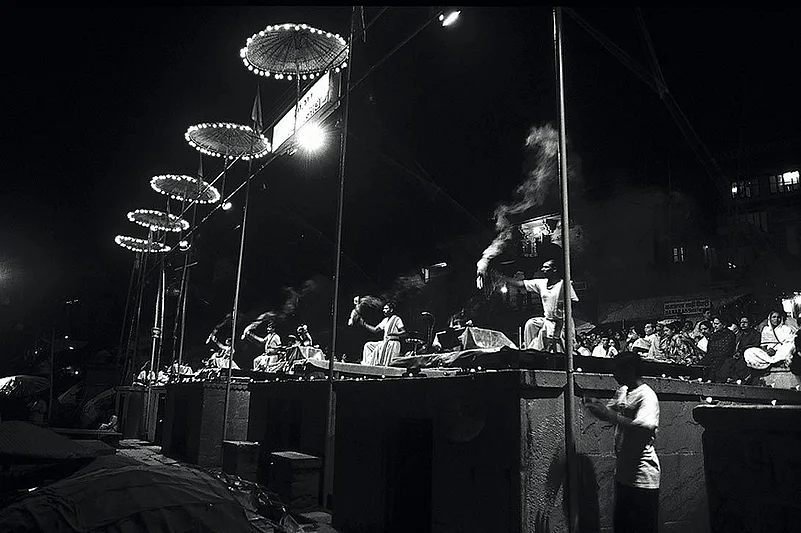
On my final evening, I returned once again to Assi Ghat. The evening aarti felt completely different from the morning ceremony. While the dawn aarti awakens the soul, the evening aarti calms it; one energises while the other reassures. Together, they create a perfect spiritual rhythm, one that gradually begins to replace the frantic pace of modern life.
My Desi Jet Lag
And that, perhaps, is what happened to me in Kashi. I returned home carrying what I can only describe as a “Desi Jet Lag”—not the kind caused by crossing time zones, but the kind caused by crossing inner landscapes. Somewhere along the way, waking up at 4 AM stopped feeling difficult, morning prayers no longer seemed unusual, silence became more appealing, and the urge to constantly check my phone felt less urgent. Kashi had quietly altered my internal clock.
People often say that you leave Kashi, but I am not sure that is entirely true. Long after the train departs and the city disappears from view, Kashi continues to travel with you. Its bells echo in your memory, its river flows through your thoughts, and its dawns linger in your soul. Perhaps that is why they say that while you may leave Kashi, Kashi never leaves you.
As for my Desi Jet Lag, I hope it never goes away. And I pray to Vishwanath that the part of me awakened on the ghats of Banaras remains awake forever.