


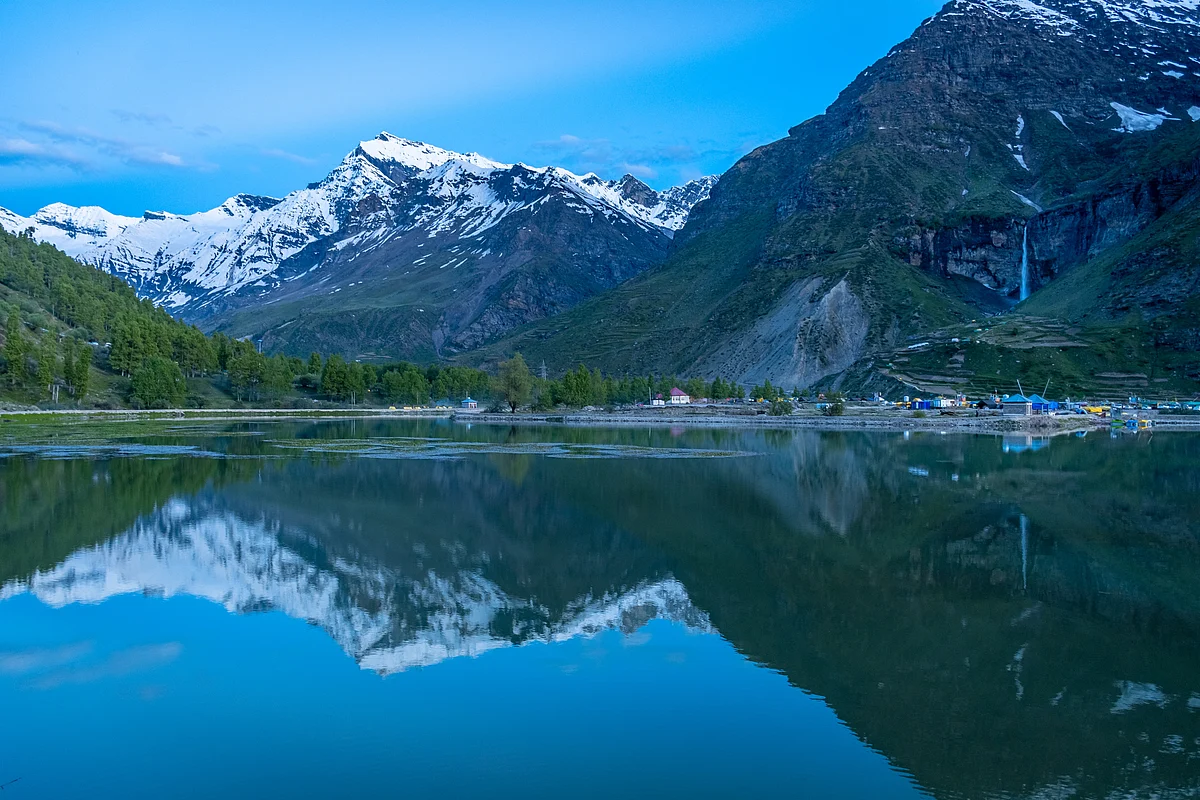
Sissu doesn’t announce itself with grand signboards or curated viewpoints. You arrive, almost unexpectedly, on the other side of the Atal Tunnel, and the landscape shifts—wider valleys, sharper air, and a sense of distance from everything you’ve left behind. Set along the Chandra River in Himachal Pradesh’s Lahaul Valley, this village sits at over 3,100 metres, framed by snow-lined peaks and open stretches that feel largely untouched.
Just 40 kilometres from Manali, Sissu has stepped into easier accessibility in recent years, but it hasn’t slipped into the template of a typical hill destination. It remains rooted in its pace, its people, and its terrain—offering travellers something increasingly rare: space, without spectacle.
A Landscape That Doesn’t Compete For Attention
Sissu’s appeal lies in how effortlessly it holds your attention without trying too hard. There are no neon-lit cafés or over-curated viewpoints here—just open skies, shifting light, and a rhythm dictated by nature rather than itineraries.
The village unfolds slowly. Morning light brushes against the mountains, afternoons bring crisp air and long walks, and evenings settle into a quiet that feels almost deliberate. The Chandra River runs alongside, constant but never overwhelming, adding a soft soundtrack to everything.
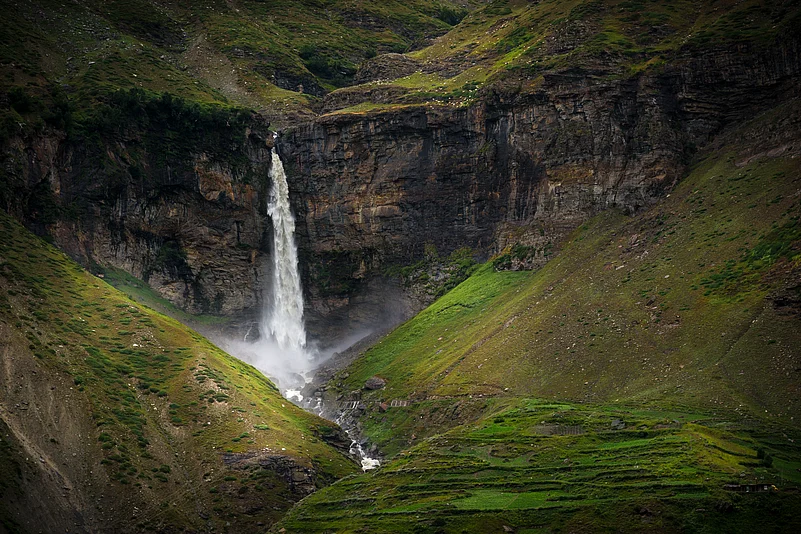
The now-iconic Sissu waterfall is often the first thing travellers notice. Cascading dramatically from a high cliff, it’s visible from the highway and grows more powerful in the summer months when glacial melt feeds its flow. Stand close enough, and the mist hits your face—a welcome jolt in the mountain sun. It’s not just a photo stop; it’s a reminder of the scale and rawness of this landscape.
Slow Travel, Naturally

Sissu doesn’t demand a checklist. If anything, it resists one. Walk through the village, and you’ll find narrow paths, traditional wooden houses, and glimpses of everyday life that haven’t been reshaped for tourism. Locals, many of Tibetan descent, continue to follow agricultural cycles, with potato farming forming the backbone of the region’s economy. If you arrive during harvest season, you’ll likely see fields in motion, with families working together in a rhythm that hasn’t changed much in decades.
Food here follows the same philosophy: simple, hearty, and rooted in place. Think steaming bowls of thukpa, freshly made momo, and butter tea that feels less like a novelty and more like a necessity in the cold. Many homestays offer meals that reflect generational recipes rather than curated menus—and that difference shows.
Where Nature Meets Adventure
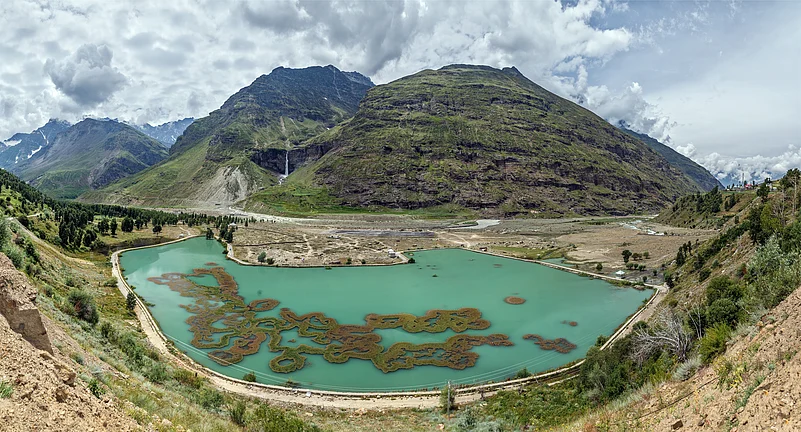
For a place that feels so calm, Sissu has a quietly adventurous side. Trekking is one of the most rewarding ways to experience the region. The trail to Sissu Lake, about five kilometres from the village, is a moderate hike that shifts in character as you go—green meadows give way to more rugged terrain, with sweeping views opening up at every turn. The lake itself sits like a still mirror, reflecting the mountains in a way that feels almost too perfect to be real.
For those seeking more adrenaline, the Chandra River offers opportunities for rafting, with rapids that are approachable yet exciting. Camping along its banks is equally popular—not for luxury, but for the kind of night sky that makes you forget your phone exists. With minimal light pollution, Sissu is one of those rare places where the Milky Way isn’t a concept but a visible, humbling presence.
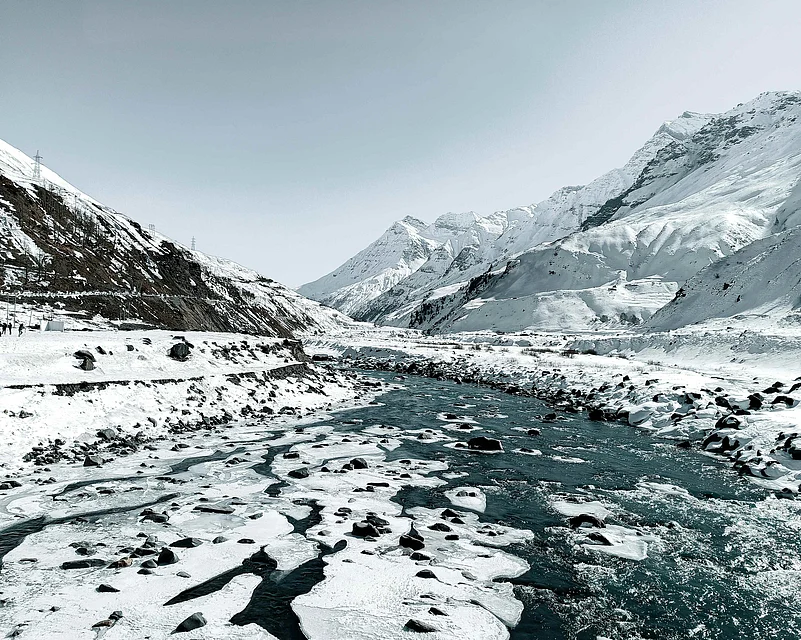
In winter, the landscape transforms entirely. Snow blankets the village, muting colours and amplifying silence. While temperatures drop sharply, the trade-off is a kind of beauty that feels almost cinematic.
A Quiet Spiritual Undercurrent
Beyond its landscapes, Sissu carries a subtle spiritual energy. Scattered monasteries in and around the village offer a glimpse into the region’s Buddhist heritage. These aren’t grand, imposing structures, but intimate spaces where prayer wheels spin softly, and chants echo through painted halls.
Visiting one isn’t about ticking off a cultural stop—it’s about pausing. The views from these monasteries often stretch across the valley, making them as much about perspective as they are about prayer.
Beyond The Village
While Sissu holds its own, it also serves as a gateway to the broader Lahaul Valley. Keylong, about 30 kilometres away, functions as the district’s main hub, with markets, monasteries, and a more active local scene. It’s a good place to pick up handicrafts, woollens, and everyday glimpses of life in the region.
The confluence at Tandi, where the Chandra and Bhaga rivers meet to form the Chenab, is another striking stop—less about lingering and more about witnessing a powerful natural intersection.
Villages like Koksar and Jispa add further layers to the journey, each offering its own take on life in this high-altitude landscape. These aren’t polished attractions, but they deepen the understanding of the region.
When To Visit & What To Expect
Timing a visit to Sissu shapes the experience significantly. The summer months, from June to September, bring the most accessible conditions—clear roads, moderate temperatures ranging between 10 degrees Celsius and 20 degrees Celsius, and landscapes in full colour. This is when trekking, camping, and outdoor exploration are at their most comfortable.
July and August can see occasional rain, which enhances the greenery and amplifies the waterfall’s intensity. October marks the beginning of colder conditions, with early snowfall adding a different visual dimension to the valley.
Winter, while more challenging, offers a dramatically altered landscape. Heavy snow, lower temperatures, and fewer visitors create a setting that feels far removed from the busier parts of Himachal.
Reaching Sissu is now far more straightforward. The Atal Tunnel has reduced travel time from Manali significantly, turning what was once a longer, weather-dependent journey into a relatively smooth drive.
What makes Sissu stand out isn’t just what it offers, but what it doesn’t. There’s no rush to see everything, no pressure to optimise your time. It’s a place where doing less somehow feels like more.
In a travel landscape increasingly defined by crowds and content, Sissu holds on to something simpler. It invites you to stay a little longer, walk a little slower, and notice things you’d usually overlook—the way light changes on a mountain face, the sound of a river at night, the comfort of a warm meal after a cold day.
FAQs
1. Where is Sissu located?
Sissu is in Lahaul Valley, Himachal Pradesh, about 40 km from Manali along the Manali–Leh highway.
2. What is Sissu famous for?
It’s known for its waterfall, Sissu Lake, Chandra River views, and access to scenic Himalayan landscapes.
3. How do you reach Sissu?
Drive from Manali via the Atal Tunnel; the route is open most of the year, weather permitting.
4. What is the best time to visit Sissu?
June to September offers the most pleasant weather; October brings early snow and fewer visitors.
5. What are the top things to do in Sissu?
Visit the waterfall, trek to nearby lakes, explore monasteries, camp by the river, and enjoy stargazing.


