

Long before she became one of India's most prominent political figures, Sonia Gandhi's life began in a small Italian village, surrounded by the familiar sights of a traditional European home. In Lusiana, a village in Italy's Veneto region, stands the six-room house where she spent her childhood. With its weathered stone façade, wooden shutters, exposed ceiling beams, and understated interiors, the property offers a glimpse into a chapter of her life that predates her association with the Nehru-Gandhi family and Indian politics. Now known as the 'Indian House' or 'India House,' the residence is attracting renewed attention following the release of her memoir, "Belonging: A Journey of Love." Its current owners are also planning to transform it into a museum dedicated to Sonia Gandhi's early years and family history, potentially adding a new point of interest to this Italian village.
A Family Home In The Veneto Region
Located in Lusiana, in Italy's Vicenza province, the house is a traditional multi-storey European residence that once belonged to the Maino family. Sonia Gandhi, born Sonia Maino on December 9, 1946, grew up here before moving to England for her studies and eventually marrying Rajiv Gandhi. Her father, Stefano Maino, worked as a mason and building contractor, and her early years in the Italian countryside were considerably removed from the public life she would later lead in India.
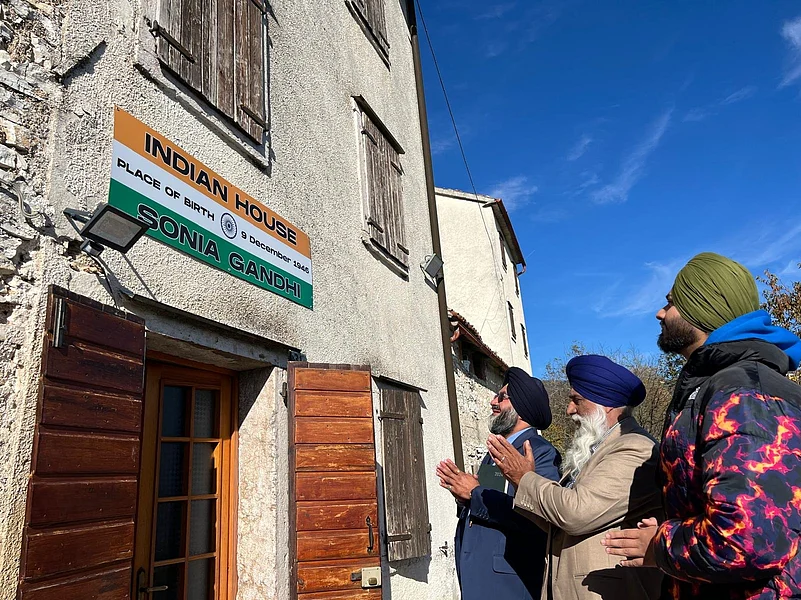
The property is modest in scale, with six rooms spread across multiple levels. Its exterior retains the appearance of an old countryside residence, featuring exposed stone masonry, patches of plaster, stone-framed windows, and wooden shutters. A wooden entrance door leads into the house, while an Indian Tricolour displayed outside gives the building its distinctive identity. An inscription on the exterior, identifying it as India House and referring to Sonia Gandhi's birth, further establishes its connection to her family history.
The residence reportedly changed ownership in 2020, when Italy-based Sikh businessman Sukhdev Singh Kang purchased it from the Maino family. The property was acquired in the name of his wife and daughter, and the family has since taken an interest in preserving its association with Sonia Gandhi's early life.
Inside The Indian House: Wooden Beams And Rustic Interiors
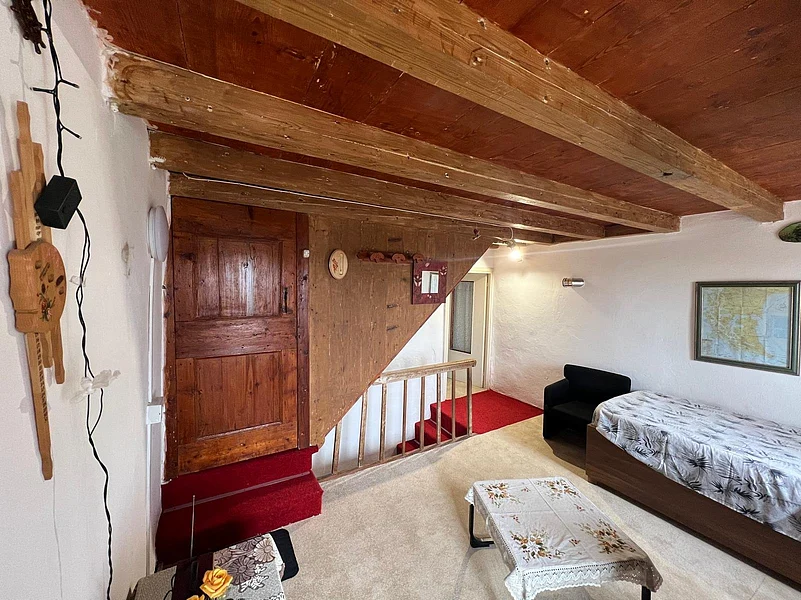

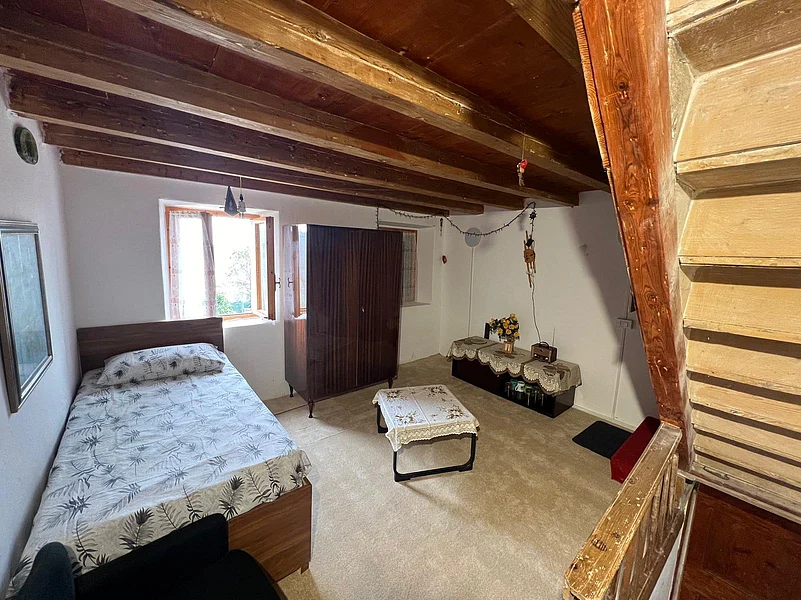
Step inside, and the house offers a glimpse of traditional Italian domestic architecture. Its interiors retain a simple, lived-in character, with whitewashed walls, stone or tiled flooring, and wooden elements that lend warmth to the rooms. Exposed wooden ceiling beams are among the defining features, drawing attention to the building's original construction and countryside aesthetic.
A wooden staircase connects the different levels, while large windows allow natural light to filter into the rooms. The furnishings are relatively minimal, with wooden tables, chairs, and other household pieces complementing the understated interiors. Rather than an extensively refurbished residence, the house has retained much of its original appearance, allowing visitors to get a sense of the environment in which Sonia Gandhi spent her formative years.
The six-room layout also gives the property an intimate scale. Its rooms, staircase, traditional architectural details, and domestic furnishings offer a glimpse into the everyday setting of a family home in the Veneto countryside. For visitors interested in Sonia Gandhi's personal history, these details provide a more tangible connection to her Italian roots.
From Private Residence To A Proposed Museum
The house is currently owned by Kang, who lives with his family in Brescia, approximately an hour's drive away. Since acquiring the property, the family has reportedly resisted suggestions to rent it out or repurpose it as a commercial establishment or place of worship. Instead, they intend to preserve its existing character and develop it into a museum dedicated to Sonia Gandhi.
The proposed museum is expected to feature photographs, personal memorabilia, and other objects contributed by the Gandhi family. Kang and his family are keen to meet Sonia Gandhi, along with Rahul Gandhi and Priyanka Gandhi Vadra, to understand which family belongings could be displayed and how her early life might be represented. The idea is to create a space that traces her journey from her childhood in Italy to her eventual life in India.
The family has reportedly obtained the necessary permissions to take the museum project forward. Maintaining the property, however, involves regular expenses, including approximately 100 euros a month for a caretaker and around 1,000 euros in annual property taxes. Despite the possibility of earning considerably more through a rental arrangement, the owners have expressed their intention to retain the house as a heritage property associated with the Maino family.
An Italian Village With An Indian Connection
The growing interest in the Indian House has also brought visitors to Lusiana. Indian tourists, including those travelling from different parts of the country, have been making their way to the village to see the residence. Visitors are often directed towards the property by locals who have become familiar with its association with Sonia Gandhi.
Until recently, the house was generally kept locked, with access managed by the family. A caretaker has since been appointed to help visitors enter and view the premises. While it is not yet a fully operational museum, the residence has already become a point of interest for travellers curious about the Congress leader's personal history and Italian background.
The increased footfall has also had a small but noticeable impact on the village's visitor economy. Tourists stopping by the house often explore local restaurants and nearby accommodation, bringing additional business to the area. The owners also reportedly organise an annual event to mark Sonia Gandhi's birthday, further strengthening the property's connection with its visitors.
For a village in Italy's Veneto countryside, the Indian House represents an unusual cultural link with India. Its proposed transformation into a museum could give travellers another reason to explore Lusiana, while preserving a personal chapter in the life of a political figure whose journey eventually crossed continents. What began as an ordinary family residence may soon become a place where visitors can learn more about Sonia Gandhi's Italian childhood, her family roots, and the home that remains connected to the earliest years of her life.
FAQs
1. Where is Sonia Gandhi’s childhood home located?
Sonia Gandhi’s childhood home is in Lusiana, a village in Italy’s Veneto region, within the province of Vicenza.
2. What is Sonia Gandhi’s childhood home in Italy called?
The property is popularly known as the Indian House or India House.
3. Who owns Sonia Gandhi’s childhood home in Italy?
The property is owned by Italy-based Sikh businessman Sukhdev Singh Kang and his family, who purchased it in 2020.
4. Will Sonia Gandhi’s childhood home become a museum?
Yes. The owners plan to convert the six-room residence into a museum dedicated to Sonia Gandhi’s life and family history.
5. What can visitors see inside the Indian House?
The house features exposed wooden ceiling beams, a wooden staircase, stone or tiled flooring, traditional furnishings, and rustic interiors. The proposed museum may also display family memorabilia.