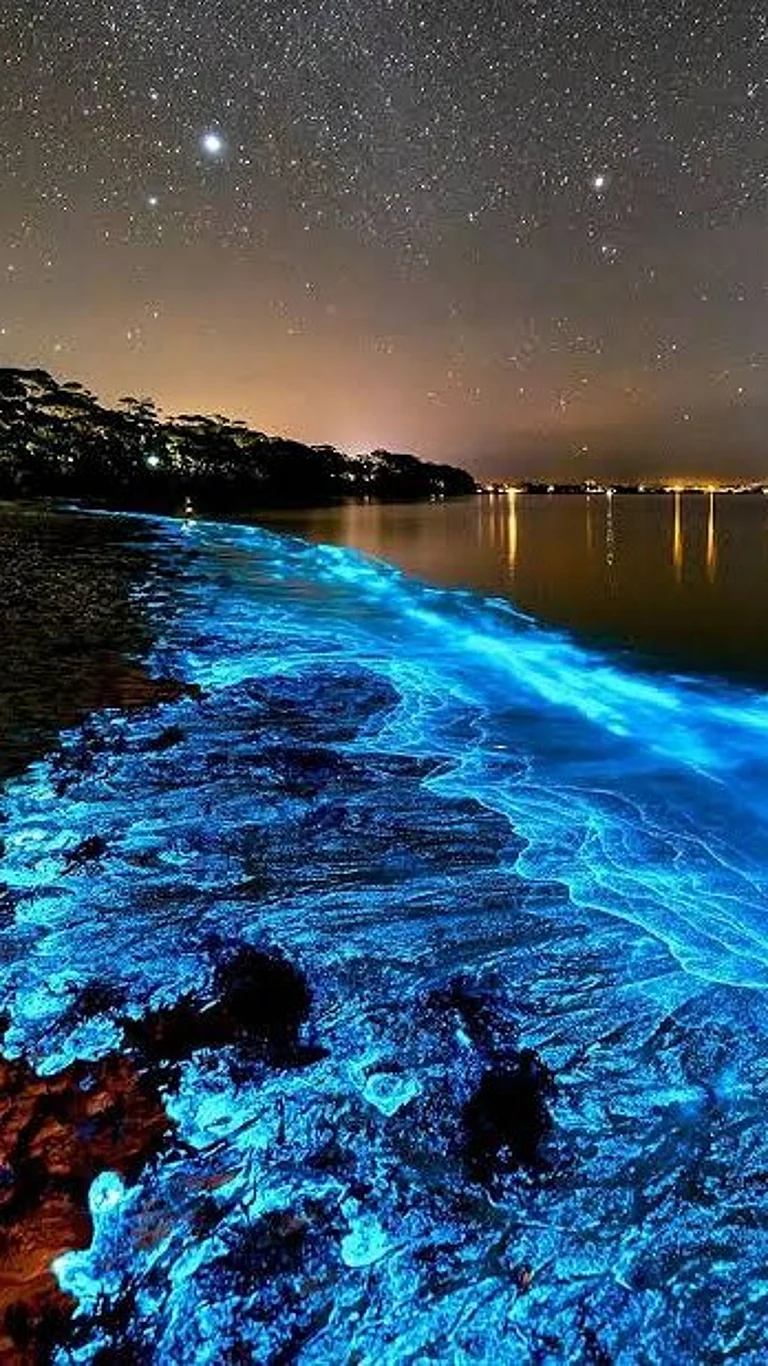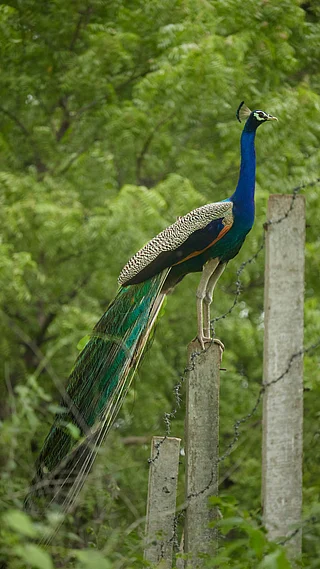


Imagine walking through a forest after a spell of monsoon rain. The ground is damp, the air carries the smell of wet earth, and fallen branches disappear beneath a carpet of leaves. You point your torch towards a rotting tree trunk and notice something unusual: tiny green lights scattered across its surface. A little further ahead, a cluster of delicate mushrooms emerges from the forest floor, while another curious growth resembles a miniature bird's nest, complete with tiny eggs.
It might sound like a scene from a fantasy film, but these are some of the extraordinary sights hidden in India's forests. Fungi are among the most fascinating, and frequently overlooked, inhabitants of the natural world. They come in an astonishing variety of shapes, colours and sizes, from luminous mushrooms and elaborate coral-like structures to formations that resemble flowers, stars and underwater creatures.
And while mushrooms are their most familiar representatives, the fungal kingdom has a much bigger story to tell.
The Forest's Natural Night Lights: Bioluminescent Mushrooms
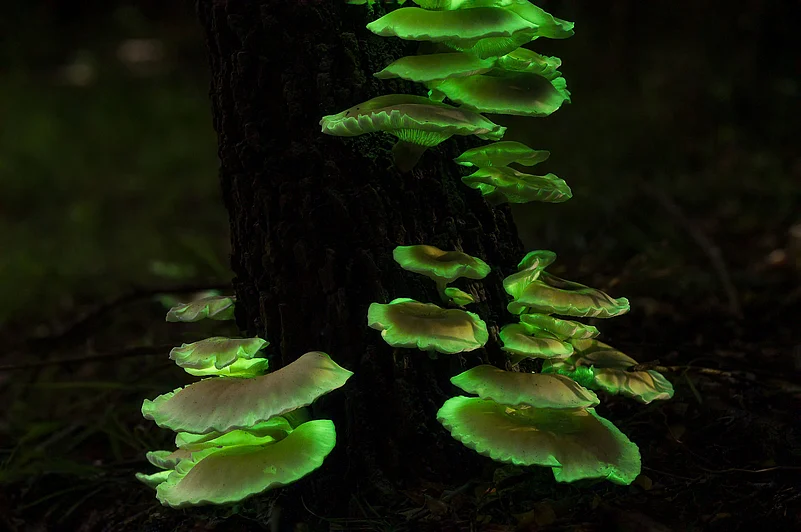
Perhaps the most extraordinary members of India's fungal kingdom are the ones that produce their own light. Bioluminescent fungi emit a faint greenish glow, often visible on decaying wood, fallen branches and damp forest floors after dark.
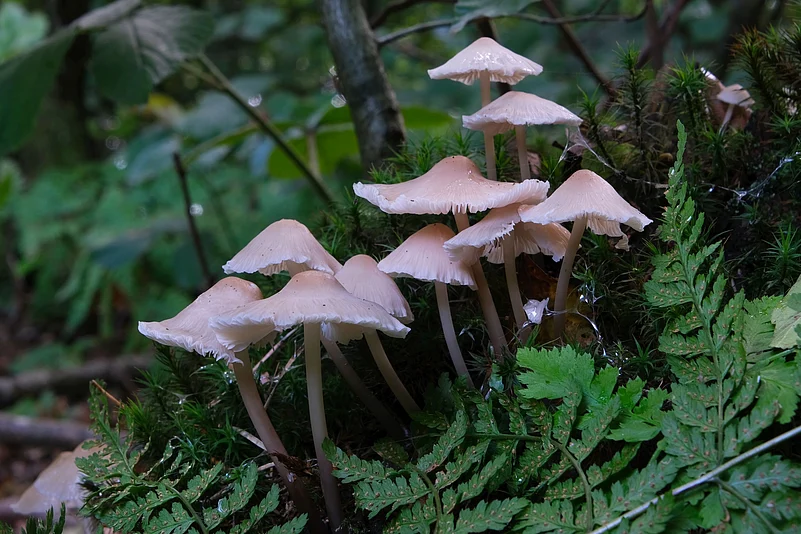

In India's Western Ghats, particularly in Goa's Mhadei Wildlife Sanctuary and surrounding forests, this phenomenon has been documented during the monsoon. The tiny mushrooms belonging to the genus Mycena are among the best-known examples. One species, Mycena chlorophos, produces a pale green glow and has been recorded growing on decomposing bamboo and woody debris in Goa and Maharashtra's Konkan region.
Meghalaya has another remarkable example. In 2020, researchers documented Roridomyces phyllostachydis, a previously undescribed bioluminescent mushroom, in the forests around Mawlynnong in East Khasi Hills and Krang Shuri in West Jaintia Hills. Its beige cap does not glow; the light comes from its slender, sticky stalk. This unusual characteristic distinguishes it from several other luminous fungi.
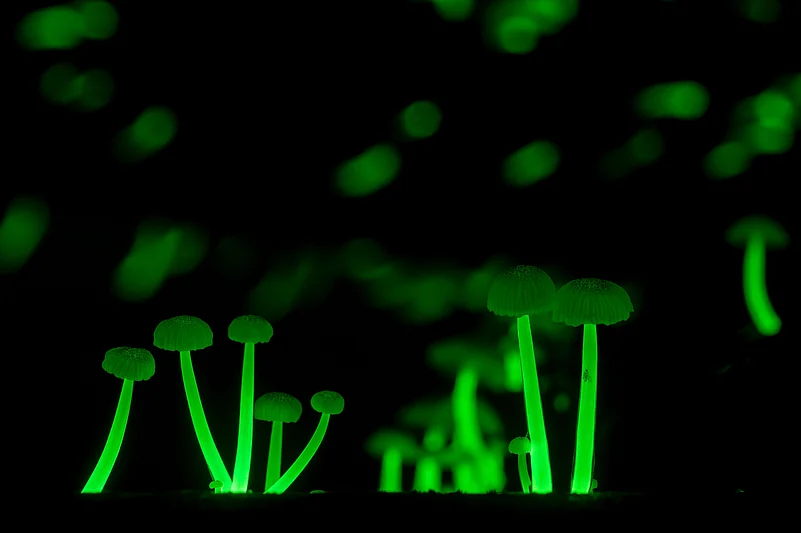
So, what makes them glow? The phenomenon involves a chemical reaction between luciferin, a light-emitting compound, and the enzyme luciferase, in the presence of oxygen. Scientists have suggested that the glow may attract insects, which can help disperse fungal spores. However, the precise ecological purpose of bioluminescence is still being investigated.
The best time to look for these luminous fungi is during the humid monsoon months, particularly after rainfall. Patience matters: artificial lights can make their faint glow difficult to detect.
Bridal Veil Stinkhorns: Nature's Elaborate Creations
Some fungi look as though they have been designed by an unusually imaginative costume designer. The bridal veil stinkhorn (Phallus indusiatus) is a perfect example.
Found in tropical forests, including parts of Kerala, this mushroom has a tall, white, cylindrical stalk topped by a small cap. Its most striking feature is the delicate, net-like white structure that hangs from beneath the cap, resembling a bridal veil or an elaborate lace skirt.
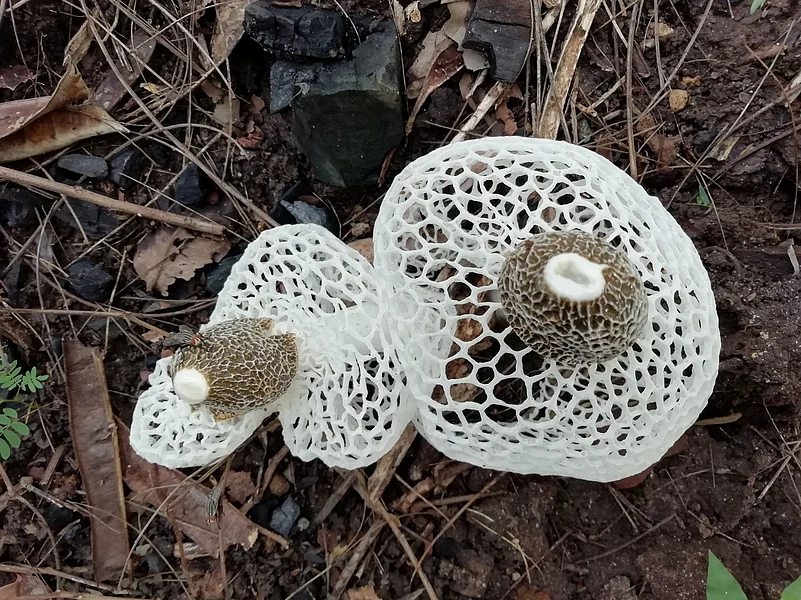
It usually appears in warm, damp conditions, particularly after heavy monsoon showers, growing among leaf litter, decomposing wood and other organic matter. Its reproductive strategy is equally unusual. The cap carries a sticky, foul-smelling spore mass that attracts flies and other insects. As they visit the mushroom, they pick up spores and transport them elsewhere.
Wayanad, particularly its forested landscapes, is among the places where mushroom enthusiasts have reported spotting these remarkable fungi.
Bird's Nest Fungi: Tiny Cups With Miniature Eggs
Look closely at the forest floor, and you might discover something resembling a collection of miniature nests. Bird's nest fungi, belonging to groups such as Cyathus, have cup-shaped fruiting bodies containing tiny, egg-like structures called peridioles.
These are not eggs, of course, but compact packets containing fungal spores. When raindrops strike the little cups, the peridioles can be splashed out, helping the fungus spread and colonise fresh surfaces.
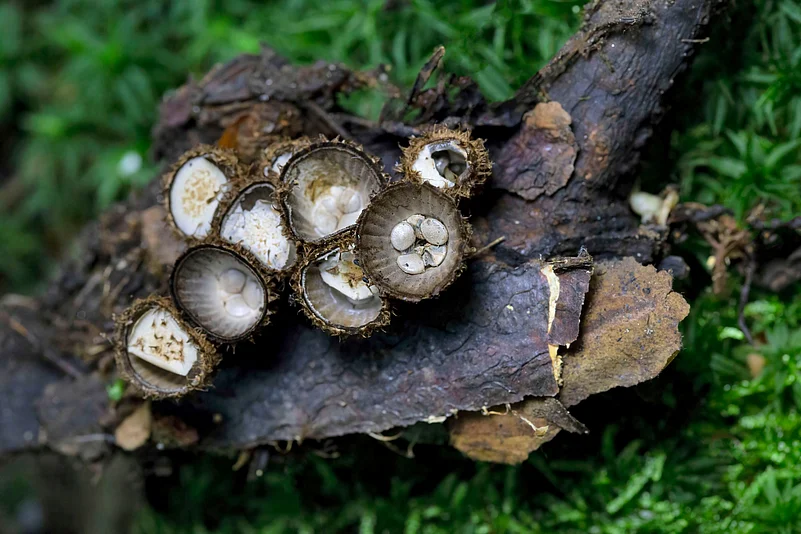
They typically grow on decaying wood, twigs, mulch and plant debris. Their small size makes them easy to overlook, but a close-up reveals beautifully patterned cups and neatly arranged spore packets.
They have also been recorded in India's forest environments, including Kerala. For urban nature enthusiasts, Delhi's Sunder Nursery and Lodhi Gardens are recommended monsoon mushroom-spotting locations, while bird's nest fungi are among the fascinating forms reported by mushroom observers in the capital.
Earthstars: Constellations Beneath The Trees
If bird's nest fungi resemble miniature nests, earthstars look like little celestial objects scattered across the ground.
Species such as Astraeus hygrometricus and members of the genus Geastrum begin as rounded fungal bodies. As they mature, their outer layer splits into several pointed sections that open outwards, creating a star-like shape. At the centre sits a rounded spore sac with a small opening through which spores are released.
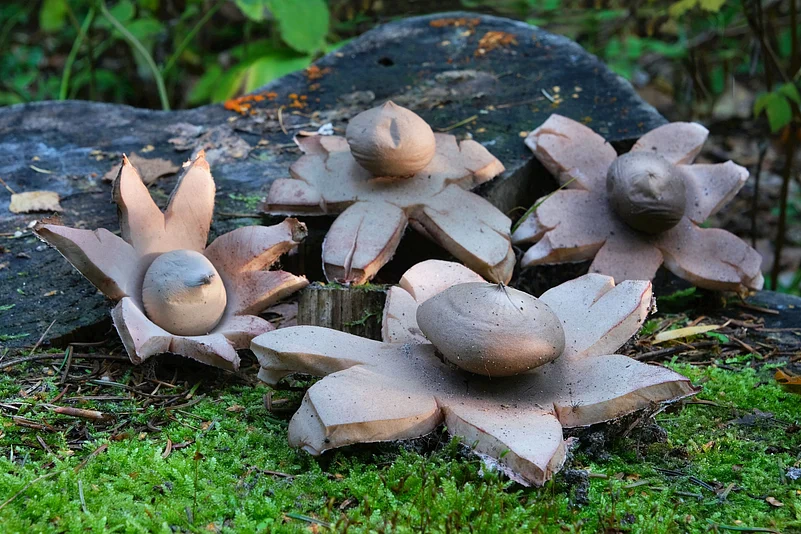
An especially interesting characteristic is their response to moisture. In certain earthstars, the outer rays curl inwards during dry weather and spread out when conditions become humid. This movement helps expose the spore sac under favourable conditions.
Earthstars grow on soil and forest debris, and have been documented in the Central Ridge Reserve Forest in Delhi. Their unusual appearance makes them particularly rewarding finds during the monsoon.
Coral Fungi: Underwater Shapes On The Forest Floor
Not every mushroom has a cap and stalk. Some resemble tiny underwater corals, complete with branching structures that spread upwards from the ground or decaying wood.
Coral fungi, including members of the genera Ramaria, Clavulina and Clavulinopsis, can be yellow, orange, white, pink or purple. Their branching fruiting bodies give them an unmistakable appearance, almost like miniature coral reefs transplanted into a forest.
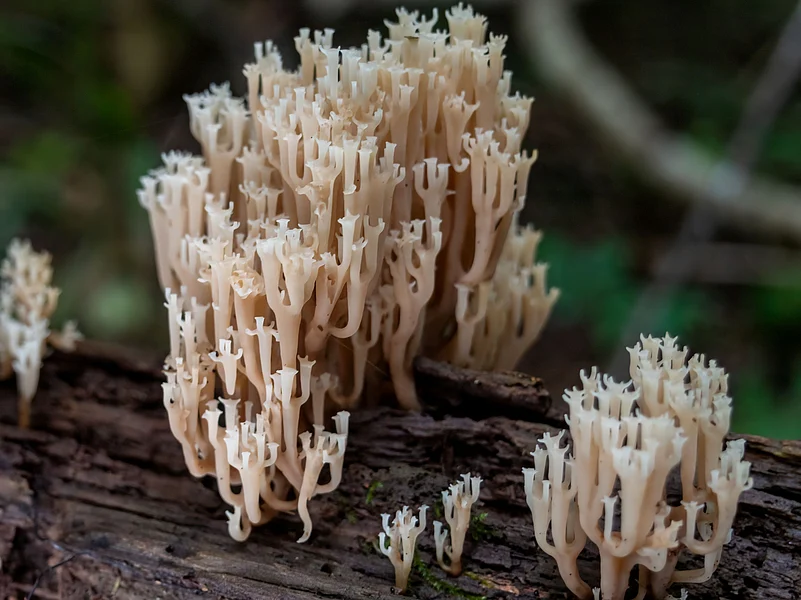
India's Botanical Survey has documented several groups of coral fungi, including species growing on soil and decomposing wood. They are particularly interesting because their shapes vary considerably between species, making identification a fascinating exercise for mushroom enthusiasts.
Bracket Fungi: The Forest's Natural Recyclers
Some fungi do not emerge from the ground at all. Instead, they grow directly on tree trunks, forming shelf-like structures that resemble wooden brackets.
Known as bracket or polypore fungi, these organisms include species such as Ganoderma, Trametes, and Microporus. Their fruiting bodies can be woody, leathery or relatively thin, often displaying concentric rings, colourful bands and intricate pores underneath.
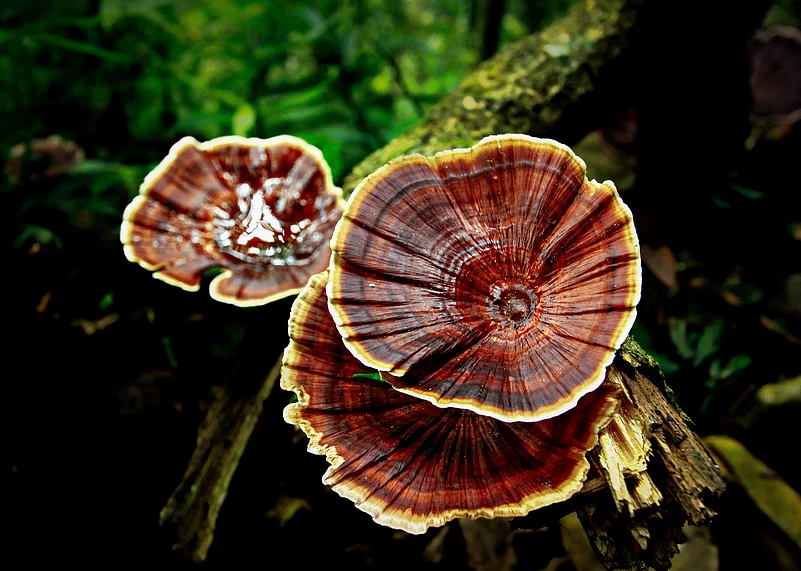
They are particularly important to forest ecosystems because many break down dead wood, releasing nutrients that can be reused by plants and other organisms. Some species also colonise living trees, causing wood decay.
Look closely at a fallen log or an old tree trunk in a humid forest, and you might find several layers of these fungi growing together.
Why Fungi Matter More Than We Realise
Their unusual appearances and occasional luminous displays are only part of the story. Fungi perform some of the most essential ecological functions in India's forests.
Much of their life happens underground, through a network of microscopic filaments called hyphae. These form a larger structure known as mycelium, which spreads through soil, leaf litter and decaying wood.
Some fungi are saprotrophs, meaning they obtain nutrients by breaking down dead organic matter. Others form mutually beneficial relationships with plant roots, known as mycorrhizal associations. The fungi help plants access nutrients and water, while receiving carbohydrates in return. Together, these relationships contribute to nutrient cycling, soil formation and forest health.
India's fungal diversity is still far from completely documented. A four-year survey in Kerala's Agasthyamala Biosphere Reserve, conducted between 2021 and 2024, recorded 112 macrofungal species. The researchers found that 86 per cent were saprotrophic, highlighting the importance of fungi in decomposing organic matter.
There is also an important distinction between discovering a mushroom and identifying it correctly. Many species look remarkably similar, and some are poisonous. Never pick or consume a wild mushroom based on appearance alone.
The next time you walk through a forest after the rain, look beyond the towering trees and familiar wildlife. Examine the fallen branches, damp soil and rotting logs. You might find a tiny glowing mushroom, a miniature star or an elaborate lace-like structure. These seemingly insignificant organisms are doing some of the forest's most important work, even when nobody is watching.
FAQs
1. Where can you find bioluminescent mushrooms in India?
Bioluminescent mushrooms have been documented in Goa's Mhadei Wildlife Sanctuary, the Western Ghats and Meghalaya. They are generally spotted in humid forests during the monsoon.
2. What is the glowing mushroom found in Meghalaya?
Roridomyces phyllostachydis is a bioluminescent mushroom documented in Meghalaya in 2020. Its slender stalk emits a greenish glow, particularly in dark forest conditions.
3. What is a bridal veil stinkhorn mushroom?
The bridal veil stinkhorn (Phallus indusiatus) is a tropical mushroom recognised by its tall white stalk and delicate, lace-like skirt hanging beneath its cap.
4. What are bird's nest fungi?
Bird's nest fungi are tiny, cup-shaped fungi belonging to genera such as Cyathus. They contain small, egg-like structures called peridioles, which carry fungal spores.
5. Why are fungi important to forest ecosystems?
Fungi break down dead organic matter, recycle nutrients, contribute to soil health and form beneficial relationships with plant roots, helping forests function as healthy ecosystems.