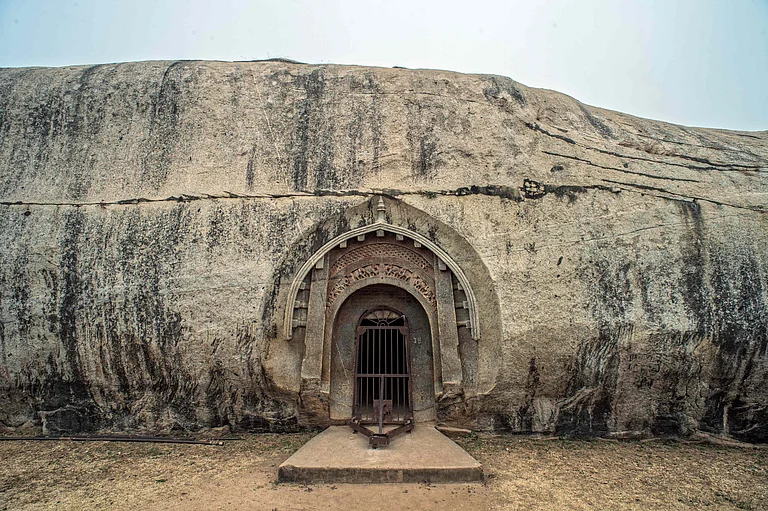


There is something almost counterintuitive about stepping inside a cave carved more than 2,000 years ago and finding walls that gleam like polished glass. No elaborate pillars or towering sculptures announce their presence. Instead, the Barabar Hills in Bihar conceal a collection of austere chambers, excavated from solid granite with a precision that continues to intrigue historians and architects. Their surfaces are so remarkably smooth that they have often been compared to those produced by modern cutting and polishing techniques. Add to this an unusual acoustic effect, with sounds reportedly echoing for up to three minutes, and these caves become one of India's most extraordinary encounters with ancient engineering.
Located in Jehanabad district, approximately 25 kilometres from Gaya, the Barabar and neighbouring Nagarjuni Hills house India's oldest surviving examples of rock-cut architecture. Dating to the 3rd century BCE, the seven caves were commissioned during the reigns of Mauryan emperor Ashoka and his grandson, Dasharatha. Four are located in the Barabar Hills, while the remaining three lie in the Nagarjuni range, a short distance away. Their construction marks an important moment in India's architectural history, when artisans began transforming natural rock formations into spaces for religious practice and contemplation.
An Ancient Art Of Precision


The first thing that distinguishes these caves is their material. Unlike many later cave complexes carved into softer rock, the Barabar caves were excavated from exceptionally hard granite. Yet their interiors feature an almost mirror-like polish, commonly referred to as the Mauryan polish. The technique used to achieve this finish remains a subject of historical interest, with the exact process still not conclusively established.
The craftsmanship is particularly striking because the walls and ceilings appear remarkably even, despite having been shaped without modern machinery. Historians have explored possible explanations involving sophisticated abrasive tools and polishing techniques, although no single theory has been definitively established. The result is an extraordinary combination of scale and delicacy: vast stretches of rock transformed into carefully finished architectural spaces.
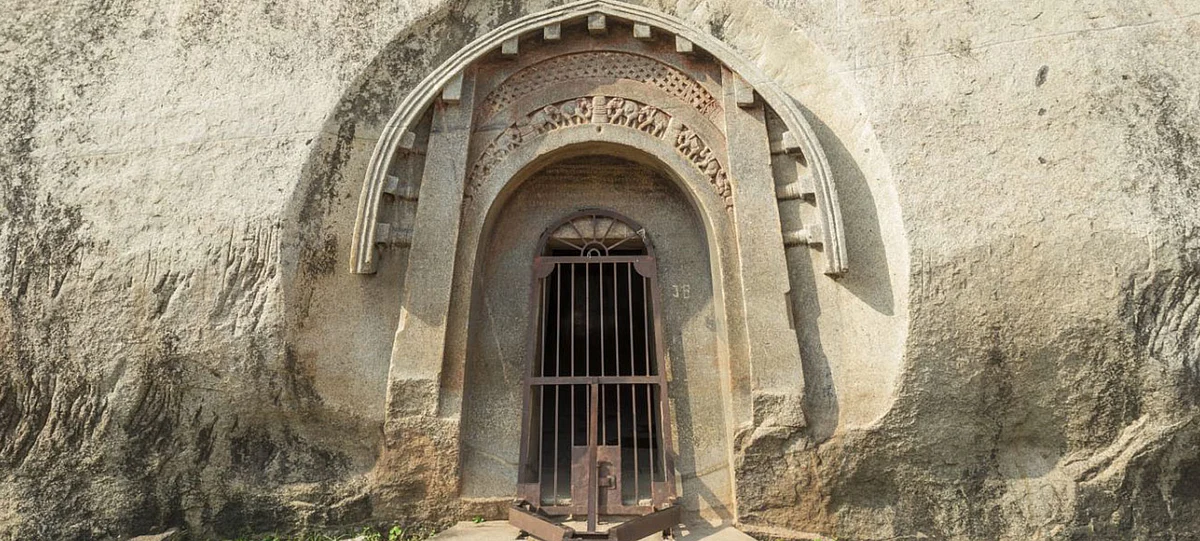
The caves also reveal how early rock-cut architecture borrowed from buildings made using perishable materials. Their vaulted ceilings, curved entrances and structural proportions reproduce elements of contemporary wooden and thatched dwellings, preserving in stone architectural forms that might otherwise have disappeared.
Where Silence Becomes Sound
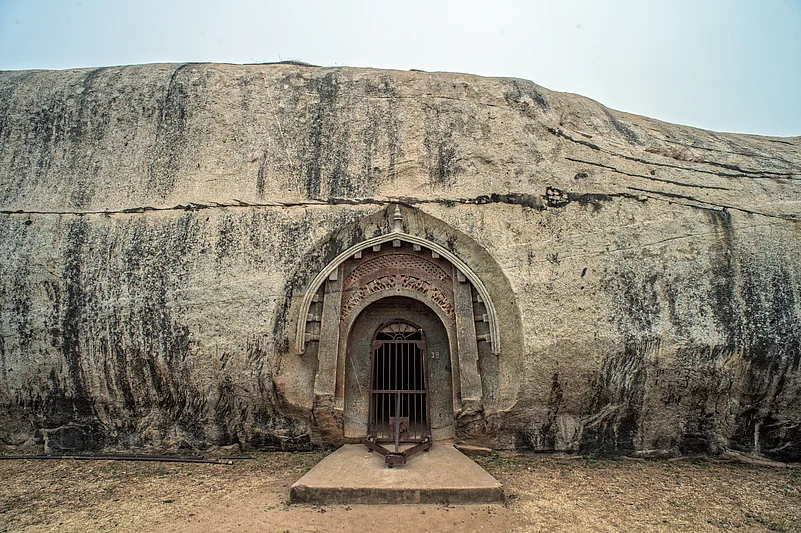
The interiors offer another unexpected experience. Step into one of the polished chambers and even a brief sound can travel across the room, returning as a prolonged reverberation. Bihar Tourism describes the acoustic effect as an echo that can last up to three minutes, making the caves particularly fascinating for visitors interested in the relationship between architecture and sound.
The effect is associated with the caves' enclosed chambers, curved surfaces and hard, polished granite interiors, which reflect sound rather than absorbing much of it. The experience is especially striking in the smaller, domed chambers, where the enclosed geometry creates an unusual auditory environment. It is an architectural feature that invites a different kind of exploration. Rather than simply looking at the walls, visitors can experience the spaces through sound, discovering how an ancient structure can shape something as fleeting as a spoken word.
Four Caves, Different Stories
The four principal caves at Barabar each offer a distinct architectural experience. Sudama Cave, considered the earliest of the group, was dedicated by Ashoka to the Ajivika ascetics in 257 BCE. It comprises a large rectangular chamber with a vaulted ceiling, connected through a narrow passage to a smaller circular room with a hemispherical dome. Its inscription provides valuable evidence of the cave's original religious association.
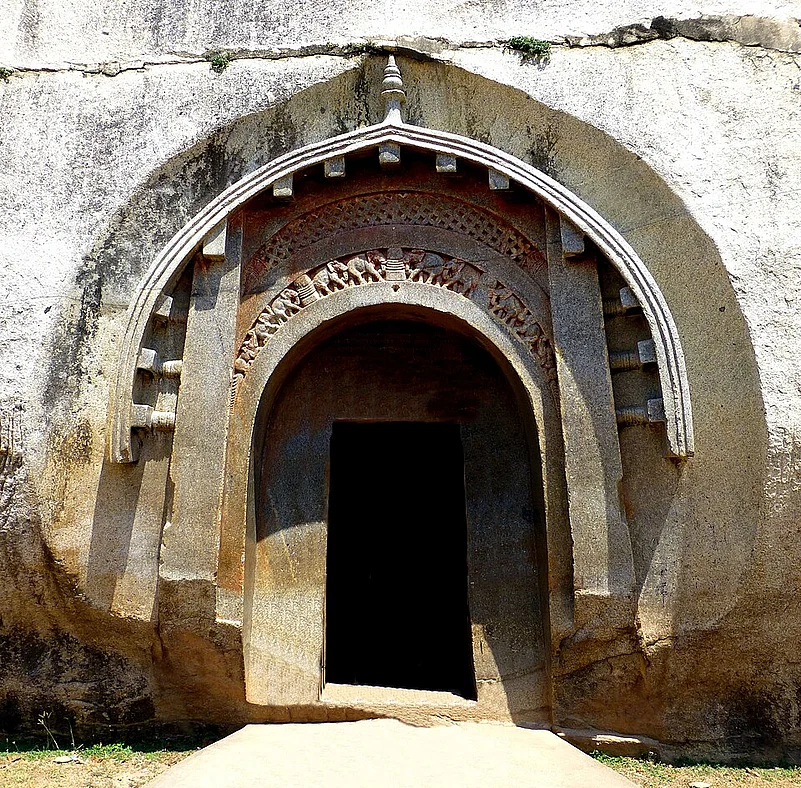
Lomas Rishi Cave is arguably the most visually distinctive. Its entrance is carved to resemble the façade of a wooden building, complete with a horseshoe-shaped arch, latticework and a frieze depicting elephants moving towards a stupa. This early form of the chaitya arch, also known as the gavaksha, would become an enduring feature of Indian Buddhist architecture. Interestingly, the cave remains unfinished, with visible chisel marks on parts of its floor and interior. It also lacks an Ashokan dedicatory inscription.
Karan Chaupar, meanwhile, is a single rectangular chamber with a vaulted ceiling and a polished interior. An inscription records its dedication by Ashoka, while a stone bench along one side adds to its austere character. Visvakarma Cave, also known as Visva Jhopa, is reached by a flight of steps and comprises two chambers, offering another glimpse into the early development of excavated religious spaces.
A Forgotten Religious History
Beyond their architectural ingenuity, the Barabar caves preserve traces of a religious movement that has largely faded from India's collective memory. The Ajivikas were an ancient ascetic sect that flourished around the same period as early Buddhism and Jainism. Their followers practised rigorous forms of renunciation, and the movement occupied an important place in the religious landscape of the Mauryan era. Yet, unlike Buddhism and Jainism, the Ajivika tradition gradually declined, leaving behind relatively few surviving records of its beliefs and practices.
The inscriptions inside the caves offer valuable evidence of the sect's historical presence. Several chambers at Barabar were dedicated by Emperor Ashoka to the Ajivikas, with inscriptions dating to the 12th and 19th years of his reign. The association is particularly noteworthy given Ashoka's enduring reputation as a Buddhist patron. It reveals a more complex picture of Mauryan religious life, in which royal patronage extended to multiple ascetic traditions.
The story continues at the neighbouring Nagarjuni Hills, where Ashoka's grandson, Dasharatha, commissioned three additional caves – Gopi, Vapiyaka and Vadathika – for the same community. Their inscriptions establish a continuation of this royal association into the next generation. Together, the seven caves offer more than an account of early rock-cut architecture. They preserve a rare material record of a religious tradition that once commanded imperial recognition but subsequently slipped into obscurity, leaving its mark on the granite hills of Bihar.
FAQs
1. Where are the Barabar Caves located?
The Barabar Caves are located in Jehanabad district of Bihar, approximately 25 kilometres from Gaya. They are situated among the granite formations of the Barabar Hills.
2. How old are the Barabar Caves?
The Barabar Caves date to the 3rd century BCE, during the Mauryan period. They are considered India's oldest surviving examples of rock-cut architecture.
3. Why are the Barabar Caves famous?
The caves are renowned for their exceptionally polished granite interiors, precise rock-cut construction, distinctive architectural features and unusual acoustic properties.
4. Who built the Barabar and Nagarjuni Caves?
The Barabar Caves were commissioned by Emperor Ashoka, while the neighbouring Nagarjuni Caves were commissioned by his grandson, Dasharatha. Both rulers dedicated caves to the Ajivika ascetics.
5. What is special about the Lomas Rishi Cave?
The Lomas Rishi Cave is known for its intricately carved entrance, featuring an elephant frieze, latticework and a distinctive horseshoe-shaped arch. Its design is considered an early influence on later Buddhist cave architecture.