

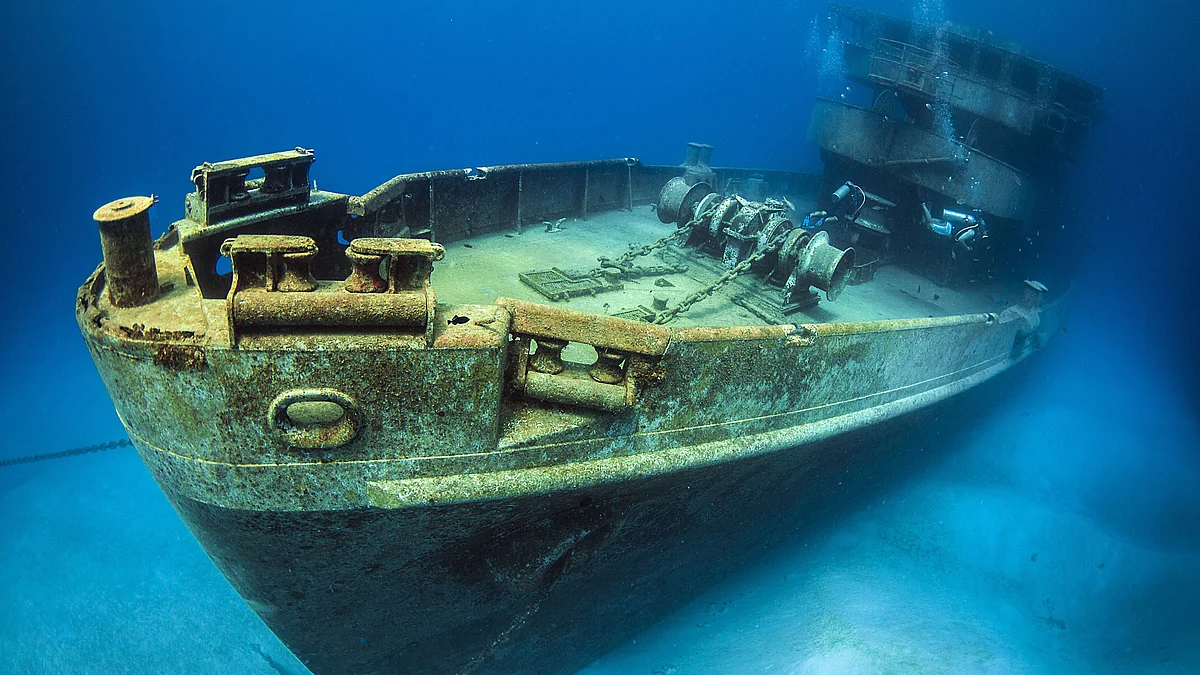
Beneath the surface of the world's oceans and seas lie the remains of ships that once carried soldiers, cargo, passengers and precious supplies across continents. Some sank during wartime attacks, others fell victim to storms or navigational mishaps, and a few were deliberately scuttled to create artificial reefs. Today, their rusting hulls, submerged decks, and forgotten cargo have become fascinating underwater worlds.
For divers, exploring a shipwreck is rather like stepping into a submerged museum. A staircase might lead to a cabin that has not seen daylight in decades, a cargo hold could still contain remnants of its original freight, and schools of fish may have made their home among the ship's machinery. Each wreck has a story, and the sea has gradually added another chapter to it.
From the Red Sea and the Caribbean to the Pacific and Mediterranean, these five shipwreck diving experiences combine maritime history, underwater exploration and remarkable marine biodiversity. While some are accessible to recreational divers, others require advanced certification and specialist technical diving experience.
SS Thistlegorm: Explore A World War II Time Capsule In Egypt
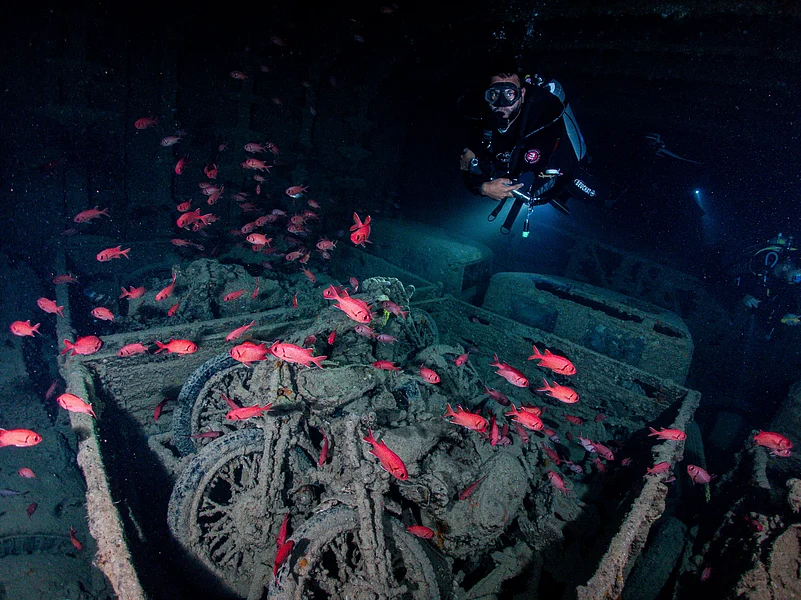
Imagine swimming through the remains of a cargo ship and coming face to face with motorcycles, military trucks, railway equipment and ammunition that have been underwater for more than eight decades. This is what makes the SS Thistlegorm, off Egypt's Sinai Peninsula, one of the world's most remarkable wreck dives.

The History
Built in Sunderland, England, in 1940, the 126-metre British cargo ship was on its fourth voyage, carrying supplies from Glasgow to Alexandria to support British forces during World War II. Its cargo included trucks, motorcycles, aircraft parts, rifles, ammunition and railway equipment.
On October 6, 1941, while anchored in the Strait of Gubal awaiting clearance to pass through the Suez Canal, the vessel was attacked by German Heinkel He 111 bombers. Two bombs struck the ship, triggering an explosion in its ammunition hold. The vessel sank, killing nine members of its crew.
Ocean explorer Jacques Cousteau brought international attention to the wreck after visiting it in the 1950s. Recreational diving gained popularity here in the 1990s.
What To See Underwater
The wreck rests at a maximum depth of approximately 32 m, with its upper structures considerably shallower. Much of its cargo remains visible, making the dive an extraordinary encounter with wartime history.
Some of the highlights include:
Military vehicles: Bedford trucks, armoured vehicles and motorcycles can still be seen inside the cargo holds.
Railway locomotives: Two steam locomotives that were blown away from the ship during the explosion lie on the seabed on either side of the wreck.
Cargo holds: Divers can see remnants of boots, rifles, aircraft components and other military supplies.
The ship's structure: Its decks, machinery, gun mounts and damaged sections provide an insight into the vessel's final moments.
How Travellers Can Experience It
The SS Thistlegorm is accessible through organised scuba diving excursions from Sharm El Sheikh. It is approximately 40 km from the Sinai coast, and the boat journey takes several hours. Divers can also include it in northern Red Sea liveaboard itineraries.
An Advanced Open Water certification is generally recommended because of the depth and conditions. Exploring enclosed sections of the wreck requires appropriate wreck-diving training. Visibility and currents can vary, so diving with an experienced local operator is essential.
SS Yongala: Dive Into Australia's Most Famous Shipwreck
Some shipwrecks are famous for what they carried. Others are celebrated for the extraordinary marine ecosystems that have developed around them. The SS Yongala, lying off the coast of Queensland in Australia, manages to be both a fascinating maritime relic and an underwater wildlife spectacle.
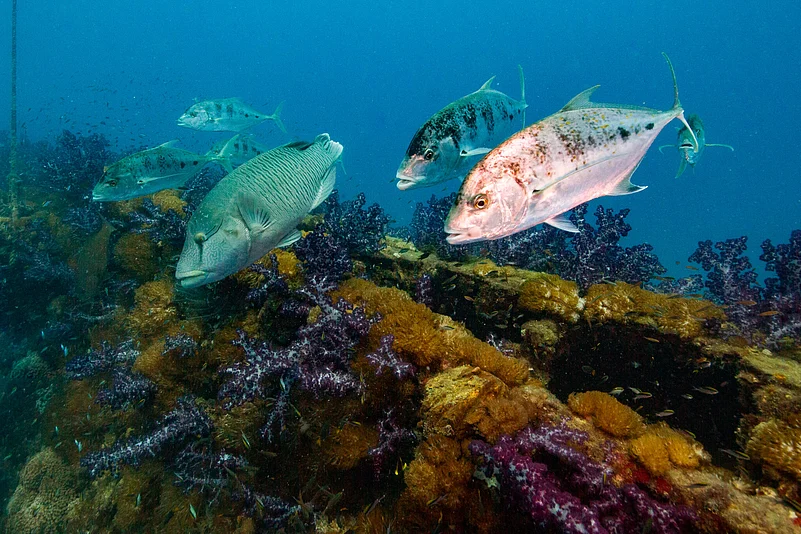
A dive here can bring you face to face with giant Queensland groupers, sea turtles, eagle rays, barracudas and schools of tropical fish. The wreck has become an artificial habitat for an impressive variety of marine creatures, making it one of Australia's most celebrated dive sites.
The History
The 110-metre passenger and cargo steamship was built in England in 1903 and entered service in Australia shortly afterwards.
On March 23, 1911, the Yongala departed Mackay for Townsville with passengers and crew aboard. It sailed into worsening weather as a cyclone approached the Queensland coast. The vessel disappeared without sending a distress signal, and all 122 people aboard were lost.
The wreck was located by the Royal Australian Navy in 1947, although it was not positively identified as the Yongala until 1958.
What To See Underwater
The ship lies at a depth of approximately 14 to 30 m, listing dramatically to one side. Its exposed position and the currents that move through the area have helped create a thriving marine environment.
Look out for:
Giant Queensland groupers: These enormous fish are among the most memorable residents of the wreck.
Sea turtles and eagle rays: They are regularly spotted around the structure.
Barracudas and trevallies: Large schools of predatory fish patrol the wreck.
Coral and marine growth: The ship's structure has become a habitat for a variety of corals and other marine organisms.
The wreck itself: Its tilted hull and remaining structural details make for striking underwater photography.
The site is also an important protected maritime heritage location. Penetration diving is prohibited, and divers must avoid touching the wreck.
How Travellers Can Experience It
The wreck is located approximately 12 nautical miles east of Cape Bowling Green and around 46 nautical miles south-east of Townsville. Organised dive trips operate from Townsville and the nearby Ayr region, with boat access dependent on sea and weather conditions.
This is a more demanding dive than its relatively accessible depth might suggest. The site is exposed to changing weather, strong currents and occasional rough seas. Divers should have suitable experience and follow the operator's advice on conditions and tide timings.
The wreck is also a final resting place for those who lost their lives in the disaster, so visitors are expected to approach it respectfully.
Fujikawa Maru: Discover A Sunken Aircraft Carrier Of History In Micronesia
For anyone fascinated by World War II history, Chuuk Lagoon in the Federated States of Micronesia is one of the most extraordinary underwater destinations to visit. Often called Truk Lagoon, it is home to dozens of Japanese ships and aircraft that sank during one of the most significant naval air attacks of the Pacific War.
Among its most popular wrecks is the Fujikawa Maru. Its cargo, machinery and aircraft remnants make it a particularly fascinating dive, while its coral-covered exterior has become a habitat for marine life.
The History
The Fujikawa Maru was originally built as a passenger-cargo vessel before being converted for military use by the Imperial Japanese Navy. It was used as an aircraft transport ship during World War II.
In February 1944, American forces launched Operation Hailstone, a major air and naval assault on the Japanese fleet stationed at Truk Lagoon. Over two days, more than 60 Japanese vessels and aircraft were sunk or destroyed. The Fujikawa Maru was among the ships lost during the operation.
Today, its remains are part of an extensive underwater collection of wartime wrecks that has made Chuuk one of the world's most recognised wreck-diving destinations.
What To See Underwater
The Fujikawa Maru is approximately 133 m long and rests at depths that make several sections accessible to recreational divers, although the exact dive profile depends on experience and conditions.
Among its highlights are:
Japanese fighter aircraft: Remains of Mitsubishi Zero fighter planes can be found inside the forward holds, making this one of the most photographed features of the wreck.
The deck guns: Military equipment and gun positions reflect the vessel's wartime conversion.
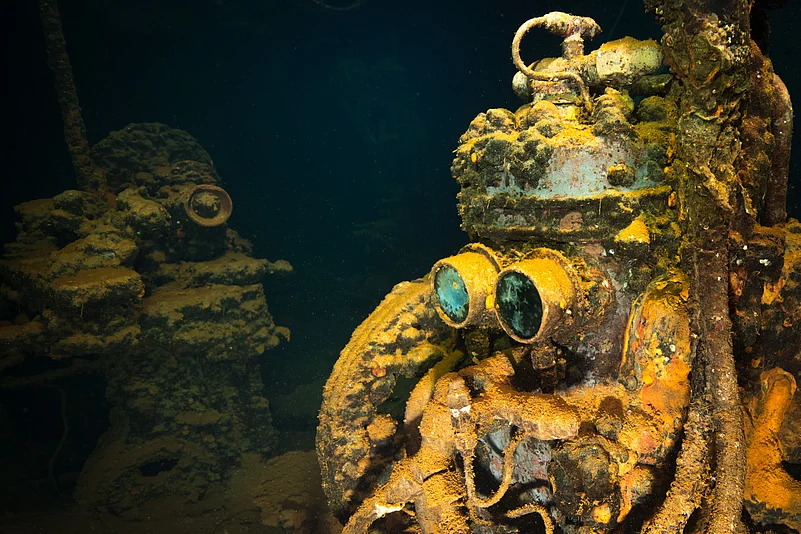
Engine room: Machinery, gauges and other industrial details offer a glimpse into the ship's working life.
Coral-covered hull: Soft corals, anemones and other marine growth have colonised the wreck.
Marine life: Schools of fish and other reef creatures are commonly seen around the structure.
The surrounding lagoon also has several other notable wrecks, including the Hoki Maru, Nippo Maru and San Francisco Maru.
How Travellers Can Experience It
Divers can reach Chuuk via Weno Island, the main island and travel hub of the state. Local dive operators organise boat excursions to the wrecks, with many sites located within a relatively short boat ride of the island.
The Fujikawa Maru is suitable for recreational wreck divers, with several sections at manageable depths. However, exploring enclosed compartments requires specialist training. For a more extensive experience, visitors can book multi-day dive packages and explore several wrecks across the lagoon.
The destination is particularly suited to divers who want to dedicate several days to underwater exploration rather than visit just one shipwreck.
USS Kittiwake: Explore A Sunken Naval Vessel In The Cayman Islands
Not every shipwreck is the result of a maritime disaster. Some vessels are deliberately sent to the ocean floor to create new habitats for marine life and underwater attractions. The USS Kittiwake, off Grand Cayman's Seven Mile Beach, is one such example. Once a working US Navy vessel, it is now an artificial reef that welcomes divers and snorkellers.
Unlike several deeper historical wrecks, this site is relatively accessible, making it an interesting choice for travellers who are new to wreck diving.
The History
The USS Kittiwake was a submarine rescue vessel that entered service with the US Navy in 1946. It served for nearly five decades, supporting submarine operations and rescue missions.
One of its most notable assignments came in 1986, when it participated in the recovery operation following the Space Shuttle Challenger disaster, helping retrieve the shuttle's black box.
After being decommissioned in 1994, the vessel was eventually transferred to the Cayman Islands. In January 2011, it was deliberately sunk off Grand Cayman to create an artificial reef and a new recreational diving attraction.
What To See Underwater
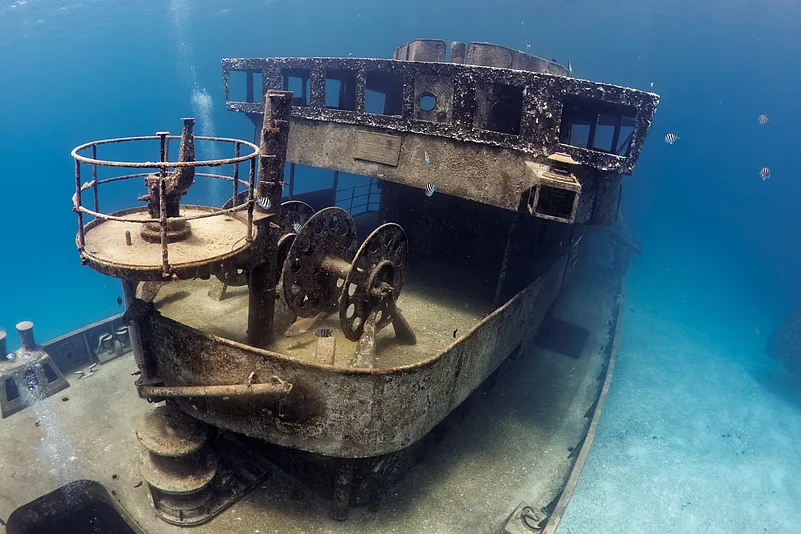
The approximately 76-metre-long vessel rests in relatively shallow Caribbean waters, with its five decks providing several points of interest.
Some of the highlights include:
Five decks to explore: Divers can see different sections of the former naval vessel, including its passageways, working areas and structural features.
The bridge: The ship's navigation area gives visitors a glimpse into its former life as a naval rescue vessel.
Marine life: The wreck has attracted sponges, squirrelfish, groupers, sea urchins and other marine creatures.
Open interiors: Several sections have been prepared to make exploration easier, allowing divers to appreciate the vessel's layout.
Artificial reef formations: Coral and other marine growth are gradually colonising the ship's surfaces.
The combination of its naval history and developing marine ecosystem makes this a particularly interesting underwater excursion.
How Travellers Can Experience It
The wreck is located off Seven Mile Beach on Grand Cayman and can be reached by boat through local dive operators. Its relatively shallow depth, around 17 to 20 m at the deeper sections, makes it accessible to recreational divers. Snorkelling excursions are also possible, depending on sea conditions and the part of the wreck being viewed.
Divers of different experience levels can explore the site, although entering enclosed sections requires appropriate training and supervision. Travellers who do not scuba dive can still appreciate the wreck through snorkelling trips.
Grand Cayman also has several other diveable wrecks, including the Doc Poulson and Oro Verde, making it possible to plan a longer underwater itinerary around the island.
MS Zenobia: Swim Alongside 100 Sunken Trucks In Cyprus
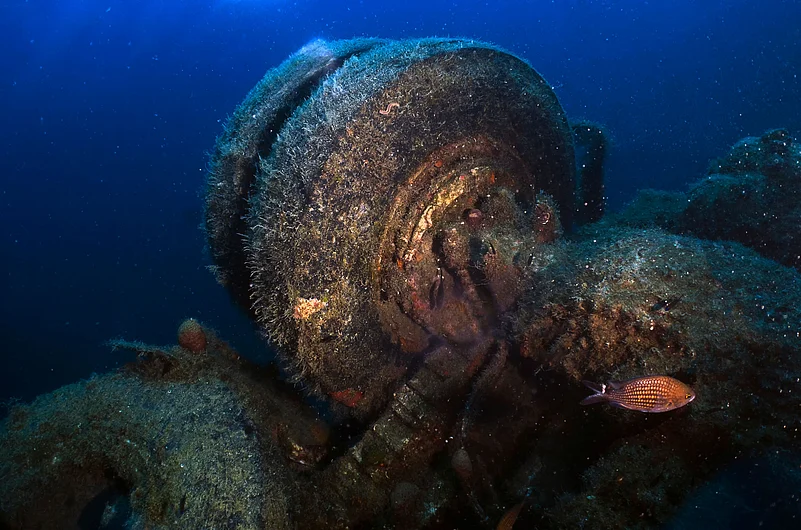
A sunken ferry carrying more than 100 trucks might sound like the setting of a maritime mystery, but off the coast of Larnaca in Cyprus, this is a real underwater attraction. The MS Zenobia, often nicknamed the Titanic of the Mediterranean, is among the most celebrated wreck-diving sites in the region.
Its enormous hull, cargo bays, and submerged vehicles make it an extraordinary destination for divers interested in exploring the remains of a working commercial vessel. Some of the trucks still appear suspended within the cargo decks, creating an unusual underwater sight.
The History
The MS Zenobia was a Swedish-built roll-on/roll-off ferry designed to transport vehicles and cargo. In June 1980, during its maiden voyage from Sweden towards Syria, the vessel developed a technical problem with its computer-controlled ballast system.
The malfunction caused water to accumulate in the ballast tanks, affecting the ship's stability. Despite attempts to manage the situation, the ferry gradually developed a list and eventually sank on June 7, 1980, off Larnaca in Cyprus.
The ship went down carrying more than 100 articulated lorries and their cargo. Fortunately, all passengers and crew were evacuated before the sinking, and there were no fatalities.
What To See Underwater
The 172-metre-long ferry now rests on its port side on the seabed in Larnaca Bay, at depths ranging from approximately 16 to 42 m.
The wreck is so extensive that divers usually need more than one descent to explore its different sections.
Some of the highlights include:
The submerged trucks: One of the most recognisable sights is the collection of articulated lorries inside the cargo bays. Several remain in position, creating an unusual scene beneath the water.
The engine room: Divers with the appropriate training can explore sections of the machinery spaces.
The propellers: The ferry's enormous twin propellers are among its most striking external features.
The cargo: Remnants of the original freight, including vehicles and other equipment, can still be seen.
Marine life: Groupers, barracudas, moray eels, lionfish, sea bream and turtles are among the creatures found around the wreck.
With excellent visibility often exceeding 25 m, the scale of the ferry can be appreciated even from a distance.
How Travellers Can Experience It
The Zenobia lies approximately 1.5 km off Larnaca's coast and is accessible through organised boat-diving excursions from the harbour. Several local dive centres offer guided trips, including two-dive programmes that cover different sections of the wreck.
The shallower sections begin at approximately 16 to 17 m, while the deeper areas reach 42 m. Advanced Open Water certification and appropriate experience are recommended for exploring the deeper parts. Technical diving qualifications are necessary for more demanding sections.
Travellers visiting Cyprus can combine the excursion with a holiday in Larnaca, exploring its waterfront, beaches, traditional neighbourhoods and archaeological attractions.
A Few Things To Know Before Planning A Shipwreck Dive
Shipwreck diving requires preparation, and not every site is suitable for beginners. Before booking an excursion, travellers should consider the following:
Check certification requirements: Some wrecks are accessible to Open Water divers, while others require Advanced Open Water or specialist wreck-diving qualifications.
Understand penetration diving: Swimming inside a wreck involves additional risks, including restricted visibility, entanglement and overhead environments. Never enter enclosed sections without the required training.
Choose a certified operator: Book with an established dive centre that provides qualified instructors, appropriate equipment and a safety briefing.
Respect underwater heritage: Avoid touching, removing or disturbing artefacts. Some wrecks are also maritime graves and must be treated with particular sensitivity.
Check seasonal conditions: Currents, visibility, water temperature and weather can influence whether a dive goes ahead.
FAQs
1. Which are the best shipwreck diving sites in the world?
Some of the most fascinating shipwreck diving sites include the SS Thistlegorm in Egypt, SS Yongala in Australia, Fujikawa Maru in Micronesia, USS Kittiwake in the Cayman Islands and MS Zenobia in Cyprus.
2. Which shipwreck is best for beginner divers?
The USS Kittiwake in Grand Cayman is a popular option for recreational divers, thanks to its relatively shallow depth and accessible sections. Beginners should still dive with a qualified operator and meet the site's certification requirements.
3. Where can you dive to see World War II shipwrecks?
Egypt's SS Thistlegorm and the Fujikawa Maru in Chuuk Lagoon, Micronesia, are notable World War II wreck-diving destinations. Both contain remnants of military equipment and wartime cargo.
4. Can non-divers visit shipwrecks underwater?
Yes. Some wrecks, including the USS Kittiwake in Grand Cayman, can be viewed through snorkelling excursions. Access depends on water conditions, visibility and the operator's arrangements.
5. Which is the deepest shipwreck dive on this list?
The MS Zenobia in Cyprus reaches approximately 42 metres at its deepest sections, making it one of the more demanding dives on this list. Advanced certification and appropriate experience are recommended.