


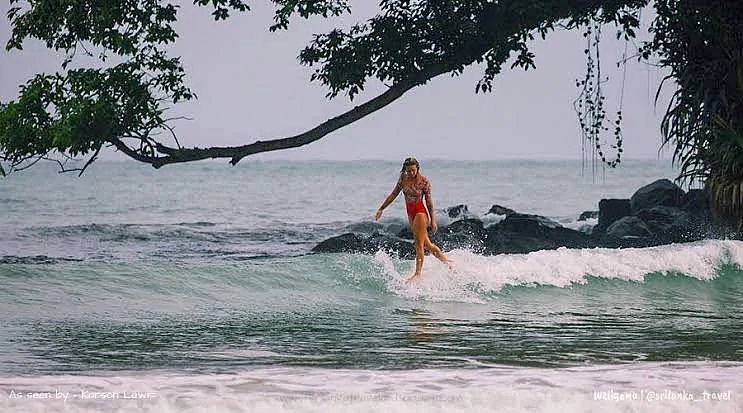
Sri Lanka's southern coastline has a way of turning a surf trip into something more than a pursuit of waves. Beyond Galle's cobbled lanes and Dutch-era ramparts, the coast opens into a succession of palm-fringed bays, fishing villages and reef-lined beaches, each with its own rhythm and relationship with the Indian Ocean. Some offer gentle rollers for first-time surfers finding their balance, while others draw experienced wave-riders towards shallow reefs and challenging breaks.
Galle makes for a thrilling starting point for exploring this stretch of coastline. From the beginner-friendly waters of Dewata and Weligama to the more demanding breaks around Kabalana and Midigama, the southern coast offers a rewarding progression of surf spots within a relatively short distance. The best time to explore is between November and April, when the southwest coast receives its most consistent surf, with December to March generally offering particularly favourable conditions. Here is where to find the waves along the way.
Dewata Beach: Begin Near Galle


Just a few minutes from Galle Fort, Dewata Beach is a natural first stop for those keen to trade the city's historic streets for the ocean. Its relatively sheltered stretch of coastline offers a beach break with smaller, manageable waves, making it a useful spot for beginners and intermediate surfers when conditions are favourable. Surfing schools and board-rental operators around the beach make it accessible to those who would rather learn from an instructor than venture into the water alone.
The nearby Closenberg area also has a longer right-hand break that can work when larger swells arrive. While Dewata is generally more approachable than the exposed reef breaks further east, conditions can change with the swell, and rocky patches and currents warrant attention. For a first session, the sandy sections of the beach are the better place to begin. Once out of the water, stay for the coastal views as the afternoon light settles over the bay.
Kabalana: Two Kinds Of Waves

Further along the coast, near Ahangama, Kabalana offers two distinctly different surfing experiences within the same stretch of shoreline. The beach break, with its sandy bottom and relatively gentle waves, is a popular learning ground for beginners. Surf schools operate along the beach, making it a convenient stop for those still getting comfortable on a board.
Further offshore lies The Rock, a well-known A-frame reef break that produces both left- and right-hand waves. Its powerful take-offs and shallow reef make it considerably more demanding, attracting experienced surfers looking for a challenge. The contrast is what makes Kabalana particularly interesting: one beach accommodates those learning to read the ocean, while the break beyond it tests those who already know how to navigate a wave. Arrive early to catch the cleaner morning conditions and watch the surf unfold against the palm-fringed coastline.
Midigama: For The Experienced

A little further east, Midigama is where the southern coast's surf scene becomes more challenging. The village is known for its concentration of reef breaks, with Lazy Left, Lazy Right and Ram's Right among its best-known waves. Each has a distinct character, making this stretch particularly rewarding for surfers who want to move beyond the gentler beach breaks. Lazy Left is a long, peeling left-hand wave that is popular with longboarders and confident intermediate surfers. Lazy Right offers another reef-riding experience, with a more forgiving wave for those progressing towards reef breaks.
Ram's Right, meanwhile, is a faster, more powerful wave suited to advanced surfers. Its shallow reef and demanding take-off make it one to approach with experience rather than curiosity alone. Between sessions, Midigama retains the easygoing character of a coastal village, with small cafés and surf stays dotted along the road. It is a place where mornings revolve around checking the swell and the rest of the day unfolds at a slower pace.
Weligama: Where Beginners Find Their Feet

For those who would rather start with a forgiving wave than tackle a reef, Weligama is one of the southern coast's most inviting surf destinations. Its expansive, crescent-shaped bay has a sandy seabed and relatively gentle beach breaks, creating favourable conditions for first-time surfers. The shoreline is dotted with surf schools, instructors and board-rental stalls, making it easy to arrange a lesson or hire equipment for an independent session.
The bay's gradual waves allow beginners to practise paddling, balancing and standing up without immediately having to contend with a rocky seabed. More experienced surfers can head further out towards the deeper sections, where the waves offer longer rides and opportunities to refine their technique. Beyond surfing, Weligama's lively beachfront has cafés, seafood restaurants and small places to unwind after a morning in the water. It is also a convenient base for exploring neighbouring breaks around Midigama and Ahangama.
Unawatuna: A Coastal Detour
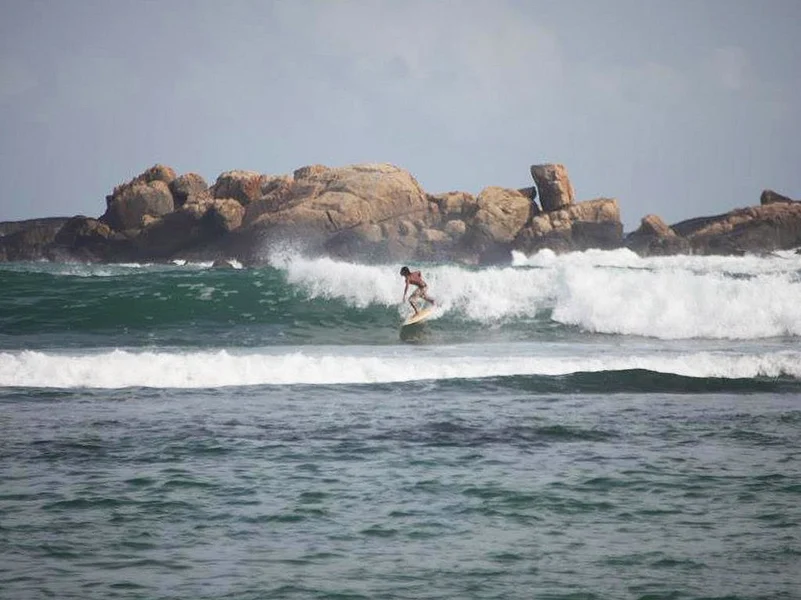
A short drive east of Galle, Unawatuna makes for a worthwhile detour along the surfing trail. Better known for its crescent-shaped bay, palm-lined shoreline and laid-back beach atmosphere, the area also has surf breaks around its neighbouring beaches. Wijaya Beach, in particular, is worth looking into when the swell and wind align, while nearby spots offer opportunities for surfers looking to explore beyond the main bay.
Unlike Weligama, Unawatuna is not the coast's most dependable destination for first-time lessons, and its conditions vary considerably with the weather. The surrounding reefs and rocky sections also call for a closer look at the water before paddling out. Nevertheless, its combination of coastal scenery and access to nearby surf points makes it a pleasant addition to the route. Those who prefer to spend time away from the waves can explore the area's quieter stretches of sand before continuing east.
The southern coast's principal surfing season runs from November to April, with December to March generally offering the most consistent conditions. The southwest monsoon, which affects the coast from around May to September, brings stronger winds and less predictable surf. During this period, surfers generally head to Sri Lanka's east coast, particularly Arugam Bay, which follows the opposite seasonal pattern. For beginners, Weligama and the sandy sections of Dewata and Kabalana are good starting points. Those with more experience can explore the reef breaks around Ahangama and Midigama. A surfing trail through Galle and its neighbouring coastal towns is ultimately as much about the changing character of the shoreline as it is about the waves. Between sheltered bays, lively surf villages and reefs shaped by the Indian Ocean, every stop offers a different way to experience Sri Lanka's southern coast.
FAQs
1. What is the best time to go surfing along Sri Lanka's southern coast?
November to April is generally the best time to surf along Sri Lanka's southern coast, with December to March offering particularly favourable conditions.
2. What are the best surfing spots near Galle?
Dewata Beach, Unawatuna, Weligama, Kabalana, Midigama and Hiriketiya are popular surfing destinations along Sri Lanka's southern coastline.
3. Which surfing spots in Sri Lanka are suitable for beginners?
Weligama, Dewata and the sandy beach breaks at Kabalana are suitable starting points for beginners, with surf schools and instructors available.
4. Where can experienced surfers find challenging waves in Sri Lanka?
Experienced surfers can explore The Rock at Kabalana and the reef breaks at Midigama, including Lazy Left, Lazy Right and Ram's Right.
5. Is Galle a good base for a surfing holiday in Sri Lanka?
Yes. Galle offers convenient access to several surfing destinations along the southern coast, including Dewata, Unawatuna, Weligama, Kabalana and Midigama.


