

Croatia’s Adriatic shoreline holds a quieter, lesser-known side, where blue-lit sea caves and the remains of the past exist side by side. In certain places, light slips into the water and takes on a striking blue tone against the pale rock below, while not far away lie the traces of what once moved above—wrecks, fragments, and submerged sites left to settle into the seabed over time.
Blue Cave (Biševo Island)
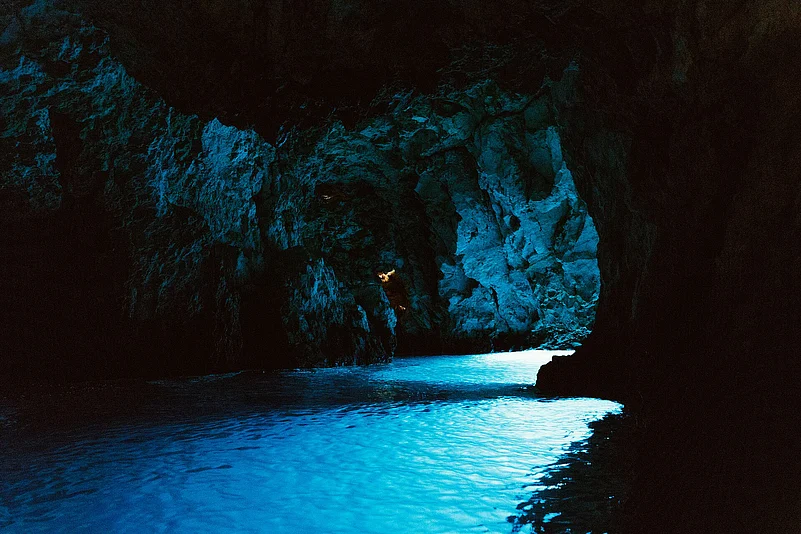

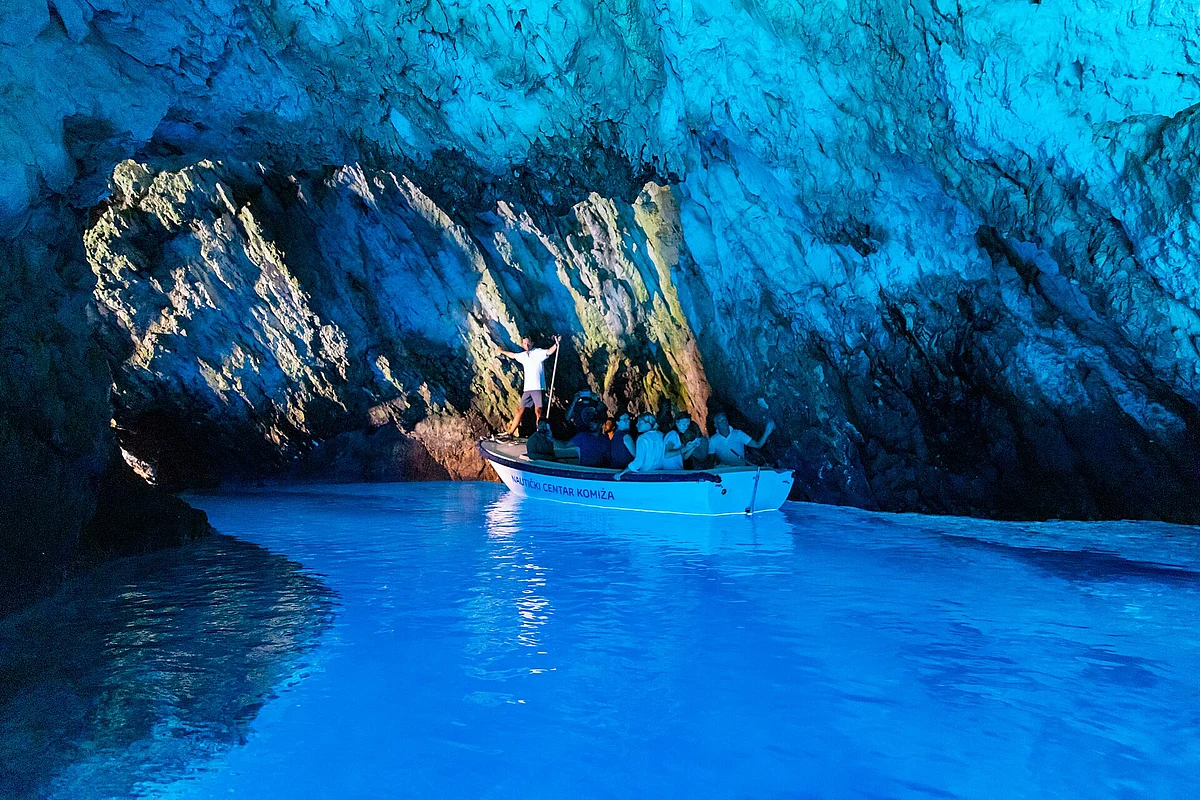
On the eastern edge of Biševo, the Blue Cave (Modra špilja) sits carved into the limestone, shaped gradually by the sea rather than any single moment in time. It is best known for what happens when the light is right: for a short window around midday, sunlight slips in through an underwater opening and bounces off the pale stone below, turning the water a deep, saturated blue that fills the cave from floor to roof. Outside those hours, it is far more subdued, which is part of what makes the effect feel so sudden when it appears. The cave was first brought to wider attention in 1884 by Eugen von Ransonnet-Villez, and remains one of the Adriatic’s most closely regulated natural sites.
Traveller Information
The cave is accessible only by small, authorised boats, as the entrance is too low for larger vessels.
Visitors often need to bend or lie back in the boat to pass through the narrow opening.
The best time to visit is late morning to early afternoon, when the blue colour is most visible.
Trips usually depart from Split, Hvar, or Komiža.
Swimming is not allowed, and visits depend on calm sea conditions.
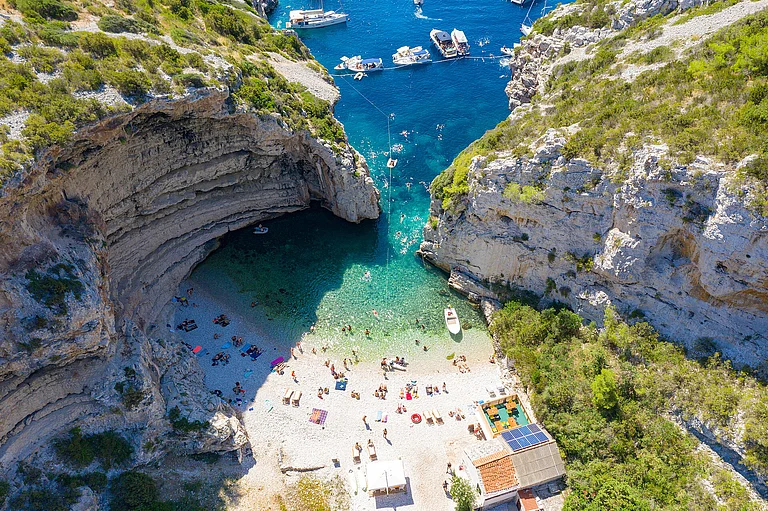
Many tours include nearby stops such as the Green Cave and Stiniva Cove.
Green Cave (Zelena špilja), Ravnik Island
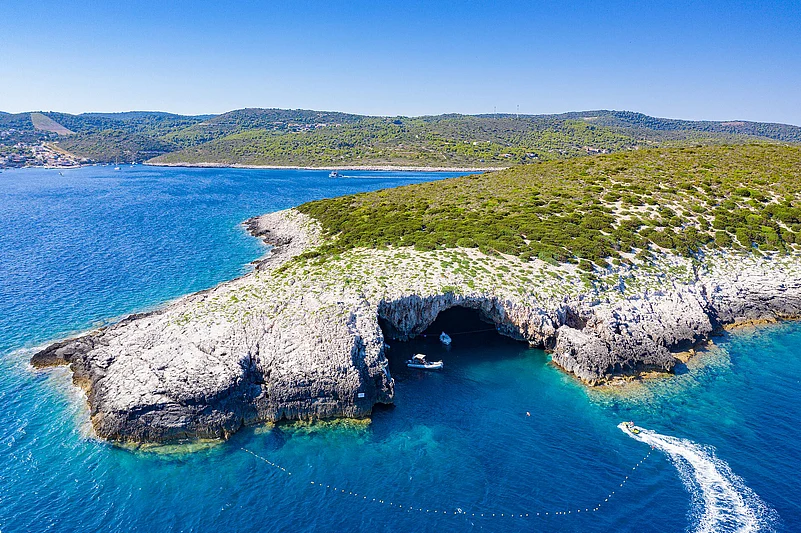
On the southwest side of the small, uninhabited islet of Ravnik sits the Green Cave (Zelena špilja), a sea cave that opens straight into the Adriatic. Inside, the water takes on a green tint when sunlight drops through a break in the roof and hits the seabed, where it is scattered back through the water column and along the rock walls. The colour is not constant—it shifts with cloud cover, angle, and swell—but at its strongest the whole chamber takes on a clear emerald tone. The cave is now a regular stop on boat routes through the Vis archipelago and is often visited alongside other nearby coastal sites.
Traveller Information
The cave is accessible by boat, with trips departing from Vis and Hvar.
Visitors can usually swim or snorkel directly into the cave through its wider openings.
The brightest green effect is typically seen around midday during the summer months.
The site is often combined with visits to the Blue Cave.
Snorkelling gear is recommended, and water shoes can be useful for rocky entry points.
Some tours may include a small entrance fee, depending on the operator.
Bear Cave (Medveđa špilja), Biševo
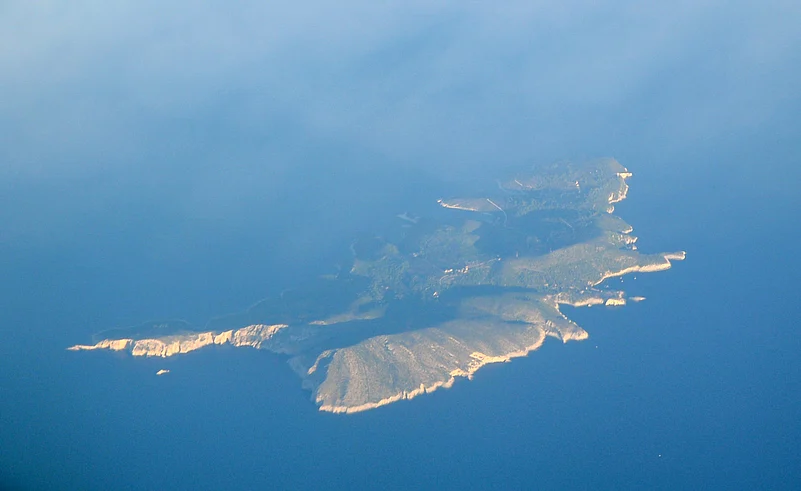
On the island of Biševo, near Vis, the Medveđa špilja (Bear Cave) sits as part of a quieter stretch of the Adriatic’s cave-dotted coastline. This sea cave was once a habitat for the Mediterranean monk seal, which gave it its name, and it remains shaped by the constant meeting of rock and water. Unlike inland limestone caves, it opens directly to the sea and is reached by boat, forming part of the wider network of coastal stops visited around the Vis archipelago. Today it is a known excursion point for travellers moving through this part of Dalmatia, often included alongside other island routes departing from the mainland.
Traveller Information
The cave is located on Biševo, near the Blue Cave, and is usually visited as part of combined boat tours.
It is accessible only by speedboat, with trips commonly departing from Split and nearby coastal hubs.
The entrance is narrow, but the cave opens into a wider interior chamber once inside.
The site is historically linked to the Mediterranean monk seal, locally called “sea bears”.
Visits are dependent on sea conditions and are generally included in broader coastal sightseeing routes.
Sunken Stories And Underwater Wonders
Croatia’s Adriatic coast carries more beneath the surface than most first realise. Out in its shallow bays and quieter channels lie fragments of older worlds—stone-built Neolithic routes more than 7,000 years old, Roman wrecks broken and settled on the seabed, and newer installations that have turned parts of the sea into open-air museums. The waters are often calm and clear, which has helped these remains stay visible rather than lost to time.
Underwater Museum (Blue Lagoon/Trogir): A unique underwater museum near Trogir features 14 Stations of the Cross, with over 50 life-size statues at a depth of 4 to 5 metres, including an 8-metre-tall statue of Jesus.
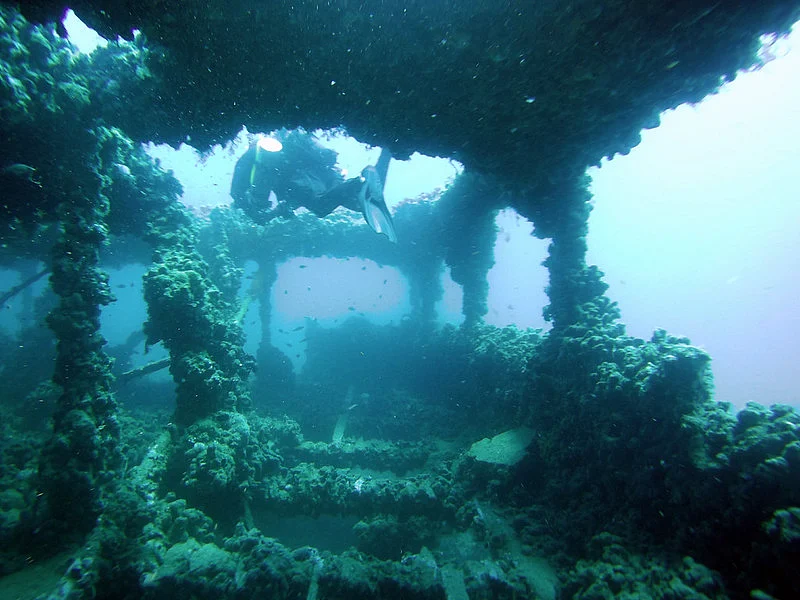
Shipwrecks at Nečujam: The remains of a sunken, shallow-water ship at Nečujam on Šolta Island allow snorkellers to explore the ruins of a ship teeming with marine life.
Prehistoric Sunken Roads: Off the coast of Korčula, researchers discovered an 8,000-year-old, 4,500-foot-long stone wall, along with a 7,000-year-old stone-paved road that connected a submerged Neolithic settlement to the mainland.
Roman Shipwrecks: A 2,000-year-old Roman ship was found sunken in Sukošan, with nine meters of its hull preserved in sand
The Zambratija Boat in Umag: Located in the Bay of Zambratija, this is one of the oldest entirely stitched ships ever found, dating back to the late Bronze Age (12th century BC).
Submerged Landscapes in Split: High-resolution scans have revealed an "astonishing" network of ancient rivers and valleys, now 100m below the surface, which were once inhabited land 10,000–24,000 years ago.
Baron Gautsch in Rovinj: Known as the "Titanic of the Adriatic," this 80-meter-long Austrian ship sank in 1914 after hitting a mine. It is now a popular, albeit deep, diving spot.
FAQs
What are Croatia’s sea caves known for?
They are best known for unusual lighting effects, where sunlight entering through openings in the rock reflects off the seabed and creates vivid blue or green colours inside the caves.
Why do some caves glow blue or green?
The colour comes from sunlight filtering into the cave and bouncing off limestone or algae below the water, which shifts the light into strong blue or green tones.
Can you swim in sea caves in Croatia?
It depends on the cave. Some allow swimming and snorkelling, while others restrict access to protect natural conditions or due to safety rules.
What is the best time to visit sea caves?
Midday to early afternoon on sunny days usually produces the strongest light effects, especially in summer.
Are Croatia’s caves easy to access?
Most sea caves are only reachable by boat, and entry often depends on sea conditions and local regulations.
What is special about Croatia’s underwater heritage?
The Adriatic seabed holds ancient remains such as Neolithic routes, Roman wrecks, and preserved coastal sites, made visible by the region’s clear, calm waters.