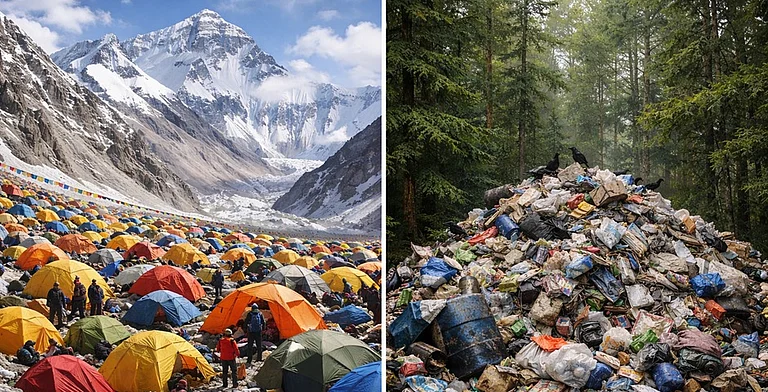
It began as a whisper, an intriguing proposition, and then the voices grew louder. My belligerent, America-returned daughter, Ava, armed with a degree in environmental studies, was keen to see first-hand just how a diminutive mountain kingdom—sandwiched between China and India, and roughly the size of Switzerland—has become the ‘gold standard’ for eco-tourism, offering authentic, low-impact experiences unlike any other.
And so began our adventure in the last Buddhist kingdom, Bhutan—its unique topography, fluttering white prayer flags, terraced rice fields, and claret-robed monks with their betel-nut-stained smiles. Even the most die-hard traveller would be intrigued to visit a country that measures progress through its ‘Gross Happiness Index,’ a matrix that emphasises spiritual, social and environmental health over material wealth.
Of Rhododendrons And Red Rice
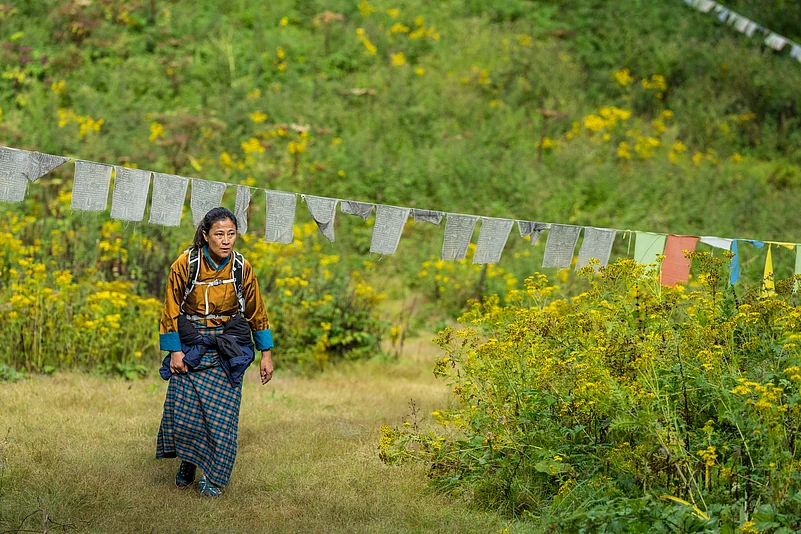

With only a week in hand and so much to see, we decided to focus on the lesser-known regions of Punakha and Gangtey, with a default stop in Paro, which houses the only international airport. Most first-timers stick to the capital, Thimphu, and Paro, and sadly miss out on hidden gems in the remoter regions.
Spring and summer in the Eastern Himalayas see Bhutan shed its shy demeanour, lifting the veil of mysticism and spirituality. The hillsides are dotted with bursts of colour, ranging from bubblegum pink to subtle shades of blush—by far the best season to visit, as jacarandas and rhododendrons are in full bloom.
Punakha, in the south, at the confluence of the Mo Chhu (Female River) and Pho Chhu (Male River), was our first stop for many reasons. Sitting at a lower elevation of 4,100 feet in a warm, fertile valley (compared to Gangtey), it makes acclimatisation easier for city dwellers. Rice-terraced landscapes dotted with orchards, a thriving preserve of Bhutanese culture, and its legacy as the former capital make it unmissable.
The icing on the cake was our guide, Kinley—all of 24, diminutive and gentle, yet with the strength of a tigress—a perfect companion for Ava. An instant affinity for Taylor Swift and suja (butter tea, the national drink—a creamy hot beverage made using yak butter) saw the girls quickly take charge.
Punakha’s most famous monument, its dzong (fortress), stands in serene authority—its whitewashed walls and gilded roof accessed by a quaint cantilevered wooden bridge across the gushing river. We made our way towards the towering six-storey structure, one of the finest examples of 17th-century architecture.
Built in 1637, the large fortress, with its temples, three great courtyards, halls and towers, overlooks the town and provides excellent views. Besides being both the second-oldest and largest dzong in Bhutan, it also served as the seat of government until the mid-20th century.
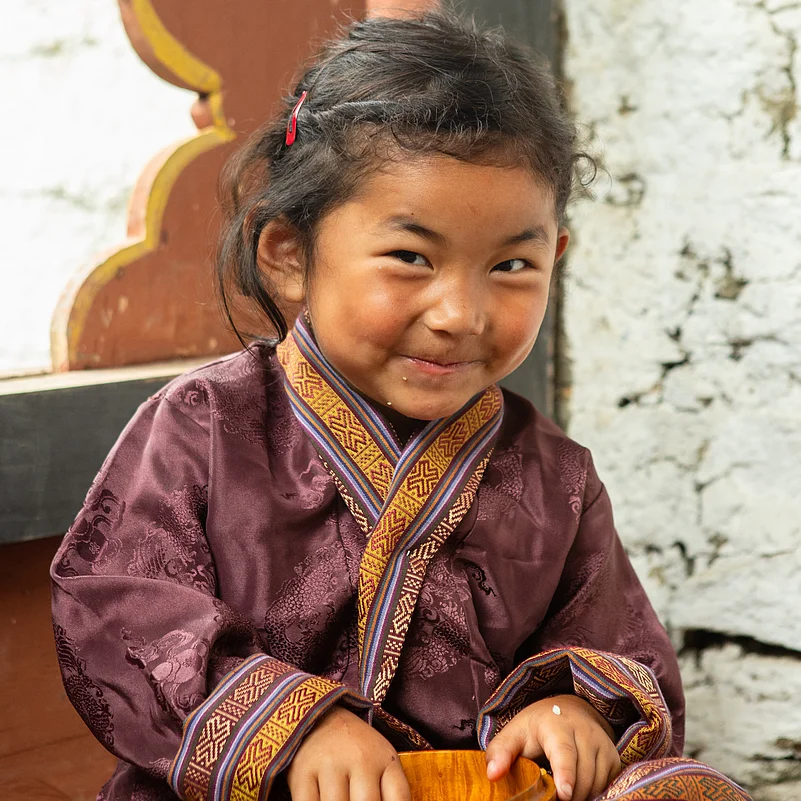
What is striking is how little has changed—serenity and spirituality walk hand in hand. Monks bow their heads in prayer, locals dressed in traditional kira and gho smile politely, and even though the country only received television and the internet in 1999, it feels far more civilised than most.
A few yards away from the dzong lies Bhutan’s longest suspension bridge—a perfect selfie spot before we headed out for lunch at a local restaurant. After plates of ema datshi (cheese and chilli), phaksha paa (pork stew) with nutty red rice, and a refreshing local orange drink, we were fortified for the second half of the day.
Our next stop was a fertility temple—Chimi Lhakhang, a shrine dedicated to Lama Drukpa Kunley, the 15th-century Tibetan saint, popularly known as the “Divine Madman” for his unconventional style of teaching Buddhism, often laced with sexual innuendo. Ava teased me that she might just make me a grandmother, thanks to the monastery’s alleged fertility-inducing powers.
It is said that those who wish to conceive receive blessings here. Photo albums filled with images of bonny newborn babies from around the world—sent by grateful devotees—are on display, accompanied by effusive praise for the powers of the resident ‘madman.’
Welcome Home
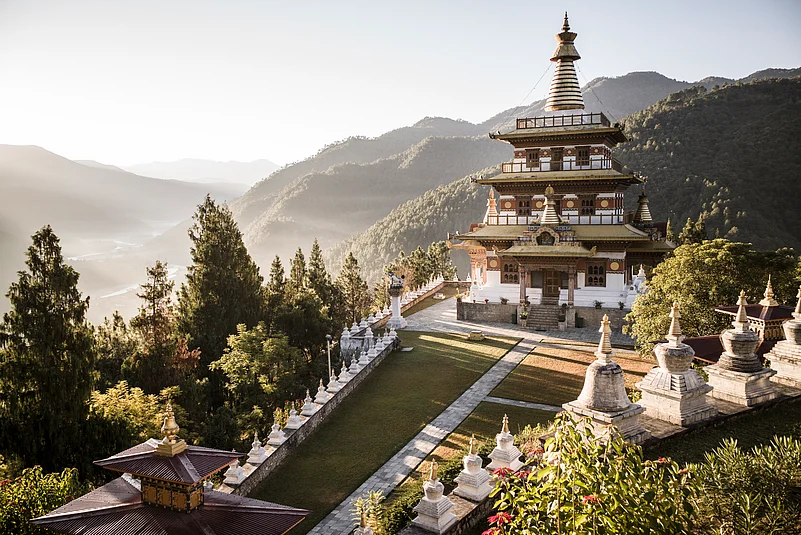
As the morning mist rose over the sweeping rice fields and forested hills surrounding the Punakha Valley, I woke to the uplifting energy of the Himalayas in a converted farmhouse dating back 300 years.
Our base across Bhutan consisted of three distinct lodges that follow the low-volume, high-quality ethos the nation exemplifies. A little over two decades ago, at the initiation of the royal family, the secluded kingdom invited its first international hospitality brand.
It was not McDonald’s or Coca-Cola, but Aman—the ultra-luxury hotel group—establishing a trail of five lodges collectively known as Amankora. Six Senses and COMO followed with similar lodge circuits, and soon Bhutan became accessible to travellers keen on exploring a quieter corner of the globe.
One of the reasons Aman was selected as the frontrunner to open Bhutan’s doors to international tourists is its understanding of how to combine luxury rooted in Bhutanese tradition with sustainability and conscious travel at its core.
Anchored by the Himalayas, the Amankora journey offers a deeply immersive experience. Each lodge reflects the unique characteristics of its setting. Days unfold gently with activities such as prayer flag making, calligraphy, archery classes (the national sport), and restorative hot stone baths—all shaped by the land and its rituals.
The idea is to blend in rather than stand out, maintaining the delicate ecological balance.
Thrung Thrung Time
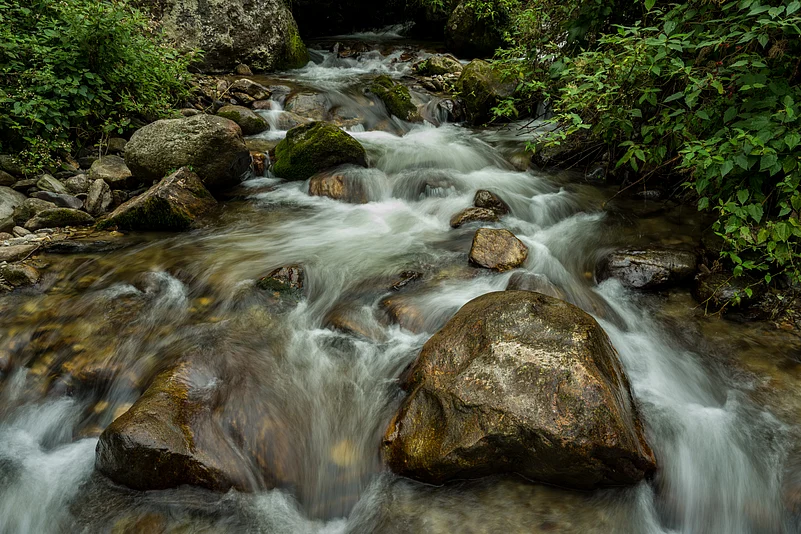
Kinley was surprised we wanted to visit Gangtey, as few Indian travellers venture there. While many flock to Paro’s Tiger’s Nest or Thimphu’s monasteries, those in search of something starker and more restorative are drawn to the Phobjikha Valley—a protected glacial bowl where cranes winter in high-altitude wetlands, clouds drift low, and silence speaks volumes.
In Gangtey, time is not measured numerically. It is heard in the call to prayer, the rustle of footsteps on pine needles, and the gentle steam rising from a hot stone bath.
Located above 3,000 metres on the western slopes of Bhutan’s Black Mountains, it is one of the country’s main conservation areas and a biological corridor between its two largest national parks. It is also home to a diverse array of wildlife, including Bhutan’s famed black-necked cranes—the main reason we were here.
Phobjikha is the wintering ground for these protected birds (Thrung Thrung Karmo in local parlance), now listed as a globally threatened species. This is where one sees how this small kingdom rises like a giant in its environmental commitment.
The valley remains one of the few places in the world where these birds can still be seen.
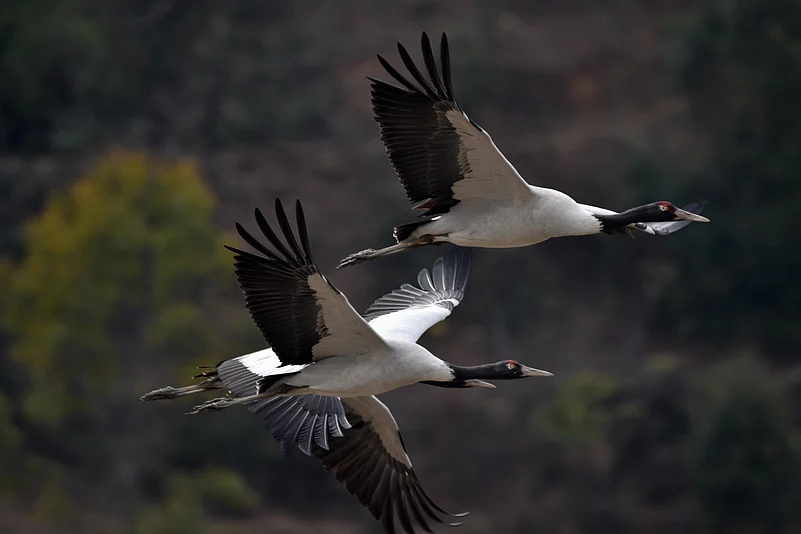
The arrival of the cranes—from November to April, when they migrate from Tibet—is celebrated annually through a cultural festival featuring dances, songs and environmental conservation-themed performances aimed at building awareness about protecting the species.
A closer look at the Black-Necked Crane Festival in Gangtey reveals how culture and conservation are intricately intertwined. If Bhutan wears the crown for environmental stewardship, then Phobjikha Valley is its jewel.
Here, farming, conservation and tourism intersect in a way that feels both natural and pure. Preserving this endangered species is a collective effort—shared by locals and the government—not just from an environmental standpoint, but a cultural one too.
We spent an afternoon with Pema and Karma, two injured cranes at the conservation centre in Gangtey. And then the realisation struck—Bhutan is a land of contradictions. It is a land of plenty, even though people have less. Community and conservation are not abstract ideas, but daily practices.
And a journey here is measured not by what you do, but how it makes you feel.
Things To Know
Getting There:
Bhutan has two national airlines: DrukAir and Bhutan Airlines. Direct flights to and from the international airport in Paro connect travellers to Bagdogra, Guwahati, Kolkata and New Delhi.
Visa And Entry Rules:
Visitors from India require a permit to enter Bhutan and must carry either an Indian passport or voter ID card. Those under 18 may travel with a birth certificate or passport and must be accompanied by a legal guardian. While permits are available on arrival, obtaining one in advance is recommended to reduce processing time.
When To Visit:
Bhutan is a year-round destination with four distinct seasons: summer (June to August), autumn (September to November), winter (December to February) and spring (March to May). Due to varying altitudes and the influence of the north Indian monsoon, the climate differs widely across regions.
Where To Stay:
The five Amankora lodges offer a seamless luxury experience across Bhutan. Other options include Postcard Hotels, Six Senses, COMO, Gangtey Lodge and Pemako.
Bhutan And The Environment
Bhutan is one of the few carbon-negative countries in the world, absorbing more carbon than it emits, largely due to its vast forest cover, which spans over 70 per cent of the land.
The Sustainable Development Fee (SDF), currently set at USD 100 per night (reduced from USD 200 in 2023), supports free education, healthcare, infrastructure and environmental conservation. Indian tourists are required to pay INR 1,200 per person per night, with concessional rates for children.
The country’s high-value, low-volume tourism policy limits visitor numbers, prioritising quality over quantity and preventing over-tourism. Tourism itself only opened in 1974 and remains tightly regulated to preserve Bhutan’s cultural and environmental heritage.
Notably, Bhutan’s constitution mandates that at least 60 per cent of the country must remain under forest cover for all time. The SDF directly contributes to the nation’s economic, social and cultural development, funding programmes that protect heritage, improve infrastructure, create opportunities and build resilience for future generations.