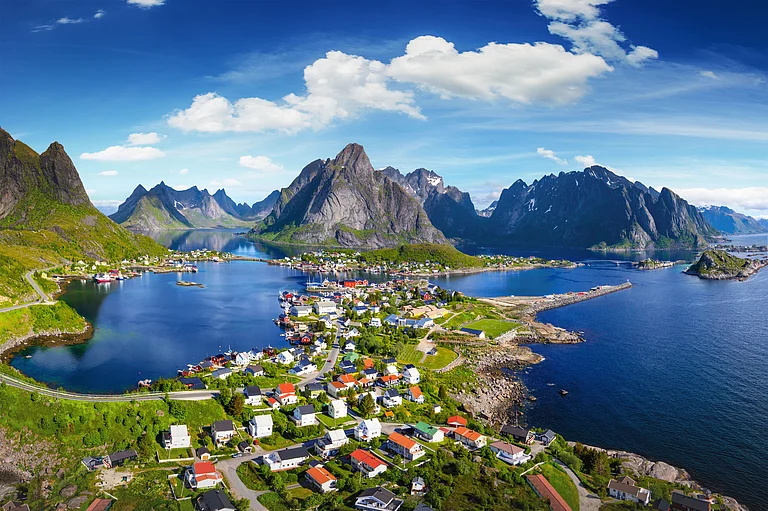


At first glance, Longyearbyen looks like the edge of the world. Snowmobiles line the streets like parked scooters. Wooden houses sit on stilts above frozen ground. Mountains rise bare and jagged behind the town, while the Arctic Ocean hardens into ice nearby. Then someone tells you the local rule everyone talks about: you cannot die here.
The truth is stranger than the myth. People do die in Longyearbyen, the largest settlement in the Norwegian archipelago of Svalbard. But the town stopped burying bodies decades ago after scientists discovered something disturbing beneath the cemetery. The permafrost had preserved human remains almost intact, including victims of the 1918 Spanish flu. Since then, terminally ill residents are usually flown to mainland Norway, and most bodies leave the island for burial elsewhere.
Yet Longyearbyen is far more than a morbid headline. It is one of the northernmost inhabited towns on Earth, a place where climate change strikes faster than almost anywhere else, where the sun disappears for months, and where survival still shapes everyday life.
The Town Built On Coal, Ice, And Survival
Longyearbyen began as a mining camp in 1906, founded by American businessman John Munro Longyear. Coal drew men into the Arctic, and for decades the settlement functioned as a company town carved into frozen wilderness.
The Germans nearly destroyed it during the Second World War. The town rebuilt itself after 1945 and slowly evolved into something unexpected: part research station, part tourism economy, part geopolitical frontier. Today, scientists, guides, students, photographers, pilots and climate researchers share the settlement with miners who still remember Svalbard’s coal era.
Longyearbyen now houses the University Centre in Svalbard, where students from around the world study glaciology, Arctic biology and geophysics. Nearby sits the Svalbard Global Seed Vault, the famous underground facility that stores backup seeds from across the planet in case of global catastrophe.
Despite its isolation, Longyearbyen has cafés, bars, a school, a supermarket, galleries and surprisingly stylish restaurants. Residents from nearly 50 nationalities live here. Thai immigrants form one of the town’s largest communities, and Filipino workers keep much of the hospitality sector running.


Still, the Arctic decides the rules.
Anyone leaving town must remain alert for polar bears. Authorities strongly recommend carrying a rifle outside settlement limits because Svalbard has more polar bears than people.
Cats are restricted because they threaten Arctic bird populations. Pregnant women leave weeks before delivery because the local hospital cannot handle complex births. Alcohol sales remain tightly controlled. The ground beneath the town stays frozen year-round, so buildings stand on wooden or steel piles to stop heat from melting the permafrost underneath.
Four Months Of Darkness And A Climate Crisis Happening In Real Time
Life in Longyearbyen runs according to extremes.
From late October to mid-February, the sun never rises above the horizon. Residents live through polar night, when darkness wraps the town for nearly four months. Then summer arrives with the opposite phenomenon: endless daylight. Between April and August, the midnight sun keeps the sky glowing through the night.
Visitors often imagine the darkness as romantic until they experience it. Locals describe losing track of time, sleeping at odd hours and craving sunlight with physical intensity. When the sun finally returns each spring, residents gather on the old hospital steps to celebrate its first appearance over the mountains.
But Longyearbyen also sits on the frontline of climate change.
The Arctic warms several times faster than most parts of the planet, and Svalbard has already seen severe consequences. Permafrost thaw weakens foundations and destabilises roads, pipelines and homes. Avalanches have struck residential neighbourhoods in recent years, forcing authorities to relocate families and demolish vulnerable houses.
Scientists monitoring the frozen ground around Svalbard have documented steadily rising permafrost temperatures. In some places, the warming reaches nearly 0.8 degrees Celsius per decade.
The irony hangs heavily over the town. Longyearbyen grew rich on coal, yet now faces some of the clearest evidence of climate breakdown anywhere in the world. Even the Seed Vault suffered flooding concerns after unusually warm weather and melting ice caused water intrusion near the entrance in 2017.
Researchers, environmentalists and tourists now arrive here to witness change happening in real time. Retreating glaciers, thinner sea ice and shifting wildlife patterns have transformed Svalbard into a global warning sign.

Why People Still Move Here
Despite the dangers and isolation, Longyearbyen keeps attracting newcomers.
Part of the fascination lies in the town’s strange freedom. Under the Svalbard Treaty, citizens from many countries can live and work on the islands without a visa. People arrive for a season and stay for years. Some come chasing Arctic adventure. Others want distance from ordinary life.
Winter becomes a social survival exercise. Residents gather in bars during the long darkness, join snowmobile expeditions across frozen valleys and spend weekends dog sledding under the northern lights. Jazz festivals, film screenings and community dinners carry people through the coldest months.
Tourism now drives much of the economy. Travellers fly in from mainland Norway to see glaciers, ice caves, whales and Arctic wildlife. Cruise ships arrive during the summer, though many locals worry that mass tourism could damage the fragile environment.

Nothing about Longyearbyen feels permanent. The mountain slopes shift. The ice retreats. Even the cemetery no longer accepts bodies. Yet people continue building lives here because the town sharpens existence into something immediate.
You notice it in the way residents talk about weather, light and survival. In Longyearbyen, nature does not sit politely in the background. It controls the calendar, the architecture, the economy and sometimes whether you make it home safely at night.
And maybe that explains why the myth about dying refuses to disappear. The real story has never been about a law. It has always been about a town trying to survive in a landscape that does not easily allow humans to stay.

The Information
Best Time To Visit
November to February: Polar night, northern lights, deep freeze, snowmobiles and months of darkness.
March to May: Best winter conditions for dog sledding, glacier hikes and ice caves.
June to August: Midnight sun, hiking, kayaking, boat safaris, whales and walruses.
How To Reach
Fly to Longyearbyen via Oslo or Tromsø in Norway. Flights run year-round, but winter delays are common. Indian travellers need a Schengen visa, though Svalbard itself sits outside the Schengen zone.
What To See
Svalbard Global Seed Vault: The mountain seed bank with its famous illuminated entrance.
The Old Cemetery: The frozen graveyard behind the “nobody dies here” myth.
Northern Lights: Best seen from October to February.
Glaciers and Ice Caves: Reached by guided snowmobile and hiking tours.
Ny-Ålesund: One of the world’s northernmost research settlements.

What To Eat
Arctic char, reindeer stew, king crab and Nordic dishes dominate menus, alongside Thai food shaped by the town’s large Thai community. Try reindeer sausages, Arctic cod, cloudberry desserts, waffles with brown cheese and craft beer brewed with glacial water.
Things To Do
Dog sledding, snowmobiling, whale watching, polar bear safaris and hiking under the midnight sun.
Things To Know Before You Go
You cannot leave settlement areas without polar bear protection or a trained guide.
Temperatures can fall below minus 20 degrees Celsius in winter.
Alcohol sales remain restricted.
The town has no roads connecting it to the outside world.
Residents remove shoes before entering many homes, hotels and even some offices because of snow and coal dust traditions.
Longyearbyen has more snowmobiles than people.
FAQs
Why is it illegal to die in Longyearbyen?
Longyearbyen stopped burying bodies because the permafrost preserves human remains for decades. Terminally ill residents are usually transported to mainland Norway for treatment and burial.
Where is Longyearbyen located?
Longyearbyen is located in the Norwegian archipelago of Svalbard, deep inside the Arctic Ocean between mainland Norway and the North Pole.
What is Longyearbyen famous for?
Longyearbyen is known for its extreme Arctic conditions, polar night, midnight sun, polar bears, the Svalbard Global Seed Vault, and the myth that “it is illegal to die there.”
Can tourists see polar bears in Svalbard?
Yes, polar bears can be seen in Svalbard, but visitors are advised to travel with trained guides outside settlement areas due to safety risks.
When is the best time to visit Longyearbyen?
Winter months are ideal for northern lights, dog sledding, and snowmobiling, while summer offers midnight sun, hiking, whale watching, and Arctic boat safaris.