

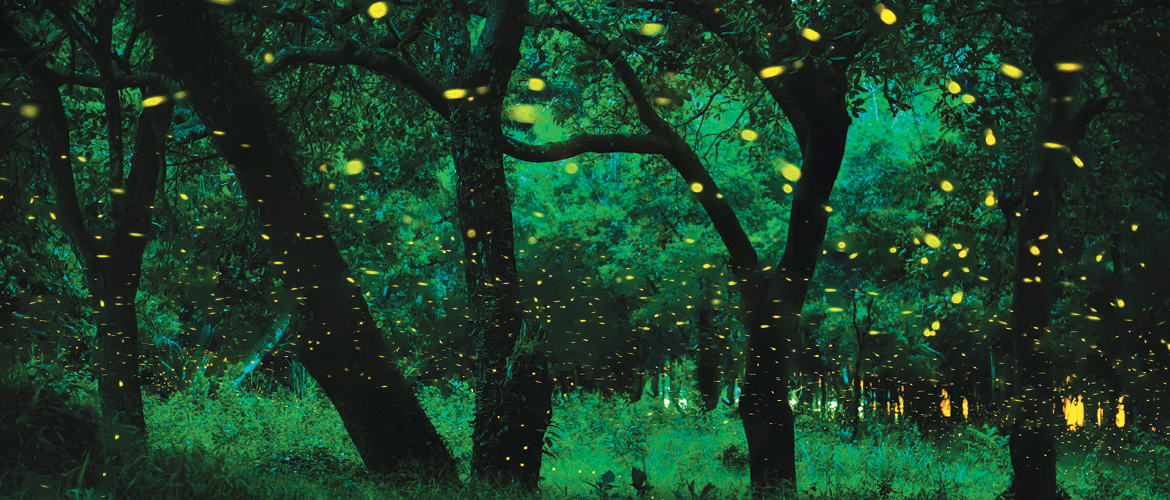
In a study that brings long-overdue clarity to a familiar yet under-documented group of insects, scientists have compiled the first comprehensive checklist of India’s fireflies. The work records 92 species across 27 genera, offering a more organised view of these bioluminescent beetles.
The findings also point to the distinctiveness of India’s firefly fauna. More than 60 per cent of the recorded species are endemic to the country, underscoring the richness and specificity of its insect diversity.
A Consolidated Record
The study, published in the journal Zootaxa, draws on more than two centuries of scientific records to present the most complete overview yet of firefly diversity in India.
The team involved experts from institutions including the Environmental Management and Policy Research Institute (EMPRI), University of Calcutta, and the Zoological Survey of India.
The checklist is built on an extensive review of research published between 1881 and October 2025. It brings together information that had until now remained scattered across sources.
Researchers say the effort provides a much-needed baseline for understanding how these insects are distributed across the country, and could help shape future conservation work focused on protecting their habitats.
Gaps In Knowledge
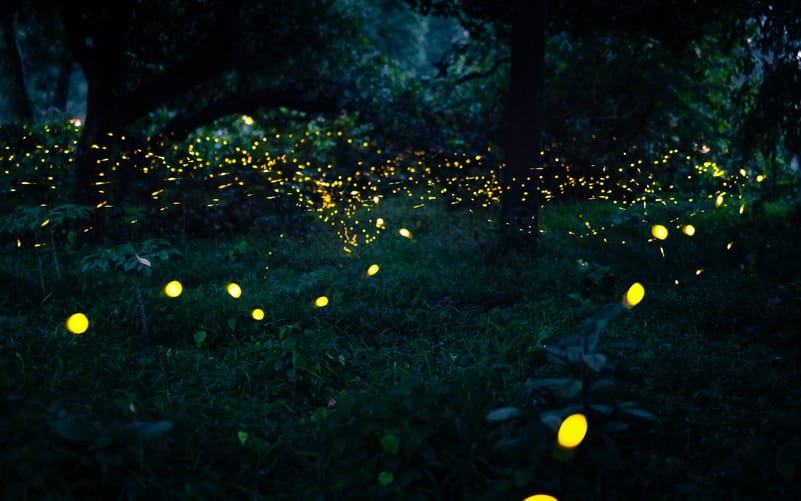

The compilation draws on records dating from 1758 to 2025 and lists 92 species across 27 genera, with close to 60 per cent known only from India. Much of the information, however, traces back to older studies—many species were first described in the 19th century and have yet to be revisited using modern taxonomic approaches.
Researchers note that more than 50 species have not been recorded again in India since their original descriptions, pointing to significant gaps in understanding the country’s firefly diversity.
So far, no Indian firefly species has yet been assessed for the IUCN Red List, nor are they protected under the Wildlife (Protection) Amendment Act, 2022.
Where Fireflies Can Be Found
Subfamily distribution: India’s firefly fauna is dominated by the Luciolinae, with 37 species, followed by Ototretinae (31 species), Lampyrinae (17 species) and Cyphonocerinae (1 species). Luciolinae and Ototretinae are also the most diverse, each containing 11 genera.
State-level spread: Most species occur in more than one Indian state, indicating a broader geographic distribution than previously known.
Hotspots:
Western Ghats: highest occurrence, representing about 25.33 percent of all species.
North-east and Gangetic plains: each accounts for roughly 22.66 percent of species.
Coastal regions: 17.33 percent, Deccan Peninsula: 13.33 percent.
Trans-Himalayan and Himalayan regions: 1.33 percent each.
Island regions: 2.66 percent.
Not recorded: No firefly species have been documented in India’s desert or semi-arid zones.
This distribution highlights clear biodiversity hotspots while also pointing to regions where firefly populations are sparse or unrecorded.
Need For Conserving Habitats
Researchers point to multiple threats, including artificial night lighting, chemical pollutants in agriculture, deforestation, logging, and land-use changes for construction.
Urbanisation and habitat disturbance are already impacting populations in semi-urban and urban areas. With limited ecological studies and monitoring, scientists warn that fireflies could vanish from many regions unless targeted conservation measures are introduced soon.
Key Takeaways
Endemism remains high: More than 60.86 percent of the listed species occur only within India, pointing to a distinctly localised fauna.
Range of species: The checklist covers 92 species, and over 50 of them have not been reported again since they were first described in the 19th century.
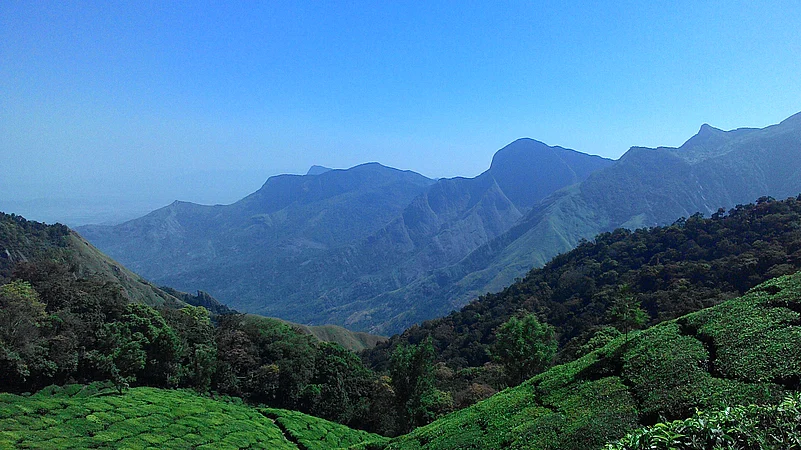
Where they are found: The Western Ghats and North East India stand out as the main centres of firefly diversity.
Why it matters: The dataset offers a starting point for tracking possible declines associated with light pollution, habitat change and pesticide use.
Fireflies And Their Role In The Environment
Fireflies are considered both bioindicators and indicator species (specifically ecological indicators) because their presence, absence, or population size indicates the health of an ecosystem. Fireflies are a sign of a healthy environment. Species that act as indicators of environmental health are primarily called indicator species or bioindicators. Fireflies are most often seen in places with clean water and little artificial light. Their larvae eat snails, slugs, and worms, which helps keep the soil healthy. Adult fireflies visit flowers for nectar and pollen, which can help plants grow. They are also food for birds, frogs, and other animals. When fireflies start disappearing, it usually means something is wrong—habitats are being lost, pesticides are being used, or light pollution is rising.
FAQs
How many firefly species are found in India?
Scientists have documented 92 species across 27 genera in India.
Where are fireflies most commonly found?
The Western Ghats and North-East India are the main hotspots, with other populations in the Gangetic plains, coastal regions, and the Deccan Peninsula.
Why are firefly populations declining?
Threats include habitat loss, light pollution, pesticide use, urbanisation, and land-use changes.
Why are fireflies important for the environment?
Fireflies act as indicators of healthy ecosystems, help control pests as larvae, support pollination, and form part of the food chain.
Are fireflies protected in India?
Currently, no firefly species is listed on the IUCN Red List, and they are not covered under the Wildlife (Protection) Amendment Act, 2022.