

For the longest time, I had been travelling alone, but almost always for work. When travel is tied to assignments, everything is planned—from the itinerary, the hotel, the meals, even the experiences. You move from one checkpoint to the next, collecting notes and photos while silently watching the clock tick toward your deadline.
Personal travel, in the last few years, had almost disappeared for me.
So when my friend Saumya’s wedding brought me to Banaras, I decided to turn the trip into a short solo escape. It felt different right from the start. There was no pressure to produce a story (ironically, I am writing one now), but travelling without an agenda allowed me to experience the city slowly, curiously, and entirely on my own terms—something that I hadn’t done in a long time.
Leaving Routine Behind

The journey began early in the morning from New Delhi Railway Station, where I boarded the Vande Bharat at 6 am. The city outside was quiet, still wrapped in the soft haze of winter mornings, but the station itself buzzed with the usual chaos of travellers, porters, and chai vendors.
The train ride was smooth and surprisingly calming. At some point, the man sitting next to me struck up a conversation. He was a retired railway employee visiting Banaras for the first time with his family, despite having spent most of his life in Delhi. Between stories about his years in the railways and occasional glances out of the window, the hours passed easily.
By the time we arrived at Varanasi Junction, the air felt dramatically warmer than the winter chill I had left behind in Delhi.
While trying to book an Uber outside the station, an auto driver approached me and quoted nearly the same fare. Rather than waiting in the heat, I hopped in. For the next two days, I would be in the city attending a wedding—but I had already promised myself one thing—I would carve out time to explore Banaras... alone.
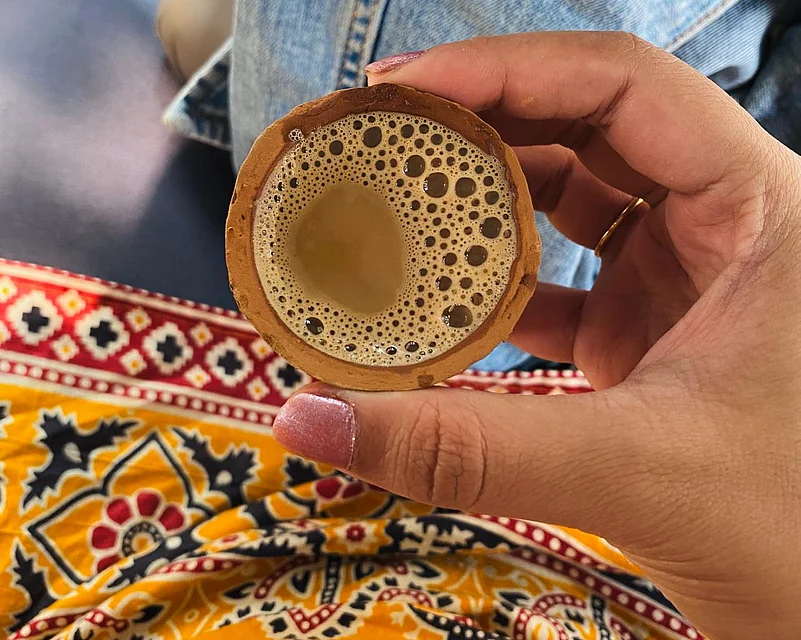
That evening, I stepped out in search of kulhad wali chai and something chatpata to snack on. A street vendor served me aloo-filled golgappas that tasted quite different from the phuchka I grew up eating. I wouldn’t say I loved them—but discovering small regional twists on familiar food is part of the charm of travelling.
A City Full Of Stories
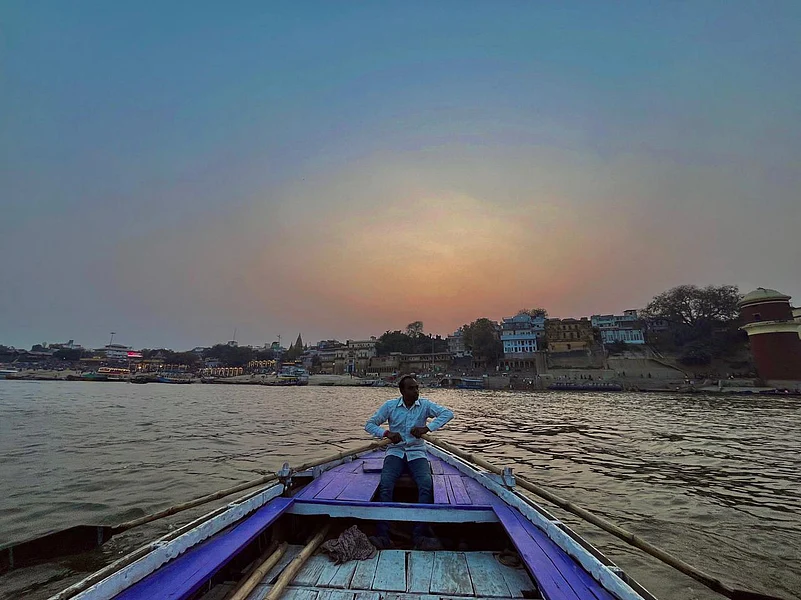
The next morning, I set out for the ghats. On the way, curiosity got the better of me and I asked my driver why the neighbourhood we were staying in was called Lanka—especially in a city like Banaras.
He explained that the name traces back to the famous Ramnagar Ramlila, where different parts of the city symbolically represent locations from the Ramayana. During the performances, areas near Banaras Hindu University came to be associated with Lanka, and over time the name simply stayed. As the auto moved through the busy streets toward the ghats, I suddenly remembered a school friend who had been living in Banaras for a while—Awaneesh Bhaibhav, now a PhD research scholar in psychology at Banaras Hindu University.
On a whim, I called him. As luck would have it, he was nearby, and within an hour we were meeting near Assi Ghat.
Conversations Over Coffee
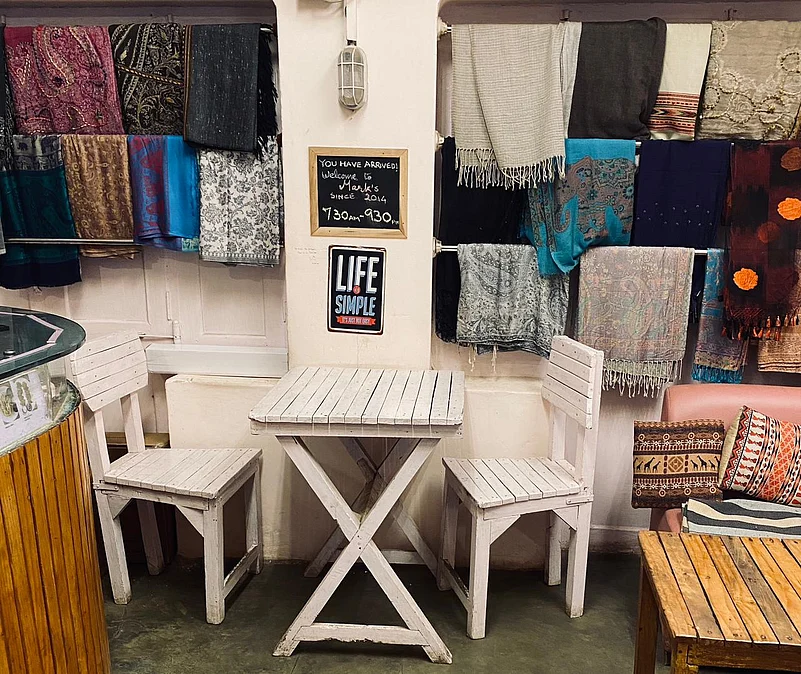
Our first stop was Mark’s Cafe, a small café near Assi Ghat that once used to be a residential house. As we sat there with our hot cup of cappuccino, I noticed how many cafés in this part of the city seemed to share a similar story—old homes quietly transformed into cosy hangouts for students and travellers. Naturally, our conversation drifted to the topic of solo travel.
According to Bhaibhav, travelling alone offers something many people rarely get in their daily lives: mental space.
“Life today feels incredibly fast-paced,” he explained. “We are constantly connected through emails, social media, and messages. Travelling allows you to slow down and reclaim that mental space. Without those constant distractions, you start noticing things again.”
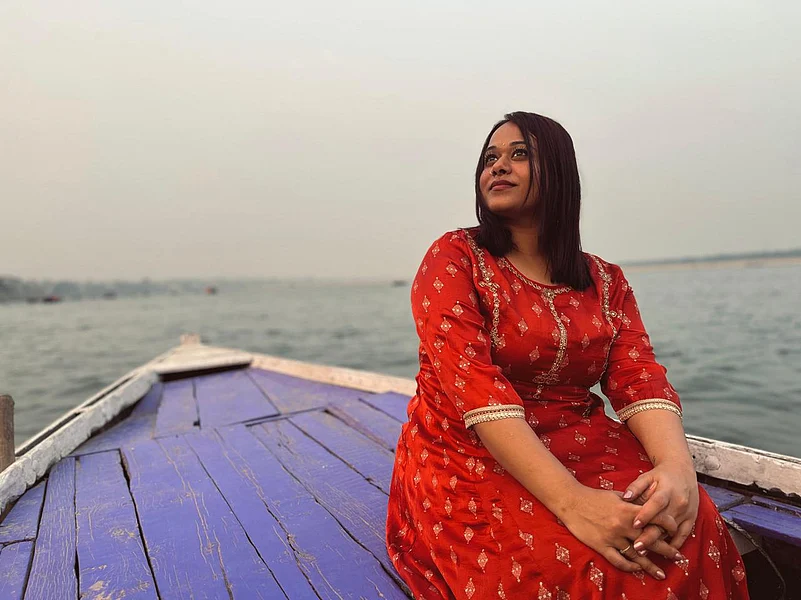
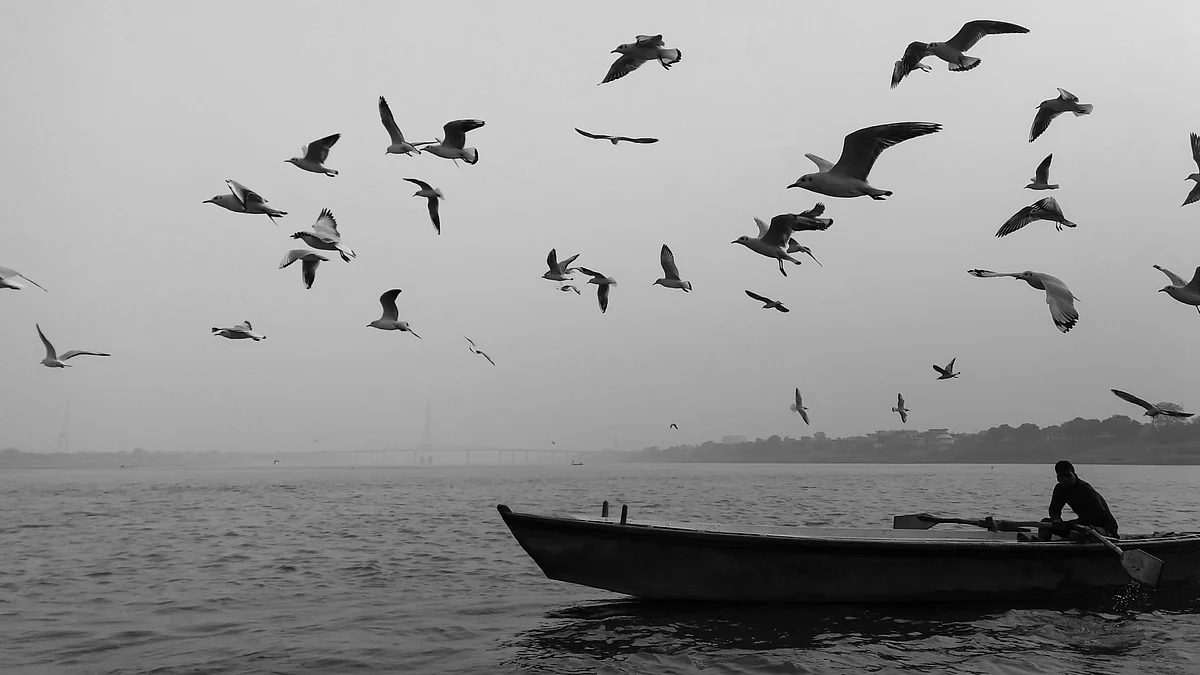
From the café, we walked down to Assi Ghat and boarded a small ferry to explore the river.
As the boat moved slowly across the Ganges, the city revealed itself from a different perspective—rows of ghats, temples rising behind them, and people moving through rituals that seemed both ancient and ordinary. Somewhere between Manikarnika’s solemn fires and the quieter stretches of the riverfront, a strange calm settled in.
Banaras, Books, And A Slice Of Apple Pie
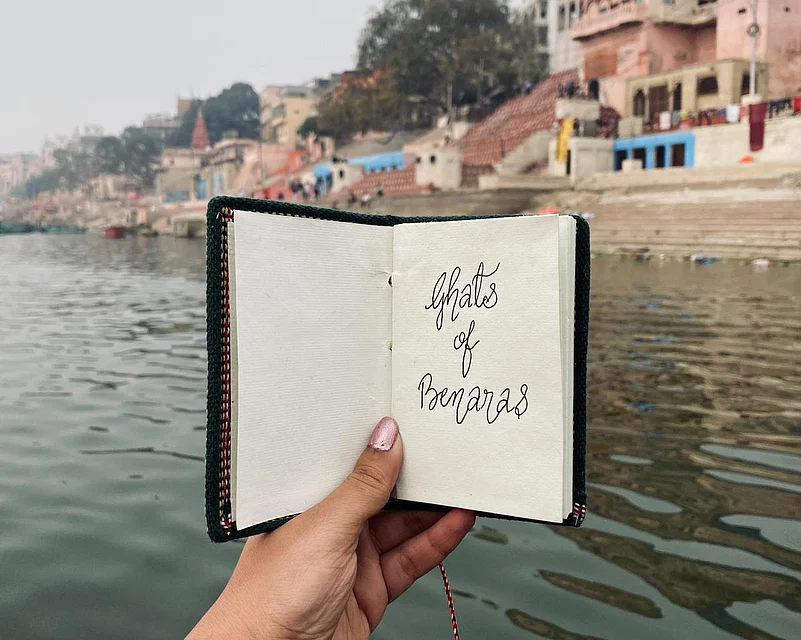
After the boat ride, Bhaibhav insisted that I read a book he loves—"Aimless in Banaras" by Bishwanath Ghosh.
So we set out looking for it in nearby bookstores, beginning with Annapurna Book House near Assi Ghat. While the book wasn’t available there, I ended up picking up my usual travel souvenir—a journal. Its cover carried a playful illustration of an auto rickshaw, which felt like an apt symbol of Banaras. After all, in a city of narrow lanes and constant bustle, autos are perhaps the most authentic way to move through its chaotic intersections.
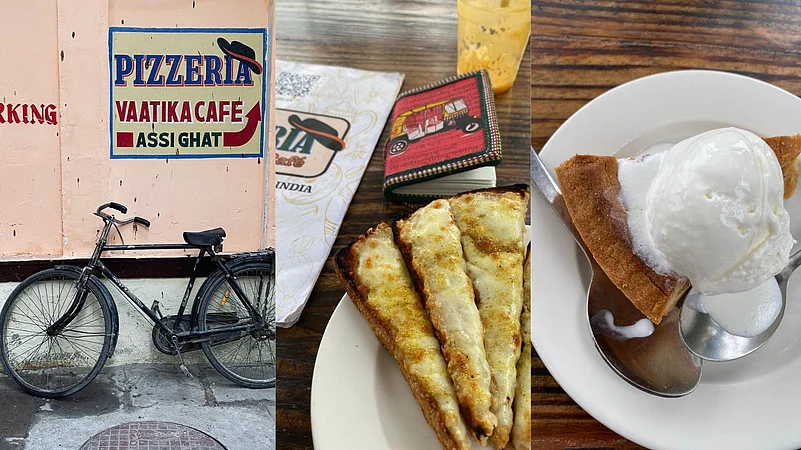
Eventually, the search led us to Pizzeria Vaatika Café, tucked away in a leafy courtyard near the ghats. The café is something of a local institution—often considered one of India’s earliest pizzerias, serving wood-fired pizzas since the early 1990s. We ordered mushroom-and-onion pizza and their famous apple pie with ice cream. Sitting there beneath the trees in a garden-like setting, the café felt almost bohemian—a curious blend of Banaras spirituality and backpacker culture.
During our conversation, Bhaibhav shared an observation about how people describe their travel experiences differently. “In my conversations with friends, I’ve noticed that men often talk about places, food, and activities when they travel,” he said. “But many women describe solo travel as a more internal experience. They talk about what they felt in that moment or what they discovered about themselves.”
Another Visit To Assi
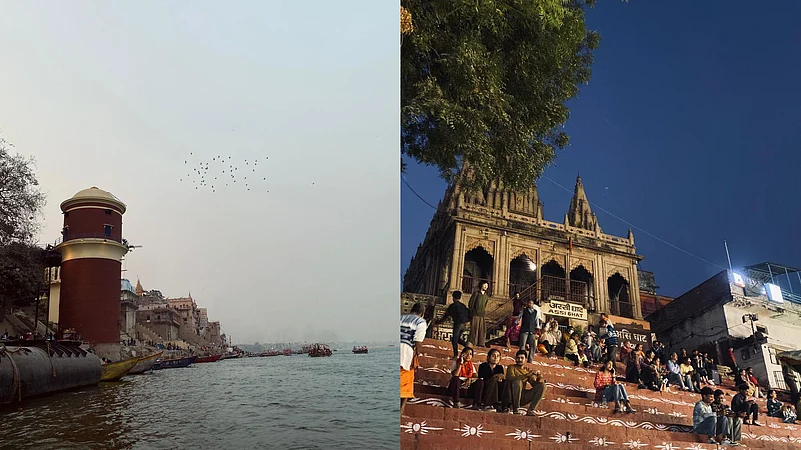
The next morning, before heading back to the station, I returned to Assi Ghat alone. The city was slowly waking up, and the ghats carried that quiet, unhurried energy that seems unique to Banaras. A few early devotees stood at the river’s edge offering prayers to the Ganges, their silhouettes softened by the morning haze. Boats drifted lazily across the water while tea sellers prepared their first kettles of chai for the day.
On the wide stone steps, an artist had already set up his canvas, quietly painting the changing light over the river. He introduced himself as Manav. He told me he had studied fine arts in Santiniketan and now spends most mornings painting the ghats.
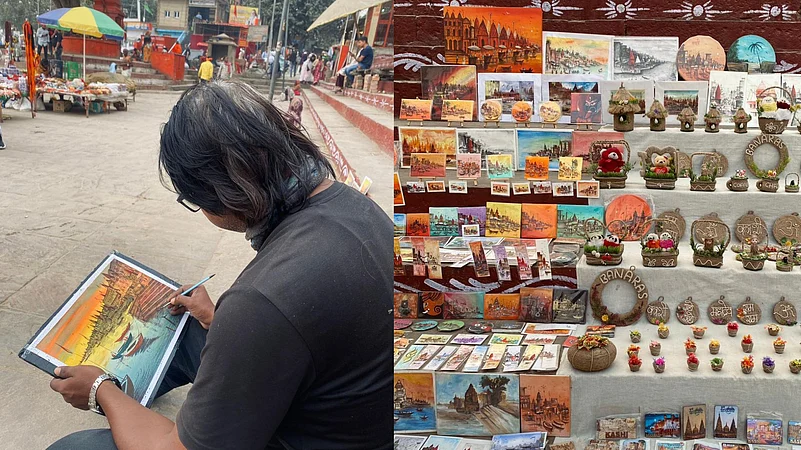
His canvas was filled with delicate strokes of ochre and blue, the river stretching quietly across the frame. When I asked how he managed to paint the ghats with such precision, barely glancing up from his work, he smiled and said he had been doing this for so many years that he no longer needed a reference. The city, he explained, had simply etched itself into his memory.
I sat there for a long while after that, watching the river and letting the moment unfold slowly. With my earphones in, I played Kinaare from the film 'Queen' (2013), a song that has stayed with me since my college days. The film had once planted a simple idea in my mind: that every woman should experience travelling alone at least once.
Standing at Assi Ghat that morning, watching the river move quietly past centuries-old temples and bustling staircases, I realised something that felt unexpectedly comforting—you don’t always need to cross continents to feel that sense of liberation. Sometimes, it can happen in a place much closer to home, in a city like Banaras.
For Bhaibhav, the psychological shift that happens during solo travel can be subtle but deeply transformative.
“Travel often forces you out of your comfort zone,” Bhaibhav explains. “When you are in a new place surrounded by strangers, you realise you have to rely on yourself. That process builds confidence and emotional resilience.”
According to him, this realisation can be particularly powerful for women. “When a woman discovers she can navigate an unfamiliar place entirely on her own, something shifts psychologically. She begins to trust herself more—and that confidence often extends far beyond the trip, shaping how she approaches independence, relationships, and life decisions.”
Leaving Banaras, But Not Quite
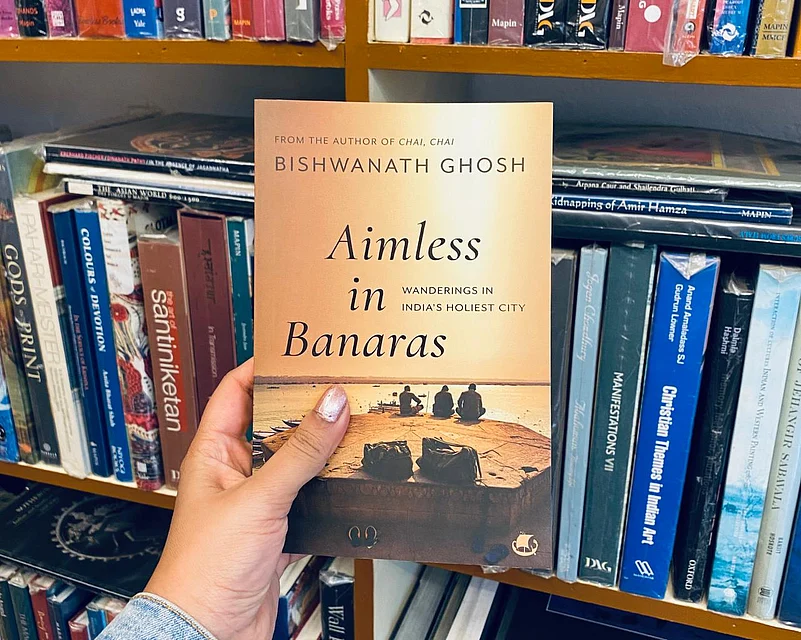
Before leaving for the station, I made one final stop at Harmony Bookstore near Assi Ghat, where I finally managed to find a copy of 'Aimless in Banaras'—the book Bhaibhav had been insisting I read. I returned briefly to Vaatika Café, ordered a glass of fresh orange juice, and opened my new red journal I had picked up the previous day, jotting down fragments of thoughts from the trip.
There is something quietly freeing about travelling alone like this. Without an itinerary dictating every step, you move through a place guided purely by curiosity—following a conversation, a café, a bookstore, or simply the mood of the moment.
I didn’t manage to do Kashi Darshan this time. But somehow that felt less like a missed opportunity and more like an open invitation. Banaras, after all, is not a city meant to be understood in a single visit—and perhaps that is reason enough to return, next time a little more aimless.
FAQs
1. Is Banaras a good destination for solo travellers?
Yes. With its lively ghats, cafés, and cultural landmarks, Banaras offers plenty to explore at your own pace.
2. Which ghats are best to visit in Banaras?
Assi Ghat, Dashashwamedh Ghat, and Manikarnika Ghat are among the most well-known and frequently visited.
3. What is the best time to visit Banaras?
October to March is considered ideal, when the weather is cooler and more comfortable for exploring the city.
4. Are there good cafés near Assi Ghat?
Yes. The area around Assi Ghat has several cafés popular with students and travellers, including Mark’s Café and Vaatika Café.
5. What makes Banaras unique for travellers?
Its ancient ghats, spiritual traditions, bustling streets, and everyday rituals create an atmosphere unlike anywhere else in India.