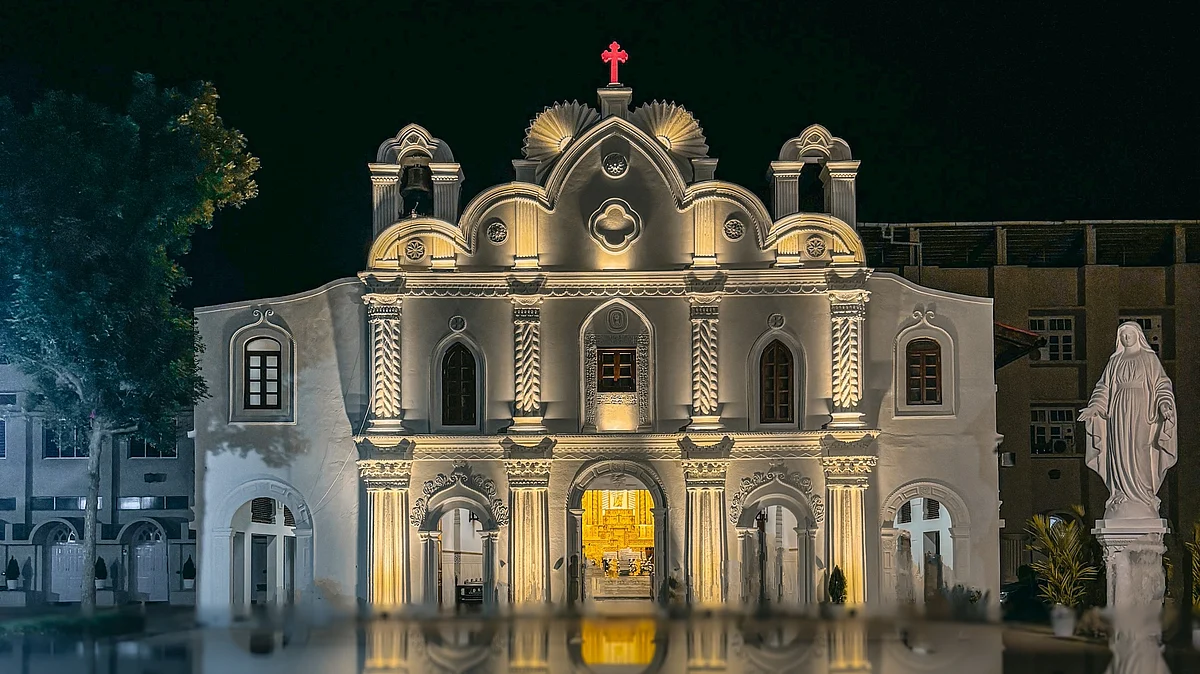
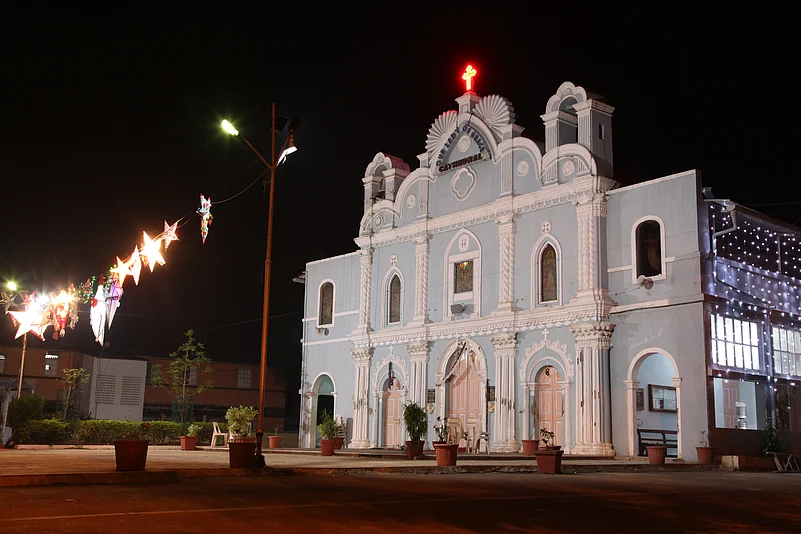
A 475-year-old cathedral in Vasai, Maharashtra, has received the Award of Merit at the 2025 UNESCO Asia-Pacific Awards for Cultural Heritage Conservation. The recognition honours the restoration of Our Lady of Grace Cathedral in Papdy village, an effort led by the parish community rather than state funding or corporate support.
Announced in Bangkok during the silver jubilee year of the awards programme, the citation places the Vasai project among 90 entries from 16 countries reviewed by an international jury.
A Structure Shaped By Portuguese-Era Craft
The cathedral was built in the mid-16th century, when Vasai, then known as Bassein, was an important Portuguese settlement on India’s western coast. It was constructed with stone bonded with mud mortar, showing an early phase of colonial rule when European church design was adapted to local materials and craftsmanship.
Over the years, heavy monsoons and scattered repair work weakened parts of the building. The Cathedral's former priest, Father John Furgose, told a media outlet, "The Mangalore tiled roof was leaking, and the entire structure, including the bell tower, was in a state of disrepair. The Cathedral is built of stone, with mud mortar, since there were no bricks or cement at the time. (Former) Archbishop Felix Machado took a keen interest in restoring it, and I launched the task."
The conservation project, carried out between 2023 and 2024, focused on stabilising the building and restoring its original structure. Repairs strengthened the roof and bell tower, removed unsuitable additions from the façade, corridors and colonnade, and revived the interior. Liturgical elements were renewed using traditional hand-carved techniques in keeping with the cathedral’s historic design.

Conservation Without Compromising Faith
In its citation, UNESCO described the cathedral as “a tangible testament to the establishment of Catholicism in Maharashtra.” “Of particular significance is the thoughtful restoration of the cathedral's interior... The skilled use of traditional craftsmanship, especially in the hand-carved renewal of liturgical elements, successfully reinstated the interior as a living place of worship and communal devotion. Despite a modest budget, the project was realised through the parish community's sustained engagement and donation network...,” the agency added.
The project was led by conservation architect Ainsley Lewis, who worked closely with parish members and church authorities. Every stage of the restoration was discussed with stakeholders, from major structural repairs to small design details. The aim was to ensure clarity and build consensus while following sound conservation principles.
Importantly, the project did not turn the cathedral into a museum piece. It remains a functioning church. The restoration preserved its architecture and religious role, ensuring it continues to serve the community.
Funded By Community
The restoration cost around INR 4.5 crore and was largely funded by parishioners and well-wishers. Donations formed the backbone of the project. This strong community involvement was one reason the cathedral stood out to the UNESCO jury. The Asia-Pacific Awards for Cultural Heritage Conservation, established in 2000, recognise completed restoration projects across the region.
The 2025 Awards were particularly competitive, featuring a record 90 entries from 16 countries. The jury, comprised of seven international experts, looked for projects that balanced "technical achievement" with an "understanding of place."
By winning the Award of Merit, the Vasai Cathedral is formally recognised as one of the outstanding heritage conservation projects in the Asia-Pacific region, joining prominent sites across Malaysia, Nepal, and Vanuatu. For residents of Papdy and the wider Vasai region, the hope is that this international spotlight will transform the area into a hub for heritage tourism.
Reframing Vasai's Heritage Story
Vasai is widely known for the ruins of its 16th-century fort. Recognition of Our Lady of Grace Cathedral brings attention to another aspect of the town’s history, one defined by continuity rather than decay.
Unlike many old structures that lie abandoned, the cathedral has had regular visitors for centuries. Its restored stone walls and renewed interiors reflect its long history and present-day care.
This project signals a broader change in India's heritage conservation. Amid pressures from urbanisation and climate, restoring this cathedral shows how community support can protect history. The UNESCO award highlights the wider relevance of such efforts.
(With inputs from various sources)
FAQs
1. Which Vasai cathedral won the UNESCO award?
Our Lady of Grace Cathedral in Papdy village, Vasai, received the Award of Merit at the 2025 UNESCO Asia-Pacific Awards.
2. Why did Vasai Cathedral receive a UNESCO award?
It was recognised for its community-led restoration using traditional craftsmanship and conservation principles.
3. How old is Vasai’s Our Lady of Grace Cathedral?
The cathedral is approximately 475 years old, dating back to the mid-16th century Portuguese period.
4. How was the restoration funded?
The INR 4.5 crore project was largely funded through donations from parishioners and well-wishers.
5. What is the UNESCO Asia-Pacific Awards programme?
Established in 2000, the programme recognises completed heritage conservation projects across the Asia-Pacific region.