Egypt isn’t merely a destination; it’s a dialogue with time. Few countries can claim a living relationship with their past quite like this one, where ancient cities hum beside modern streets, and temples still catch the sun exactly as they did thousands of years ago. UNESCO World Heritage Sites in Egypt are not static relics behind glass; they are vast, breathing landscapes of belief, power, faith, and astonishing ingenuity. From Islamic Cairo’s minarets slicing through the skyline to fossilised whales resting in desert silence, Egypt’s heritage spans not just dynasties, but epochs of human and natural history.
This is not a checklist country. These sites reward patience—early mornings, lingering afternoons, and moments of stillness when crowds thin and history speaks softly. Below are five UNESCO World Heritage Sites that best capture Egypt’s layered soul, iconic, yes, but endlessly revealing when seen with fresh eyes.
Historic Cairo
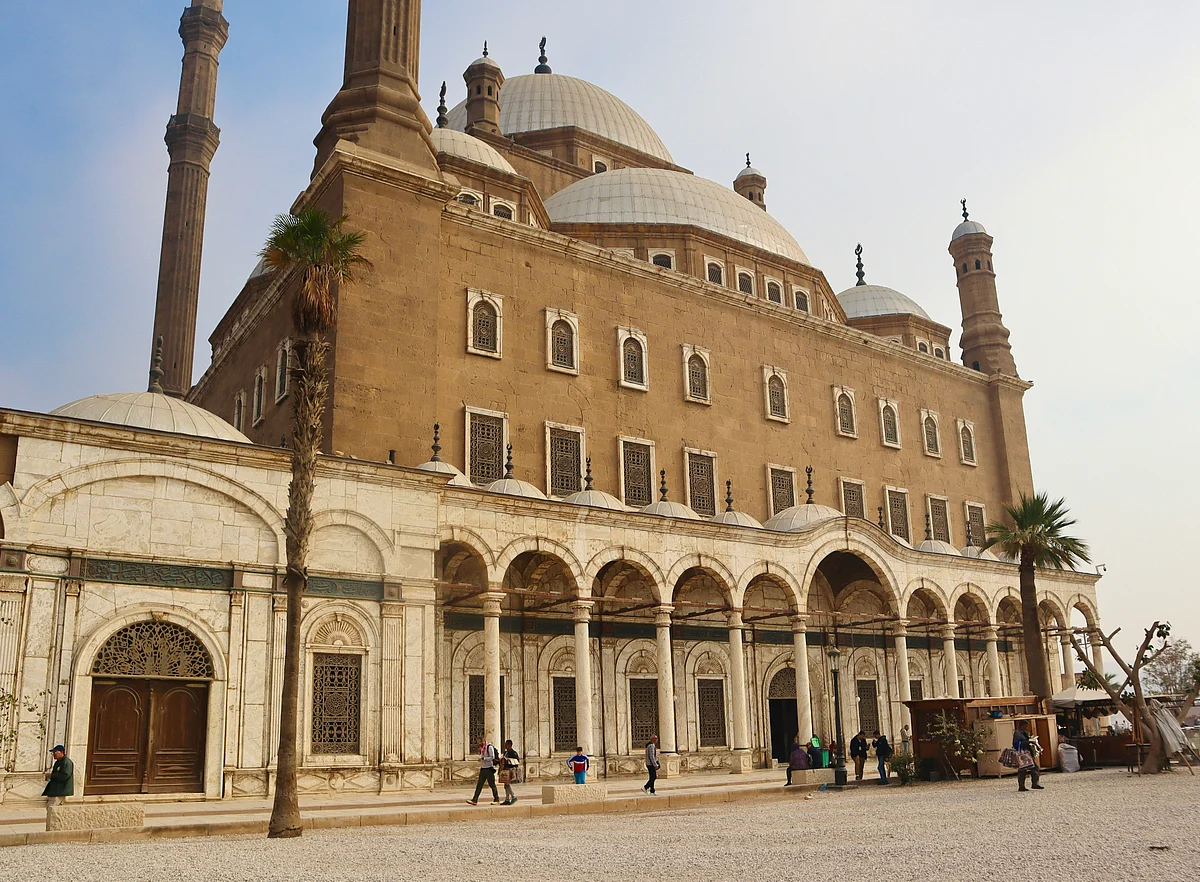
Hidden within the sprawl of modern Cairo lies one of the world’s greatest Islamic cities, a dense architectural manuscript written over a thousand years. Historic Cairo is not a single monument but a living archive—Fatimid gates, Mamluk madrasas, Ottoman fountains, and alleyways that still echo with the call to prayer. Founded in the 10th century, it became the intellectual and spiritual heart of the Islamic world, attracting scholars, traders, and mystics alike.
Walk through Al-Muizz Street, and you’ll pass centuries in minutes, the Mosque of Ibn Tulun’s vast courtyards, the soaring grandeur of Sultan Hassan’s complex, and the Citadel standing watch over it all. Coptic Cairo adds another layer, with churches built atop Roman fortresses, tracing Egypt’s Christian past. Despite pressures of overcrowding, Historic Cairo remains achingly atmospheric, chaotic, beautiful, and deeply alive.
Best time to visit: March to April and between October to November
Entry fee: Giza Pyramids: 240 EGP; Inside the Great Pyramid: 440 EGP; Inside the 2nd or the 3rd Pyramid: 100 EGP; Pyramids Sound and Light Show: 300 EGP
Hours: Throughout the day
Memphis & Its Necropolis


This vast UNESCO listing isn’t just about the Pyramids of Giza, it’s about the idea of immortality itself. Memphis was ancient Egypt’s first capital, founded around 3000 BCE, and the surrounding necropolises were its eternal suburbs. Here, the story of pyramid-building unfolds in full: from the Step Pyramid of Djoser at Saqqara to the experimental Bent Pyramid and the perfectly proportioned Red Pyramid at Dahshur.
The Great Pyramid of Khufu still dominates the skyline with unnerving confidence, a mathematical marvel built over 4,500 years ago, and the only surviving Wonder of the Ancient World. Yet wander beyond Giza, and you’ll find quieter revelations: mastabas etched with daily life, half-buried causeways, and tombs that reveal how power, faith, and architecture evolved together. This is Egypt at its most monumental, and most human.
Best time to visit: Throughout the year
Entry fee: From EGP 80 (adults), EGP 40 (students)
Hours: From 9:00 am to 5:00 pm, every day
Ancient Thebes With Its Necropolis
If ancient Egypt had a golden age, it lived here. Modern-day Luxor stands atop Thebes, once the capital of the New Kingdom and the spiritual centre of an empire that stretched deep into Nubia. On the east bank, life flourished, Karnak Temple’s colossal columns rise like stone forests, while Luxor Temple glows softly at dusk, still aligned with ancient processional routes.
Cross to the west bank and you enter the realm of the afterlife. The Valley of the Kings hides richly painted tombs beneath desert cliffs, including Tutankhamun’s. Nearby, Hatshepsut’s terraced mortuary temple feels startlingly modern, carved directly into rock. The Colossi of Memnon keep their silent vigil, as they have for millennia. Few places on earth present history at this scale, this completeness, and still feel intimate.
Best time to visit: March to April and October to November shoulder seasons
Entry fee: Karnak Temple + Karnak “Open air Museum” - 220 EGP; Karnak Sound and Light Show - 300 EGP; Luxor Temple – 180 EGP; Hatshepsut Temple (Deir el Bahary); Taftaf “Electric Train” - 160 + 12 EGP
Hours: Throughout the day
Nubian Monuments From Abu Simbel To Philae

Few UNESCO sites tell a story of rescue as dramatic as this one. When the Aswan High Dam threatened to submerge Nubia’s ancient temples, an unprecedented international effort dismantled and rebuilt them stone by stone. The most famous of these is Abu Simbel, Ramesses II’s colossal rock temples, where twice a year the rising sun illuminates statues deep within the sanctuary, just as it did 3,000 years ago.
Nearby, the Temple of Philae, dedicated to Isis, now sits serenely on Agilkia Island, surrounded by Nile waters. The journey between these sites reveals layers of Egyptian, Nubian, Greek, and Roman history intertwined. More than monuments, they are symbols of global cooperation, proof that heritage, once valued, can be saved.
Best time to visit: Throughout the year
Entry fee: 260 EGP per person; 130 EGP per student; 300 EGP per camera ticket; 20 EGP for a tripod
Hours: Throughout the day
Wadi Al-Hitan
Far from temples and hieroglyphs lies Egypt’s most surprising UNESCO site—a silent desert scattered with the fossilised remains of ancient whales. Wadi Al-Hitan, in the Fayoum region, preserves millions of years-old skeletons of archaeoceti, capturing the evolutionary moment when whales transitioned from land to sea.
Protected walkways guide visitors past rib cages, skulls, and vestigial limbs, all remarkably intact, embedded in golden sand. The stark landscape adds to the wonder—no crowds, no noise, just wind and deep time. It’s a reminder that Egypt’s heritage doesn’t stop with civilisation; it stretches back into Earth’s biological memory. For travellers who think they’ve “seen Egypt,” this place quietly proves otherwise.
Best time to visit: Between November and April and October to April
Entry fee: Tickets start from EGP 2,814 and go up to EGP 7,118, depending on group size.
Hours: Throughout the day
FAQs
1. How many UNESCO World Heritage Sites are there in Egypt?
Egypt has seven UNESCO World Heritage Sites, six cultural and one natural.
2. What is the only natural UNESCO site in Egypt?
Wadi Al-Hitan (Whale Valley) in Fayoum is Egypt’s only natural World Heritage Site, famed for its fossilised whales.
3. Which Egyptian UNESCO sites were listed first?
Five sites were inscribed in 1979, including the Pyramids of Giza, Historic Cairo, and Ancient Thebes.
4. Are Egypt’s UNESCO sites open to tourists year-round?
Most sites are open all year, though October to April offers the most comfortable weather for sightseeing.
5. Do I need separate tickets for each UNESCO site?
Yes. Each site and monument has its own entry ticket, with prices varying by location and attraction.