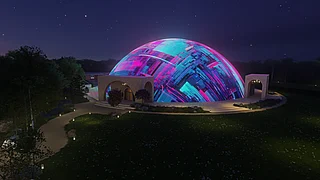
The Whale, a new museum and visitor centre dedicated to whales and marine ecosystems, is set to open in Andenes on Norway’s Arctic island of Andøya on June 4, 2027. Located more than 300 kilometres north of the Arctic Circle, the centre is being built on a coastline already famous for whale watching. It brings together architecture, science, conservation, and tourism, all in one destination.
The project has been in development since 2014, with Danish architect Dorte Mandrup’s studio winning the international design competition in 2019. Construction is now nearing completion after the project secured final public funding in November 2024. For travellers, it is not another museum added to their Norway checklist, but a way to learn about the mammals who share a very long history with the people of Norway.
Why Andøya Is The Right Location
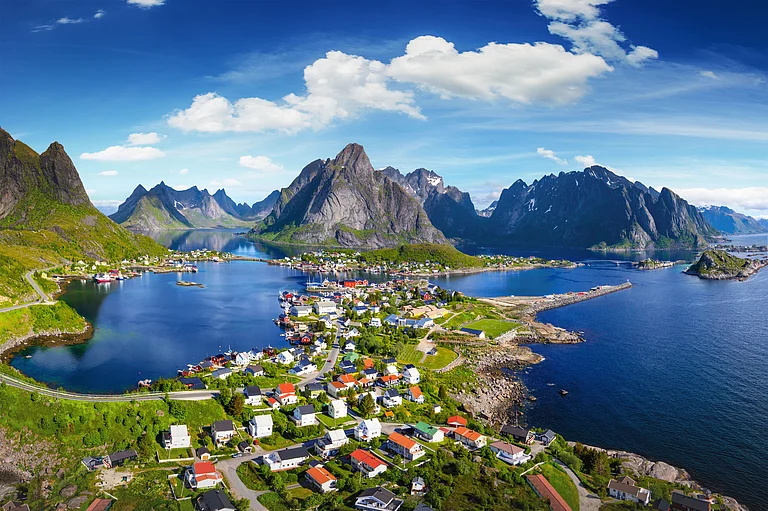
The Whale is being built near Andenes Lighthouse, on the western shore of Andøya, close to Bleiksdjupet, a deep underwater canyon. The canyon brings nutrient-rich waters close to the coast, creating a feeding ground for sperm whales, humpback whales, orcas and fin whales. Organised whale-watching trips have operated in the area since the late 1980s, making tourism around these animals an established part of the local economy.
That setting also shapes what the museum can offer. The building will contain exhibitions on whale evolution, biology, behaviour, and marine ecosystems, alongside educational spaces, a café and a shop. Its roof will function as a public viewing platform, giving visitors views across the Norwegian Sea. In summer, the Midnight Sun adds another dimension to whale watching, with almost continuous daylight in the region.


A Museum Designed To Look Like A Whale
This museum will not only house information about whales, but is designed to look like one. Mandrup’s design rises from the shoreline in a sweeping concrete curve that evokes the back of a whale diving beneath the surface. Local stone and vegetation will cover the roof, allowing visitors to walk across it while looking towards the sea.
Inside, exhibition design by New York-based Ralph Appelbaum Associates will combine scientific material with art, storytelling and immersive experiences. The focus will extend beyond whale biology to examine how humans have understood, studied, hunted and lived alongside these animals. The organisers describe the broader aim as creating a meaningful encounter between humans and whales, rather than treating the animals simply as a tourist attraction.
Norway’s Relationship With Whales

The museum’s conservation-focused approach sits alongside a much more complicated history of Norway with its whales. Coastal communities have hunted whales for thousands of years, while the 19th century saw Norway become a major force in industrial whaling. Norwegian inventor Svend Foyn developed an explosive-tipped harpoon and steam-powered whale-catching technology that made it possible to hunt faster and larger whale species. Norwegian companies subsequently expanded into Antarctic waters and became dominant players in global commercial whaling.
This history remains relevant as commercial minke whale hunting is still permitted in the country. Norway objected to the International Whaling Commission’s 1986 commercial whaling moratorium and resumed commercial hunting in 1993, arguing that North Atlantic minke whale populations can be sustainably managed. The industry is now small, only a handful of vessels participate, and actual catches are substantially below government-set quotas because demand for whale meat has declined.
Therefore, The Whale will place scientific and cultural accounts of whales alongside the history of their exploitation, inviting visitors to consider how Norway’s relationship with these animals has shifted from subsistence and industry to tourism, research and conservation.
FAQs
1.When will The Whale museum in Norway open?
The Whale is scheduled to open on June 4, 2027, in Andenes on the island of Andøya.
2.Where is The Whale museum located?
The Whale is being built near Andenes Lighthouse on the western coast of Andøya, more than 300 kilometres north of the Arctic Circle.
3. Why is Andøya famous for whale watching?
Andøya lies close to Bleiksdjupet, a deep underwater canyon where nutrient-rich waters attract whales including sperm whales, humpback whales, orcas and fin whales.
4. What will visitors see at The Whale museum?
The museum will explore whale evolution, biology, behaviour and marine ecosystems, while also examining the cultural relationship between humans and whales. It will include exhibitions, educational spaces, a café, a shop and a rooftop viewing area.
5. What is Norway’s relationship with whaling?
Norway has a long history of whale hunting, from coastal subsistence practices to large-scale industrial whaling. The country opposed the International Whaling Commission's 1986 commercial whaling moratorium and continues to permit commercial minke whale hunting.