


Norway’s fjords are among the most recognisable natural landscapes in the world. Formed by repeated glacial advances over thousands of years, these long, narrow sea inlets cut deep into the land. The result is a coastline that is highly fragmented yet remarkably navigable, where waterways often provide easier access than overland routes. Although Norway has more than a thousand fjords, only a small number are widely known beyond the region. These stand out not only for their scale or scenery, but also for how accessible they are and how clearly, they illustrate the interaction between geology, climate, and human activity.
What Is a Fjord and How Are Norwegian Fjords Formed?
A fjord is a deep, glacially formed inlet of the sea, usually flanked by steep cliffs or mountains. Fjords were created during the Ice Age, when massive glaciers moved slowly across the land, carving U-shaped valleys. When the ice retreated and sea levels rose, seawater flooded these valleys, forming the fjords seen today.
What distinguishes a fjord from a regular inlet is its depth and shape. Fjords are often deeper than the adjacent sea and may stretch far inland, sometimes for over 200 kilometres. Many Norwegian towns and villages developed along fjords, making them both natural landmarks and living landscapes rather than untouched wilderness.
The 6 Most Famous Fjords in Norway
Geirangerfjord
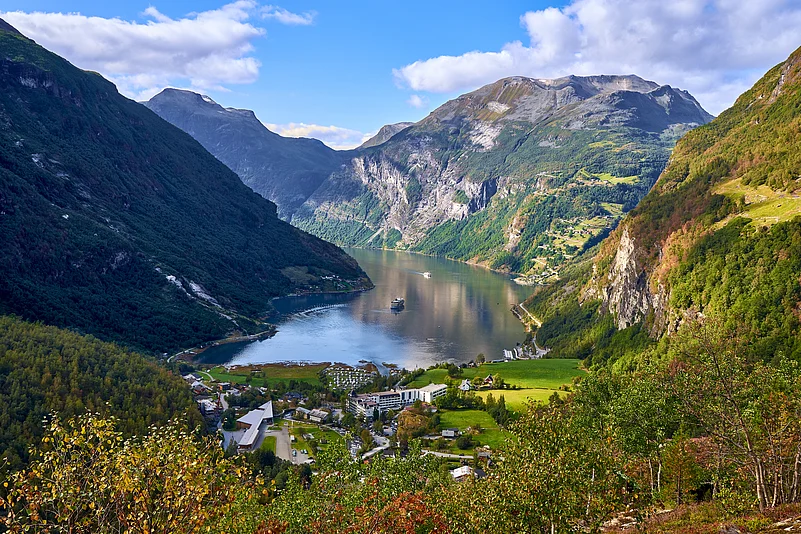

Geirangerfjord is one of Norway’s most iconic fjords and a UNESCO World Heritage Site. Located in western Norway, it is best known for its dramatic waterfalls, including the Seven Sisters and the Suitor, which cascade down near-vertical cliffs. The fjord is relatively short but visually intense, with sharp mountain peaks rising directly from the water. Cruise ships frequently visit during summer, making it one of the most accessible fjords for first-time visitors. Despite its popularity, Geirangerfjord remains a strong example of classic fjord scenery.
Sognefjord
Sognefjord is Norway’s longest and deepest fjord, extending over 200 kilometres inland. Often referred to as the “King of the Fjords,” it includes numerous branches, each with distinct landscapes and settlements. Because of its size, Sognefjord encompasses everything from alpine terrain and glaciers to fertile valleys and historic villages. It offers a comprehensive picture of how fjords function as regional systems rather than isolated features.
Nærøyfjord
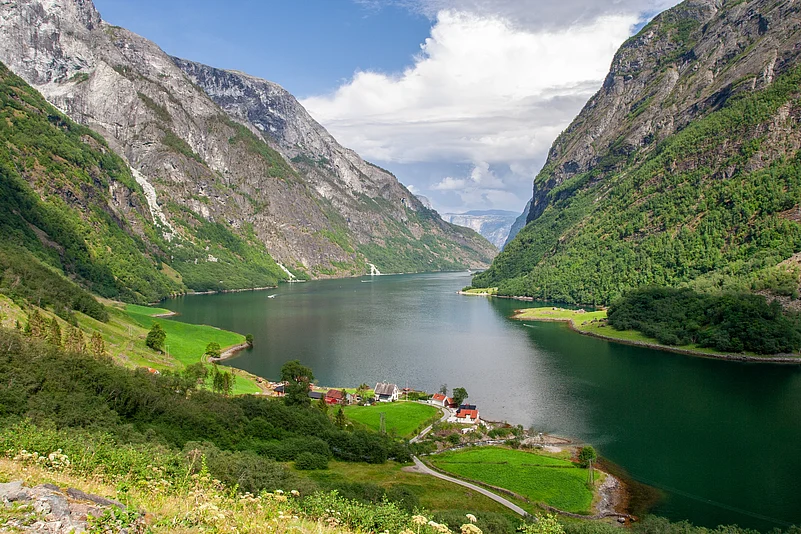
A branch of the larger Sognefjord, Nærøyfjord is one of the narrowest fjords in the world. At some points, steep cliffs rise over 1,700 metres while the fjord narrows to less than 300 metres wide. lso listed as a UNESCO World Heritage Site, Nærøyfjord is valued for its sense of scale and enclosure. The experience here is less about landmarks and more about immersion.
Hardangerfjord
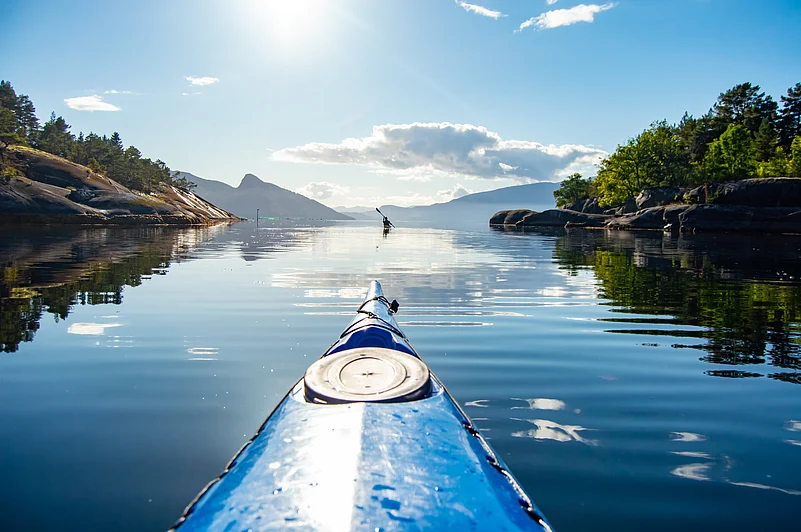
Hardangerfjord is often called Norway’s “orchard fjord.” Its milder climate supports extensive fruit farming, particularly apples, cherries, and plums. In spring, flowering orchards contrast sharply with snow-capped mountains. tretching inland from the Atlantic coast, Hardangerfjord combines agricultural life with glacial landscapes, including access to the Folgefonna glacier. This balance between human activity and natural geography makes it one of Norway’s most varied fjords.
Romsdalsfjord
Romsdalsfjord is closely associated with Norway’s mountaineering culture. The surrounding peaks, including the Troll Wall and Romsdalshorn, attract climbers and hikers from around the world. The fjord runs past the town of Åndalsnes and serves as a gateway to some of Norway’s most dramatic mountain terrain. Unlike more enclosed fjords, Romsdalsfjord feels broader and more open, offering expansive views rather than tight corridors.
Lysefjord
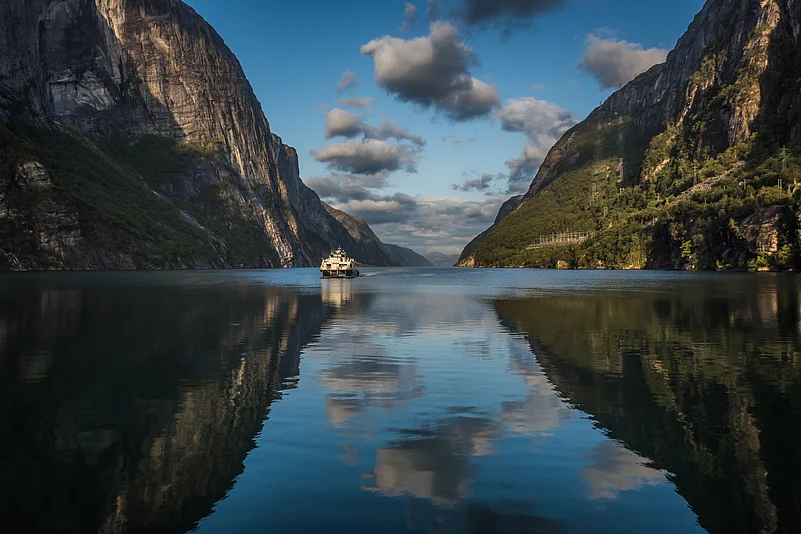
Lysefjord is best known for Preikestolen, or Pulpit Rock, one of Norway’s most photographed viewpoints. The fjord itself is long, narrow, and framed by steep granite cliffs. Located near Stavanger, Lysefjord is easily accessible and popular with hikers, kayakers, and boat travellers. Its appeal lies in the combination of manageable scale and striking natural features concentrated in a relatively compact area.
FAQs
1. What is a fjord?
A fjord is a deep, narrow sea inlet formed by glacial erosion, typically bordered by steep cliffs or mountains.
2. How many fjords are there in Norway?
Norway has over 1,000 fjords, making it the country with the highest concentration of fjords in the world.
3. Which fjord is the most famous in Norway?
Geirangerfjord is often considered the most famous due to its waterfalls, dramatic cliffs, and UNESCO status.
4. What is the longest fjord in Norway?
Sognefjord is the longest and deepest fjord in Norway, stretching more than 200 kilometres inland.
5. Are Norwegian fjords accessible for travellers?
Yes. Many fjords are accessible by road, ferry, train, or cruise, especially during the summer months.


