

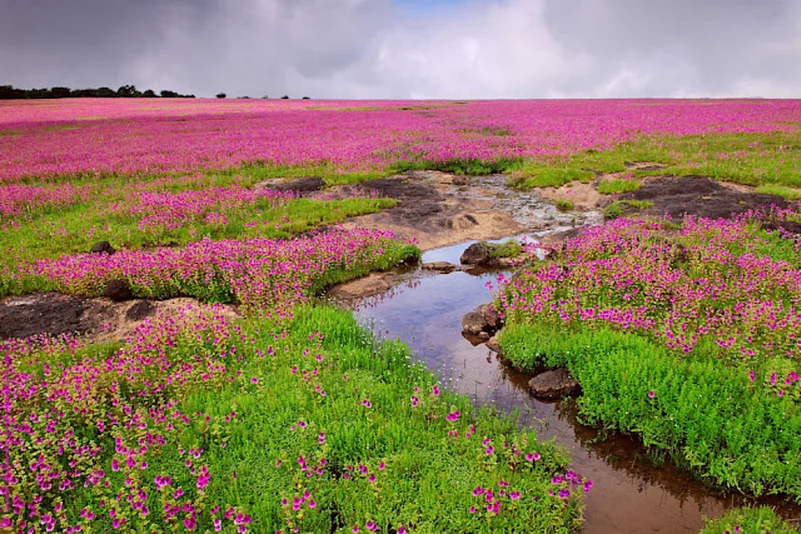
If there is one time of year when Maharashtra’s Kaas Plateau becomes impossible to ignore, it is flower season. For a few weeks after the monsoon, the high-altitude grassland in Satara transforms into a colourful carpet of wildflowers, drawing nature lovers, photographers and weekend travellers from across the country. With the 2026 season approaching, preparations are already underway to manage the annual rush while protecting the fragile ecosystem.
Kaas Plateau, also known as Kaas Pathar, is expected to enter its flowering season around early to mid-September, although the exact dates depend on rainfall and are typically confirmed closer to the season. Some reports have indicated September 1 as a possible start, while the broader flowering window is expected to extend from mid-September through October. Peak blooms generally appear from late September to early October, making this the period when demand for entry slots is likely to be highest.
When Flowers Bloom
Located at around 1,200 metres above sea level in Maharashtra’s Satara district, Kaas is recognised as a UNESCO World Heritage Site and is home to more than 850 flowering plant species. Several of these are endemic to the region, making the plateau important not only for tourism but also for conservation.
The flowers appear in phases as the monsoon retreats. Early blooms can include Smithia, balsam and blue grass lily, while later in the season, visitors may spot yellow Sonki and other species. Among Kaas’ most unusual plants are insectivorous varieties such as Indian sundew and purple bladderwort. The plateau is also known for its terrestrial orchids and the Karvi shrub, which flowers only once every seven years. Bloom intensity varies from year to year depending on rainfall, so even the same week can offer a different experience across seasons.
For 2026, the strongest flowering is expected from the last week of September through the first week of October. Travellers planning a weekend visit during this period should expect heavier crowds and should arrange their entry well in advance.
Tickets And Timings
Entry to Kaas Plateau is expected to cost around INR 50 per person on weekdays and INR 100 on weekends and public holidays, although visitors should check the official Kaas Pathar website for the latest season-specific announcement before travelling. The number of visitors is capped each day to limit pressure on the ecosystem, with reports indicating a maximum of 3,000 visitors divided across timed entry slots.
The plateau is generally open from 7 AM to 6 PM during the flowering season, with morning, midday and afternoon slots. The early morning period is particularly suited to photographers and travellers looking to explore before the busiest hours. Booking requirements can vary by day, with online reservations expected to be especially important for weekends and holidays.
Travellers should also be prepared for traffic-management measures around the plateau. Authorities are expected to regulate vehicle movement, enforce no-parking zones and restrict cars from entering the flower-covered areas. One-way traffic arrangements and increased police surveillance are also likely during the busiest days. Visitors may need to park at designated areas and use local transport arrangements where applicable.
Plan Your Visit

The easiest way to experience Kaas is to treat it as a day trip from Satara, Pune or another nearby destination, but an overnight stay can make an early morning visit considerably easier. Satara is the closest major city, while Pune is around 140 kilometres away. Travellers can also combine Kaas with nearby attractions such as Thoseghar Waterfall, Vajrai Waterfall, Sajjangad Fort, Kaas Lake and the Bamnoli area around Shivsagar Lake.
The landscape may look inviting, but Kaas is not a conventional meadow where visitors can wander wherever they please. The plateau’s flowers and grasslands are highly sensitive, so travellers must remain on marked paths and avoid picking flowers or seeds. Drones are restricted, single-use plastic is discouraged or prohibited in designated areas, and visitors are expected to carry their waste back with them. Pets, smoking, open fires and loud music are also not permitted.
With the 2026 flower season approaching, Kaas is preparing for another busy few weeks. The best approach is to check the official season announcement before setting out, book an entry slot where required and plan around the peak period rather than arriving without a reservation. After all, Kaas’ annual transformation lasts only a few weeks, and protecting it is what ensures the flowers return for the next season.
FAQs
1. When is Kaas Plateau flower season 2026?
The 2026 season is expected from September to October, with peak blooms likely in late September and early October.
2. How much is the Kaas Plateau entry fee?
Entry is expected to cost around INR 50 on weekdays and INR 100 on weekends and public holidays.
3. Does Kaas Plateau have a daily visitor limit?
Yes. Visitor numbers are capped each day to reduce pressure on the fragile plateau ecosystem.
4. What are the timings for Kaas Plateau?
The plateau generally remains open from 7 AM to 6 PM during the flowering season, with timed entry slots.
5. What are the rules at Kaas Plateau?
Visitors must stay on marked paths, avoid picking flowers, refrain from littering and follow restrictions on drones, pets, smoking and loud music.