

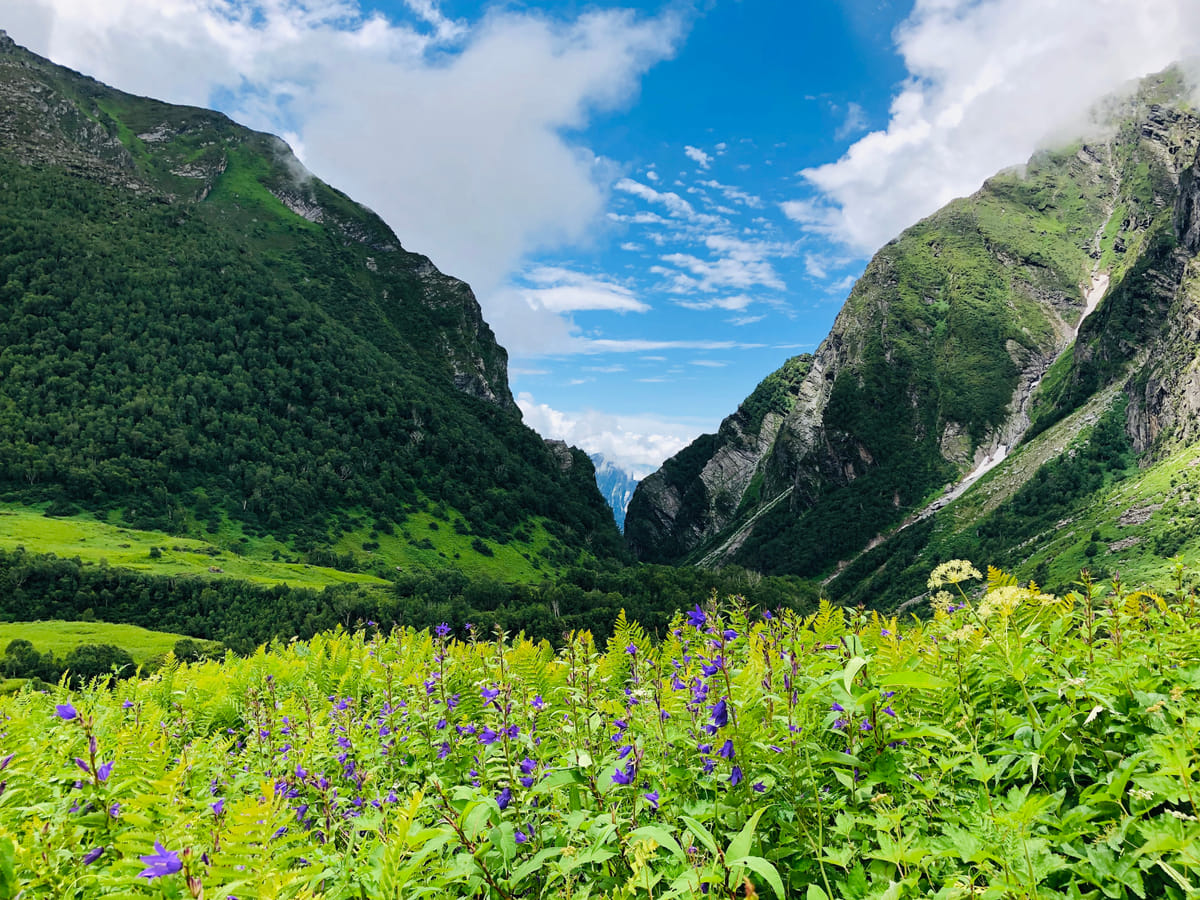
If a trek to the Valley of Flowers is on your travel list this year, the wait is over. The Valley of Flowers National Park in Uttarakhand's Chamoli district reopened to visitors on June 1 and will remain open until October 31, giving travellers a five-month window to explore one of the Himalayas' most celebrated seasonal attractions.
Set in the Garhwal Himalayas, the Valley of Flowers is best known for its annual transformation during the monsoon months, when wildflowers begin to spread across the valley floor. For trekkers, nature lovers, and photographers planning a visit, the weeks ahead mark the start of the park's most anticipated season.
A Rare Spectacle
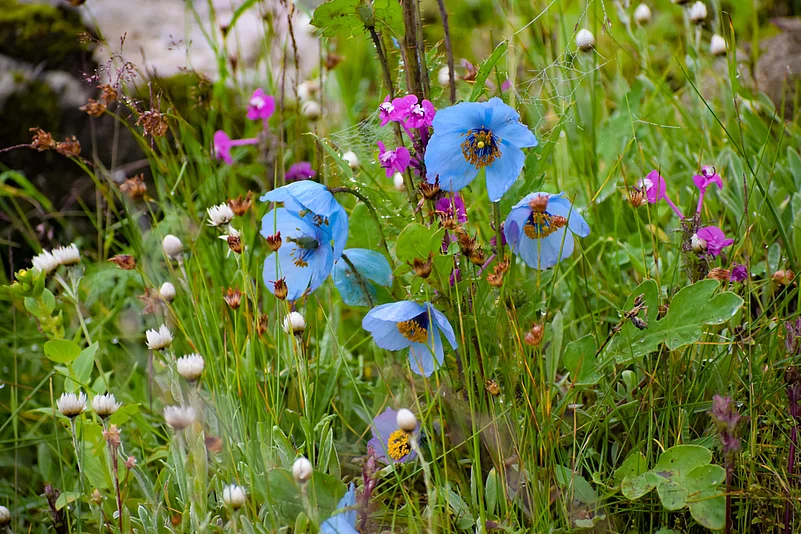
Said to have been discovered in 1931 by three British mountaineers, the Valley of Flowers National Park in the Chamoli district of Uttarakhand is famous. The UNESCO World Heritage Site forms one of the two core zones of the Nanda Devi Biosphere Reserve, the other being the Nanda Devi National Park. The valley comes into its own during the monsoon months, typically between July and September, when hundreds of flowering species emerge across the grasslands. More than 500 varieties of plants have been recorded here, including several rare Himalayan species. Among the best-known are the Himalayan Blue Poppy and the Brahma Kamal, flowers that have become closely associated with the region's unique alpine ecosystem.
Beyond its floral displays, the valley is also recognised for its ecological importance, supporting a range of protected wildlife and high-altitude habitats found only in the western Himalayas.


Know Before You Go
Best Time To Visit
June: The visitor season begins in June, when the snow has only recently receded from parts of the valley. Trekking conditions are generally favourable, and visitor numbers remain relatively low, although the peak flowering season is still some weeks away.
Mid-July to Mid-August: Widely regarded as the best time to visit, this period coincides with the monsoon-driven flowering season. The valley is at its most colourful, with hundreds of alpine species in bloom, including the Brahma Kamal and the Himalayan Blue Poppy.
September: As rainfall eases, clearer skies return to the region, offering improved visibility of the surrounding mountains. While the floral display gradually begins to diminish, the valley continues to attract visitors seeking scenic views and favourable conditions for photography.
Practical Info
Entry Fees: Indian visitors are charged INR 150, while foreign nationals pay INR 600. Each permit allows access to the valley for up to three days.
Booking: Permits can be arranged online before arrival or purchased at the Forest Department counter in Ghangaria, the last settlement before the trek to the valley.
Timings: Entry to the valley is permitted between 7 AM and 2 PM. All visitors must leave the national park by 5 PM.
Regulations: Camping and overnight stays within the valley are not permitted. The use of drones and single-use plastics is also prohibited.
How To Trek
The Route: The Valley of Flowers is reached via Govindghat, around 25 km from Badrinath. From there, travellers either trek or take a shared vehicle to Pulna, before continuing on foot to Ghangaria, which acts as the base for the final stretch into the valley. Reports say that officials have approved the construction of a new road linking Pulna to Bhyundar village in Chamoli district. It is estimated that the distance to the Valley of Flowers will drop to about 5 kilometres with the opening of the new road.
The Final Stretch: From Ghangaria, it is an approximately 4 km gradual but uphill trek to the Valley of Flowers.
Difficulty: Considered moderate. The total round trip from Ghangaria is around 8 to 10 km
Check here for our guide to trekking the valley.
FAQs
When does the Valley of Flowers open in 2026?
The Valley of Flowers National Park opened on June 1, 2026, for the visitor season.
When does it close for the year?
The park will remain open until October 31, 2026.
What is the best time to visit the Valley of Flowers?
Mid-July to mid-August is considered the peak blooming period.
Do visitors need a permit to enter?
Yes, an entry permit is required for all visitors, available online or at Ghangaria.
How do you reach the Valley of Flowers?
Travellers reach Govindghat, trek or take a shared ride to Pulna, then continue to Ghangaria before entering the valley.