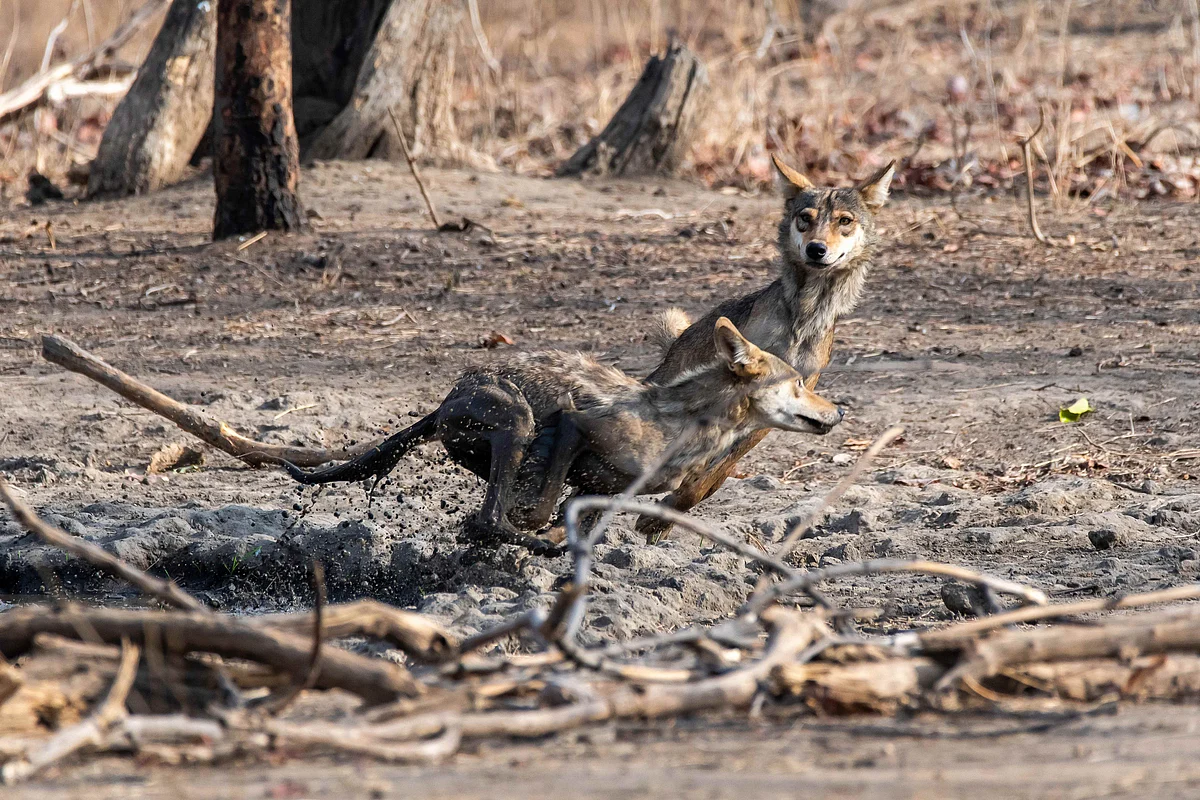
A female Indian Wolf has welcomed seven healthy puppies at Pilikula Biological Park, marking an exciting first for the zoo. Officials are celebrating it as a major win for wildlife conservation, and the playful pups are already capturing the hearts of visitors who can’t wait to see them.
In January, a female Indian wolf named Geetha gave birth to four male and three female pups, setting a milestone for Pilikula Biological Park in Mangaluru. Wolves of this species have been housed at the park for about three years, but until now, none had successfully bred in captivity. Experts see this as a major achievement for the zoo’s conservation programme and a promising step for future efforts to safeguard the species.
Park officials and a team of veterinarians are keeping a close eye on both mother and pups to ensure they thrive in the early weeks of life, a critical period for survival. The pups are showing strong signs of activity and curiosity as they begin to explore their surroundings under the watchful eyes of caretakers.
Visitor Excitement And Conservation Awareness
Visitors will now be able to see the pups as they are becoming more mobile, in a newly developed exhibit at Pilikula. The exhibit will allow for a safe environment so people can see Indian wolves during their early developmental stages of life. Wolves are currently listed as vulnerable due to being threatened in the wild because of loss of habitat and human-wildlife conflict. There is hope that the type of public interaction presented by Pilikula will help raise awareness concerning the challenges that other less well-known species face and encourage the public to assist within their communities to aid in helping to conserve the species throughout the country.


Pilikula officials stated that success with Pilikula’s work demonstrates success with how wildlife conservation efforts throughout India, particularly benefiting lesser-known or endangered species, have been progressed through increased attention to conservation throughout the country. Wildlife educators and advocates believe that stories like Pilikula’s will generate increased interest in much greater levels of funding and participation in global biodiversity protection for future generations.
(With inputs from various sources)
FAQs
1. How many Indian wolf pups were born at Pilikula?
Seven healthy Indian wolf pups were born at Pilikula Biological Park, marking the first successful captive breeding of this species at the park.
2. Who is the mother wolf?
The female Indian wolf named Geetha gave birth to four male and three female pups.
3. Why is this captive breeding important?
The success helps conserve the vulnerable Indian wolf, raises public awareness, and strengthens wildlife conservation initiatives in India.
4. Can visitors see the wolf pups?
Yes, the pups are now viewable in a specially developed exhibit at Pilikula Biological Park that allows safe observation of their early development.
5. How does this benefit conservation in India?
The success demonstrates how conservation programs in India can protect endangered species, attract public interest, and generate funding for biodiversity preservation.