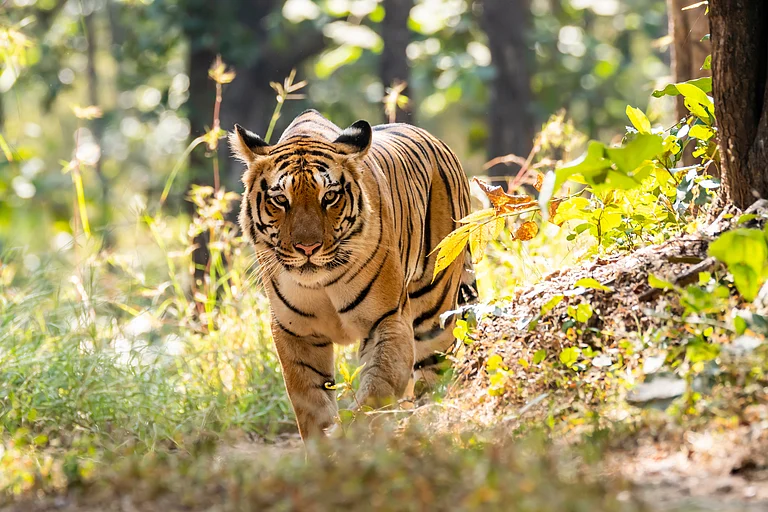
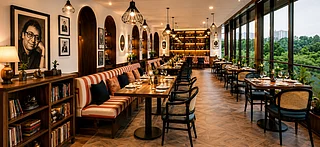
Anil Agarwala, the founder of Tathastu Resorts, a wildlife hospitality brand with properties across some of India's most celebrated forest destinations purchased 15 acres of land near Pench almost two decades ago. But at the time, hospitality was the last thing on his mind.
The entrepreneur, whose professional background spanned furniture exports, construction, interior design and handicrafts, was simply looking ahead to a quieter future. The property, nestled close to one of India's most celebrated tiger landscapes, was meant to be a personal retreat: a place where he could step away from the demands of business and spend time immersed in nature.
What followed was not a carefully plotted business strategy, but an organic evolution shaped by curiosity, hospitality and word of mouth. Today, Tathastu Resorts operates across some of India's leading wildlife destinations, including Pench, Kanha, Bandhavgarh, Tadoba and Satpura. Along the way, the brand has built a reputation for combining luxury, thoughtful service and immersive wilderness experiences—challenging the long-held belief that travellers must compromise on comfort when venturing into the wild.
Speaking to Outlook Traveller, Agarwala reflects on the unexpected journey from private lodge owner to wildlife hospitality entrepreneur, the changing face of wildlife tourism in India, and why meaningful experiences matter more than ever.
An Unplanned Journey


The origins of Tathastu Resorts can be traced back to a decision that had nothing to do with hospitality. Agarwala purchased the Pench property as a personal investment in a future he imagined would be slower and more connected to nature. The plan, he says, was modest. "There was a private bungalow and a small art centre. That was the entire plan."
What followed surprised him. Friends began asking if they could visit, then brought along their own friends. Gradually, the property became known beyond his immediate circle, attracting travellers who were looking for more than just a place to stay.
Reflecting on those early years, Agarwala realised that visitors were responding to something intangible. "People were not just looking for a place to stay. They were looking for a certain feeling. They wanted to slow down, spend time outdoors and reconnect with nature."
As interest continued to grow, the retreat evolved into a hospitality business, eventually becoming Tathastu Resorts. Yet despite its expansion across multiple wildlife destinations, Agarwala believes the original philosophy remains unchanged. "Even today, we still approach hospitality in much the same way. We simply try to create the kind of experience that we ourselves would enjoy as guests."
Interestingly, wildlife hospitality was never a career path he actively pursued. "I never sat down and decided that I wanted to become a wildlife hotelier," he says. "I was travelling through forests long before I entered the business."
Those experiences shaped his perspective on what wildlife tourism could become. While he loved India's forests, he was often frustrated by the standards of hospitality available around them. "There was a tendency to excuse poor hygiene, average food or inconsistent service because the property happened to be inside a forest destination. I never understood that logic."
That question would eventually become the foundation of the brand. "Why should guests compromise on comfort simply because they are close to nature? We wanted to prove that a meaningful forest experience and high hospitality standards can coexist."
The Changing Face Of Wildlife Travel
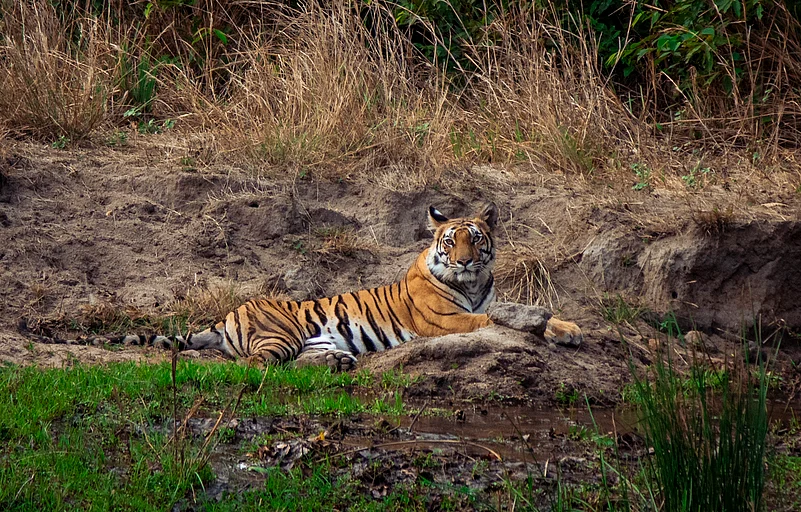
Few sectors of Indian tourism have evolved as dramatically as wildlife travel. Having witnessed that transformation firsthand, Agarwala points to changes that go far beyond infrastructure and accommodation. "The difference is extraordinary," he says. "I remember a time when we carried our own groceries into national parks because there were barely any facilities around. There were days when you could spend an entire safari without seeing another tourist vehicle."
Today, wildlife tourism occupies a much more prominent place in the travel landscape. Better roads, improved accommodation and growing awareness have made India's forests more accessible than ever before. Yet, according to Agarwala, the most significant shift lies in changing traveller expectations.
"The biggest change is that travellers are no longer chasing only tiger sightings. The forest itself has become the attraction."
That broader interest has opened the door to more immersive experiences. Guests increasingly seek birdwatching sessions, photography opportunities, interactions with naturalists, local cultural experiences and time spent simply being outdoors. "That shift is very encouraging because it creates a deeper appreciation for nature," he says.
The definition of luxury has evolved as well. Travellers are increasingly prioritising experiences over extravagance. "Earlier luxury was often associated with excess. Today many travellers define luxury as privacy, space, authenticity and time."
This desire for meaningful experiences has transformed the role of wildlife resorts themselves. Accommodation is no longer viewed merely as a base between safaris. Instead, it has become an integral part of how travellers engage with a destination and its surroundings.
Creating The Tathastu Experience

For Agarwala, the essence of hospitality has always been remarkably simple. While architecture and amenities matter, people remain at the heart of every memorable stay.
"Hospitality is still a human business," he says. "A beautiful room cannot compensate for indifferent service. On the other hand, genuine warmth can stay in a guest's memory for years."
That philosophy shapes how Tathastu's teams operate across its properties. Staff are encouraged to take ownership, solve problems and focus on creating meaningful guest experiences rather than simply following procedures. Food is another area where the brand places particular emphasis. "Across all our properties, we place enormous emphasis on quality, variety and personalisation," Agarwala explains. "When guests leave remembering the people, the food and the feeling of being connected to the forest, we know we have done something right."
His background in construction, interiors, furniture manufacturing and handicrafts has also influenced the development of the resorts themselves. Long before entering hospitality, he spent years designing and building spaces, experiences that continue to inform his approach today.
"I often visualise a property long before construction begins," he says. "Many people are surprised when I tell them that we have rarely relied on architects or consultants in the traditional sense."
Rather than applying a uniform template across destinations, the objective is to create properties that feel rooted in their surroundings. "Every destination has its own personality. The goal is never to impose a standard template but to create something that feels connected to the landscape around it."
Looking Ahead

As tourism increasingly embraces sustainability, Agarwala believes the concept must move beyond marketing language and become part of everyday operations. "I think sustainability becomes meaningless when it exists only in presentations and brochures," he says. For him, practical measures such as waste management, water conservation, rainwater harvesting, sewage treatment and reducing plastic consumption are what truly matter in wildlife destinations.
Equally important is the role of local communities. "Conservation cannot succeed if surrounding communities do not benefit from tourism. The two are closely linked." Across Tathastu's properties, local communities contribute not only to the workforce but also to the guest experience itself. Through local guides, cultural interactions, food traditions and storytelling, visitors gain a deeper understanding of the destinations they visit. "In many ways, they are the soul of the destination," Agarwala says. "Guests often remember a conversation with a local guide or a village visit long after they have forgotten the details of a room."
Looking to the future, he remains optimistic about the opportunities ahead. India, he points out, has hundreds of protected areas, many of which remain relatively unexplored from a tourism perspective.
For Tathastu Resorts, growth will continue, but with a clear sense of purpose. "The objective is not simply to add more properties," he says. "The objective is to create experiences that help people reconnect with nature."
It is a goal that feels remarkably consistent with the original reason he bought that piece of land in Pench all those years ago. What began as a personal escape evolved into a hospitality brand almost by accident, but its core philosophy remains unchanged: helping travellers slow down, immerse themselves in nature and discover that comfort and wilderness need not be mutually exclusive.