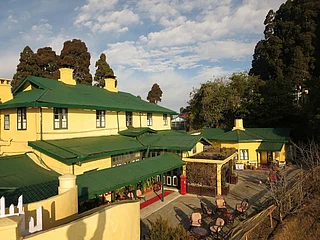


On the banks of the Ganges in Murshidabad, a late-18th-century palace has found an unusual way to remain part of the present. Bari Kothi, which means ‘Palace of the Elder’, spent nearly five decades behind closed doors before a five-year restoration turned it into a heritage hotel rooted in the history, architecture and communities of rural Bengal. Today, its old courtyards, period furniture, and elaborate interiors sit alongside a hospitality model built around local employment, sustainable practices and experiences shaped by the region.
Murshidabad was once the capital of Bengal and remains one of the state’s richest repositories of historic architecture, with remnants of its Mughal and colonial past scattered across the landscape. Bari Kothi belongs to this layered history. It was the ancestral home of Rai Bahadur Budh Singh Dudhoria, a prominent figure from the Sheherwali community, whose influence became part of the cultural fabric of the region. After years of disuse, the property was taken up for restoration by siblings Darshan Dudhoria and Lipika Dudhoria, who saw its future in heritage hospitality rather than simply preserving it as a relic.
Bringing An Old Palace Back To Life


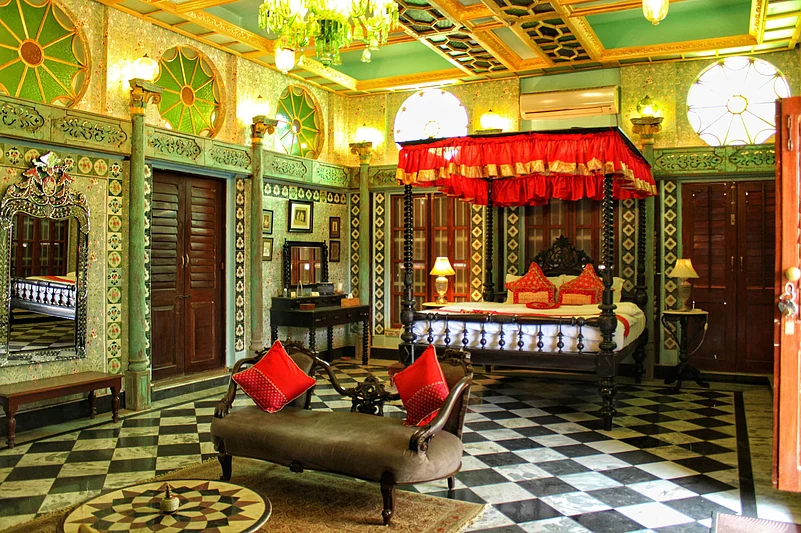
The restoration was undertaken with Canadian restoration specialist and architect Dr Samar Chandra, with the project following the principles of adaptive reuse. Rather than stripping the building down to create a conventional luxury hotel, the restoration worked around its existing character and architectural details. The result retains the patina and personality of an old Bengali mansion while introducing the amenities expected of a contemporary stay.
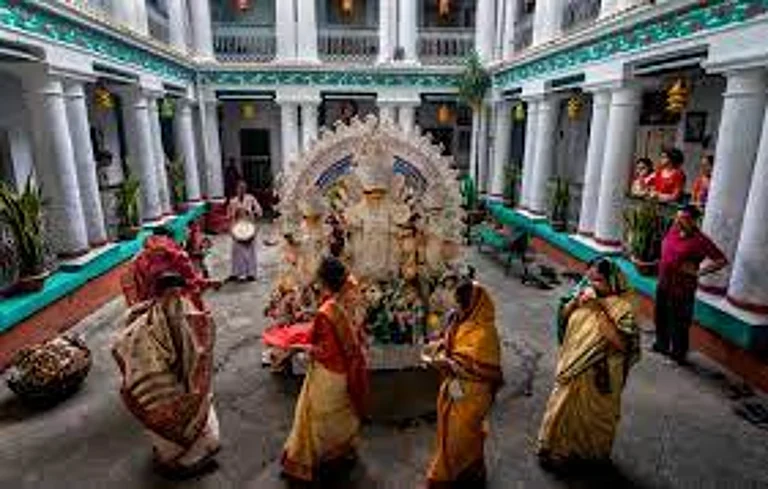
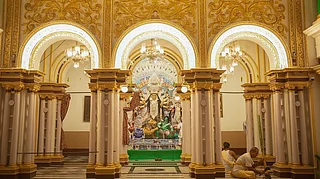
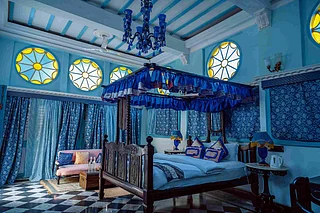
Seven open courtyards form the heart of the property, each lending a different character to the sprawling residence. Architectural influences ranging from Greek and Roman to French can be seen in details such as Corinthian pillars, circular windows and patterned flooring. Inside, antique furnishings and period pieces sit alongside modern comforts. The Royal Heritage Rooms feature original 18th-century furniture and views towards the Sheesh Mahal, while the Maharaja Suites draw on the grandeur associated with Nawabi-era interiors, with carved arches, and high wooden ceilings.
The restoration also extended beyond the building itself. More than 50 members of the local workforce, many of whom began without formal training, were taught skills including masonry, carpentry, painting, and welding during the project. Women from nearby tribal communities were trained in housekeeping and cleaning. Over time, several workers went on to learn aspects of hospitality, including cooking, serving, guiding, and translating. For Bari Kothi, conservation consequently became tied to livelihoods and skills development within the surrounding community.
A Hotel Shaped By Murshidabad

The idea of staying at Bari Kothi is closely connected to experiencing the region beyond its walls. The hotel develops customised itineraries based on individual interests, whether that means spending more time exploring local culture, learning about the area's history or meeting people involved in traditional crafts.
Food is another route into the landscape. The property grows some produce organically and sources seasonal ingredients from nearby farmers and vendors, helping reduce the distance food travels to the kitchen. Guests can also visit local farms and select vegetables, turning an everyday part of a hotel stay into a closer look at rural life.
Back at the property, meals can be served in several distinct spaces. The Durbar Hall has an 18-seater dining table suited to a more formal setting, while a Mughal-inspired dining room features hand-painted murals. A café by the river offers another setting for meals and refreshments. The 100-foot-long ghat is also part of the experience, particularly around sunset, when guests can sit by the river with drinks as the sky changes over the Ganges.
From Heritage To Hospitality

Bari Kothi's cultural programme brings together traditions associated with Bengal and Murshidabad. Guests can encounter Baul and Fakiri music as well as Raibeshe dance, while workshops introduce crafts such as pottery, shola art, kantha stitching, and block printing. These experiences create an additional connection with local practitioners while giving artisans an avenue to share their skills with visitors.
The hotel's approach to hospitality is equally rooted in the traditions of the Sheherwali community. Personalised itineraries, attentive hosting, and a sense of family form a significant part of the guest experience. Even the evening high tea is tied to the setting, combining snacks, and tea with local music.
For a property in a rural part of Bengal, practical amenities have not been overlooked. Rooms have Wi-Fi, and a complimentary tuk-tuk service connects guests with the railway station. Toiletry kits use bamboo and locally sourced ingredients, reflecting the property's wider focus on reducing waste. The restoration eventually evolved into a zero-waste project, extending the sustainability conversation beyond the conservation of the old building.
A New Chapter For An Old Address
Bari Kothi's transformation is ultimately about more than turning an abandoned palace into a hotel. Its restoration has preserved architectural details and family history while creating a working property that depends on the skills and participation of the people around it. The old mansion has therefore gained a second life without being separated from the place that gave it meaning.
For travellers arriving in Murshidabad, Bari Kothi offers a way to stay inside that history rather than simply pass through it. Its courtyards, riverfront, antique interiors, food, and cultural experiences provide different entry points into the story of the region. Fifty years after its doors closed, the Palace of the Elder is open again, this time as a living part of Bengal's heritage rather than a house frozen in the past.
The Information
Address: Jainpatty, Jiaganj Azimganj, Azimganj, West Bengal 742122
Tariff: INR 11,204 onwards
Contact: +91 90512 00800
Website: barikothi.com
FAQs
1. Where is Bari Kothi located?
Bari Kothi is located in Murshidabad, West Bengal, on the banks of the Ganges.
2. How old is Bari Kothi?
The palace dates back to the late 18th century and was originally associated with the Sheherwali community.
3. How long was Bari Kothi closed?
The palace remained locked away for nearly 50 years before its restoration.
4. What can guests experience at Bari Kothi?
Guests can explore local culture through music, dance, craft workshops, farm visits, customised itineraries, and regional food.
5. How is Bari Kothi connected to sustainability?
The property follows adaptive reuse principles, employs, and trains members of the local community, sources seasonal produce locally, and uses sustainable toiletries.