

In a temple town in Kerala's Pathanamthitta district, mirrors are made without glass, silver backing or the industrial processes associated with modern reflective surfaces. Known as the Aranmula Kannadi (Aranmula Mirror), these unusual objects are fashioned from a carefully prepared metal alloy and polished by hand until they produce a clear reflection. The craft is distinctive not only for its metallurgical ingenuity but also for the closely guarded knowledge behind it, passed down through generations of artisan families. Aranmula's mirrors are more than decorative curiosities. They are associated with temple traditions, auspicious ceremonies and the village's cultural identity. Their continued production offers a glimpse into a form of craftsmanship in which specialised knowledge, family inheritance and patience remain central to the making of an object.
The Story Behind The Silverless Mirror

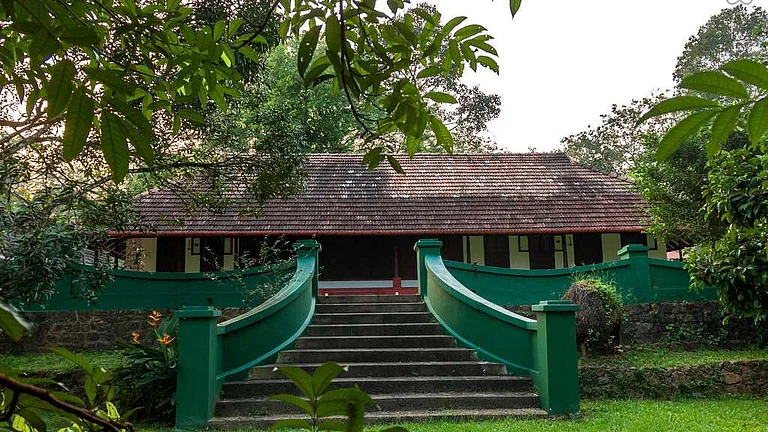
The origins of the Aranmula Kannadi are closely connected to the village's most important religious landmark, the Aranmula Parthasarathy Temple. Dedicated to Lord Krishna in his role as Parthasarathy, or the charioteer of Arjuna, the temple is believed to have played a significant role in the development of the craft. According to accounts preserved by the artisan community, bronze-smith families migrated to Aranmula from the region around Sankaran Koil in present-day Tamil Nadu, at the invitation of the King of Pandalam. They were brought in to assist with the construction and embellishment of the temple. Alongside making jewellery, bells and ritual vessels, the artisans worked with copper-based alloys and eventually discovered that a particular combination of metals, when polished, could produce a reflective surface.
Local legend offers a more mystical explanation. One popular account tells of a temple crown that needed to be replaced within a short period. An artisan, troubled by the task, is said to have received divine guidance in a dream about the proportions of a special alloy. The women of the community are believed to have contributed their gold ornaments to help procure the required metals. The resulting crown was said to possess an extraordinary shine and reflective quality. While these accounts are part of the craft's oral history rather than independently established historical facts, they explain the close association between the mirror, the temple and the artisan families.
Over time, the metal mirror became an important ritual object. Traditionally known as the Valkannadi, or handled mirror, it is included in the Ashtamangalyam, a collection of eight auspicious objects displayed during important ceremonies, including weddings. It is also associated with prosperity, good fortune and wellbeing. Today, the craft remains exclusive to Aranmula, with its specialised manufacturing knowledge preserved within a small number of artisan households.
The Metal Takes The Mirror's Place
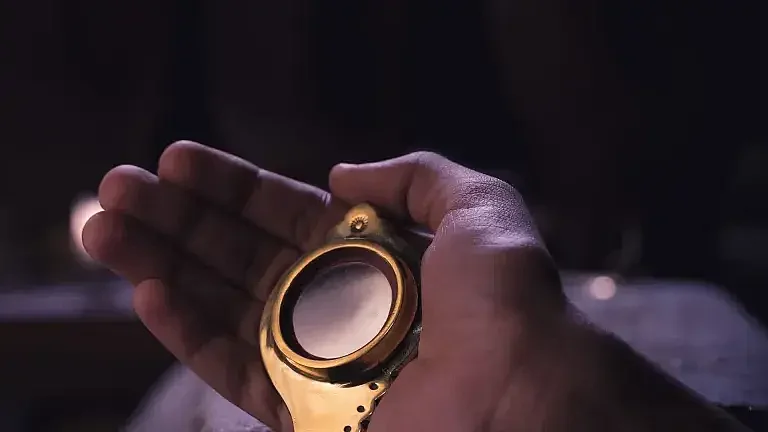
The distinction between an Aranmula Kannadi and an ordinary mirror lies in where the reflection takes place. Most conventional household mirrors are made from glass with a reflective metallic coating on the reverse. Light travels through the glass, reaches this backing and reflects towards the viewer. The process can produce secondary reflections and slight distortions. An Aranmula Kannadi, by contrast, is a front-surface mirror. Its reflective surface is the polished metal itself. Light reflects directly from the front, without passing through a layer of glass. This gives the mirror its characteristic clarity and eliminates the secondary reflection associated with conventional glass mirrors.
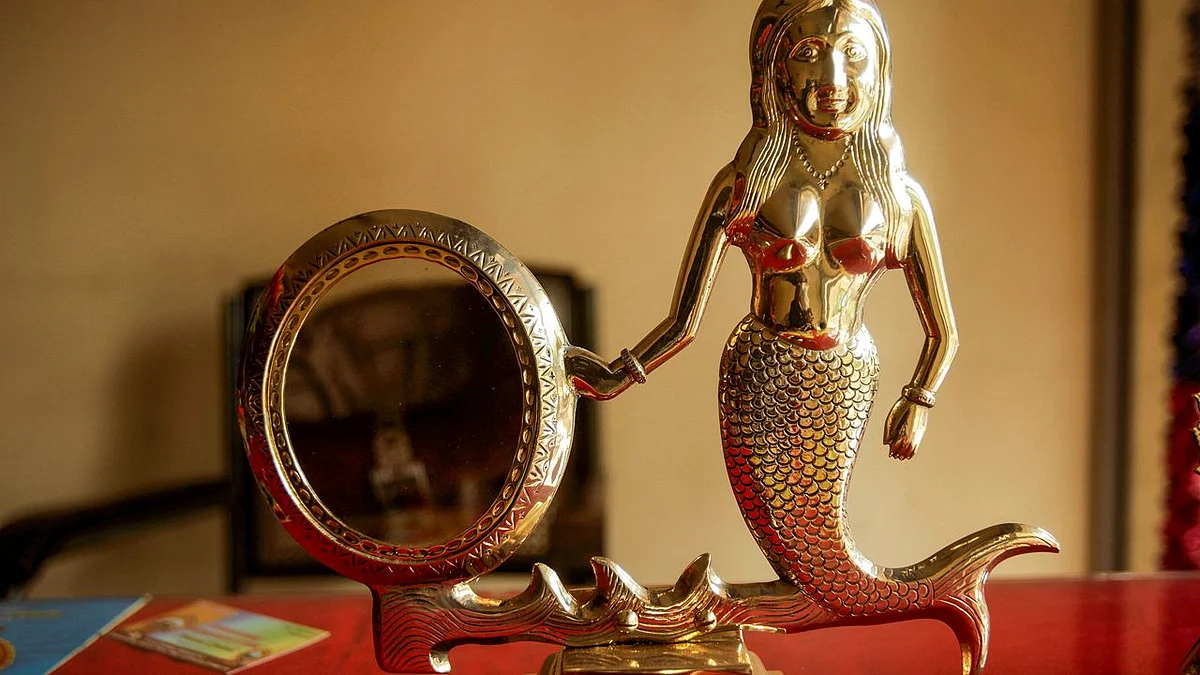
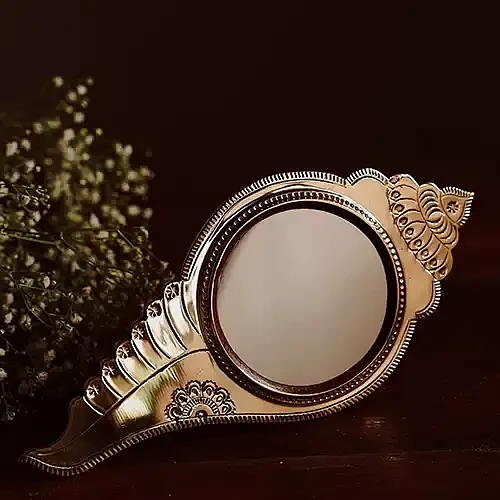
The mirror is generally understood to be made from a copper-tin alloy, often described as a form of speculum metal. However, the precise composition and proportions remain closely guarded knowledge within the artisan families. Its appearance is equally distinctive. Traditionally, the mirror has an oval reflective surface attached to an intricately worked metal handle, although contemporary versions are available in different shapes and sizes. Floral motifs, traditional patterns and elaborate brass frames lend the pieces their ornamental character. The result is an object that sits somewhere between a functional mirror, a piece of metalwork and a ceremonial artefact.
The Many Stages Of A Reflection
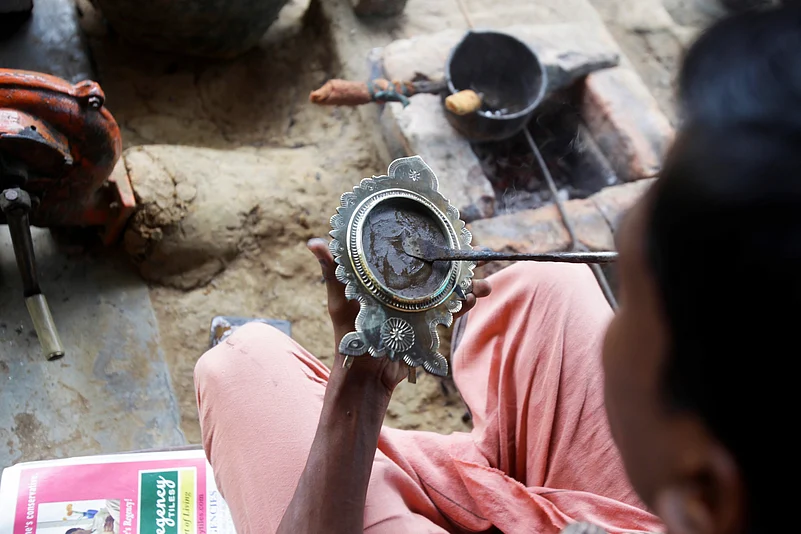
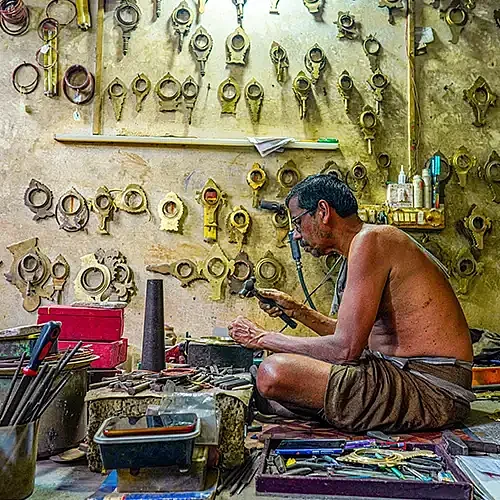
The making of an Aranmula Kannadi is a painstaking process that relies on generations of metallurgical knowledge and considerable manual skill. It begins with the preparation of a mould, traditionally using clay sourced from local paddy fields. Artisans employ the lost-wax casting technique, also known as cire perdue, in which a wax model is covered with layers of clay and heated until the wax melts away, leaving a cavity for the molten metal. The carefully prepared copper-tin alloy is then poured into the mould and allowed to solidify.
Once the casting is removed, cleaned and shaped, the most exacting stage begins. Artisans polish the metal repeatedly using traditional abrasives, materials and oils until its surface develops a clear reflection. This can take several days, with even minor imperfections affecting the final result. The precise alloy composition and polishing methods remain closely guarded within artisan families. Finally, the reflective surface is fitted into an ornamental frame, often crafted from brass and embellished with traditional motifs. Each mirror is thus a product of patient handwork and inherited expertise.
A Living Legacy Beyond The Mirror
The survival of the Aranmula Kannadi depends on something that cannot be easily reproduced through mechanisation: the accumulated knowledge of the people who make it. The composition of the alloy, the casting methods and the techniques used to achieve its reflective finish are inherited skills, preserved through generations of practice. As production remains concentrated among a small number of artisan families, the continuity of the craft is closely tied to their ability to sustain their livelihoods and pass on their expertise.
For visitors, this makes an encounter with Aranmula's mirror-making tradition particularly meaningful. Rather than viewing the Kannadi simply as a purchase, travellers can take an interest in the process behind it, understand the labour involved and recognise the value of keeping traditional skills economically viable. Purchasing directly from established artisan households can help support the people responsible for preserving the craft. Visitors should also look for information about the product's provenance and GI registration, rather than assuming that every decorative metal mirror sold as an Aranmula Kannadi is authentic.
Equally important is respecting the boundaries around traditional knowledge. The ingredients surrounding the alloy and certain production techniques are part of the community's inheritance. A visit to an artisan's workspace should be approached with permission, patience and an understanding that not every stage of the process may be open to observation or photography. In Aranmula, exploration is as much about supporting a living tradition as it is about discovering one. The mirror's reflection may be created through metal and meticulous polishing, but its enduring value comes from the people who continue to make it.
FAQs
1. What is Aranmula Kannadi?
Aranmula Kannadi is a traditional handcrafted metal mirror made in Aranmula village in Kerala's Pathanamthitta district. Unlike conventional mirrors, it uses a polished metal alloy rather than glass with a reflective backing.
2. What makes Aranmula Kannadi different from ordinary mirrors?
Aranmula Kannadi is a front-surface mirror that reflects light directly from its polished metal surface. Conventional mirrors use a reflective coating behind glass, which can produce secondary reflections.
3. How is Aranmula Kannadi made?
The mirror is made using a traditional lost-wax casting technique, followed by extensive hand-polishing. Artisans shape a specialised copper-tin alloy and polish it repeatedly until it develops a clear reflective surface.
4. Why is Aranmula Kannadi considered auspicious?
The mirror is traditionally associated with prosperity and good fortune. Known as the Valkannadi, it is included among the eight auspicious objects of the Ashtamangalyam, displayed during important ceremonies such as weddings.
5. Does Aranmula Kannadi have a Geographical Indication (GI) tag?
Yes. Aranmula Kannadi received its Geographical Indication registration on September 19, 2005. The recognition protects the identity of this distinctive metal mirror-making tradition associated with Aranmula, Kerala.