

Tourism is often measured through visitor numbers, hotel occupancy and the money a destination brings in. But in Kerala, its success is increasingly being measured by something else: how much of that money reaches the people who call it home.
From women running homestays and preparing traditional meals to farmers supplying fresh produce to hotels, Kerala has spent years building a model that brings local communities into the tourism economy. At the centre of this effort is the Kerala Responsible Tourism Mission Society, which works to connect tourism with rural livelihoods, local culture and environmental conservation.
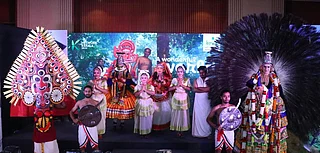
Leading much of this work is Rupeshkumar K., CEO of the Kerala Responsible Tourism Mission Society, who recently received the 'Pioneering Contribution to Responsible Tourism' award instituted by the International Centre for Responsible Tourism (ICRT Global). Recognised as the highest individual honour in global responsible tourism, the award acknowledges his contribution to implementing responsible tourism practices in Kerala.
Rupeshkumar has previously received the World Travel Market (WTM) London's Outstanding Achievement Award and won Outlook Responsible Tourism's Indian Responsible Tourism Leader Award. Under his leadership, Kerala's Responsible Tourism initiatives have also received 24 national and international awards. But for him, the most meaningful recognition has little to do with awards.
Making Tourism Work For Local Communities


Ask Rupeshkumar what makes him proudest about Kerala's responsible tourism journey, and his answer comes down to the lives that have changed along the way. In particular, he points to the growing financial independence of women in rural communities.
"While global accolades like ICRT Global Awards or international recognition are deeply humbling, the real trophy sits in the courtyard of an ordinary village home in Kerala. The proudest change I see is dignity through economic self-reliance, particularly for our women," he explains.
Earlier, much of the money generated through tourism stayed with large operators and intermediaries, while villagers were often limited to basic jobs. The aim was to change this and give communities a direct stake in the tourism economy. And so, today, housewives, weavers, farmers and artisans are finding opportunities as entrepreneurs. Some run homestays, others supply produce to hotels, prepare local cuisine or participate in Village Life Experience packages that introduce visitors to everyday life in rural Kerala.
"When a woman who once struggled to make ends meet hands a traveller a cup of locally brewed tea, looks them in the eye as an equal business partner and earns an independent livelihood, that financial security and social transformation is our greatest victory," he adds.
Making this possible required a different approach to tourism planning. Instead of deciding what a village should offer from government offices, the Mission began involving residents in the process. One of its key initiatives is PEPPER, which stands for People's Participation for Participatory Planning and Empowerment through Responsible Tourism. The programme begins with Tourism Grama Sabhas, where villagers come together to identify their area's natural, cultural and heritage resources. Local resource persons then help map these assets and identify tourism opportunities.
Once a community decides to participate, local Responsible Tourism Mission units are formed, followed by hospitality training, capacity building and market connections. Local Self-Governments also play an important role, ensuring the participation of women, marginalised communities and differently-abled individuals.
"They aren't just employees; they own the supply chains, manage the community tour packages and decide how tourism grows in their backyard," Rupeshkumar emphasises.
Moving Beyond Crowded Tourist Hotspots

As Kerala continues to attract travellers from across the world, managing visitor numbers has become an important part of its responsible tourism strategy. Popular destinations can easily become victims of their own success, with increasing footfall putting pressure on local environments and ways of life.
For Rupeshkumar, the answer lies in spreading tourism across lesser-known destinations rather than allowing it to concentrate around a handful of popular spots. "Mass tourism destroys the very soul of what travellers come to find. Our mantra has always been dispersion instead of concentration and carrying-capacity-based planning," he says.
Through destination development and community-led experiences, the Mission aims to introduce visitors to rural areas often overlooked by conventional tourism circuits. Its Village Life Experience packages revolve around everyday activities rather than large-scale commercial attractions. These could include canoe rides through backwaters, walks through paddy fields or watching traditional coir-making.
The idea is to offer visitors an experience of local life without turning villages into crowded tourist attractions. Rupeshkumar believes that involving residents in tourism management is also one of the most effective ways to protect local culture. "Because the local community is in the driver's seat, they act as the ultimate cultural guardians. When locals realise that their authentic lifestyle, unpolluted environment and traditional art forms are their primary economic assets, they become fiercely protective of them," he explains.
Building Trust Before Building Tourism

Responsible tourism was not always an easy idea to sell. When the concept was first introduced in Kerala, there was considerable scepticism from both the tourism industry and local communities. Traditional tourism businesses questioned whether rural communities had the skills to participate in the sector, while villagers were wary of government initiatives and the possibility of being exploited.
Rupeshkumar recalls that the turning point came through the pilot project in Kumarakom. The team began by addressing practical problems rather than introducing a large tourism plan.
"We didn't try to change minds through speeches; we showed results on the ground," he recalls.
One of the first steps involved connecting local farmers directly with resorts so they could sell their vegetables instead of losing produce that had no market. Farmers found a reliable source of income, while hotels gained access to fresher and more affordable local produce.
"Once the farmers saw immediate money in their pockets and once hoteliers realised local sourcing was fresher and cheaper, the mindset shifted. Success became our best argument. Resistance melted away the moment dignity and economic viability walked hand-in-hand," he adds.
Looking at Kerala's experience, Rupeshkumar believes other states can adopt similar models, provided they get three things right: grassroots participation, locally driven economic activity and the protection of cultural and ecological resources.
Can Technology Make Rural Tourism More Responsible?

With artificial intelligence and digital travel platforms changing the way people discover and book destinations, technology is likely to play a bigger role in rural tourism over the coming decade. However, Rupeshkumar believes its impact will depend on who controls these tools and who benefits from them.
Large digital platforms could end up commercialising rural destinations, encouraging overcrowding and taking tourism revenue away from local communities. At the same time, technology can help manage visitor movement and give smaller businesses better access to travellers.
"Technology is a powerful tool, but it is entirely dependent on who holds the steering wheel. If we harness technology democratically, it can be the greatest protector of rural communities," he says.
Digital mapping and AI-powered predictive analytics could help destinations monitor visitor numbers, identify pressure points and distribute tourist traffic across villages. Direct-to-consumer platforms could also allow local artisans and homestay owners to promote their offerings and manage bookings without depending on intermediaries.
However, he is clear that technology should support, rather than replace, the human connections that make rural travel meaningful.
For Kerala, the challenge ahead is to ensure tourism continues to create opportunities without taking away from the communities and landscapes that make the state special. Its journey so far offers a reminder that a destination's success is not just about how many people visit, but also about how many local lives benefit from their arrival.
FAQs
1. What is Kerala's responsible tourism model?
Kerala's responsible tourism model aims to ensure that tourism benefits local communities while protecting the environment and cultural heritage. It connects visitors and tourism businesses with local farmers, artisans, women entrepreneurs and rural service providers.
2. What is the Kerala Responsible Tourism Mission Society?
The Kerala Responsible Tourism Mission Society is an initiative that works to connect tourism with local livelihoods, cultural preservation, environmental conservation and community participation across the state.
3. Who is Rupeshkumar K.?
Rupeshkumar K. is the CEO of the Kerala Responsible Tourism Mission Society. He has been recognised for his contribution to responsible tourism, including receiving the ICRT Global's Pioneering Contribution to Responsible Tourism award.
4. How does responsible tourism benefit women in Kerala?
Kerala's responsible tourism initiatives create opportunities for women to participate in the tourism economy through homestays, local food experiences, handicrafts, hospitality services and other community-led businesses. These activities can help strengthen their financial independence.
5. What is the PEPPER programme in Kerala?
PEPPER stands for People's Participation for Participatory Planning and Empowerment through Responsible Tourism. It involves local communities in identifying tourism resources, planning experiences and developing opportunities in their villages.