Every region in India marks time differently. A harvest, a monsoon or the memory of an old battle can all be reasons enough for a festival, each carrying its own music, dress and ritual logic that rarely makes it into a standard travel itinerary. The festivals below span the length of the country, from a Himalayan monastery to a village square in Goa, and are best understood through the communities that keep them alive.
Korzok Gustor
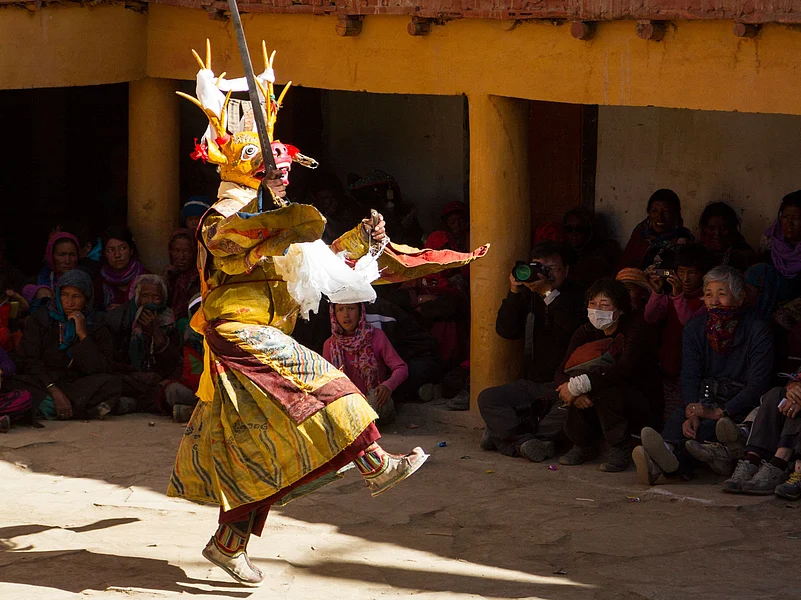

Korzok Gustor is a two day monastic festival held at Korzok Monastery in Ladakh, perched above Tso Moriri lake at an altitude of over 4,500 metres. Monks of the Drukpa lineage perform Cham, ritual masked dances that reenact the triumph of good over evil, timed to the Tibetan Buddhist calendar. The festival builds toward the Black Hat Dance, which commemorates the historical assassination of the ninth century Tibetan king Langdarma. Set against the high altitude desert of the Changthang plateau, the event draws local herding communities as much as travellers.
Madai
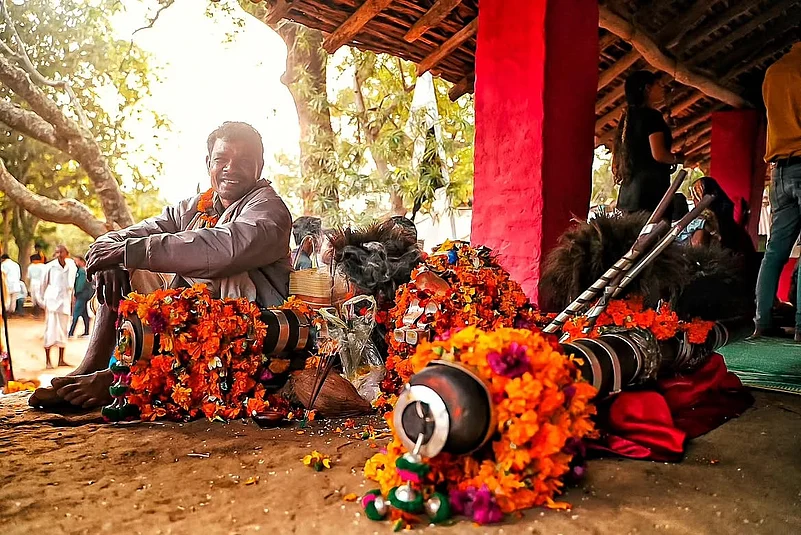
Madai is an Adivasi festival celebrated by the Gond community across the Bastar and Kanker regions of Chhattisgarh, touring from village to village between December and March. Most local Madai fairs honour village deities, while the best-known version, the Phagun Madai held at Dantewada in February and March, centres on Goddess Danteshwari, the presiding deity of the Bastar region. Villages come together for processions carrying the palanquins of local deities, accompanied by masked folk dances performed by tribal groups. Alongside the rituals, Madai fairs turn into bustling markets where handicrafts, forest produce and local feasts are traded and shared. It remains one of the clearest windows into Bastar's tribal social structure, where the sacred and the communal are never separate.
Chapchar Kut
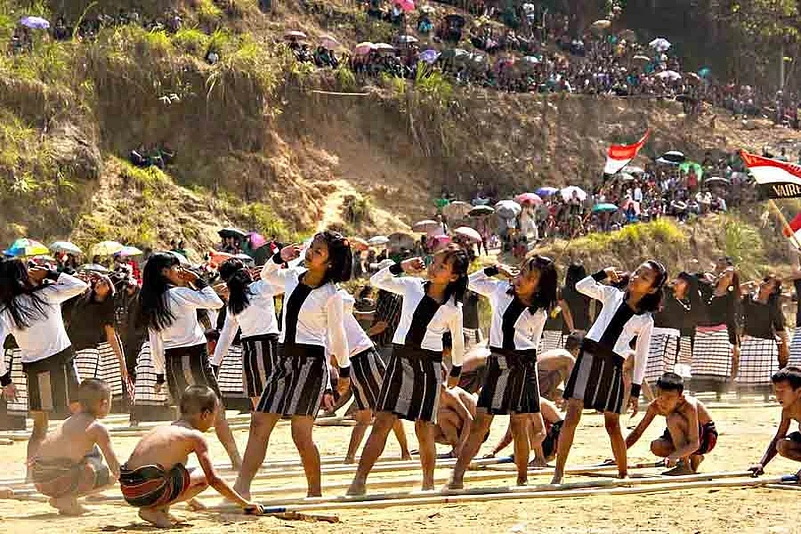
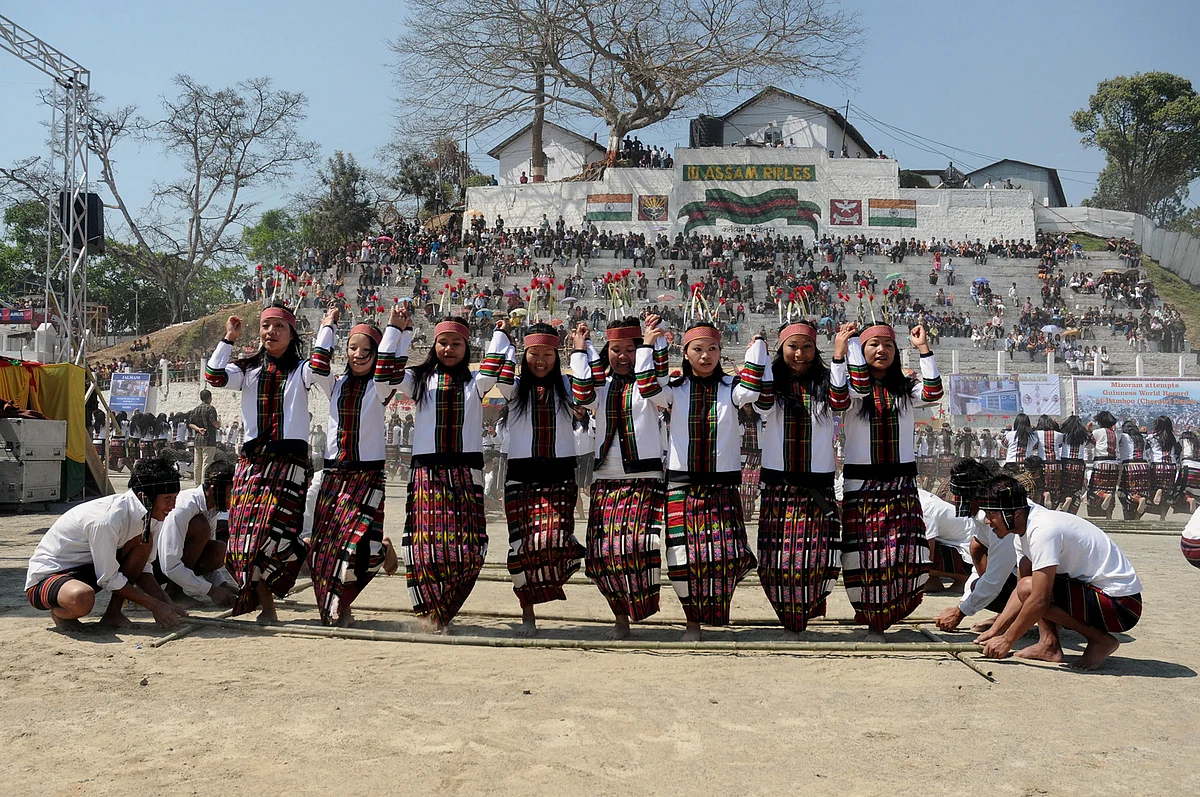
Chapchar Kut is Mizoram's principal spring festival, celebrated in March during the brief lull after the arduous work of clearing forest land for jhum, or shifting, cultivation. Its origins are traced to the seventeenth century, though the festival was discouraged in the early twentieth century as Christian missionary influence spread through Mizoram, and it was revived in its present mass, public form in 1973. It has since grown into a symbol of Mizo unity and identity, built around music, indigenous sports and dance, chief among them the Cheraw, popularly called the Bamboo Dance, in which dancers step between clapping bamboo poles held by others in precise rhythm.
Shigmo Festival
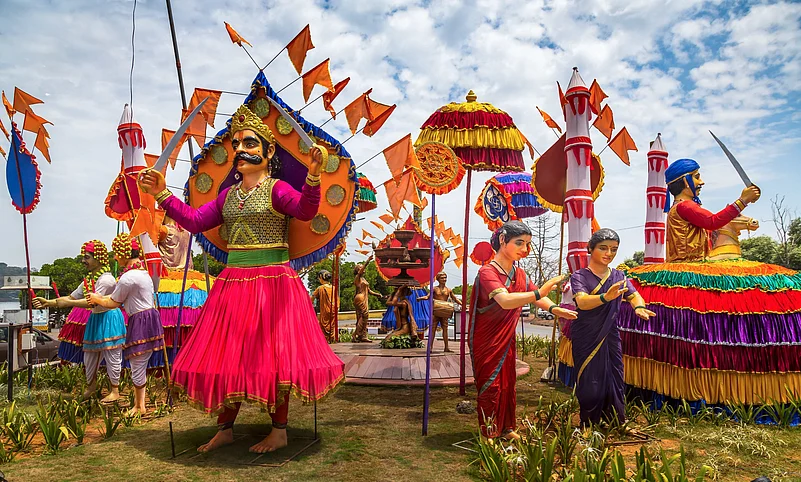
Shigmo is Goa's spring folk festival, celebrated throughout March across towns and villages in the state. It marks the end of winter and, in local memory, the homecoming of warriors, and is built around honouring village deities rather than any single temple. Communities organise percussion troupes and long street parades featuring floats drawn from Goan mythology. A highlight is the Ghodemodni, a horse dance performed by men in warrior costume that recalls Goa's martial history. Unlike Goa's more commercialised festivals, Shigmo remains rooted in village participation, with each ward contributing its own float and performance.
Behdienkhlam

Behdienkhlam is the most important festival of the Pnar tribe, celebrated in July in the town of Jowai in Meghalaya's West Jaintia Hills. Its name loosely translates to "chasing away the plague," and the festival invokes blessings for a good harvest and freedom from disease. Villages build tall wooden structures called Rots, decorated in bright colours, which are carried through the streets amid drumming and dance before being ceremonially immersed in a muddy pool known as Aitnar. The ritual, along with a symbolic tug-of-war, is meant to cleanse the community and prepare it for the agricultural season ahead.
Thimithi
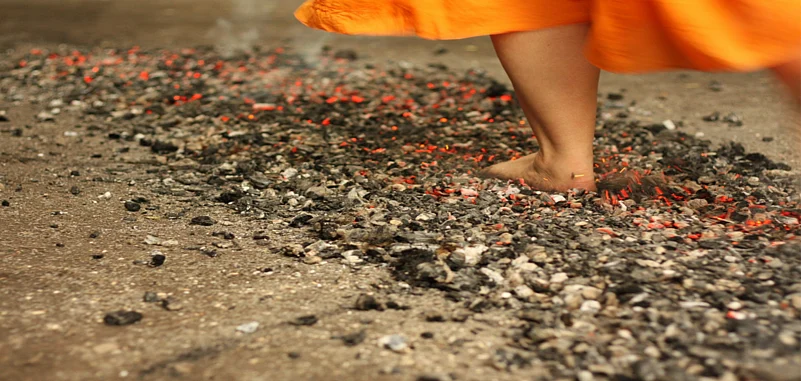
Thimithi is a fire-walking festival observed by Tamil Hindu communities in Tamil Nadu, most prominently at temples dedicated to Draupadi. It commemorates an episode from the Mahabharata in which Draupadi proves her purity, and devotees walk barefoot across a bed of glowing embers as an act of faith and vow fulfilment. The festival typically includes theatrical reenactments of scenes from the epic performed in the days leading up to the fire walk, along with processions of temple chariots through the streets. The ritual is taken seriously as a personal act of devotion rather than a spectacle staged for onlookers.
These festivals are a reminder of how much variation exists within one country. Travelling toward one is less about the spectacle and more about arriving at a moment that belongs first to the people who built it.
FAQs
1. What are some traditional festivals in India?
Madai, Chapchar Kut, Shigmo, Behdienkhlam and Thimithi are among the traditional festivals celebrated across different regions of India.
2. Which festivals showcase tribal culture in India?
Madai in Chhattisgarh and Behdienkhlam in Meghalaya offer insights into the traditions and community life of the Gond and Pnar communities respectively.
3. Which traditional festivals can you experience in Northeast India?
Chapchar Kut in Mizoram and Behdienkhlam in Meghalaya are two major traditional festivals in Northeast India.
4. Which Indian festival is associated with fire walking?
Thimithi is a Tamil Hindu fire-walking festival associated with Draupadi, in which devotees walk barefoot across a bed of glowing embers.