


The story behind a festival is often as fascinating as the celebration itself. Most of them begin with an origin surrounding victories, harvests, and mythology. But Chapchar Kut, one of Mizoram’s biggest festivals, traces its origins to something far less expected - a hunt with a twist.
Observed during a brief pause in the farming calendar, the festival takes its name from ‘Chap’ (cut bamboo and trees), ‘Char’ (dried up), and ‘Kut’ (festival).
From Hunt To Heritage
According to Mizo oral traditions recorded by the Government of Mizoram, the story dates to the period when Mizo ancestors lived along the Rûn and Ṭiau rivers, between 1450 and 1700 AD. During the annual Chapchar season, a brief lull in the Jhum (Shifting) cultivation cycle, forests had already been cut and left to dry before burning. It was during this period that a village chief, his elders and a group of warriors set out on a hunting expedition, only to return empty-handed.
As they approached the village, they felt deeply embarrassed and disheartened, losing all enthusiasm for the traditional ‘Hah Zu’ (resting beer) session the following morning. To console his disappointed hunting companions, the chief hosted a feast using an assortment of livestock (Ran lukim — including a mithun (gayal), pig, and fowl) as a comforting meal. His fellow hunters contributed fowls and pots of rice beer (Zu), while the chief provided the main large communal pot. They then invited the young men and women of the village, completely halting all work to celebrate intensely. What began as consolation soon turned into a celebration.
The gathering grew larger as elders emerged from their homes carrying more food and drink. The chief’s courtyard filled with laughter, music, and revelry. Ironically, the hunters discovered that they were enjoying themselves far more than they usually did after a successful hunt. This spontaneous feast is regarded as the first Chapchar Kut.


The following year, villagers gathered again during the same agricultural pause. Another feast was organised, and the communal celebration repeated itself. Over time, the annual gathering became an established festival.
Some oral traditions identify the village of Seipui (also written as Suaipui) as the place where Chapchar Kut was first celebrated.

The Curious Tradition Of The “Beer Fine”
One of the most intriguing details in the origin story involves the village children.
Community narratives also recount a playful custom involving village children during the early celebrations. Children who lingered to watch the festivities were jokingly threatened with a 'beer fine'. Those unable to pay were asked to scoop rice beer from the dancers' pots and serve it back to the gathering. While this anecdote is not as widely documented as the central hunting legend, it survives in local storytelling as one of the festival's memorable social customs.
From Folklore To Festival grounds

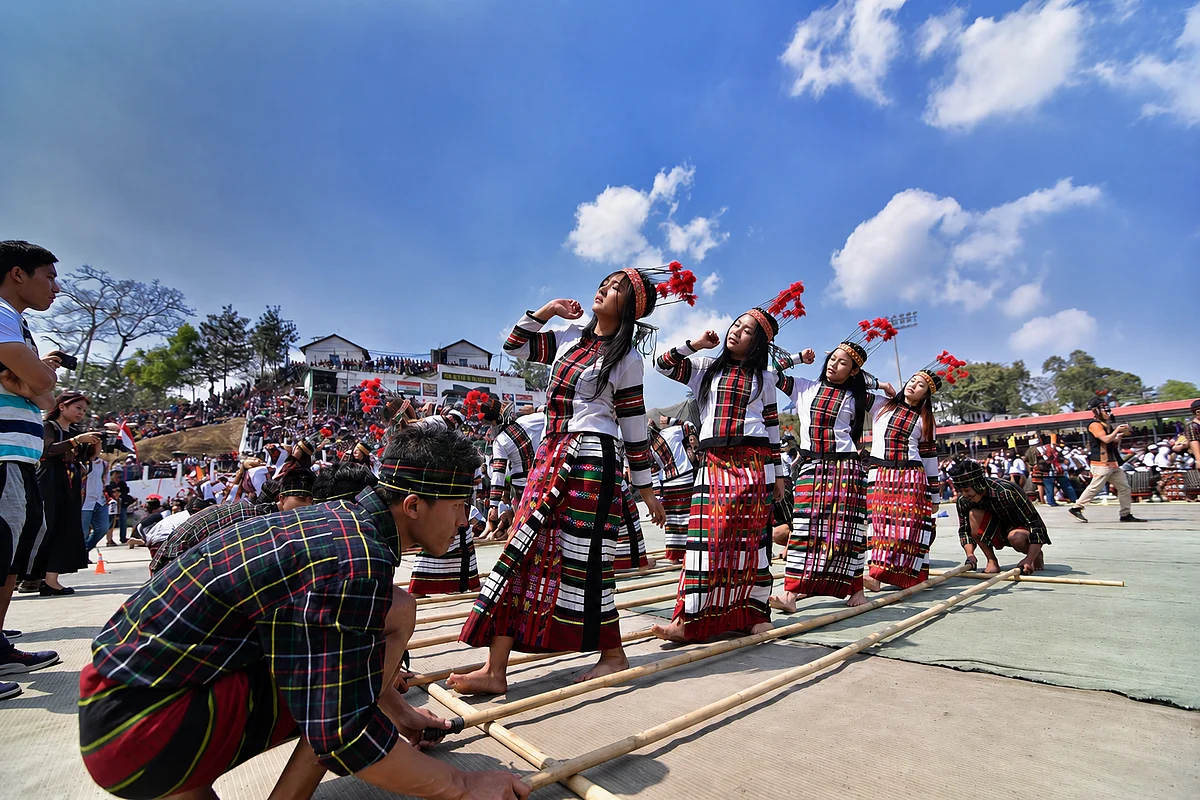
It is celebrated annually in early March across Mizoram, particularly in Aizawl, with large-scale cultural programmes, traditional music and dance performances, indigenous games, handloom and handicraft exhibitions, art and photography displays, and food stalls serving Mizo cuisine. One of the festival's highlights is the ‘Cheraw’, the traditional bamboo dance in which performers weave in and out of rhythmically clapped bamboo staves with remarkable grace and precision. Traditional attire remains central to the celebrations, with women wearing the vibrant ‘Puanchei' and performers often donning the distinctive ‘Vakiria’ headdress.

The festival is also associated with ‘Chai’, a traditional Mizo dance that many oral traditions trace back to the swaying, communal dance performed during that first impromptu feast. What began as a way to cheer up a group of disappointed hunters has endured as a celebration of community, resilience, and cultural identity.

As interest in cultural tourism grows, festivals such as Chapchar Kut remind us of the importance of experiencing heritage with respect and curiosity. For travellers, the festival is an opportunity to engage with local traditions, support indigenous crafts and learn about the customs that shape community life in Mizoram. In doing so, travel becomes an exchange grounded in understanding, appreciation and responsibility.
FAQs
1. What is Chapchar Kut?
Chapchar Kut is one of the most important festivals of Mizoram, celebrated annually in early March after the completion of forest clearing for jhum (shifting) cultivation.
2. What does the name Chapchar Kut mean?
The name is derived from three Mizo words: Chap (cut bamboo and trees), Char (dried up), and Kut (festival), referring to the agricultural season during which it is celebrated.
3. What is the origin of Chapchar Kut?
According to Mizo oral traditions, the festival began when a village chief organized a feast to cheer up hunters who had returned empty-handed from a hunting expedition. The gathering became an annual community celebration.
4. How is Chapchar Kut celebrated today?
The festival features traditional dances, music performances, indigenous games, handicraft exhibitions, cultural programmes, and food stalls showcasing Mizo cuisine across Mizoram, especially in Aizawl.
5. Which traditional dances are associated with Chapchar Kut?
Chapchar Kut is best known for the Cheraw (bamboo dance), where dancers move between rhythmically clapped bamboo staves. The festival is also associated with the traditional Mizo Chai dance.


