

India's drinking culture extends far beyond its popular spirits, wines and beers. Across its villages, mountains, forests and coastal communities, generations have perfected traditional methods of brewing and fermenting locally available ingredients into distinctive alcoholic beverages. Made with everything from rice and millet to fruits, flowers and palm sap, these drinks are deeply connected to the agricultural practices, climate and food traditions of their regions.
Often prepared at home or by local brewing communities, many rely on age-old fermentation techniques and recipes passed down through generations. While some are consumed during festivals and community gatherings, others are part of everyday life. Here are some traditional alcoholic drinks from across India, and what makes each of them unique.
Handia: The Traditional Rice Beer Of Jharkhand And Odisha
Popular among tribal communities such as the Ho, Munda, Santhal and Oraon, Handia is a traditional rice-based fermented beverage found across Jharkhand and Odisha. Its name is believed to come from the earthen pot, or handi, traditionally used to prepare and store it.
The preparation begins with rice, which is cooked and allowed to cool. It is then mixed with ranu, a naturally prepared starter culture made using a combination of forest herbs, roots, leaves and barks. The composition of ranu varies between communities and households, with some recipes incorporating several different plant ingredients. These tablets initiate fermentation and contribute to the drink's distinctive flavour.
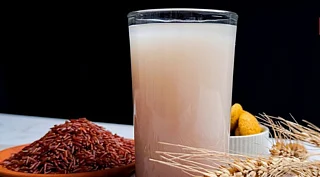
The rice and starter mixture is transferred into an earthen pot and left to ferment for several days. Once ready, water is added and the mixture is strained to obtain the beverage. Handia is typically milky-white, mildly alcoholic and has a slightly sour, fermented taste. It is often served during community gatherings, festivals and social occasions, sometimes in cups made from sal leaves. What makes it particularly interesting is that its flavour is closely linked to the locally sourced ingredients used in the starter culture.
Mahua: A Spirit Prepared Using Flowers
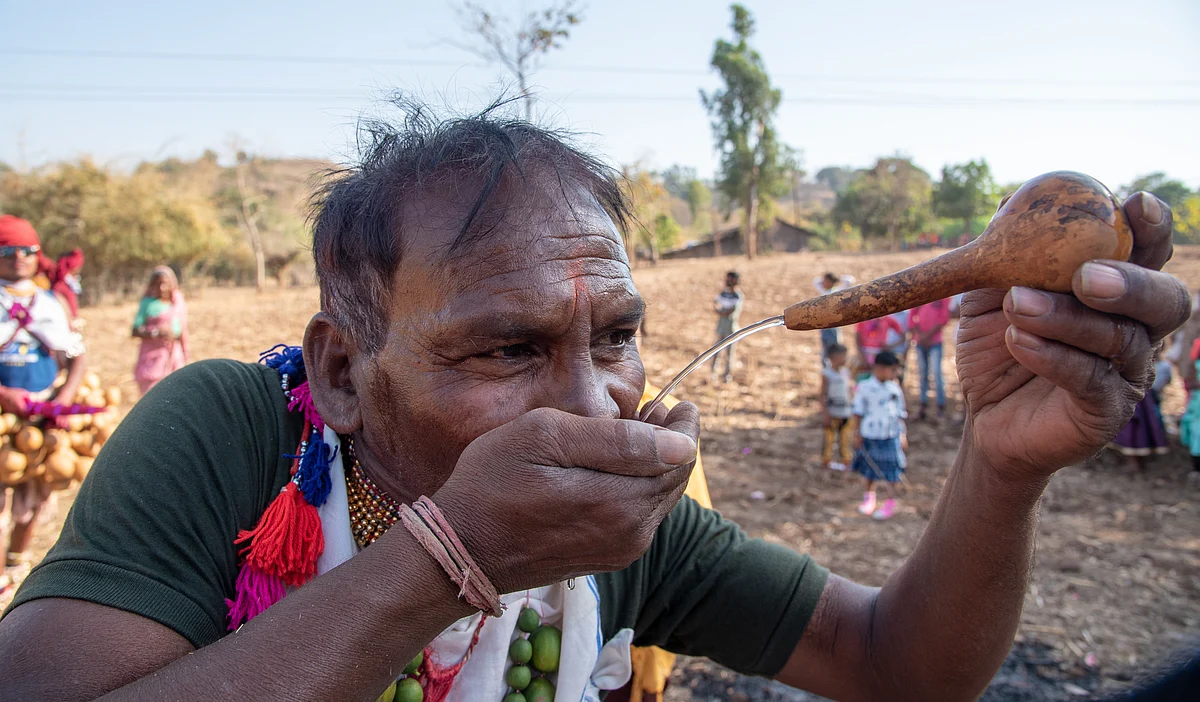
Unlike most alcoholic beverages made from grains or fruits, Mahua is prepared using the sweet, fragrant flowers of the Mahua tree (Madhuca longifolia). The drink is particularly associated with Adivasi communities across Madhya Pradesh, Chhattisgarh, Jharkhand, Odisha and parts of Rajasthan.
The process begins with collecting freshly fallen Mahua flowers, which are spread out in the sun to dry. Drying helps preserve their natural sugars, making them suitable for brewing throughout the year. When required, the dried flowers are soaked in water and left to ferment for a few days. Some communities also use locally available leaves or starter cultures to facilitate fermentation.
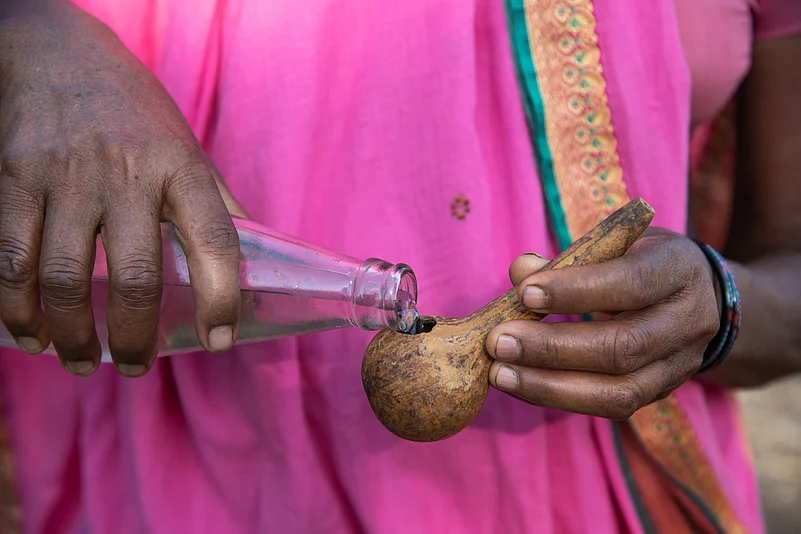

The fermented mixture is subsequently distilled to obtain Mahua liquor. Traditionally, this involves a simple three-vessel arrangement: the fermented flowers are heated in the bottom vessel, the vapour rises into the middle chamber, and a vessel containing cold water above helps condense it into liquid alcohol. The resulting spirit has a distinctive floral character and is deeply associated with the cultural and social practices of several indigenous communities.
What makes Mahua particularly distinctive is its raw material. The flowers are not merely an ingredient but also an important forest resource, traditionally collected, dried and stored by communities for both culinary and brewing purposes.
Chhang: The Barley-Based Brew Of Ladakh
A familiar part of Ladakhi social and cultural life, Chhang is a traditional fermented alcoholic beverage made primarily from barley. It is also consumed in parts of Himachal Pradesh, including Lahaul and Spiti, where variations of the drink are prepared using locally available grains.
The brewing process starts with cleaning and boiling barley grains. Once cooked, the grains are spread out to cool before being mixed with an indigenous starter culture known as phab or phabs. This starter is particularly important because it introduces the microorganisms responsible for fermentation. In Ladakh, phabs is traditionally prepared using roasted barley flour and locally available herbs.
The mixture is transferred into an airtight container and allowed to ferment. Depending on the temperature and desired strength, fermentation can take several days. Once ready, the fermented grains are transferred to a wooden vessel, water is added and the liquid is extracted through repeated filtration. The different extractions are then blended to achieve the desired flavour and strength.
Chhang generally has a mild, slightly sweet and sour flavour. Its significance, however, goes beyond its taste. It is traditionally served to welcome guests and features prominently in weddings, festivals and other community gatherings. It is also used to prepare kholak, a traditional preparation combining Chhang and barley flour.
Apong: The Indigenous Rice Beer Of Assam And Arunachal Pradesh
Apong is a traditional rice-based alcoholic beverage associated particularly with the Mishing and Adi communities of Assam and Arunachal Pradesh. It is an important part of their cultural identity and is traditionally served to guests during festivals, celebrations and community gatherings.
There are two well-known varieties of Apong among the Mishing community: Nogin Apong and Poro Apong. The latter is particularly interesting because of its preparation technique. Cooked sticky rice is cooled on banana leaves and mixed with a locally prepared starter culture called E'pob. This starter is made using rice flour and a combination of several locally available plants and herbs.

For Poro Apong, ash obtained from burnt paddy straw and rice husks is also incorporated into the mixture. The preparation is transferred into an earthen vessel, sealed and left to ferment. Depending on the season, fermentation can take anywhere between six and 15 days. The mixture is subsequently filtered to obtain the finished beverage.
The use of burnt paddy straw gives Poro Apong its characteristic dark, charcoal-like appearance, distinguishing it from other rice beers. The preparation is an excellent example of how agricultural by-products and indigenous fermentation knowledge come together to create a regional beverage.
Feni: Goa's Distinctive Cashew-Based Spirit
One of India's most recognisable indigenous spirits, Feni has a long association with Goa. While coconut Feni is also produced, cashew Feni is particularly distinctive because it is made from the juice of cashew apples rather than the nuts.
The process begins towards the end of the cashew season, when ripe cashew apples that have fallen naturally from the trees are collected. The fruits are crushed to extract their juice, which is then allowed to ferment naturally. Traditionally, the fermented juice is distilled in copper vessels, using a system in which the vapour travels through a conduit and is cooled to produce the spirit.

The first distillate is known as urrak, a lighter and less potent drink that is particularly popular during the summer months. Further distillation produces Feni, a stronger spirit with a pronounced fruity aroma and distinctive flavour. Depending on the production process, it can be consumed neat, over ice or used as a base for cocktails.
What sets cashew Feni apart is its close association with Goa's cashew-growing landscape and its traditional production methods. It also has a Geographical Indication (GI) tag, recognising its regional identity and heritage.
Toddy: The Naturally Fermented Palm Drink
Toddy, locally known as kallu in parts of South India and tadi in several other regions, is a naturally fermented alcoholic beverage made from the sap of palm trees. Depending on the region, the sap may be collected from coconut, palmyra or date palms.
Its preparation begins with the skilled work of toddy tappers, who climb the trees and carefully cut the unopened flower clusters to extract the sap. A container, traditionally an earthen pot, is attached beneath the cut to collect the liquid. Initially, the sap is sweet and non-alcoholic. However, naturally occurring yeasts begin fermenting its sugars soon after collection, gradually turning it into an alcoholic beverage.
Freshly fermented toddy is generally milky-white, mildly effervescent and slightly sweet, with a characteristic tanginess. As fermentation continues, its flavour becomes increasingly sour and acidic. This is why it is traditionally consumed fresh, often within a day or two of collection.
In Kerala, toddy is closely associated with local toddy shops, known as kallu shaaps, where it is traditionally enjoyed alongside spicy seafood, tapioca and meat preparations. Its dependence on natural fermentation and the skill involved in tapping palm trees make it quite different from commercially produced alcoholic beverages.