


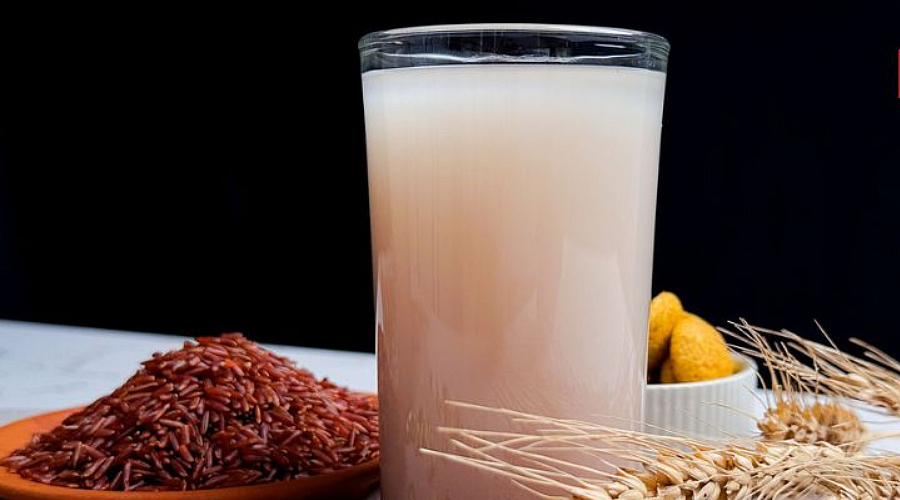
In Jharkhand, Handia is one of the most enduring culinary traditions rooted in the relationship between indigenous communities and the forests. This traditional fermented rice beer, brewed and consumed by Adivasi communities for generations, is made using cooked rice and a distinctive herbal fermentation starter. More than a local beverage, it is closely connected to the region's cultural identity, community celebrations, religious rituals, and everyday social life.
Handia is particularly associated with communities such as the Munda, Santhal, Oraon and Ho. Its preparation involves knowledge passed down through generations, especially the making of ranu, a natural fermentation starter whose ingredients and proportions vary across communities and households. Whether shared during festivals, offered as part of a ritual or served to visitors, Handia continues to occupy an important place in Jharkhand's food and drinking traditions.
How Is Handia Prepared?
At the heart of Handia's preparation is ranu, the naturally prepared fermentation starter that gives the drink its distinctive character and reflects long-held traditions. These small, dried cakes are made from powdered rice mixed with locally available herbs, roots, rhizomes and barks. The exact composition varies across communities and households, with some preparations incorporating eight ingredients and others using 20 or more. This variety highlights the central role of ranu in shaping Handia's traditional preparation.
The brewing process begins with rice, which is cooked and allowed to cool completely before the powdered ranu is added. The mixture is then transferred into an earthen pot, traditionally known as a handi, and left to ferment. Depending on the weather, local practices, and the fermentation method, this can take anywhere from three to seven days. During this period, the natural microorganisms in the starter break down the rice's starches and develop the drink's alcoholic character.
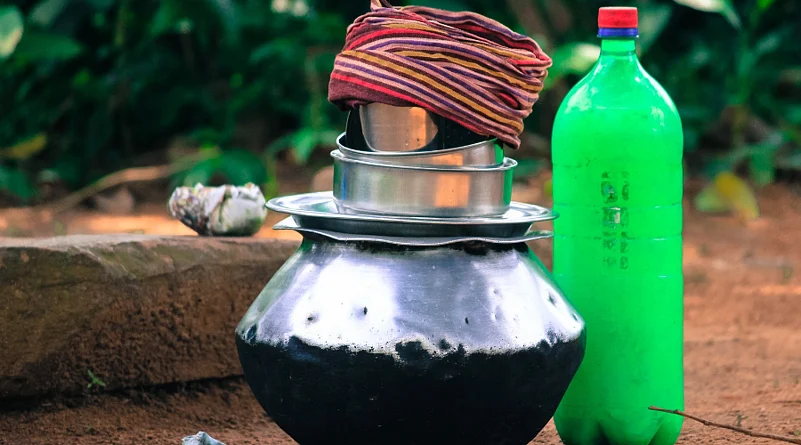

Once fermentation is complete, water is added to the mixture. It is then allowed to rest before being strained to obtain a cloudy, milky-white beverage. Handia is generally mildly alcoholic, with a slightly sour and earthy flavour. Its taste and strength can vary depending on the rice used, the composition of the ranu, the fermentation period and the quantity of water added. This variability reflects its traditional character and the absence of a standardised recipe.
The Cultural And Religious Significance Of Handia
For several Adivasi communities in Jharkhand, Handia holds religious and cultural significance as both an offering that connects people to their ancestors, deities, and natural surroundings and an alcoholic beverage.
Handia features in festivals such as Sarhul, Karma and Sohrai, where it marks nature, agricultural life and community identity. During these occasions, it is often offered in religious observances and shared among community members. It also has a role in weddings, social gatherings, and other important milestones, where serving the drink expresses hospitality, togetherness, and social importance.
Its significance is also reflected in indigenous folklore. In Santal oral tradition, a creation myth known as Binti centres on the supreme deity Marang Buru, also known as Thakur Jiu, and the first human ancestors, Pilchu Haram and Pilchu Budhi. According to the legend, Marang Buru introduced the couple to the art of fermentation, teaching them how to combine cooked rice with forest herbs and roots to prepare Handia. After brewing the first batch, the couple poured the drink into cups made from fresh sal leaves and offered it back to the deity in gratitude.
This is believed to have established the ritual of chuman, in which a few drops of Handia are poured onto the earth as an offering to ancestors and deities before the drink is consumed. Through this story, Handia becomes a symbol of spirituality, gratitude, nature and inherited knowledge in the Santal community.
Today, Handia is more than a drink; it is a source of livelihood. Across Jharkhand, brewing and selling the drink provides income for several Adivasi households, particularly women who prepare it at home and sell it in local markets.
However, this practice also faces social and economic challenges. Despite its cultural significance, the sale of traditional alcoholic beverages can carry a social stigma, and women involved in the trade have reported harassment and difficulties in accessing market spaces. These challenges show the complicated relationship between indigenous food traditions, alcohol regulation, and livelihoods.
A Tradition That Continues To Be Shared
As conversations around indigenous food cultures and traditional fermentation gain momentum, Handia offers an interesting glimpse into Jharkhand's culinary heritage. Its preparation brings together locally sourced ingredients, knowledge of wild plants and an understanding of natural fermentation that has been refined over generations.
While the drink continues to be prepared in homes and sold in local markets, its importance extends beyond its ingredients or alcoholic properties. It represents a way of sharing food, celebrating festivals, welcoming guests and preserving community traditions. In a world where many traditional food practices are increasingly being documented and rediscovered, Handia remains a reminder that some of India's most meaningful culinary experiences are found not in elaborate recipes but in everyday practices passed down through generations.
While the drink continues to be prepared in homes and sold in local markets, its importance extends beyond its ingredients or alcoholic properties. It represents a way of preserving community traditions through food. In a world where many traditional food practices are increasingly being documented and rediscovered, Handia remains a reminder that some of India's most meaningful culinary experiences are found not in elaborate recipes but in everyday practices passed down through generations.