

Sponsored Content
Nestled within the rugged folds of the Western Ghats, Sandhan Valley, often called the Valley of Shadows, is one of Maharashtra’s most thrilling trekking destinations. Located in the Bhandardara region, near Samrad village, this naturally carved gorge offers an experience unlike the typical hill-fort climb in Maharashtra.
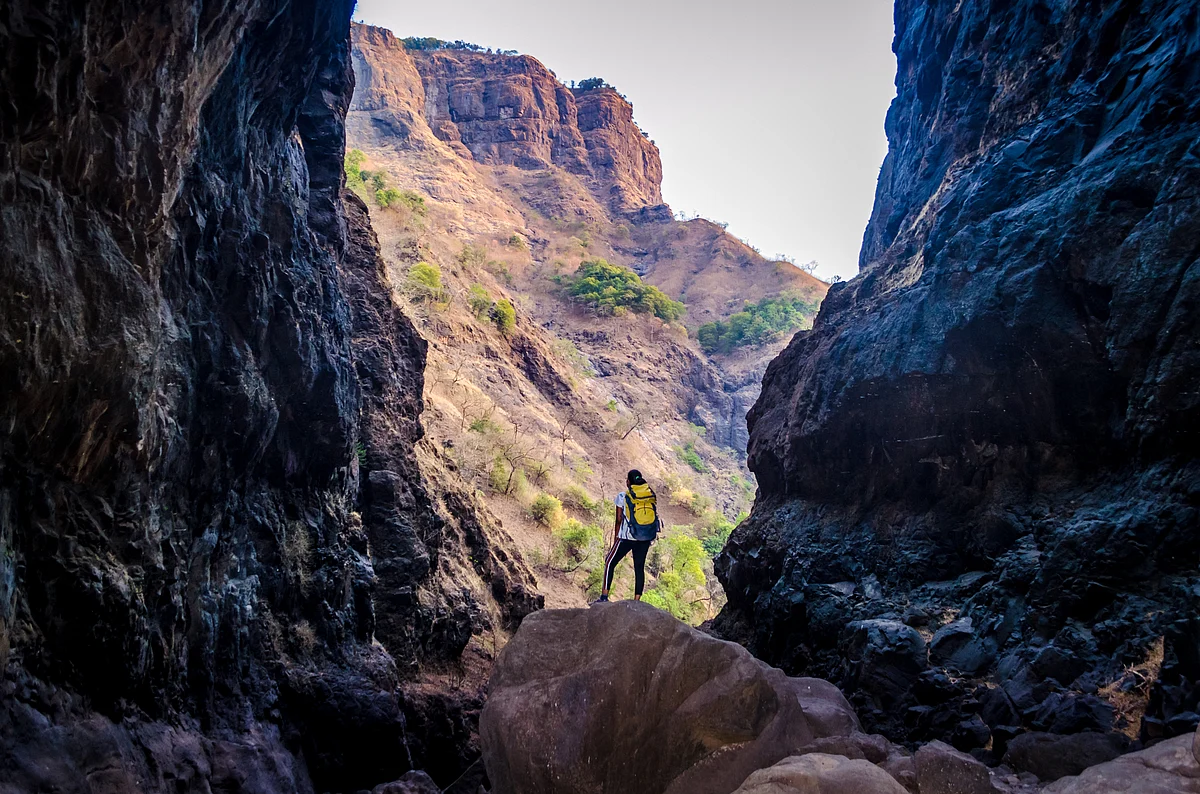
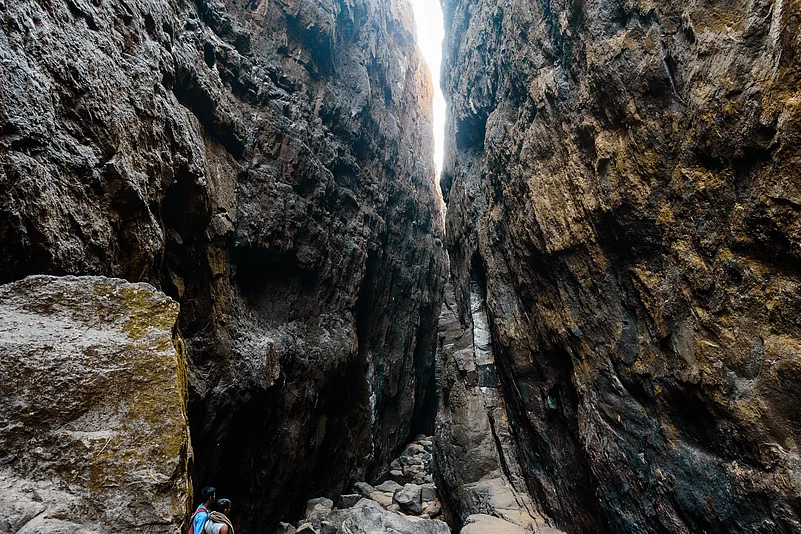
Instead of walking toward a summit, Sandhan draws you into a narrow canyon where massive basalt walls rise up to 300 feet on either side. These walls filter sunlight into shifting beams and deep shadows that give the valley its evocative name.
A Natural Gorge Sculpted By Time
Sandhan Valley is a geological wonder formed by centuries of water erosion cutting through solid rock. The result is a deep, narrow gorge nearly two kilometres long, enclosed by steep vertical cliffs.
At various points along the trail, the canyon tightens, and only a thin ribbon of sky is visible overhead. The dark basalt surfaces, shaped by wind and rain, reflect the rugged character of the Sahyadris.
Located close to iconic trekking peaks like Ratangad and Harishchandragad, Sandhan forms part of a larger adventure circuit in the Bhandardara region. Yet, its canyon terrain makes it entirely unique among Maharashtra’s treks.
Things To Do And Experience In Sandhan Valley

The Canyon Trek
The primary attraction is the trek itself. But this is no ordinary trail. The Sandhan Valley trek involves:
Boulder hopping across massive rock slabs
Navigating narrow rock corridors
Crossing water pools (especially post-monsoon)
Descending steep sections using ropes
Unlike summit treks that reward you with wide views at the top, Sandhan’s beauty unfolds gradually as you move deeper inside. The journey requires focus, balance, and coordination with your group.
Rappelling Adventures
One of the most exciting parts of the trek is rappelling down near-vertical rock faces. This involves descending with an anchored rope and specialised safety gear. The main rappelling wall ranges between approximately 45 feet and up to 100–120 feet, depending on the trail taken to reach the base. This vertical descent is the most technical and adrenaline-filled part of the trek.
The difficulty can vary depending on the route and season. With proper equipment and experienced guides, rappelling in Sandhan is both safe and thrilling, adding a real adventure element to the rocky trail. Because these sections require basic technical skills, first-time trekkers should go with certified trekking groups.
Camping In The Valley
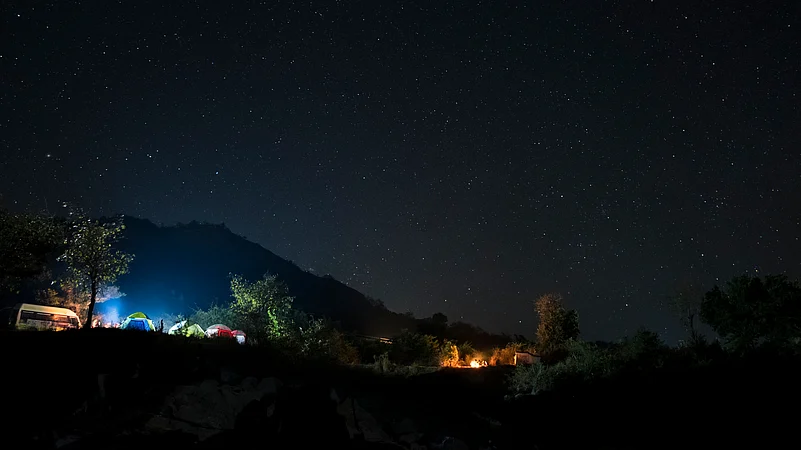
As evening falls, Sandhan Valley takes on a different mood, and many trekkers choose to camp overnight inside the gorge. Tents are set up between massive rock walls. The air turns cooler as night deepens, and a sky full of stars stretches overhead. Camping here is simple and basic rather than luxurious. The canyon's quiet, broken only by the wind moving through the rocks, creates a rare feeling of being far removed from the outside world.
Scenic Contrasts Of The Sahyadris
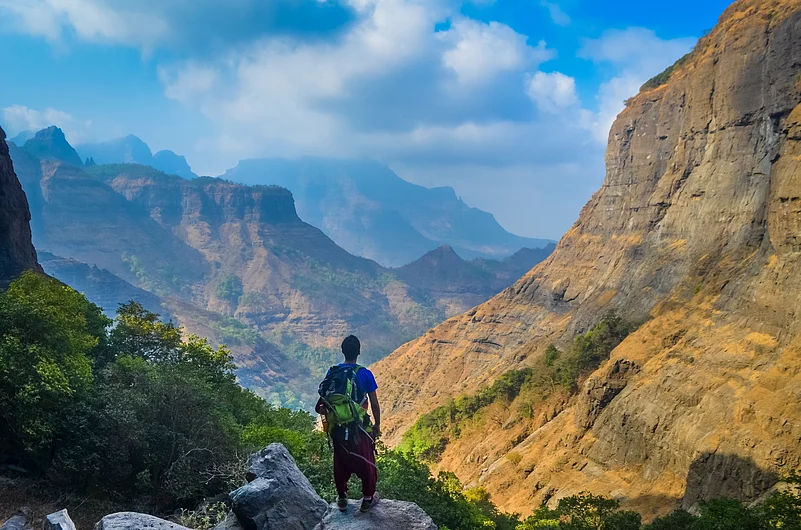
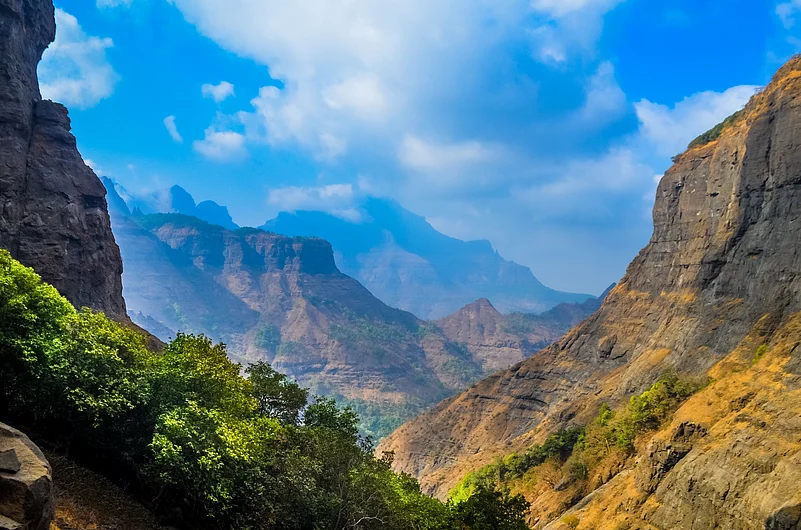
The Sahyadri landscape surrounding the impressive gorge is just as striking. After the monsoon, the hills turn lush green, and waterfalls spill down cliffs. In winter, the scenery is drier and more rugged, highlighting the raw beauty of the basalt rock formations. For photographers, Sandhan is especially rewarding, thanks to the contrast between light and shadow, textured rock faces, and the small human figures moving through the vast terrain.
Different Level And Fitness Requirements
Sandhan Valley is regarded as a moderate-to-difficult trek. It requires:
Good physical stamina
Strong grip footwear
Comfort with heights
Basic endurance for long walking hours
The uneven terrain and technical sections require careful steps and steady focus. Because of this, the trek may not be suitable for very young children, elderly people with mobility issues, or those with no prior trekking experience, unless they are accompanied by trained professionals.
Safety Precautions And Permits
Given its challenging terrain, preparation is key. Trekkers should:
Travel with experienced guides or trekking organisations
Carry helmets, ropes, and safety harnesses for rappelling sections
Wear sturdy trekking shoes with excellent grip
Carry sufficient drinking water and energy snacks
Avoid trekking during heavy rainfall
Monsoon treks are generally discouraged due to the risk of flash floods within the narrow gorge. Depending on the trek, especially if it includes camping or rappelling, permissions may be required. It is advisable to confirm current regulations with local authorities or trek organisers before planning your trip.
Before You Plan Your Trek
Sandhan Valley is an exciting adventure, but knowing a few things beforehand can help prepare you for the experience.
One-Way Route
Sandhan Valley is a one-way trek. Most treks start at Samrad village and end at Dehne village. These two villages are about three hours apart by road. If you drive your own car to Samrad, you will need to arrange for someone to move it to Dehne before you finish the trek. Many organised trekking groups handle this, but independent trekkers must plan ahead.
Restroom Facilities
There are no toilets inside the valley. Basic washrooms are available only at Samrad (the starting point) and Dehne (the exit point). It is best to use these before entering the gorge.
Mobile Connectivity
Mobile network is very limited inside the canyon. Once you descend, you should expect little to no signal. Treat this as an off-grid experience and inform family or friends in advance.
Footwear Matters
Regular sports or running shoes are not suitable for this trek, especially because the basalt rocks can be wet and slippery. Trekking shoes with a strong grip are highly recommended for safety during water crossings and rappelling sections.
Unique Experiences Beyond The Regular Trek
For those looking for more than the standard canyon walk, Sandhan Valley also offers a few unique experiences.
The Reverse Waterfall
Near Samrad village, during strong winds, usually before or at the start of the monsoon, a nearby waterfall appears to flow upward. The wind pushes the falling water back toward the cliff, creating a fascinating visual effect.
The Tarzan Swing
At one point during the descent, trekkers cross a section popularly known as the Tarzan Swing. It involves rope support and controlled movement, adding an extra thrill to the trek.
Giant Swing And Hanging Tents
Some specialised adventure organisers offer activities such as a giant swing between the canyon walls or hanging tents high above the ground. These are optional experiences and must be conducted only under professional supervision.
Astro-Photography
Because the valley is remote and has very little light pollution, it is one of the darkest spots in Maharashtra. On clear nights, it becomes an excellent place to photograph the Milky Way and star trails.
How To Get To Sandhan Valley
Sandhan Valley treks typically begin from Samrad village in Ahmednagar district.
By Air: The nearest major airport is Pune International Airport, approximately 180 kilometres away. From Pune, travellers can hire taxis or self-drive to Bhandardara.
By Train: Igatpuri and Kasara railway stations are the closest railheads, well-connected to Mumbai and Nashik. From there, road transport is required to reach Samrad.
By Road: Samrad is accessible via road from Mumbai, Pune, and Nashik. The nearest town is Akole. The drive through the Bhandardara region offers scenic mountain views, especially during and after the monsoon.
Private vehicles give you more flexibility, while many trekking groups also offer organised transport.
Best Time To Visit
The best time to explore Sandhan Valley is between October and March. In October and November, just after the monsoon, the landscape is lush and green, and water pools add to the canyon experience. From December to February, the weather is cool and pleasant, making it ideal for trekking and camping. Early March still offers manageable conditions before the summer heat intensifies. The monsoon season is not recommended due to slippery rocks and the risk of flash floods. Peak summer can be physically demanding because of high daytime temperatures.