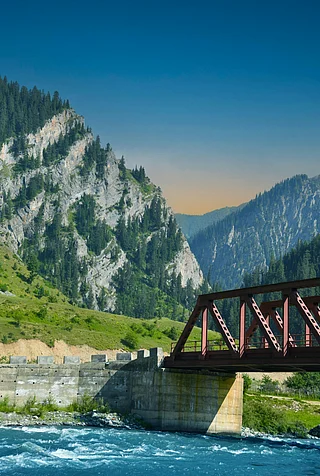
A holiday does not always have to mean slowing down. For some travellers, taking a break now also means trying something new, getting outdoors, or doing something that gets the heart racing.
And so, more people are choosing adventure as part of their holiday experience. The global adventure travel market is now worth more than USD 1 trillion, according to the Adventure Travel Trade Association (ATTA), while India’s market is estimated at USD 19.51 billion, according to Grand View Research. India’s adventure tourism sector is expected to grow at an annual rate of 20.9% between 2026 and 2033.
You do not have to be an adventure junkie to understand the appeal. A holiday can still mean sitting by the pool and doing nothing. But it can also mean rafting down a river, hiking up a mountain, trying paragliding for the first time or taking a road trip with friends. Here's what experts have to say about the trend.
From Sightseeing To Experiencing A Place

The way people travel is changing. Instead of simply ticking off famous landmarks, many travellers now want to take part in an experience. Vinod Bondi, regional manager – India and Sri Lanka at PADI, has noticed this shift particularly after the pandemic. He explains that travellers have moved away from simply collecting destinations and towards finding experiences that make a holiday feel more meaningful.
“During the lockdown period, there was no travelling, and once people started travelling again, it became clear that travellers’ interest in completing a list of visited places had declined, while their interest in adding experiences to the holiday to make it more meaningful had grown significantly,” Bondi noted. “This was particularly evident in the case of scuba diving. In India, there had been an increase in interest in diving among people living in cities such as Bengaluru, Mumbai, Hyderabad, and Chennai, with more and more people enrolling in PADI courses across the country."
That shift is also about participation. Seeing a landscape from a viewpoint or a boat is one thing; getting into it is another. For Bondi, this is one of the reasons diving has such a lasting impact on first-time participants.
“Sightseeing provided an opportunity to witness beauty, whereas scuba diving allowed one to become immersed in it,” he explained. “There was an entirely different experience in swimming next to a live coral reef and observing how marine animals lived from within, as opposed to seeing the same from a boat or from behind a glass. For those who had experienced it once, the sensation of having participated in the environment, rather than simply observing it from the outside, remained in their minds.”
Why A Little Adrenaline Can Help You Switch Off

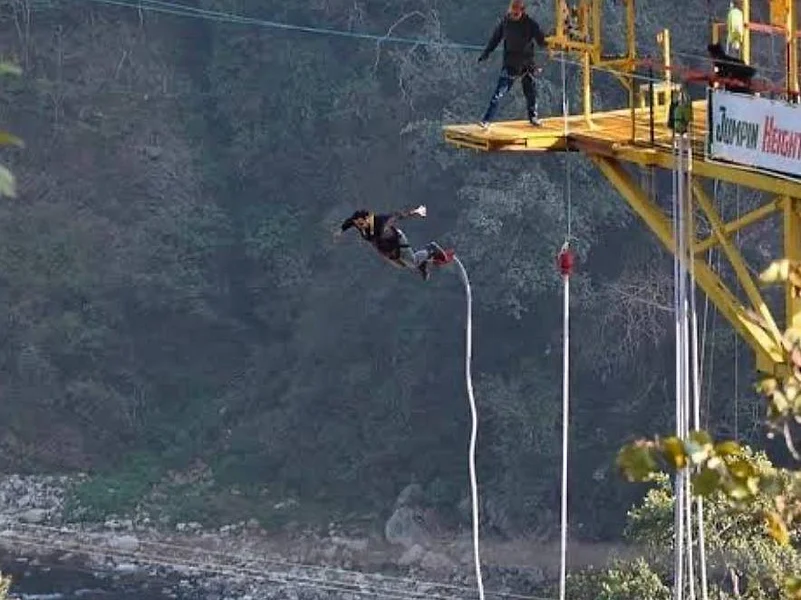
One of the biggest attractions of adventure travel may have little to do with the activity itself. When you are rafting, diving, climbing or standing on a bungee platform, you have to pay attention to what is happening around you. Emails, notifications and deadlines suddenly become less important.
Bondi describes diving as particularly absorbing because of how much attention it demands. “Your complete attention had to be paid to your breathing, your buoyancy and your environment, and there really was no time left over to fill your mind with the usual clutter, deadlines and notifications,” he explained. “Most divers would say that this was as close to being entirely disconnected while remaining fully alert as you could get.”
He also points to an aspect of diving that is different from simply relaxing on a beach. “There was also something incredibly peaceful about the lack of noise underwater, aside from the sound of your own breathing,” Bondi added. “This was not the same sort of relaxation as sunbathing on the beach.”
The same idea applies to activities on land. Niharika Nigam, managing director of Jumpin Heights, observed that people often arrive carrying the weight of their everyday routines, but their attention changes as soon as they have to confront the activity in front of them.
“The constant presence of digital devices often inspired a desire for adventure activities that naturally brought people back into the present moment,” Nigam shared. “When someone stepped onto our activity platform, checking work emails or scrolling through phone feeds was the last thing on their mind. You could actually watch the mental shift happen right as people walked up to the edge.”
Adventure Can Build Confidence Too
The appeal of adventure is not always about getting a rush. For some travellers, it is about proving something to themselves. Nigam believes this is an important part of the change in the way people approach adventure travel. “Modern travellers view adventure travel with the intent of personal growth rather than a simple quest for thrills or photos,” she said. “Travellers were drawn to natural surroundings for meaningful experiences and challenges that built deep internal confidence. Beyond the initial excitement, guests demanded strict global safety standards and uncompromising operational excellence.”
For her, the difference between a conventional holiday and an adventure experience comes down to what travellers take home with them.
“A conventional holiday offered physical rest, whereas outdoor adventure actively refreshed your inner drive and perspective,” Nigam added. “Spending active time in natural environments sharpened your attention and cleared mental clutter. Participating in adventure activities like bungee jumping allowed travellers to discover a level of personal resilience they rarely drew upon in daily life.”

The Rise Of The Beginner Adventure Traveller
Adventure travel is also becoming less intimidating. You do not necessarily need previous experience, specialist equipment or years of training to get started. Many operators now offer introductory experiences that allow beginners to try an activity with professional guidance.
At PADI, Bondi sees growing interest from first-time divers, including people fitting diving into short holidays and weekend breaks.
“Much of this could be attributed to short introductory courses such as PADI Discover Scuba Diving, which required no prerequisites other than curiosity and medical fitness to dive,” he shared. “Newly married couples on holiday in Andaman, people from the metros spending a weekend away in Goa, and even families with children opted for these courses during their holiday breaks.”
At Jumpin Heights, Nigam notices a similar interest in structured experiences where beginners can challenge themselves without having to figure everything out on their own.
“First-time travellers were choosing structured adventure activities because they wanted the genuine emotional reward of a thrilling challenge alongside total peace of mind,” she explained. “People loved testing their personal boundaries when they knew they were backed by reliable equipment and seasoned professionals.”
Adventure Is For More Than One Kind Of Traveller
The idea that adventure travel is mainly for young, highly active travellers is also changing. Different groups are finding different reasons to try it.
“Different age groups came to us for very different reasons, though the enthusiasm was everywhere,” Nigam observed. “Younger travellers loved setting personal records that gave them something real to be proud of. Couples used these leaps to celebrate meaningful milestones and build trust in a unique environment. Parents liked bringing their children along to help them build real-world confidence away from quiet home routines. Solo travellers usually booked an activity as a personal goal they had set for themselves.”
Diving, too, has become more inclusive. Bondi points to families, people with disabilities and women as examples of how participation has expanded.
“Diving had developed quite significantly in terms of how it was viewed as a sport,” he said. “Families with kids enjoyed diving as a learning activity together. Thanks to PADI Adaptive Techniques Speciality, scuba diving was enjoyed by people with physical disabilities. And age had never been a limit, as long as one was medically fit for diving.”
He also highlights the growing participation of women, noting that women account for around 40 per cent of recreational PADI certifications globally and that initiatives such as PADI Women’s Dive Day have helped encourage more women to take up diving.
You Don't Have To Go Extreme
The idea of adventure travel can sometimes bring to mind mountaineering, white-water rafting or high-adrenaline activities. But the shift may simply be towards doing something outside your usual routine.
For Nigam, the value is often in crossing a personal boundary. She recalls a guest who arrived at Jumpin Heights unsure about taking a bungee jump. The team walked her through the safety process and allowed her to set her own pace.
“The moment she took the leap and completed the jump, her hesitation turned into pure pride,” Nigam said. “She walked off the platform beaming, telling us that overcoming that boundary had given her a whole new sense of confidence. Moments like that highlighted the true value of adventure travel.”
Bondi sees a similar combination of feelings in diving. “There was an element of an adrenaline rush during your first descent into the water,” he explained. “There was a sense of accomplishment when you successfully performed a new skill such as mask clearing. There was also the sense of being disconnected from the world above the water’s surface when you could not reach your phone. And for most of us, it was simply the fact that we had never done it before.”
Perhaps that is why adventure is becoming part of the way people think about taking a break. A holiday does not always have to be about doing less. Sometimes, it can be about stepping away from the familiar, focusing on one thing and returning home with a little more confidence than you leave with. As Bondi puts it, the common thread is “the wish to return home from a holiday slightly different.”
Adventure Experiences Across India
Rishikesh, Uttarakhand: River rafting and bungee jumping
Havelock Island, Andaman: Scuba diving and snorkelling
Bir Billing, Himachal Pradesh: Paragliding
Valley of Flowers, Uttarakhand: Himalayan trekking
Grande Island, Goa: Scuba diving
Jaisalmer, Rajasthan: Desert camping and dune bashing
FAQs
1. What is adventure travel?
Adventure travel involves trips that include outdoor activities, physical challenges, exploration or immersive experiences, from hiking and diving to rafting and bungee jumping.
2. Why is adventure travel becoming popular?
Many travellers are looking for more meaningful experiences that help them step away from everyday routines and actively engage with their surroundings.
3. Can adventure travel help you reset?
Adventure activities can require focused attention, helping travellers temporarily disconnect from work, phones and everyday distractions.
4. Is adventure travel only for experienced travellers?
No. Many operators offer beginner-friendly activities and introductory experiences with professional guidance, making adventure more accessible to first-time participants.
5. What are some beginner-friendly adventure activities?
Depending on the destination and operator, beginners can try activities such as introductory scuba diving, guided hikes, rafting and structured bungee experiences.