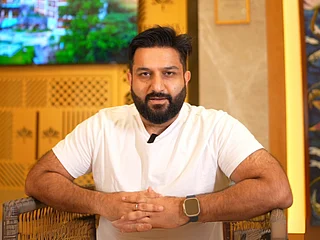


By the time I reached a small village near Amarkantak, my feet were covered in blisters. I had been walking a stretch of the Narmada Parikrama and could barely continue. There was a small temple in the village where pilgrims could take shelter. You went in, said “Narmade Har,” and found a place to sleep. A woman who lived next door saw me there. She had never met me before. When she found out about my feet, she went home, brought medicine and cleaned my blisters with her own hands. It wasn’t pleasant. There was dirt, fluid and blood. She could easily have just handed me the medicine. Instead, she did it herself.
The next day, she brought me lunch. Then she took me around her fields and showed me the village. I remember crying and thinking, "Why would somebody do this for a complete stranger?"
That was one of the moments when I began to understand what travelling through India can actually give you.
India is a hard pill to swallow, and it takes time and patience to truly get it. But the India I have fallen in love with is not the one you understand by moving quickly from one famous destination to another. It begins to appear when you stay, walk, get uncomfortable and allow strangers into your journey.
Some of my most transformational journeys have been along India’s rivers. While working on my YouTube series "Melodies of India," following the Ganga from its source towards the sea, I met a sadhvi near Gangotri who lived in a rock shelter in the mountains.
She was over 60, woke up at four in the morning, wrote out the “Ramayana” by hand and did her bhajans. But she also had a small radio and loved listening to old songs. She had this incredibly playful, almost childlike energy.
I asked her how she could live there alone without being afraid. “I don’t live alone,” she told me. “I live with my mother and my brother.” Her mother was Ganga. Her brother was Hanuman. When you meet somebody whose belief is so sincere, whether or not you share it almost becomes irrelevant. You begin to understand that there are completely different ways of living.
Banaras made me confront that again. At Manikarnika Ghat, bodies burn while, a few steps away, tea is being made, shops are open, and people are having ordinary conversations.
Later, while documenting a Moksha Bhawan, I spent time with a family that had brought their grandmother there for her final days. They knew they would probably not take her home again. Yet they sat around her remembering old stories, eating kachoris, joking and spending those last days together. Death was not hidden away from life. It was sitting right beside it.
And sometimes India completely confuses you. While walking along the Yamuna on another journey, we were warned to put our cameras away because illegal sand mining was happening ahead. There were boats everywhere, and scores of men were pulling sand out of the river. One of them spotted my tripod sticking out of my backpack and called me over. For a minute, I thought we were in trouble.
Instead, when he learnt that we were walking towards Yamunotri, he sat us down, fed us samosas and jalebis, packed food for the journey and told us to use his name if anyone stopped us further ahead.
Here was somebody mining the river and, at the same time, showing reverence for someone undertaking a journey along it.
Travelling through India is one thing, experiencing it is something else. For me, that begins when I stop trying to collect places and allow a place, and the people in it, to change something in me.
Looking for more such exciting and meaningful stories? Grab our latest issue on Amazon.