

In Qatar, winter isn't the season for staying in. It's when you want the table outside. At Souq Waqif, that might mean lingering over a karak tea while the evening crowd moves through the lanes. At Katara, it could be dinner overlooking the water. Even a simple walk along Doha's Corniche feels like an outing when the weather is on your side.
From November through February, cooler days and pleasantly crisp evenings change how you experience the country. Neighbourhoods become easier to explore on foot, beaches are back on the agenda, and the desert becomes somewhere you can spend an entire afternoon. It's a season that makes you want to stay out a little longer.
The Pleasure Of Exploring A City On Foot
Take Msheireb Downtown Doha, a neighbourhood where contemporary architecture sits alongside restored heritage houses. Its pedestrian-friendly streets connect galleries, cafés and museums, but you could just as easily spend an afternoon browsing a design store and stopping for coffee at Barahat Msheireb, the district's covered open-air courtyard.
A short walk away, Souq Waqif feels like a different Doha altogether. The narrow lanes are lined with spice shops, perfume stalls and traditional handicrafts. There is a dedicated falcon market, restaurants serving Qatari and regional cuisine, and plenty of places to sit with a glass of karak. The souq is particularly lively after sunset, when families gather for dinner, and the streets remain busy well into the evening.
You can take in both neighbourhoods in one evening, with an easy walk between them. Moving from Msheireb's contemporary urban design to the older marketplace character of Souq Waqif is part of the pleasure. There is little reason to hurry through just to tick off another sight.
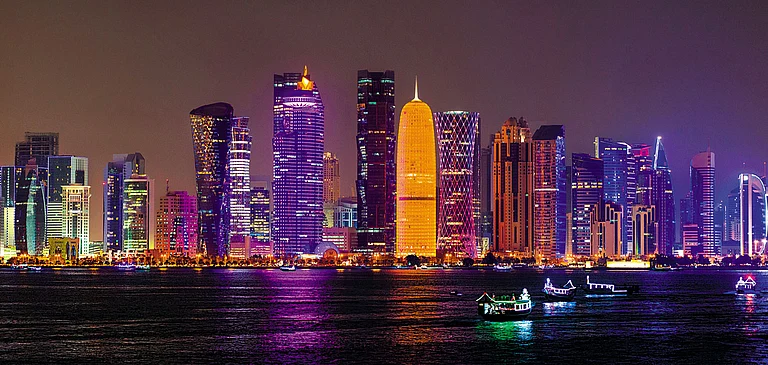
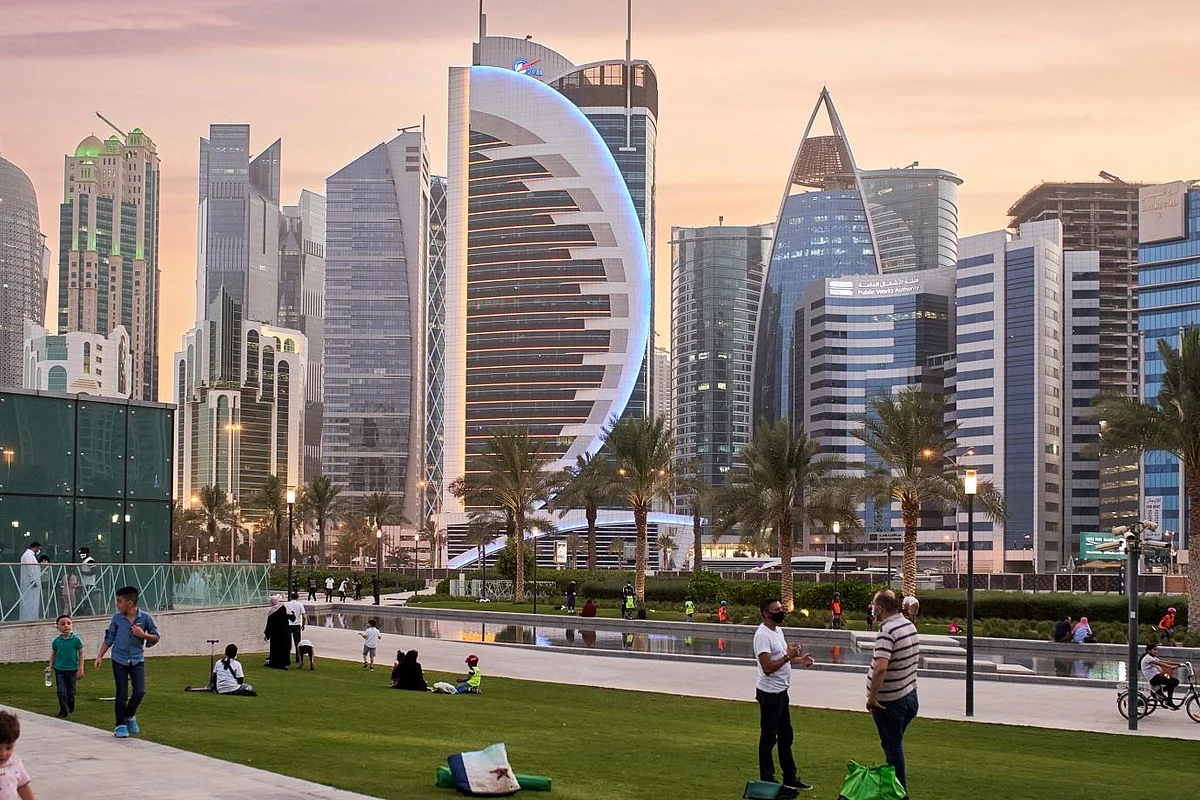
Elsewhere, the seven-kilometre Doha Corniche offers uninterrupted views across the bay. There are traditional dhows on the water, the distinctive silhouette of the Museum of Islamic Art and West Bay's skyscrapers rising in the distance. You don't need to walk its entire length. Pick a stretch, stop for photographs or continue towards the green lawns of Al Bidda Park, where cycling paths and picnic areas bring families outdoors.
Dinner Is Better When There's No Hurry To Leave
There is something about eating outdoors on holiday that makes dinner feel like an occasion, even when the only plan is to try somewhere new.
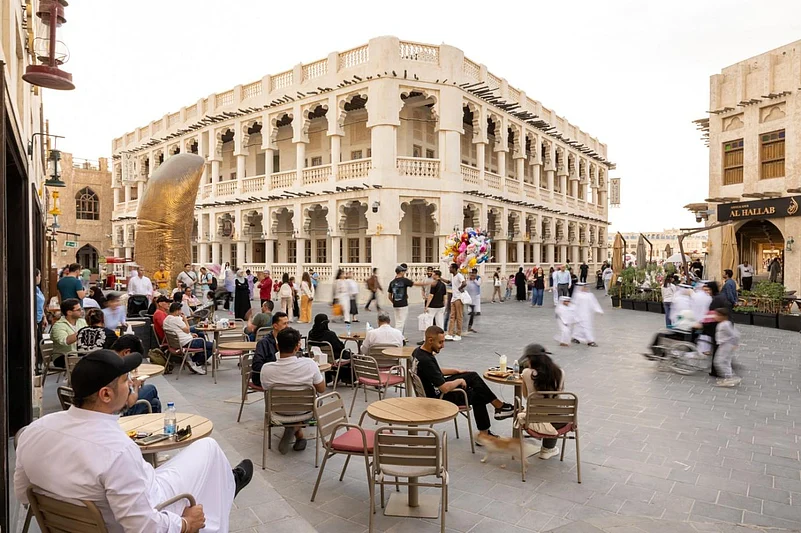

Doha takes this particularly seriously during winter. Across Msheireb, Souq Waqif and The Pearl Island, terraces and courtyards become places for long lunches, evening coffees and dinners that stretch beyond the main course.
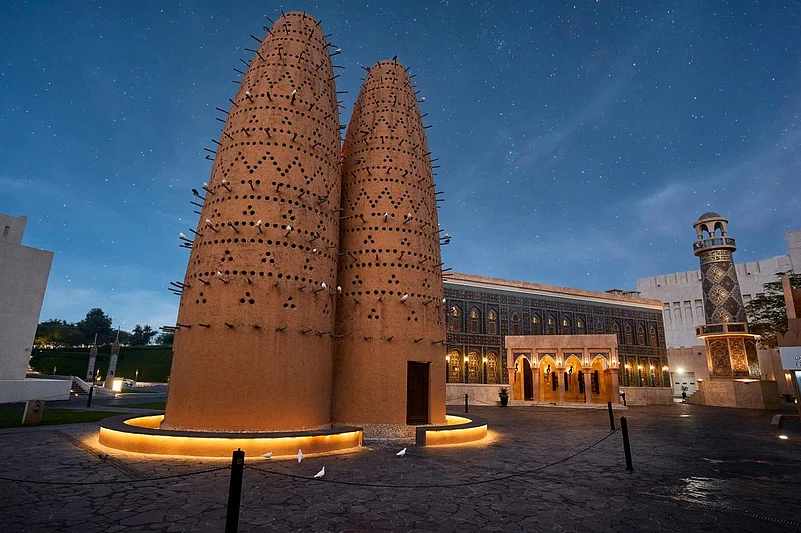
At Katara Cultural Village, Bayt El Talleh serves Lebanese dishes on a terrace overlooking Doha. Think mezze, freshly baked bread and grilled meats, ideally with enough time to enjoy the view. Nearby, Katara's cafés, galleries and waterfront paths mean that dinner can be preceded by a walk rather than another taxi journey.
At Mina District in Old Doha Port, pastel-coloured buildings line the harbourfront streets. They make the area a favourite spot for photographs, but a visit needn't end there. The Chabrat Al Mina fish market and adjoining restaurant give you a reason to stay for seafood, followed by a slow evening at one of the surrounding cafés by the water. The pleasure here isn't necessarily a lavish meal. It's being able to stay for another coffee because the evening is too pleasant to call it a night.
A Beach Holiday Doesn't Have To Mean Leaving The City
Most people associate a beach holiday with an island or a coastal resort. Doha makes a slightly different case: you can spend the morning exploring a cultural district and be on a beach by the afternoon.
Katara Beach sits alongside the cultural village, with water sports and space to relax by the sea. West Bay Beach offers a more urban setting, complete with sunbeds, food outlets and the city's high-rises in the background. Families can settle in for a few hours without committing an entire day to a resort.
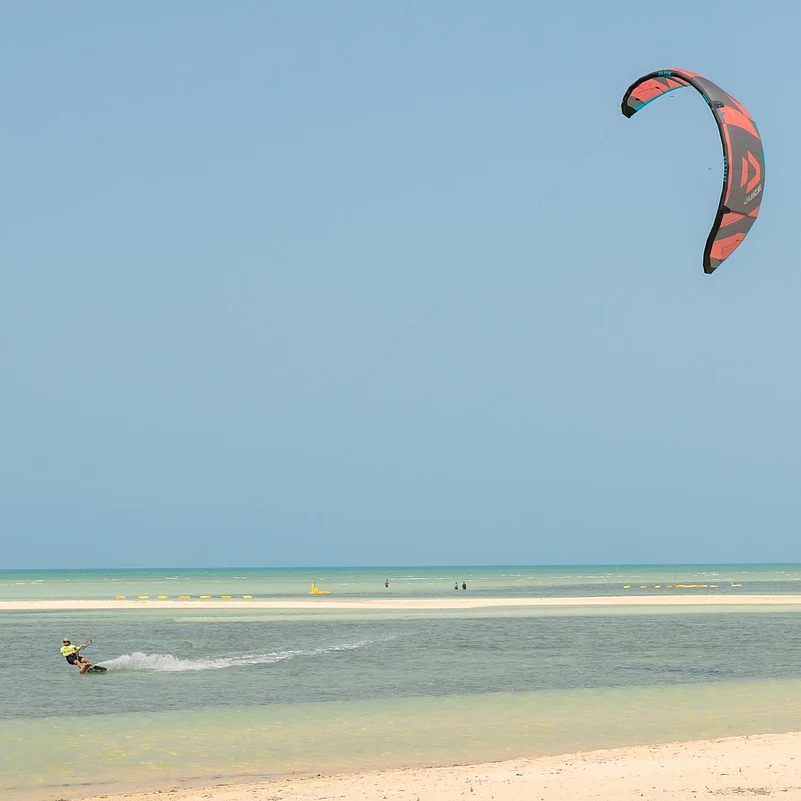
Further north, approximately 100 kilometres from Doha, Fuwairit Beach has pale sand and shallow waters. The coastline feels different here, and the favourable winds make it a popular destination for kitesurfers. If water sports are part of your plans, winter can be particularly appealing—just bear in mind that the sea becomes cooler during December and January.
For travellers who prefer their beach days with minimal activity, Simaisma offers a quieter setting with shallow waters and space for a picnic. The appeal lies in being able to choose the kind of beach afternoon that suits you.
Trade The City Skyline For Mangroves
Kayaking might not be the first experience that comes to mind when planning a trip to Qatar, which makes Al Thakira, near Al Khor, all the more interesting.
Here, a network of tidal waterways runs through dense mangrove forests, creating an environment that looks nothing like Doha's desert-and-skyscraper imagery. Guided kayaking excursions take visitors through the channels, where crabs and several species of fish live among the roots.
Winter also coincides with the arrival of migratory birds, including greater flamingos, which can be spotted around Qatar's coastal wetlands between November and April.
A sunrise or a late afternoon paddle leaves time to take in the mangroves without rushing. Compared with more adrenaline-heavy activities, kayaking here is a relatively gentle way to explore. And for anyone travelling with children, it offers an unexpected opportunity to learn about the country's coastal ecosystems.
The Desert Deserves More Than A Quick Photo Stop
Of course, no conversation about Qatar's outdoors would be complete without its desert. But the dunes deserve more than a quick photo opportunity.
South of Doha, Khor Al Adaid, or the Inland Sea, is an unusual natural setting where rolling sand dunes meet a tidal inlet. Reaching it requires a four-wheel-drive vehicle and an experienced driver, with the journey itself forming part of the adventure.
There is dune bashing for those who enjoy the thrill, sandboarding for anyone willing to get a little sand in their shoes, and desert camps where visitors can stay for dinner or overnight.
Yet the most memorable part may be the simplest. As the afternoon light softens, the dunes change colour, and the water takes on a different shade. Winter gives you the freedom to linger, watch the sunset and remain outdoors after dark without the intense heat that defines other parts of the year.
For something less conventional, Zekreet offers another reason to head west. Its sculpted limestone formations provide a dramatic setting for Richard Serra's East-West/West-East, an installation of four towering steel plates spread across the desert. It is an encounter with art that feels entirely different from standing inside a gallery.
For travellers used to planning holidays around a succession of attractions, Qatar's winter offers a useful change of pace. You can still fill your days with museums, restaurants and activities. But leave room for a walk that turns into dinner, a beach afternoon that lasts until sunset or a morning spent kayaking with no city skyline in sight. After all, sometimes the most satisfying part of a holiday is what happens between the things you planned.
FAQs
1. What is the best time to visit Qatar for outdoor activities?
November to February is an ideal time to visit Qatar for outdoor activities. The cooler temperatures and pleasant evenings make it easier to explore the city, enjoy open-air dining, visit beaches and experience the desert.
2. What are the best outdoor activities to enjoy in Qatar during winter?
Travellers can enjoy kayaking through the mangroves at Al Thakira, dune bashing and sandboarding at Khor Al Adaid, kitesurfing at Fuwairit Beach, cycling along the Doha Corniche and exploring traditional markets.
3. Which are the best beaches to visit in Qatar during winter?
Some popular options include Katara Beach, West Bay Beach, Fuwairit Beach and Simaisma. Each offers a different experience, from urban beach outings and water sports to quieter coastal escapes.
4. Where can you go kayaking in Qatar?
Al Thakira, near Al Khor, is one of Qatar's popular kayaking destinations. Its mangrove forests and tidal waterways offer visitors an opportunity to explore coastal ecosystems and spot migratory birds.
5. What are the best places to visit in Qatar's desert?
Khor Al Adaid, also known as the Inland Sea, is a popular desert destination where sand dunes meet the sea. Zekreet is another interesting option, known for its limestone formations and Richard Serra's East-West/West-East installation.