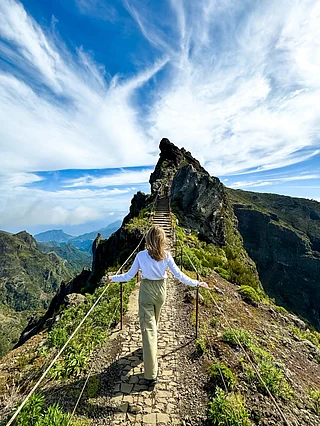


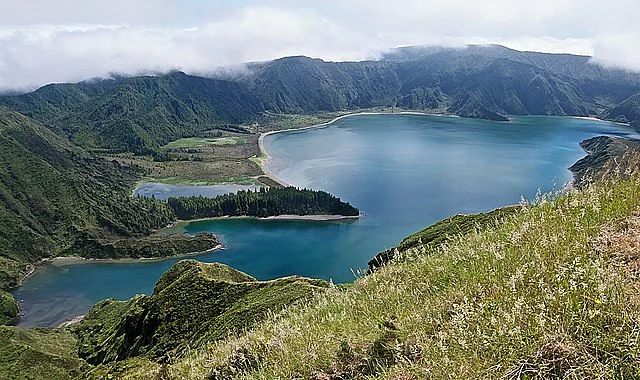
The Azores can feel like a geographical trick. Somewhere in the North Atlantic, roughly 1,400 km west of mainland Portugal, nine volcanic islands sit scattered across more than 600 km of ocean. Here, a road can wind past a crater lake before opening to an Atlantic view; a tiny village can sit beneath a volcanic peak; and offshore, whales and dolphins move through waters that have long shaped the islands' relationship with the sea.
For travellers, the appeal lies in this unusual mix. The Azores offers hiking through laurel forests, kayaking on volcanic lakes, soaking in geothermal waters, exploring lava tubes, cycling through rural landscapes and watching cetaceans offshore. At the same time, its towns remain relatively small and its tourism infrastructure is spread across nine distinct islands. The result is a destination that feels suited to travellers who would rather explore than rush through a checklist.
Nine Volcanic Islands


The archipelago is divided broadly into three island groups. São Miguel and Santa Maria form the eastern group; Faial, Pico, São Jorge, Terceira, and Graciosa sit in the centre; while Flores and Corvo make up the western group. Each has its own character, although volcanic geology provides the common thread.
São Miguel is the largest island and the principal entry point for many international visitors. Ponta Delgada, its main city, provides the transport links, accommodation, and services needed to explore the wider archipelago. Yet the city is also a starting point rather than the destination itself. From here, roads quickly lead towards crater lakes, forested hills, geothermal areas, tea plantations, and small settlements.
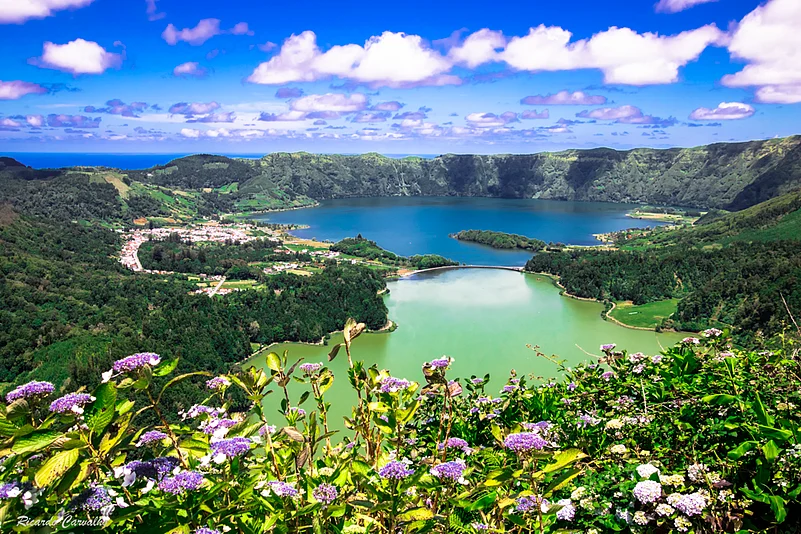
Sete Cidades is one of the island's best-known landscapes, where two lakes occupy the floor of a volcanic crater. Viewpoints such as Vista do Rei and Boca do Inferno offer expansive views across the lakes and surrounding calderas. Further east, Furnas brings another side of São Miguel into focus, with steaming fumaroles, mineral-rich thermal waters, and Lagoa das Furnas, where the island's geothermal activity is part of everyday life.
From Craters To Coast

The volcanic landscape is equally prominent on Pico, where Montanha do Pico rises to 2,351 m, making it Portugal's highest mountain. The ascent is challenging and is generally undertaken with a local guide, but the reward is a sweeping view across the central islands and the Atlantic.
Pico also demonstrates how people have adapted to the islands' volcanic terrain. Its vineyards are enclosed by thousands of small stone walls known as currais, which protect vines from the Atlantic winds. This distinctive viticultural landscape was recognised as a UNESCO World Heritage Site in 2004. Hiking trails pass through these vineyards and former routes used to transport wine, linking the island's agricultural history with its landscape.
Back on São Miguel, the geothermal environment extends into food and agriculture. Furnas is known for cozido, a traditional stew cooked for several hours in the heat of the earth. Nearby, the Gorreana estate has been producing tea since the 19th Century and is recognised as Europe's only surviving commercial tea plantation. The combination of subtropical vegetation, volcanic soil, and a mild climate gives São Miguel an unexpectedly varied agricultural landscape.
Life Beneath The Water
The ocean is as important to the Azores as its volcanoes. Faial, and particularly the port city of Horta, has developed a strong connection with marine tourism. Whale watching is one of the archipelago's signature experiences, with resident and migratory cetaceans passing through Azorean waters.
More than 20 species of cetaceans have been recorded in the region, including sperm, blue, and fin whales, alongside several species of dolphins. Excursions generally operate from coastal towns and head into open water in search of sightings, with the experience shaped as much by marine conditions as by the animals themselves.
The relationship with whales also carries historical weight. Whaling was once an important industry in the Azores and continued into the 20th Century. Today, the emphasis has shifted towards observation and conservation. In Horta, the long-standing Peter Café Sport includes a scrimshaw collection that offers a glimpse into the islands' maritime and whaling history.
Adventures Across Islands
Adventure in the Azores does not depend on one particular activity. Corvo offers diving around submerged lava formations, while Terceira has the Algar do Carvão, a volcanic chimney descending around 90 m underground. Flores is known for waterfalls, lagoons, and lush vegetation, and is designated a UNESCO Biosphere Reserve.
On Faial, the Capelinhos landscape marks the site of an eruption that took place between 1957 and 1958, while Pico is home to Gruta das Torres, a lava tube stretching for around five kilometres. Across São Miguel, visitors can cycle around volcanic landscapes, hike crater rims, and kayak on lakes. The weather, however, remains an important part of planning. Conditions can shift quickly, with rain, wind and cloud appearing even during the warmer months.
A Different Tourism Model

The Azores is increasingly positioning this natural wealth within a sustainability-focused tourism strategy. The archipelago became the world's first destination certified as sustainable across an entire group of islands under the EarthCheck programme. Its destination management approach includes monitoring environmental impacts, protecting biodiversity, managing resources, and involving local communities and businesses.
That framework matters because the Azores is not built around conventional mass-market island tourism. Its attractions are dispersed across nine islands, while rural accommodation, outdoor activities, marine experiences and locally run businesses form an important part of the visitor economy. Travellers can therefore build multi-island itineraries rather than concentrating their stay in a single resort area.
Getting around requires some planning. Flights connect the islands, while ferries are particularly useful between the central islands during the warmer months. On São Miguel, hiring a car offers greater flexibility, especially when visiting viewpoints, villages, trailheads and geothermal sites spread across the island.
The Azores ultimately works because its experiences are closely tied to its geography. Volcanic peaks, crater lakes, vineyards, forests, thermal springs, small villages, and whale-filled waters all belong to the same landscape. For travellers willing to slow down, allow for changing weather, and move beyond the main gateways, this Portuguese archipelago offers a way to experience an Atlantic destination where nature remains firmly at the heart of the journey.
FAQs
1. Where are the Azores located?
The Azores are a Portuguese archipelago in the North Atlantic, around 1,400 kilometres west of mainland Portugal.
2. How many islands are there in the Azores?
The Azores consists of nine volcanic islands divided into eastern, central and western island groups.
3. What is the best time to visit the Azores?
April to September is generally a popular period for visiting, although the islands can experience changing weather throughout the year.
4. What is the Azores known for?
The archipelago is known for volcanic landscapes, crater lakes, whale watching, hiking, geothermal springs, vineyards and marine activities.
5. How do you travel between the Azores islands?
Domestic flights connect the islands, while ferries are particularly useful for travelling between the central islands during the warmer months.