


As the hues of fall knock on Tokyo’s doorsteps, its Shinjuku Gyoen National Garden turns into an art class. Its ginkgo trees turn yellow, maples red, and the green leaves try to hold on for just a little more. The diorama of colours is so unmatched that scores of artists, both established and amateur, pick the nooks and corners of these classic Edo-period strolling gardens to capture the changing tunes of nature.
This year, however, they will have to wait, as koyo (autumn foliage) is running a little late. As per Japan Meteorological Corporation’s final forecast, while Tokyo should turn all red and yellow only around the very last day of November, Kyoto is expected to take another 15 days to get there, which is nine days later than usual.
Though Sakura season in Japan may be the popular must-see, must-visit, the myriad colours of its fall hit differently. Also, think cooler temperatures, fewer crowds, seasonal food – fatty sanmas-sabas (fish) and more, and an early Christmas spirit, with all things bright, warm, and cheerful, adding to it all.
Unlike cherry blossoms (which move north), autumn foliage spreads southwards from the mountains like a slow wave rolling down the country for almost two and a half months. The Japanese, expectedly, have a word for this spectacle of leaf-watching too – momijigari (red-leaf hunting), with the colours themselves termed Momiji or koyo. And the night festivals and an inexhaustible joie de vivre all round make it an experience for a lifetime.
Capital Idea
Staying right in the heart of Shinjuku Skyscraper district has its own charm. A major commercial, administrative, and entertainment ward, it is home to the Tokyo Metropolitan Government Building, its piece de resistance. Not only does its observation deck on the 45th floor kick-start the day with an envious bird’s-eye view of a blossoming Tokyo, but its Guinness World Record-certified light show is a well-kept secret. Digital art, anime, Godzilla, Pokémon, and pop culture take over the massive canvas each evening for 30-minute shows from around 5 pm to 10 pm.

Continuing that quest for best views, I choose to go beyond being a part of the orderly chaos that defines Shibuya Scramble Crossing. After saying a quick hello to the famed Hachiko statue at the station exit, I make my way to one of the rooftop cafes and marvel at the almost robotic movements below, the traffic signals serving as diligent orchestrators. One can also book a ticket to the Shibuya Sky deck.
My Christmas and caffeine-loving self enjoys the 10-minute ride to the artsy neighbourhood of Nakameguru. The illuminated streets and trees lead to one of the only five Starbucks Reserve Roasteries in the world. Chicago, Milan, New York, and Shanghai are the other four. The Tokyo one stands out for its second floor dedicated to tea, wares, and an origami ceiling.
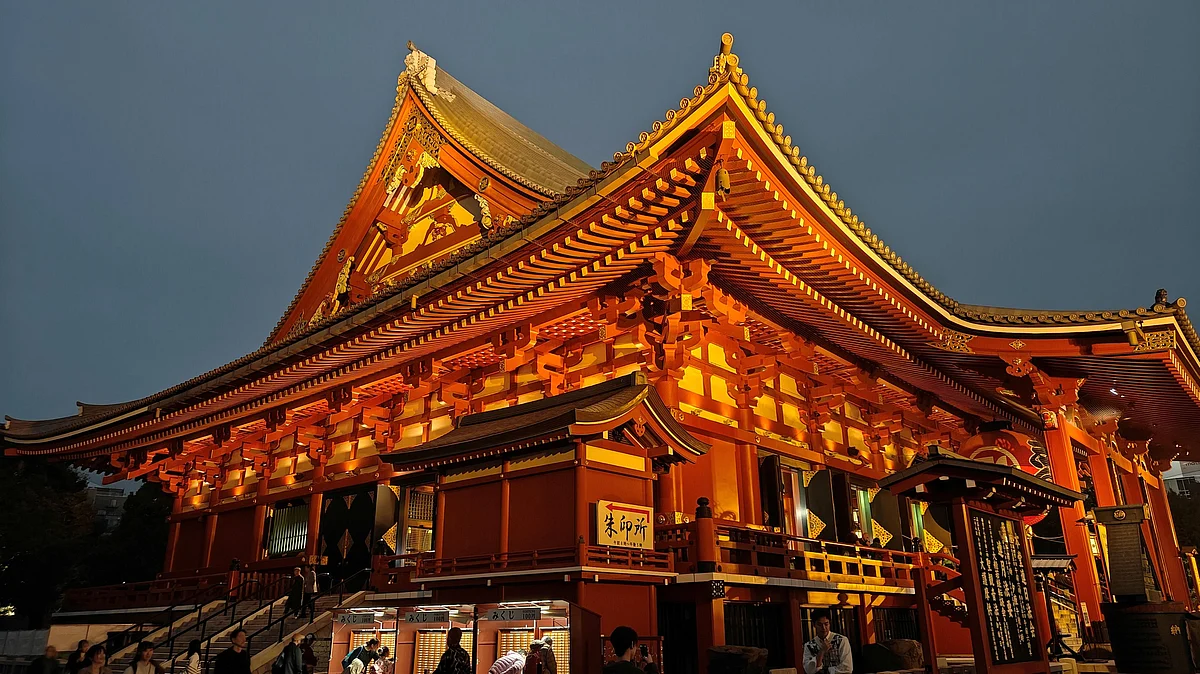
It is, however, Senso-ji, the oldest Buddhist temple in Tokyo, that is pure poetry at night. The autumnal chill somehow embellishes its evening avatar. After 6 pm, when the crowds have dispersed, the main hall’s vermillion pillars and the ancient multi-tiered pagoda glow against the night sky, and the sounds of this city become more noticeable.
Let There Be Light
While Tokyo might be the capital, Kyoto is Japan’s hub for autumn temple illuminations. After coming precariously close to missing the Shinkansen (bullet train) due to a ‘once-in-a-generation delay’, that elusive sighting of Mt Fuji right from the train seat makes up for the anxious moments. (Pro tip: In an ordinary car, reserve Seat E, and Seat D in first class. The sighting happens 40-45 minutes into the journey, around Shin-Fuji.)
Stepping into Kyoto in the evening is akin to entering an autumnal wonderland. Apart from the markets bathed in warm lights, the 400-year-old food arcade—Nishiki Market—is full of warm curry buns and winter ramen bowls; its temples and shrines feature special illumination, with maples and bamboo groves in the spotlight and the ponds turning into mirrors.
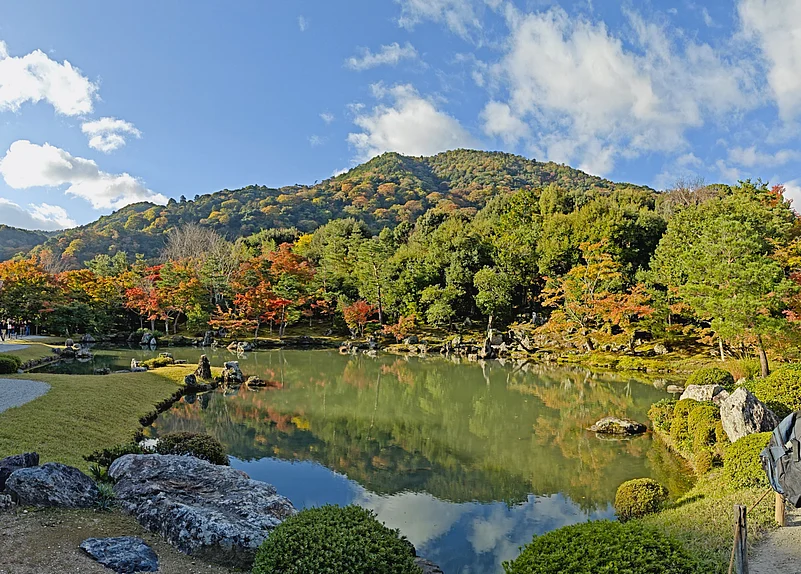
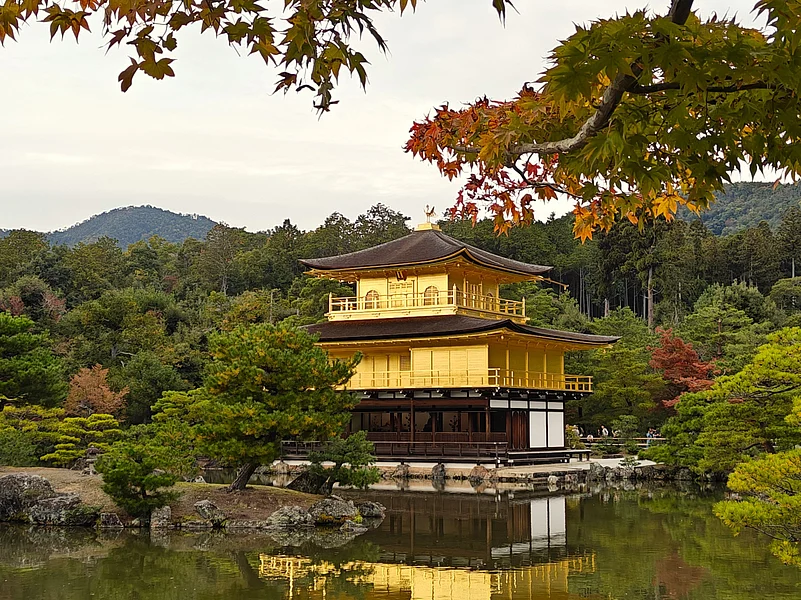
The pond at Arashiyama Bamboo Forest’s Tenryu-ji also looks nothing if not unworldly. An early morning Arashiyama Sagano Romantic Train is a 25-minute ride along the Hozugawa River to marvel at the autumn foliage all over again. It is definitely the magic of fall that perhaps makes Kinkaku-ji, or the golden temple, seem like one falling in love with its own reflection.
And while admiring the various spots of the UNESCO-listed Nijo Castle complex, it takes me a while to realise that the overwhelming sense of déjà vu is, in fact, OTT memories. Did you know that the opening shots of “Shōgun” Season 1, of the regents meeting at ‘Osaka Castle,’ are actually the rooms of the early Edo period Ninomaru-goten Palace?
Soul Satisfaction
Osaka, meanwhile, is rightly known as ‘Japan’s Kitchen’ and you are not experiencing it well enough if you are not following the local philosophy of kuidaore (eat until you drop).
For this is the city that invented those crisp-on-the-outside, molten-on-the-inside octopus dumplings–Takoyaki. Drizzled with savoury sauce, mayonnaise, bonito flakes, and green seaweed, these are the must-haves in the neon-lit entertainment hub called Dotonbori. It is packed with giant mechanical crab signs, glowing billboards, and endless street-food stalls.
Then there is Rikuro Ojisan’s cheesecake, which will spoil you for every other cheesecake in the world! It is a signature airy, jiggly, and creamy warm souffle-style cheesecake baked with raisins at the bottom.
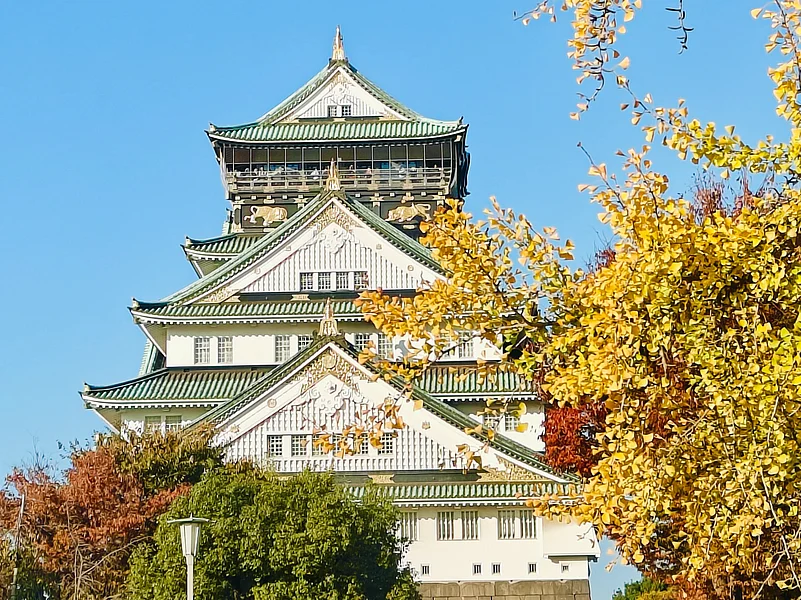
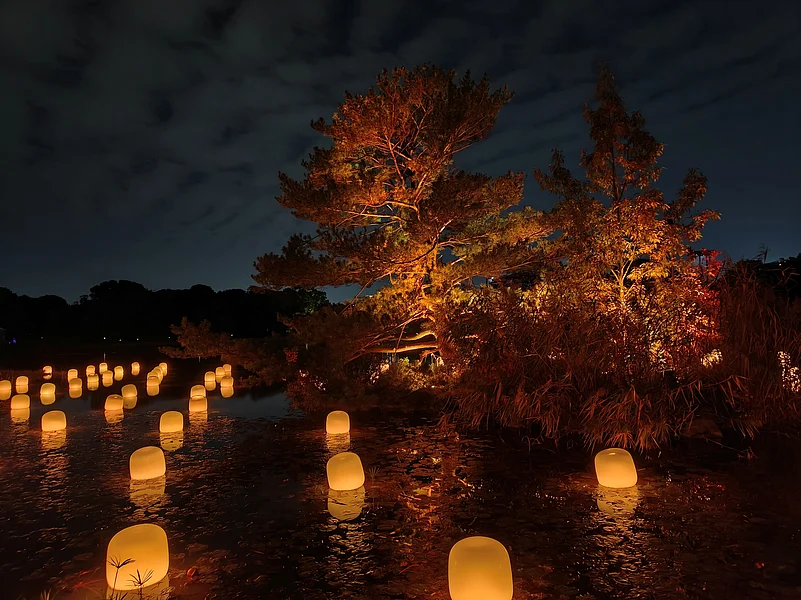
From TeamLab Botanical Gardens making for a perfect evening, Osaka Castle checking off a dreamy escape, to Michelin spots (like Chisou Uosa) not burning a hole in your pocket, Osaka just has it all, and then some in this season. Sakura’s soft pinks and whites might incite a fleeting spring romance, but it is the extended canvas of koyo that is synonymous with spectacular.
FAQs
1. When is autumn foliage season in Japan?
Japan's autumn foliage season generally begins in the northern and mountainous regions in September and moves southwards, reaching cities such as Tokyo and Kyoto in November and early December.
2. What are the best places to see autumn leaves in Japan?
Popular spots include Shinjuku Gyoen in Tokyo, Arashiyama and Kinkaku-ji in Kyoto, and parks and gardens around Osaka. Temple illuminations in Kyoto are particularly popular during the season.
3. What is koyo in Japan?
Koyo refers to the changing colours of autumn leaves in Japan, particularly the reds and yellows of maple and ginkgo trees.
4. What is momijigari?
Momijigari is a Japanese tradition of viewing autumn foliage. The term translates to red-leaf hunting and describes the seasonal practice of visiting scenic spots to admire the changing leaves.
5. Is autumn a good time to visit Tokyo, Kyoto and Osaka?
Yes. Autumn brings cooler weather, colourful foliage, seasonal food and evening illuminations, making it a popular time to explore Japan's Golden Route.


