

The night sky has a way of putting the scale of the world into perspective. Away from the glow of streetlights, illuminated skylines and passing traffic, familiar constellations sharpen, the Milky Way unfurls and distant celestial bodies become visible without a telescope. Yet, as artificial light increasingly spills into the night, places where darkness remains largely undisturbed are becoming harder to find. Dark sky reserves seek to protect these vanishing nightscapes, preserving them for wildlife, scientific discovery and travellers who want to see the universe beyond the reach of city lights.
An International Dark Sky Reserve is a substantial area of land with exceptional starry skies and a protected nocturnal environment. According to DarkSky International, the organisation responsible for the designation, a reserve comprises two zones: a central core that meets specific standards for natural darkness and a surrounding buffer area that helps safeguard it. The designation involves cooperation between landowners, local authorities and communities, with responsible outdoor lighting, conservation policies and public education forming an important part of the effort. Here are seven internationally recognised dark sky reserves where the night sky is as much a part of the destination as its mountains, deserts and coastlines.
Aoraki Mackenzie International Dark Sky Reserve, New Zealand
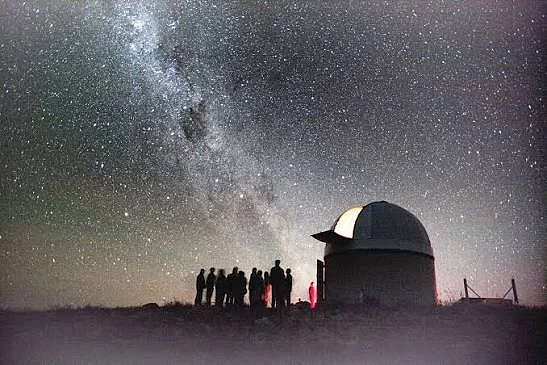

Set against the glacial lakes and snow-covered peaks of New Zealand's South Island, the Aoraki Mackenzie International Dark Sky Reserve offers a nightscape that feels almost otherworldly. Established in 2012, the reserve spans 4,367 sq km, encompassing Aoraki/Mount Cook National Park and the Mackenzie Basin. It is among the largest dark sky reserves in the Southern Hemisphere.
The region's commitment to preserving its night skies goes back to the early 1980s, when outdoor lighting controls were introduced to reduce light pollution around the Mount John Observatory. Today, the observatory, near Lake Tekapo, remains one of the area's principal attractions for astronomy enthusiasts. Visitors can join guided stargazing experiences and learn to identify constellations, planets and distant celestial objects. The reserve also holds cultural significance for the Māori, whose ancestors used the stars for navigation and incorporated celestial knowledge into their traditions. Here, looking up is also a way of understanding the relationship between people, place and the night sky.
The Information
Location: Mackenzie Basin, Canterbury, South Island, New Zealand.
Entry fee: There is no general entry fee to the dark sky reserve. Guided stargazing experiences are separately ticketed, approximately around INR 6,000 to 12,000 per person.
Timings: The reserve can be visited throughout the year. Guided evening tours operate according to availability and weather conditions.
Contact: Dark Sky Project, 1 Motuariki Lane, Lake Tekapo. Phone: +64 3 680 6960; Email: info@darkskyproject.co.nz.
Stargazing experiences: Dark Sky Project offers guided experiences at the Mount John Observatory, including the Summit Experience and Crater Experience.
Rules: Evening access to the Mount John Observatory is restricted to authorised guided tours. The observatory is an active scientific research facility, and visitors cannot enter its telescope buildings independently. Daytime access is subject to weather and road conditions.
NamibRand Nature Reserve, Namibia
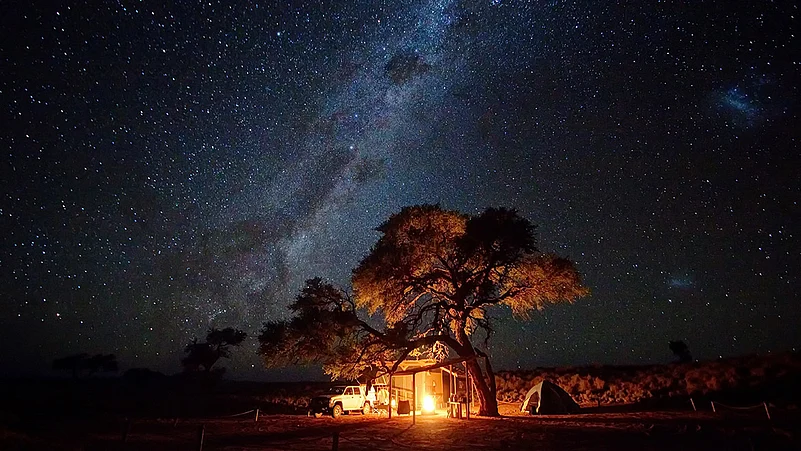
In the Namib Desert, the absence of artificial light is almost as striking as the landscape itself. The NamibRand Nature Reserve in southwestern Namibia is one of Africa's largest private nature reserves and was designated an International Dark Sky Reserve in 2012. Covering approximately 2,022 sq km, it protects an expansive stretch of desert wilderness where the night sky remains remarkably undisturbed.
The reserve's appeal lies in the combination of its naturally dark skies and its remote desert setting. With little artificial illumination to compete with the stars, the Milky Way can appear as a distinct band across the night, while the Southern Cross and the Magellanic Clouds offer further points of interest for observers. The reserve also connects astronomy with environmental education through the Namib Desert Environmental Education Trust (NaDEET) Centre, which introduces visitors to the relationship between the Earth and the night sky. Its open-air accommodation units allow guests to sleep beneath the stars, making the experience less about observing the sky from a distance and more about inhabiting the landscape after dark.
The Information
Location: Southern Namibia, Namib Desert.
Entry Fee: No standard public entrance ticket. Conservation charges and access arrangements depend on the accommodation or authorised operator.
Timings: No fixed public visiting hours. Entry must be arranged in advance.
Contact: NamibRand Nature Reserve, 2 Mozart Street, Windhoek. Phone: +264 61 224882; Email: info@namibrand.org.
Rules: Visitors must use designated tracks; off-road driving is prohibited. Drone operations, research and commercial filming require prior permission. Arrange accommodation before visiting.
Mont-Mégantic International Dark Sky Reserve, Canada
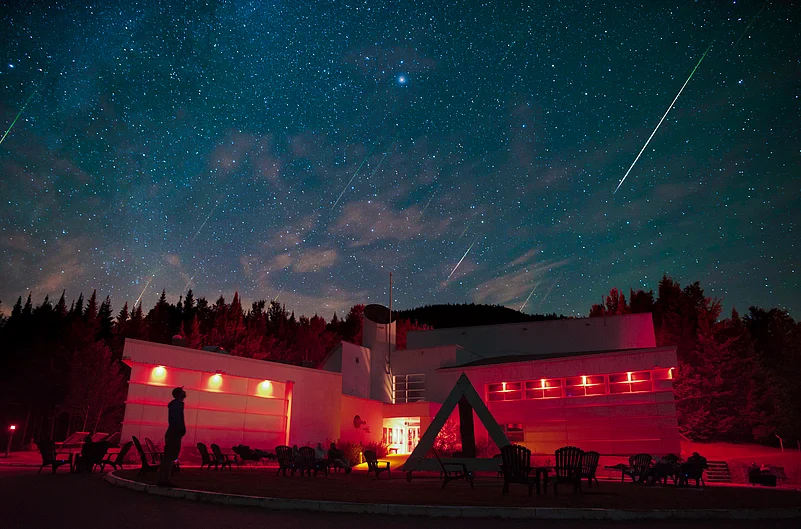
The first place in the world to receive International Dark Sky Reserve recognition, Mont-Mégantic in Quebec, Canada, demonstrates how preserving the night sky can become a collective regional effort. Designated in 2007, the reserve covers approximately 5,260 sq km, bringing together Mont-Mégantic National Park, surrounding municipalities and the region's astronomical facilities.
At its centre is the Mont-Mégantic Observatory, perched in the Appalachian Mountains, alongside an astronomy visitor centre that introduces visitors to the science behind the night sky. But the reserve's significance extends beyond its observatories. Its designation prompted 34 municipalities to develop outdoor lighting regulations to curb light pollution, with approximately 2,500 lighting fixtures replaced as part of the initiative. These changes helped reduce regional light pollution by 25 per cent. For visitors, the experience combines mountain scenery with opportunities to explore astronomy through guided activities and educational programmes. It is an especially interesting destination for those who want to understand the practical work behind dark-sky conservation, not just admire its results.
The Information
Location: Mont-Mégantic National Park, Quebec.
Entry Fee: The 2026 daytime ASTROLab and Observatory visit is listed at around INR 1,430 per adult; children aged 17 and below accompanying family members enter free. Astronomy evenings are separately priced.
Timings: ASTROLab operates seasonally, with daytime visits and scheduled evening programmes. The observatory welcome centre has seasonal opening hours.
Contact: ASTROLab, Mont-Mégantic National Park, Quebec. Phone: +1 819 888 2941.
Rules: Book astronomy activities in advance. Summit access and programmes are subject to seasonal road conditions and weather. Visitors should check the schedule before travelling.
Kerry International Dark Sky Reserve, Ireland
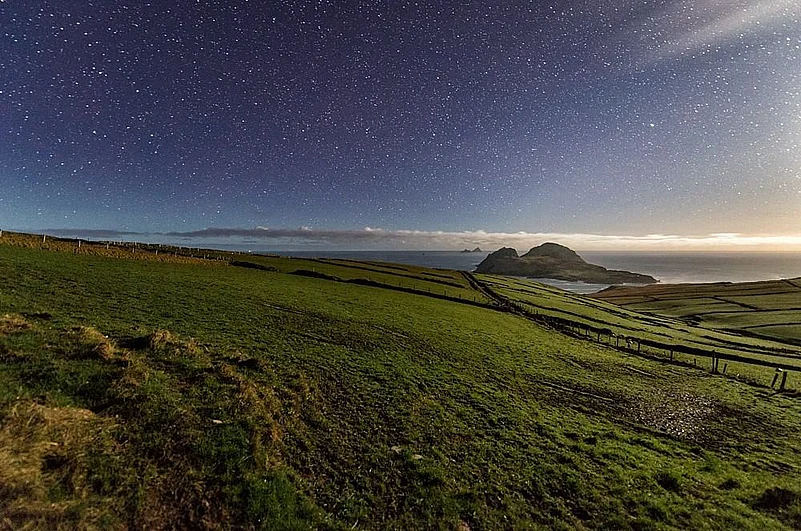
On Ireland's southwestern edge, where the Kerry Mountains meet the Atlantic, the Kerry International Dark Sky Reserve occupies a stretch of the Iveragh Peninsula along the Wild Atlantic Way. Designated in 2014, it covers approximately 700 sq km and is recognised as the only Gold Tier International Dark Sky Reserve in the Northern Hemisphere.
The surrounding geography plays an important role in preserving its darkness. The Atlantic Ocean to the west and the mountains to the east help shield the peninsula from artificial light, creating favourable conditions for observing the stars. The reserve encompasses communities and coastal settlements including Waterville, Cahersiveen, Portmagee and Ballinskelligs, where visitors can find viewpoints along beaches, headlands and elevated stretches of countryside. Its relationship with the night sky is also rooted in history. Archaeological monuments on the peninsula point to the importance of celestial cycles to its Neolithic inhabitants, while the region's ancient landscape offers a reminder that people have been looking skyward here for thousands of years.
The Information
Location: Iveragh Peninsula, County Kerry.
Entry Fee: No general reserve entry fee. Guided stargazing tours start at around INR 3,600 per person.
Timings: No fixed visiting hours. Guided tours take place after dark, with timings varying according to sunset and weather.
Contact: Kerry Dark Sky Tourism, Castlecove, County Kerry. Phone: +353 83 189 9883; Email: kerrydarkskyreserve@gmail.com.
Rules: Avoid white torches and bright phone screens; use red lights to preserve night vision. Wear warm clothing, keep noise low and follow guides' instructions. Tours can be cancelled up to 72 hours before departure or rescheduled up to 24 hours beforehand, subject to availability.
Westhavelland Nature Park, Germany
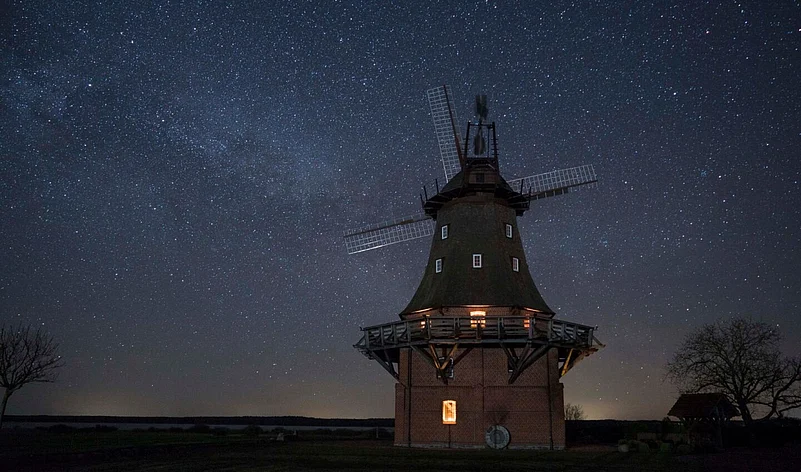
Just around 70 km west of Berlin, the Westhavelland Nature Park offers an unusual contrast to the illuminated capital. Designated an International Dark Sky Reserve in 2014, it encompasses a mix of public and private land across a protected landscape of wetlands, rivers and sparsely populated settlements. Its proximity to one of Europe's major urban centres makes the preservation of its darkness particularly significant.
The reserve is known for its opportunities to observe the Milky Way with the naked eye, as well as airglow, a faint natural luminescence produced in the upper atmosphere. Its dark skies have also encouraged a growing programme of astronomy-led tourism and public engagement. The annual WestHavelländer AstroTreff brings together astronomy enthusiasts, while guided night walks and educational activities introduce visitors to the constellations and the science of light pollution. For travellers, Westhavelland offers an opportunity to experience a remarkably dark sky without venturing deep into a remote wilderness. It is a compelling example of how conservation and community-led initiatives can protect darkness close to a major city.
The Information
Location: Brandenburg, approximately 70 km west of Berlin.
Entry Fee: Free. The Star Park is an open-access protected landscape.
Timings: Open throughout the year, with no fixed opening or closing hours.
Contact: Westhavelland Nature Park Administration, Pareyer Dorfstraße 5, 14715 Havelaue. Phone: +49 33872 7430; Email: np-westhavelland@lfu.brandenburg.de.
Rules: Respect protected habitats and private agricultural land. Avoid unnecessary artificial lighting, noise and littering. Camping and overnight stays should be restricted to authorised locations.
Pic du Midi International Dark Sky Reserve, France
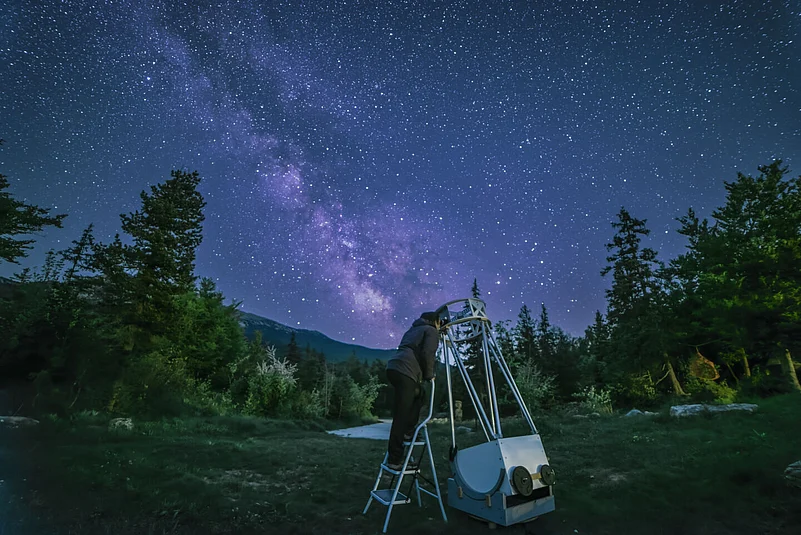
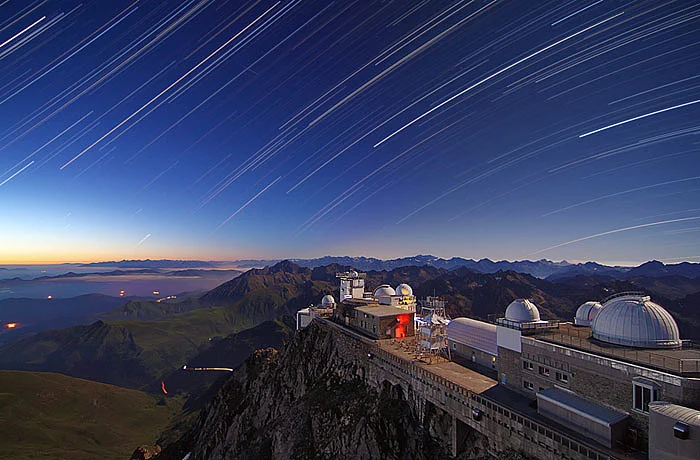
High in the French Pyrenees, the Pic du Midi International Dark Sky Reserve brings together mountain wilderness and a long tradition of astronomical observation. Designated in 2013, it covers approximately 3,112 sq km, encompassing parts of the Pyrenees National Park and the UNESCO-listed Pyrénées-Mont Perdu landscape. The reserve is centred around the Pic du Midi de Bigorre, whose summit is home to a renowned astronomical observatory.
At an elevation of approximately 2,877 m, the observatory has long attracted scientists studying the Sun and other celestial phenomena. Its high-altitude location makes it a distinctive setting for observing the night sky, away from much of the atmospheric interference and artificial illumination found at lower elevations. Visitors can reach the summit by cable car from La Mongie and explore the observatory's astronomical facilities, exhibitions and observation areas. Overnight stays are also possible at the summit, allowing visitors to experience the mountain after the last cable car has descended. Here, stargazing becomes an encounter with both the science of astronomy and the dramatic geography of the Pyrenees.
The Information
Location: Hautes-Pyrénées, French Pyrenees.
Entry Fee: Dated cable car tickets start at around INR 3,400 per person; flexible tickets start at around INR 5,550. Overnight experiences are charged separately.
Timings: Winter 2026–27 season: December 5, 2026–April 11, 2027. Cable car departures: 9:30 am–4 pm; last return at 5 pm. Closed for maintenance in May and November.
Contact: Pic du Midi, La Mongie, Hautes-Pyrénées. Phone: +33 5 62 97 71 01.
Rules: Cable car operations depend on weather and technical checks. Check the daily operating status before departure. Summit temperatures can be considerably lower than at the base, so carry suitable warm clothing.
Greater Big Bend International Dark Sky Reserve, USA
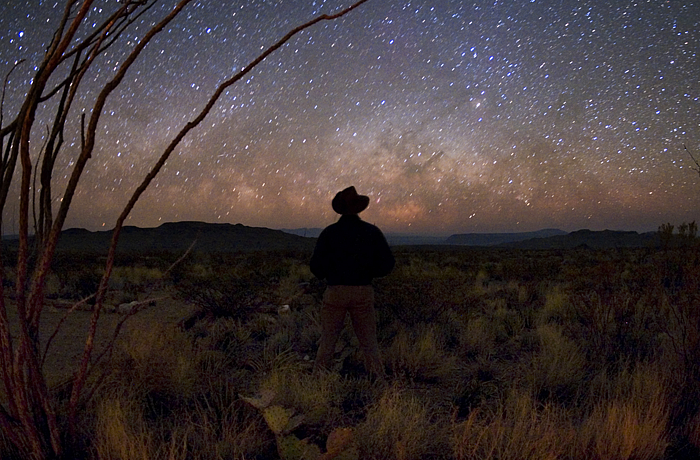
Spanning an immense stretch of West Texas and northern Mexico's neighbouring region, the Greater Big Bend International Dark Sky Reserve is one of the world's most ambitious dark-sky conservation initiatives. Designated in 2022, it covers more than nine million acres, making it the world's largest International Dark Sky Reserve. Its vast scale brings together protected natural areas, communities, observatories and privately managed land in a shared effort to preserve the region's exceptional night skies.
The reserve's remote desert terrain, expansive horizons and relatively low population density create favourable conditions for astronomy. One of its major attractions is the McDonald Observatory, which runs public star parties several times a week, alongside special viewing sessions using research telescopes and guided daytime tours. Other options include the Marathon Skypark and Terlingua Star Park, where visitors can take part in organised observing experiences. Beyond the telescopes, the reserve's significance lies in demonstrating how a landscape shared across borders can be protected through coordinated conservation. It offers a particularly rewarding experience for travellers interested in combining desert exploration with a closer look at the cosmos.
The Information
Location: West Texas, USA, extending into northern Mexico.
Entry Fee: No common reserve entrance fee. McDonald Observatory Star Party tickets cost INR 470 to 2,340; special viewing nights cost extra.
Timings: Big Bend National Park is open 24 hours throughout the year. McDonald Observatory programmes operate on scheduled dates; Star Parties last approximately two hours.
Contact: McDonald Observatory, 3640 Dark Sky Drive, Fort Davis, Texas 79734. Phone: +1 432 426 3640; Email: info@mcdonaldobservatory.org.
Rules: Advance reservations are recommended for astronomy programmes. Arrive 15 minutes before a Star Party. Dress for outdoor conditions, as telescope viewing takes place outside. Big Bend camping is permitted only at designated sites and requires reservations.
There is something quietly extraordinary about standing beneath a sky that has not been washed out by artificial light. In these seven reserves, darkness is not an absence but an essential part of the landscape, shaped by conservation efforts, local communities and generations of astronomical knowledge. Whether it is the Milky Way above Namibia's dunes, the stars reflected in New Zealand's glacial lakes or the vast celestial canopy over the Texas desert, each destination offers a different perspective on the same spectacle. Perhaps the greatest reason to visit is also the simplest: to look up, find your bearings among the stars and rediscover a night sky that much of the world rarely gets to see.
FAQs
1. What is an International Dark Sky Reserve?
An International Dark Sky Reserve is a designated area with exceptional starry skies and a protected nocturnal environment. It has a central core with high-quality natural darkness and a surrounding buffer zone that helps protect it from light pollution.
2. Which is the world's first International Dark Sky Reserve?
Mont-Mégantic International Dark Sky Reserve in Quebec, Canada, became the world's first International Dark Sky Reserve in 2007.
3. Which is the largest International Dark Sky Reserve in the world?
The Greater Big Bend International Dark Sky Reserve, spanning West Texas and parts of northern Mexico, is the world's largest, covering more than nine million acres.
4. What is the best time to visit a dark sky reserve for stargazing?
The best conditions are generally around a new moon, when moonlight is minimal. Clear skies, low humidity and limited cloud cover also improve visibility. Checking local weather and astronomical calendars before travelling is recommended.
5. Why are dark sky reserves important?
Dark sky reserves help reduce artificial light pollution, protect nocturnal wildlife and natural ecosystems, support astronomical research and preserve opportunities for communities and visitors to experience naturally dark night skies.