

Imagine walking through a forest just after sunrise when a strange, haunting call travels through the trees. You look up to find an indri, the largest living lemur, perched among the branches. Its black-and-white coat stands out against the foliage, and its call carries across the forest. A little further along, a chameleon grips a twig, while a leaf-tailed gecko remains so perfectly camouflaged against the bark that you could easily walk past it.
This is Madagascar, an island that seems to have developed its own rules of natural history. Located off the southeastern coast of Africa in the Indian Ocean, it is home to an extraordinary collection of animals and plants, many of which cannot be found anywhere else on Earth. Rainforests, limestone formations, dry deciduous woodland and unusual spiny forests make up a landscape as varied as the species that inhabit it.
Often called the eighth continent, Madagascar is among the world's most fascinating destinations for wildlife enthusiasts. A forest walk can turn into an encounter with a lemur, a night safari can reveal miniature nocturnal creatures, and a drive through the countryside can bring you face to face with some of the world's most recognisable trees.
An Island That Evolved On Its Own Terms
Madagascar's extraordinary biodiversity has much to do with its geological past. The island separated from the African mainland around 160 million years ago and eventually became isolated from other landmasses. Over millions of years, its plants and animals evolved independently, producing an exceptional number of endemic species.

According to the World Wide Fund for Nature (WWF), around 95 per cent of Madagascar's reptiles, 89 per cent of its plant life and 92 per cent of its mammals are found nowhere else. The island is also home to more than 11,000 endemic plant species.
This isolation explains its unusual wildlife. Lemurs occupy ecological niches filled by other primates elsewhere, chameleons have evolved into an astonishing variety of shapes and sizes, and the island has its own distinctive predators, frogs and reptiles. Its plants are equally remarkable, from water-storing baobabs to the thorn-covered vegetation of the southern spiny forests.
Lemurs: Madagascar's Most Famous Residents
It is difficult to talk about Madagascar without beginning with lemurs. These primates are the island's most recognisable residents, with more than 100 recognised species ranging from tiny nocturnal animals to larger, tree-dwelling varieties.
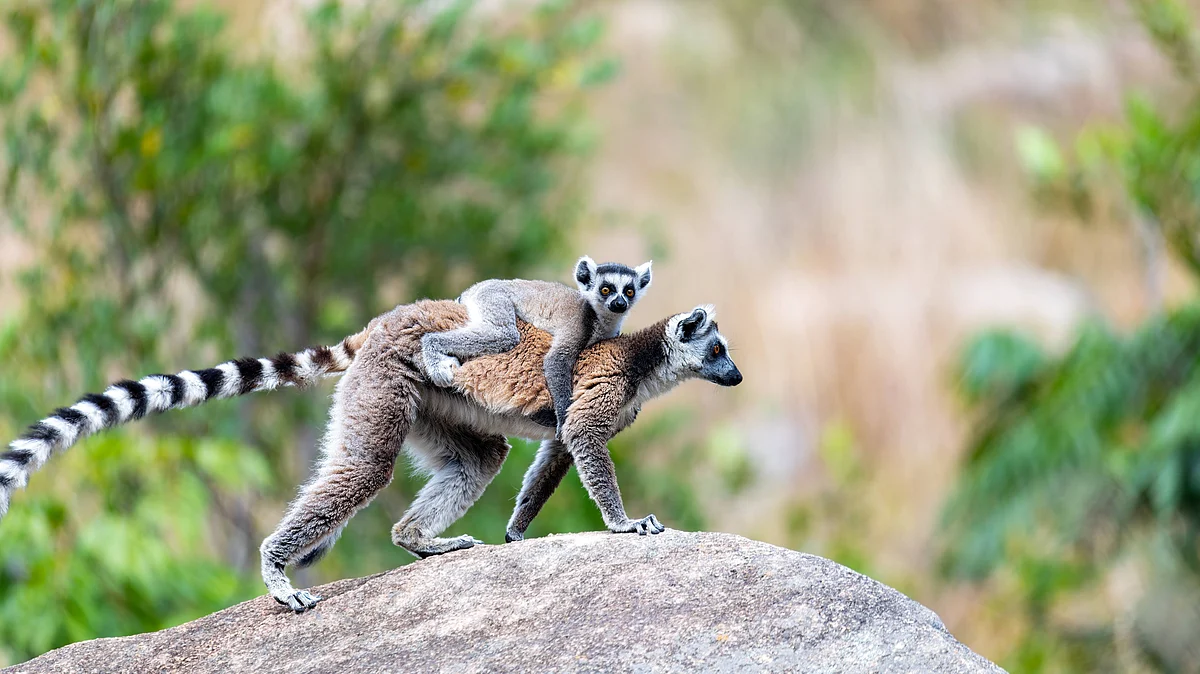
The ring-tailed lemur is perhaps the easiest to recognise. Its black-and-white striped tail, expressive face and social nature make it a favourite among visitors. Groups can be seen grooming one another, foraging or sitting in the morning sun with their arms outstretched. Anja Community Reserve, near Ambalavao in southern Madagascar, is particularly well known for its ring-tailed lemur population.
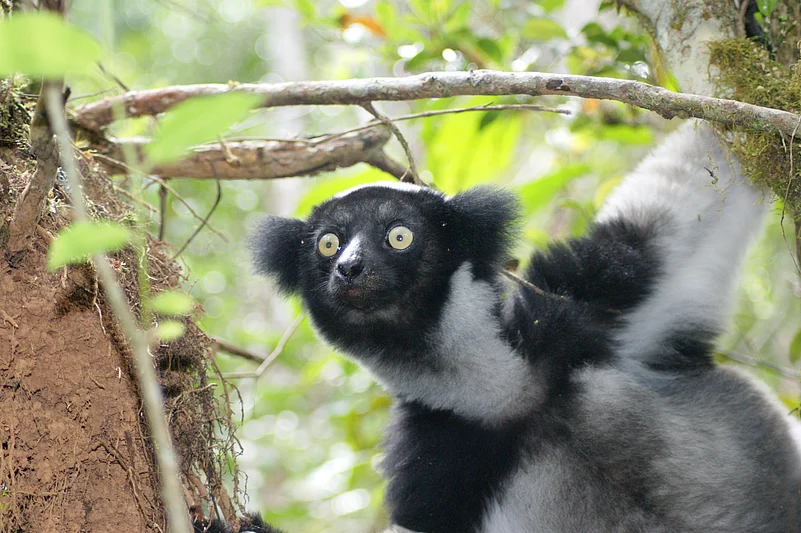
Then there is the indri, the largest living lemur. Found in eastern Madagascar's rainforests, particularly around Andasibe-Mantadia National Park, it is known for its striking black-and-white coat and extraordinary vocalisations. Hearing an indri chorus during an early-morning forest walk is among the island's most memorable wildlife experiences.
The Verreaux's sifaka, with its pale fur, dark patches and long limbs, is another fascinating sight. On the ground, it moves sideways in upright hops, almost appearing to dance across the forest floor. It is associated with the dry forests of western and southern Madagascar.
And then there is the aye-aye, one of the strangest-looking primates in the world. Nocturnal and elusive, it has oversized ears, large eyes and an unusually long middle finger. It taps tree trunks to locate insect larvae beneath the bark before extracting them with its specialised finger.
Guided forest walks are the best way to spot lemurs. Local naturalists know their calls, feeding habits and preferred trees, making it easier to locate species that might otherwise remain hidden in the canopy.
The Fossa And Other Unusual Creatures
If lemurs are the island's celebrities, the fossa is its most intriguing predator. Endemic to Madagascar, this elusive carnivore has a long, muscular body, retractable claws and a tail that helps it balance while moving through trees. It is also one of the principal natural predators of lemurs.
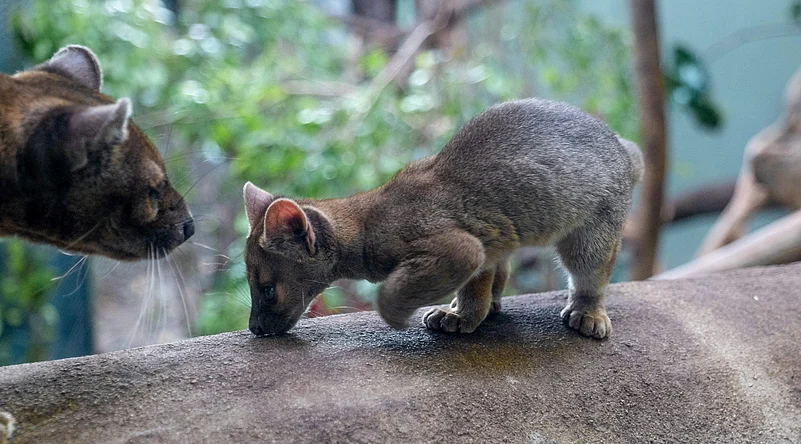
Kirindy Forest, near Morondava in western Madagascar, is among the better-known places to look for a fossa. The reserve also shelters lemurs, tenrecs, mongooses, birds and reptiles. Guided night walks can reveal some of its nocturnal residents, although sightings are never guaranteed.
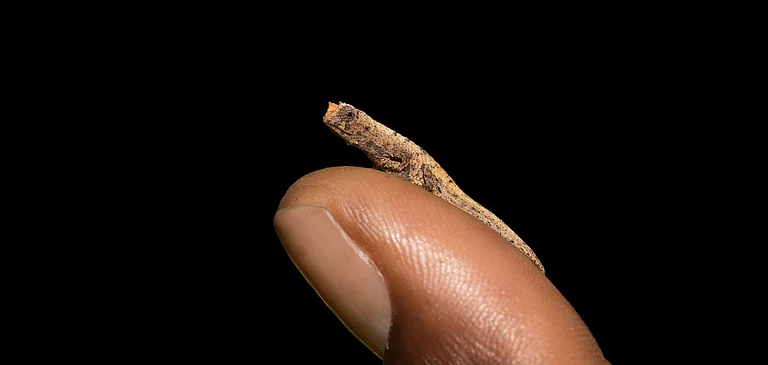
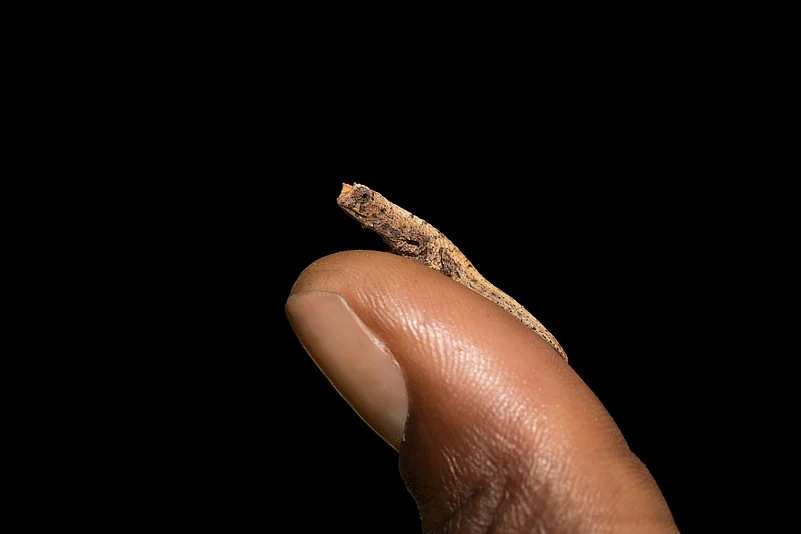
Madagascar's reptiles are equally fascinating. The panther chameleon is celebrated for its vivid colours, with males displaying combinations of green, blue, red, orange and yellow. At the opposite end of the size spectrum is Brookesia micra, also known as the Nosy Hara leaf chameleon, one of the world's smallest chameleons. Measuring only a few centimetres, it can be incredibly difficult to distinguish from the leaf litter.
The island is also home to leaf-tailed geckos, masters of camouflage whose flattened bodies and irregular patterns help them disappear against tree trunks and foliage. Its rainforests shelter colourful frogs, too, including tiny species in bright shades of orange, red and green.
Rainforests, Bamboo Groves, And A Forest Full Of Surprises
Eastern Madagascar is where tropical rainforests flourish. Their dense vegetation, streams and steep hills support an extraordinary variety of lemurs, birds, amphibians, reptiles and plants.
One of the best places to experience this ecosystem is Andasibe-Mantadia National Park, around three hours by road from Antananarivo. The park is famous for its indri population, but visitors can also look for bamboo lemurs, chameleons and colourful birds. Guided night walks around designated areas reveal mouse lemurs, frogs and nocturnal reptiles.
Further south, Ranomafana National Park is another essential stop. Part of the UNESCO-listed Rainforests of the Atsinanana, it protects a rich expanse of tropical rainforest, with waterfalls, river valleys and dense vegetation.
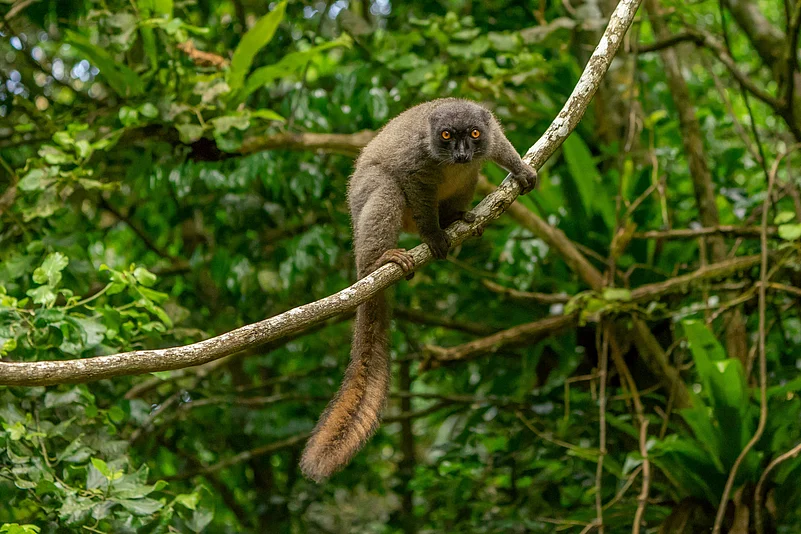
The park is particularly important for bamboo lemurs. The golden bamboo lemur, discovered in the area in the 1980s, feeds on bamboo, an unusual dietary specialisation. Ranomafana also shelters Milne-Edwards' sifaka, red-bellied lemurs and several nocturnal species.
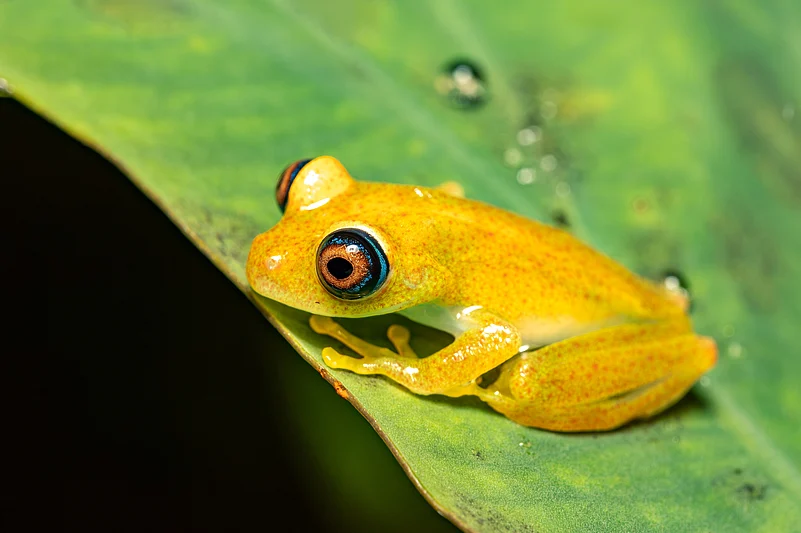
Look beyond the mammals and the forest reveals tree ferns, orchids, moss-covered trunks and climbing plants. Its amphibian diversity is particularly impressive, making guided walks rewarding for naturalists and wildlife photographers.
Baobabs And The Extraordinary Spiny Forest
Madagascar's flora deserves as much attention as its animal life. The island has seven native baobab species, six of which are endemic. Their enormous, swollen trunks store water, helping them survive the prolonged dry periods experienced in parts of western and southern Madagascar.
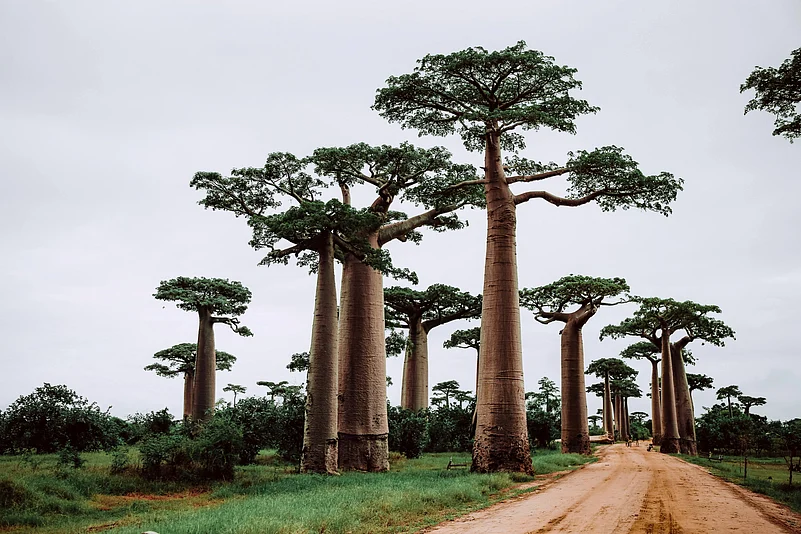
The most photographed examples stand along the Avenue of the Baobabs, near Morondava. Towering trees line an unpaved road, creating one of the country's most recognisable landscapes. Visit around sunset, when their silhouettes stand out against the changing colours of the sky. Look out for Grandidier's baobab (Adansonia grandidieri), the tallest and most iconic of Madagascar's baobab species.
Travel further south and the scenery changes again. The lush eastern forests give way to the arid spiny forests, particularly around Toliara and Ifaty. These unusual ecosystems are dominated by plants from the Didiereaceae family, which is largely restricted to Madagascar.
Among the distinctive species is Alluaudia procera, with upright stems covered in small leaves and sharp spines. Other plants have thick, water-storing stems that allow them to withstand intense heat and limited rainfall.
The spiny forest also supports specialised wildlife, including radiated and spider tortoises, reptiles, birds and lemurs adapted to dry conditions. Its survival is threatened by forest clearance, grazing, charcoal production and fires.
Tsingy de Bemaraha: A Stone Forest With Its Own Wildlife
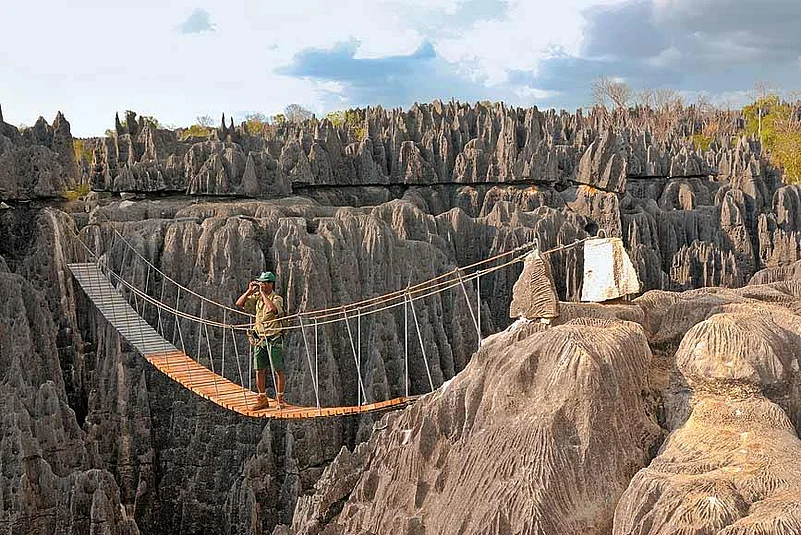
In western Madagascar, Tsingy de Bemaraha National Park protects a dramatic landscape of jagged limestone pinnacles, deep gorges and pockets of vegetation. Over millions of years, water has eroded the limestone, creating narrow passages, caves and razor-edged rock formations. The word tsingy is commonly associated with walking on tiptoe, an apt description of this terrain.
Despite its harsh appearance, the landscape supports lemurs, birds, reptiles and endemic plants. Decken's sifaka and red-fronted brown lemurs inhabit the surrounding forests, while the rocky formations provide shelter for smaller creatures.
Visitors can explore designated circuits featuring elevated walkways, suspension bridges and passages between limestone formations. Some routes involve climbing and narrow passages, so a local guide and appropriate equipment are essential.
Wildlife Underwater
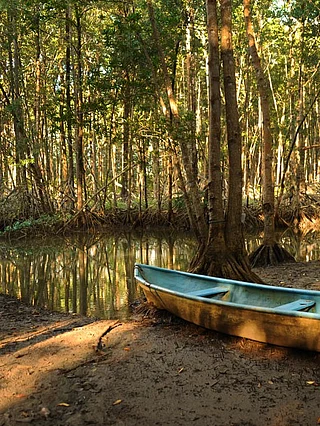
Madagascar's biodiversity extends into the Indian Ocean. Its coral reefs, mangroves and seagrass beds support a variety of marine species, making the coast an important part of a wildlife itinerary.
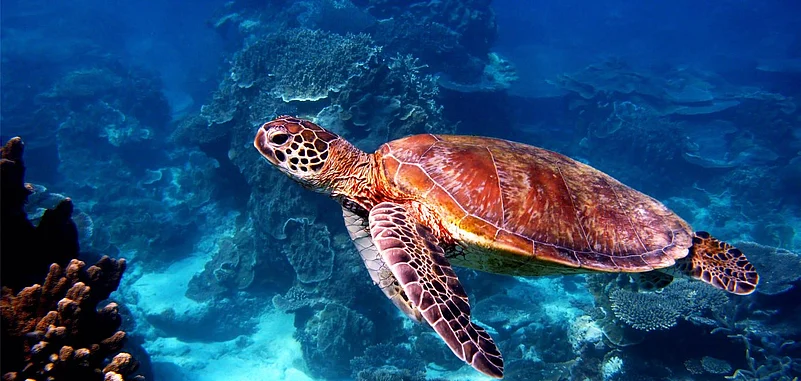
The waters around Nosy Be, off the northwestern coast, are popular for snorkelling and diving. Coral reefs support colourful fish and sea turtles, while nearby Nosy Tanikely is known for its underwater biodiversity.
For a seasonal encounter, head to Île Sainte-Marie, off the eastern coast. Between June and September, humpback whales migrate through the waters around Madagascar. Their breaches, tail slaps, and courtship displays make whale-watching excursions particularly rewarding.
Dolphins and sea turtles are also found in coastal waters, while mangrove forests provide nursery grounds for fish and crustaceans.
Planning A Wildlife Trip To Madagascar
Most international visitors arrive in Antananarivo, the capital, before travelling to different wildlife regions. Andasibe is a convenient introduction to the eastern rainforests, while Morondava provides access to the Avenue of the Baobabs and Kirindy Forest. Ranomafana and Tsingy de Bemaraha require more extensive journey planning, and Nosy Be works well for a combination of marine wildlife and beach experiences.
April to October is generally the drier period and a convenient time for exploring national parks. September and October are particularly rewarding for wildlife watching. Those hoping to see humpback whales should consider June to September around Île Sainte-Marie. The wetter months, from November to March, bring greener landscapes and increased activity among frogs and other reptiles, but heavy rain, cyclones and difficult road conditions can disrupt travel.

Madagascar's biodiversity also faces considerable pressure from deforestation, agricultural expansion, forest fires, illegal wildlife trade and climate change. Many lemur species are threatened, and the loss of forest habitat affects everything from chameleons and frogs to endemic trees.
Community-managed reserves, protected areas and responsible ecotourism play an important role in conservation. Anja Community Reserve, for instance, involves local communities in managing its wildlife habitat and directing tourism revenue towards local development.
For visitors, choosing locally qualified guides, respecting park regulations, keeping a safe distance from animals and supporting community-run reserves are meaningful ways to contribute.
Madagascar is a destination that rewards curiosity. You might arrive hoping to see a ring-tailed lemur and leave fascinated by a tiny chameleon, an unusual orchid or a baobab that has survived centuries in an arid landscape. Few places make the remarkable variety of the natural world as visible as this island.
FAQs
1. Why is Madagascar famous for its wildlife?
Madagascar is famous for its exceptional biodiversity and high number of endemic species. Around 92 per cent of its mammals, 95 per cent of its reptiles and 89 per cent of its plant life are found nowhere else in the world.
2. What animals can you see in Madagascar?
Madagascar is home to ring-tailed lemurs, indris, sifakas, aye-ayes, fossas, panther chameleons, leaf-tailed geckos, colourful frogs, endemic birds and several species of tortoises.
3. Where are the best places to see wildlife in Madagascar?
Andasibe-Mantadia National Park, Ranomafana National Park, Kirindy Forest, Anja Community Reserve and Tsingy de Bemaraha National Park are among the best places to explore Madagascar's wildlife.
4. When is the best time to visit Madagascar for wildlife?
April to October is generally the best period for wildlife trips, as it coincides with the drier season. September and October are particularly rewarding for exploring national parks. Humpback whales can be spotted around Île Sainte-Marie between June and September.
5. What makes Madagascar's flora unique?
Madagascar has more than 11,000 endemic plant species, including six native baobab species found nowhere else. Its unusual vegetation also includes the thorn-covered plants of the southern spiny forests, orchids, tree ferns and distinctive succulents.