

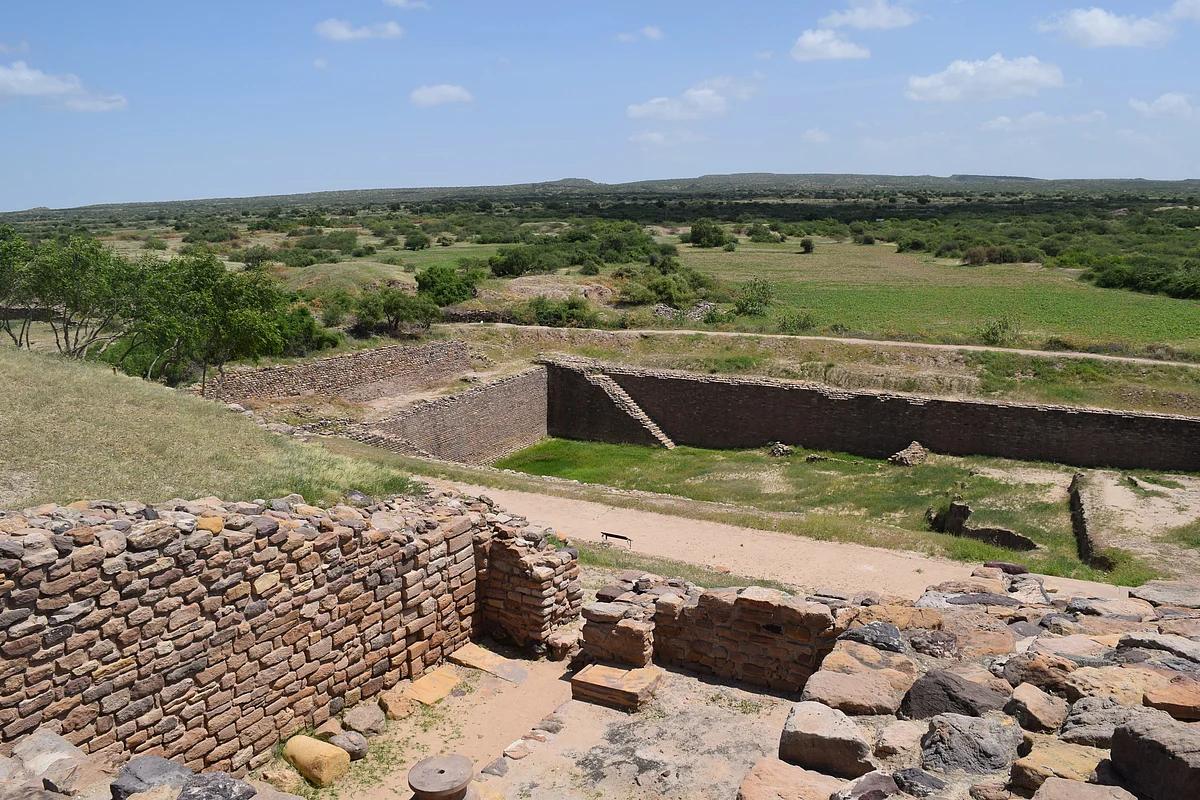
In the Great Rann of Kutch, the most compelling thing about Dholavira is not simply its age. It is the sight of a city that planned for scarcity: more than 4,000 years ago, its people built channels and vast reservoirs to harvest and store water in a landscape where every drop mattered. Those stone-lined tanks remain among the site’s most striking features, making its history unusually tangible to visitors.
Set on Khadir Bet, Dholavira was occupied from around 3000 to 1500 BCE. A UNESCO World Heritage Site since 2021, it is one of the best-preserved urban settlements of the Harappan Civilisation in South Asia. Its layout, waterworks, and gateways offer more than a distant encounter with an ancient culture; they let visitors see how a city was organised in an unforgiving environment.
A City Planned Around Scarcity
Dholavira developed between two seasonal streams, the Manhar and Mansar. Its inhabitants channelled their flow into reservoirs and drains, storing water for the dry months. Water management shaped the city itself. Unlike many Harappan settlements built largely with brick, Dholavira made extensive use of stone.
The walled settlement was divided into a fortified Castle, a Bailey and ceremonial ground, a Middle Town and a Lower Town. The separation of these spaces, alongside houses of different sizes, suggests a carefully planned and socially stratified centre. Excavations have revealed bead-making workshops and objects made from copper, shell, stone, semi-precious stones, terracotta, gold, and ivory. Finds also point to trade links with other Harappan centres, Oman, and Mesopotamia.
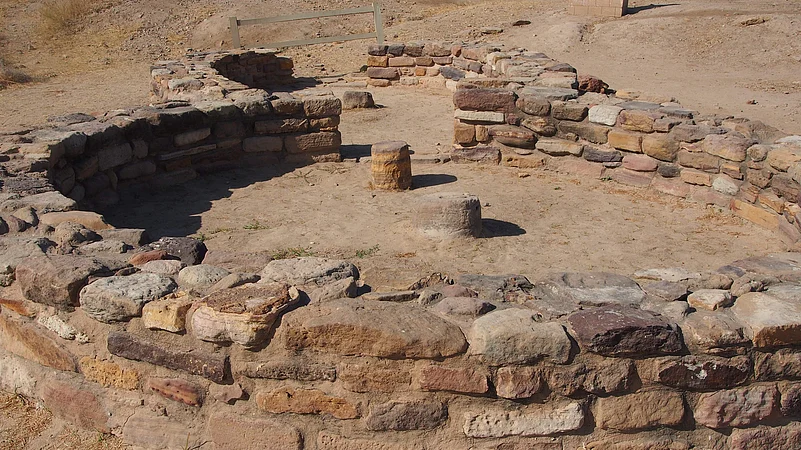

Among the most intriguing discoveries are large gypsum signs bearing symbols of the still-undeciphered Indus script, believed to have been displayed near a gateway. The cemetery, with different forms of memorial cenotaphs, offers another glimpse of the people's beliefs and practices.
Read The Ruins, Then Visit The Museum
Explore the site on foot, moving between the citadel, gateways, residential quarters, ceremonial ground, and reservoirs. The waterworks deserve particular attention: look for the channels and stone-lined tanks that gathered and stored seasonal water. A guide can help make sense of the layout, which may otherwise appear as a spread of foundations and walls across dry ground.
The nearby archaeological museum adds detail to what remains in situ. Pottery, seals, beads, ornaments, and tools offer a closer look at the craft traditions and everyday life behind the monumental planning. Seeing these artefacts after walking through the city connects the scale of the ruins with the people who once made and traded them.
Dholavira’s decline was gradual, not a single dramatic event. The settlement was reoccupied in later phases, but its urban character changed. Climate shifts, changing trade patterns and pressure on resources are among the explanations considered for its decline.
The Village, The Rann, And A Taste Of Kutch
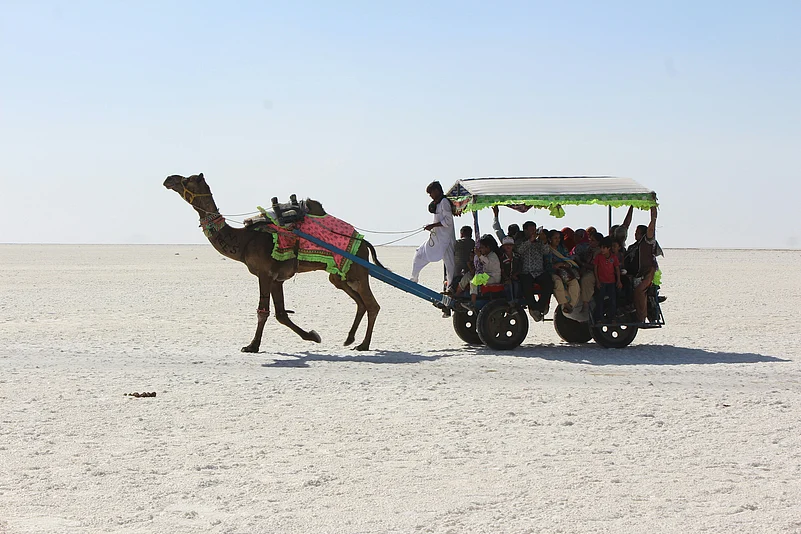
The modern village of Dholavira lies about a kilometre south of the excavated city. A visit gives the archaeological landscape a present-day context: this is not just an isolated monument but an inhabited part of Khadir Bet. Nearby, the Fossil Park offers another perspective on the region’s deep past. Salt flats and seasonal wetlands make the surrounding landscape worth exploring, too. In winter, the area can attract migratory birds, including flamingos, though sightings are never guaranteed.
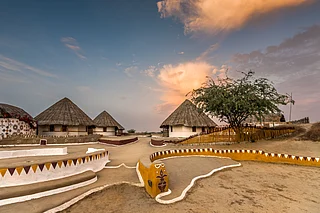
Make time for the Road to Heaven, the causeway across the Great Rann that links Khadir Bet with the mainland. The salt plains are especially atmospheric around sunrise and sunset. After dark, the low level of light makes stargazing another reason to stay overnight rather than treat Dholavira as a rushed day trip. Stays near the site include Praveg Resort, about 1.5km away, which offers a base for an early start and evenings under the open sky.
Food is part of the Kutch experience. Look for a Kachchhi thali with bajra rotla, kadhi, khichdi, curd or buttermilk, and seasonal vegetables. Try odho, a local preparation similar to baingan bharta, where available. In larger towns such as Bhuj and Mandvi, seek out Kutchi dabeli, the spiced potato-filled bun that originated in the region. The Rann Utsav, held at Dhordo, is another winter addition to a Kutch itinerary. The 2026–27 edition is scheduled from November 1, 2026 to March 7, 2027, with local crafts, music and dance at the White Rann.
Continue The Harappan Trail
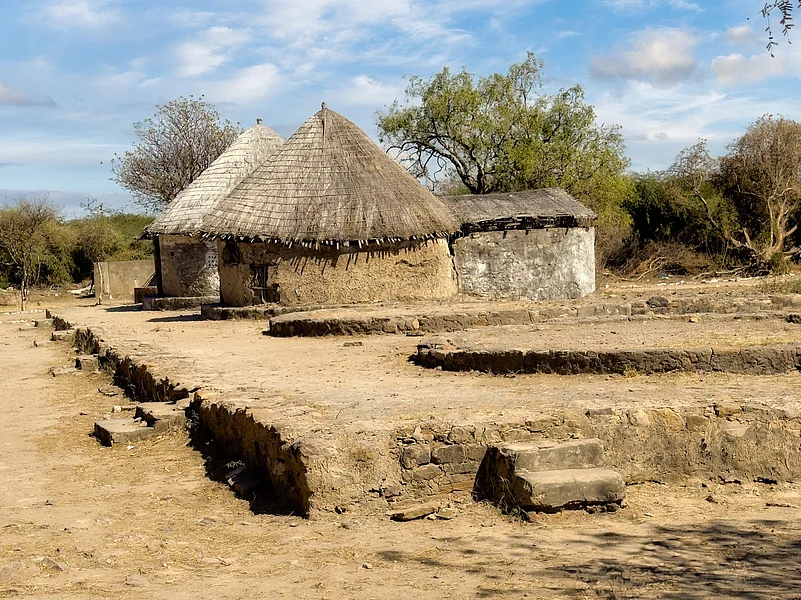
Dholavira is not the only place in India where the Harappan world can be explored. In Gujarat, Lothal offers a glimpse into the civilisation's maritime trade networks. Its large basin, identified by archaeologists as a dockyard, along with the remains of a warehouse, bead-making workshops, stone anchors and seals, points to commercial connections that extended as far as Mesopotamia and the Persian Gulf. Further north, Rakhigarhi in Haryana reveals the scale of Harappan urban life through its extensive settlement mounds, planned streets, drainage systems, craft workshops, and cemetery.
In Rajasthan, Kalibangan presents another fascinating chapter in this history. Situated along the dried bed of the Ghaggar River, the site contains evidence of both pre-Harappan and Mature Harappan settlements. Among its notable discoveries is an ancient ploughed field, with intersecting furrows that offer insights into early agricultural practices. Excavations have also revealed a fortified citadel, a lower town and fire altars, suggesting distinct patterns of settlement and ritual life. Each site brings a different dimension of the Harappan world into focus, from maritime commerce and agriculture to urban planning. Dholavira, however, remains distinctive for the ingenuity with which its inhabitants adapted an entire city to the demands of an arid landscape.
Plan Your Visit
When to go: October to March, when days are more comfortable for walking and winter birdlife may be present.
Getting there: Bhuj is the nearest major airport and the usual rail hub. Hire a car or taxi from there; allow around 3–4 hours by road. The newer approach via Khavda and the Road to Heaven differs from the older route via Rapar and Bhachau.
At the site: Set aside at least half a day for the ruins and museum. Wear walking shoes and carry water, a hat and sun protection.
Stay: Book ahead in winter. Fuel up and download maps before leaving Bhuj; services and mobile coverage can be limited around Khadir Bet.
FAQs
1. Where is Dholavira located?
Dholavira is located on Khadir Bet island in the Great Rann of Kutch, Gujarat. The archaeological site lies near the modern village of Dholavira.
2. Why is Dholavira famous?
Dholavira is famous for its well-preserved Harappan urban settlement, sophisticated water management systems, stone reservoirs, fortified structures and evidence of ancient trade networks. It became a UNESCO World Heritage Site in 2021.
3. What are the best places to visit in Dholavira?
The main attractions include the Harappan archaeological site, its ancient reservoirs, gateways, fortified settlement and archaeological museum. Visitors can also explore the nearby Fossil Park, the modern village of Dholavira and the Road to Heaven across the Great Rann.
4. What is the best time to visit Dholavira?
October to March is the best time to visit Dholavira, when temperatures are relatively comfortable for exploring the archaeological site and surrounding salt desert. Winter also offers opportunities for birdwatching and stargazing.
5. How can travellers reach Dholavira?
Bhuj is the nearest major airport and railway hub. From Bhuj, travellers can hire a car or taxi for the approximately 3–4-hour road journey to Dholavira. It is advisable to arrange transport in advance, as public transport and services around Khadir Bet are limited.