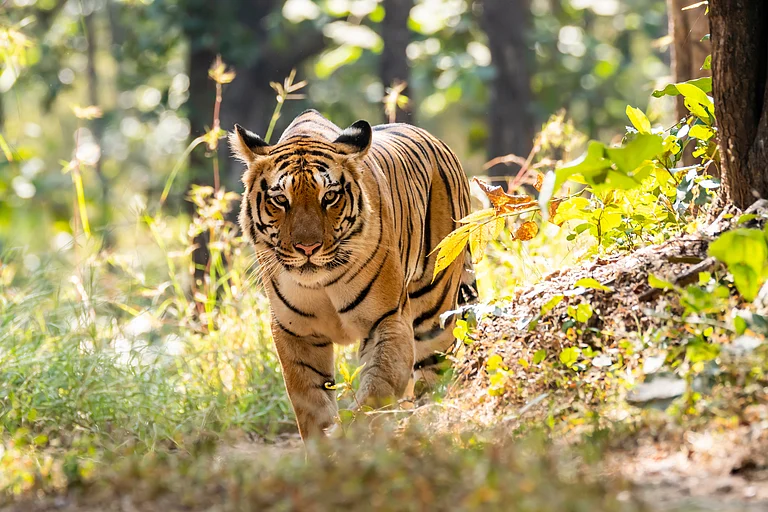


The wait is almost over. Pench National Park will reopen for the 2026-27 safari season on October 1, 2026, bringing travellers back to one of central India's most evocative tiger landscapes. Advance bookings for safaris from October 1 to 31 opened on August 1, while permits for November onwards opened on September 1. The Forest Department has also published the new safari timings for the season.
There is good reason to return once the forest opens its gates. Pench is not a forest that reveals itself all at once. The landscape changes as the jeep moves through teak woodland, bamboo thickets, open grassy stretches, and dry riverbeds, with the Pench River cutting through the reserve. The Madhya Pradesh side of the tiger reserve has three principal tourism zones, Turia, Karmajhiri, and Jamtara, along with buffer areas such as Telia and Rukhad. The Forest Department lists the best time to visit as October 15 to June 30, although safaris begin from October 1.
The wildlife is just as varied. Bengal tigers share the forest with leopards, sloth bears, dhole, gaur, sambar, chital, nilgai, wild boar, and four-horned antelope. Then there are the birds. The Forest Department records around 325 species, including migratory birds that arrive around the Totladoh reservoir during winter.
For most visitors, of course, the tiger remains the big draw. But Pench is more interesting when you give the forest time to do its own thing. A barking deer suddenly alert in the undergrowth, a herd of gaur crossing the track, langurs throwing alarm calls from the canopy or a raptor circling above the teak can turn an ordinary drive into a memorable one, even when the tiger stays out of sight.
And that is where the lodge matters. In Pench, your safari does not begin and end at the park gate. The right property can introduce you to the villages around the reserve, local food traditions, naturalists, walking trails and the landscape itself. From a tree house built around a Mahua tree to a tented camp that disappears before the monsoon, these are three distinctive lodges to consider when planning a Pench safari this season.
Jamtara Wilderness Camp: A Tented Camp Built Around Village Life And Conservation


Jamtara Wilderness Camp is located in Jamtara village, on the fringes of Pench National Park. Its story is closely linked to the Sankhala family's history in Indian wildlife conservation. Kailash Sankhala, Amit Sankhala's grandfather, was the first director of Project Tiger and later established Tiger Trust. His son Pradeep Sankhala subsequently took the family's conservation interests into wildlife tourism, and Jamtara continues that connection between hospitality, local communities and conservation.
The camp itself is deliberately small, with 10 luxury safari tents set among tall Arjuna trees and around an ancient Banyan rooted beside a dry riverbed. Each tent has a private verandah facing the forest, an en-suite bathroom and large panels that can be rolled up to bring the surrounding landscape into view. The accommodation uses reclaimed materials extensively. The camp's furniture includes reclaimed ship timber, old embassy furniture and desks associated with the Supreme Court, giving the interiors an eclectic connection with India's institutional and architectural past.

Perhaps the most distinctive part of Jamtara's philosophy is that the camp is not intended to remain permanently assembled. Every year before the monsoon, the tents, flooring and removable furniture are dismantled and stored. Only the permanent bathroom structures remain. The camp is rebuilt before the next safari season, allowing the site to experience the monsoon without the usual resort infrastructure sitting on the land.
The relationship with the surrounding village is equally important. Farming remains a major livelihood in Jamtara, and the camp's kitchen follows a farm-to-table model that deliberately purchases produce from nearby farmers rather than attempting to grow everything itself. Jamtara says this allows the economic benefit of food procurement to reach the surrounding community.

Then there is the Star Bed, perhaps the camp's most distinctive experience. It takes inspiration from the raised platforms used by villagers to guard their crops from animals. Jamtara developed its version as a revenue-sharing initiative with a local villager. Guests can spend the night outdoors under the stars, listening to the nocturnal sounds of the landscape and watching for signs of wildlife.
The camp's other experiences include jeep safaris, buffer-zone walks, village walks, cycling, birdwatching and nature interpretation with resident naturalists. There is also an infinity pool for the hours between excursions. Meals can be served in different parts of the property, including beside the Banyan, near the pool or beneath the trees. For a lodge where the surrounding village is as important to the story as the tiger reserve itself, Jamtara makes the landscape part of the accommodation rather than merely the backdrop.
The Information
Address: Village Jamtara, near Pench National Park, Madhya Pradesh 480110
Tariff: For October 10, 2026 to June 15, 2027, the published Jungle Plan is INR 79,850 per night for double occupancy and INR 68,970 for single occupancy. It includes accommodation, meals, two scheduled shared safaris, resident naturalists, buffer walks, village walks, refreshments, current park fees, and government taxes.
Contact: +91 85058 96657 / +91 96259 22313
Website: jamtarawilderness.com
How to get the best deal on the hotel: Compare the American Plan with the Jungle Plan. If you are planning two shared park safaris, the Jungle Plan's inclusions can make the package more convenient. Confirm inclusions for your dates directly with the camp.
Things to do nearby: Pench National Park safari, buffer-zone walks, village walks, cycling, birdwatching, nature walks, Star Bed, and stargazing.
Pench Tree Lodge: Tree Houses, Tribal Flavours, And A Forest-First Stay

Pench Tree Lodge is tucked into 40 acres of forest in Sarahiri, a small tribal hamlet in the Karmajhiri landscape of Pench. Pugdundee Safaris established the lodge in this relatively underdeveloped part of the reserve as its first property in the area, with an approach centred on keeping the development low-density rather than concentrating a large resort in one location. The lodge is about 20 minutes from the Karamajhiri gate.
The accommodation is what immediately distinguishes it. There are six tree houses and 10 cottages, giving the property a total of 16 units. The tree houses are built on stilts around Mahua trees, with the six structures deliberately spaced apart. Their safari-style interiors use local crafts and natural materials, while large windows and private verandahs keep the forest within view. The cottages provide a more conventional alternative without losing the lodge's forest setting.
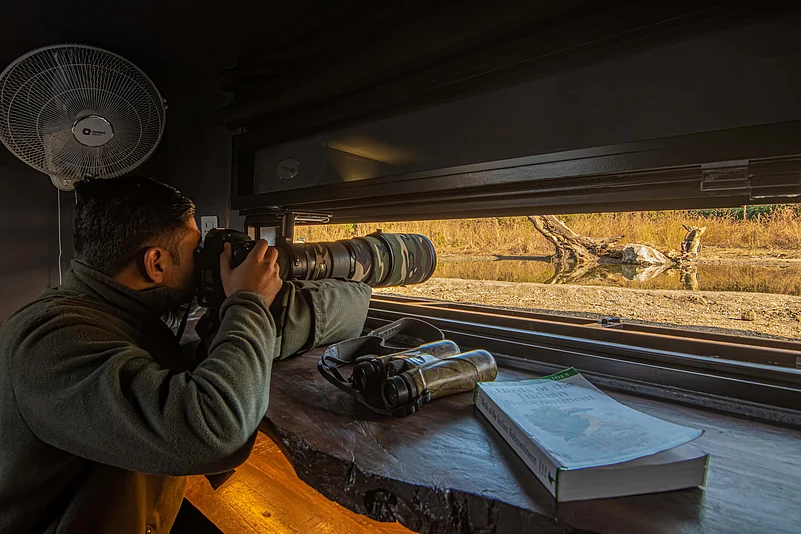
The property is designed as more than a base for jeep safaris. Guests can head into the buffer forest around Rukhad, take nature walks and explore the landscape by bicycle. The Kipling Hide, described by Pugdundee as India's first luxury underground wildlife photography hide of its kind, is another experience aimed at observing wildlife without the presence of a safari vehicle. There are also night trails and village walks.
Food is particularly tied to the surrounding landscape. Much of the produce comes from the lodge's organic garden, which grows herbs and vegetables used in the kitchen. The menu also explores regional and tribal food traditions. Its Baiga Thali draws on the cuisine of the Baiga communities, including staples such as Kodo and Kutki millets. The lodge's Paanch Gaon Andar menu is built around produce sourced from five surrounding villages, linking the kitchen with local farmers.

One of the most atmospheric dining experiences is the Farm Dinner, set beside the organic garden under the night sky. Food is cooked using traditional methods involving clay pots, an open hearth and a tandoor, bringing village cooking techniques into the lodge experience. Breakfast can even be served inside the national park during a safari.
The Information
Address: Village Sarahiri, Tehsil Kurai, District Seoni, Madhya Pradesh 480661
Tariff: From INR 30,000 per night for double occupancy for cottages and INR 33,000 for tree houses, plus applicable taxes, for the current published 2026-27 tariff period.
Contact: +91-11-40146400
Website: penchtreelodge.com
How to get the best deal on the hotel: Check Pugdundee Safaris' direct-booking offers and multi-lodge packages before booking.
Things to do nearby: Pench National Park safari, Karamajhiri zone, Rukhad buffer excursion, Kipling Hide, village walks, cycling, nature walks, and birdwatching.
Baghvan, A Taj Safari: Colonial Bungalows And Private Machans In Tiger Country

A few minutes from Pench National Park, Baghvan, A Taj Safari takes its name from the Hindi words bagh and van, referring to a tiger forest. The lodge is in Village Awargani near Turia and is built beside a seasonal dry riverbed. That location is central to the property's character: the nullah is not merely scenery but part of the wildlife landscape, with animals sometimes using the riverbed as a movement corridor along the forest edge.
Baghvan has 12 stand-alone colonial-style bungalows, set among teak and banyan trees. Each is designed as a private accommodation with a shaded sit-out, air conditioning, a reading nook, spacious bathroom, and a bedroom that opens onto a verandah. The defining feature is the rooftop machan, reached by stairs from the bungalow. During the day it becomes an elevated place to sit among the trees; at night, guests can sleep outdoors beneath the sky. The rooms are 49 square metres and accommodate up to three guests. Butler service, in-room dining, minibars and Wi-Fi are among the facilities.
The lodge's central offering remains its wildlife programme. Safaris are accompanied by resident naturalists, who interpret animal behaviour and the ecology of Pench rather than treating the drive simply as a search for tigers. Guests can also explore the area through nature trails, birdwatching, cycling, and stargazing. For younger travellers, Taj runs a Junior Naturalist programme that introduces children to the forest through activities including nature walks, safaris, and stargazing.
Baghvan also puts considerable thought into how guests eat in the wilderness. Its dining programme includes farm-to-fork wilderness dining, breakfasts during safari and several private dining settings. Guests can arrange dinner on their bungalow deck, beneath a Mahua tree, beside the pool or on a covered deck overlooking the seasonal riverbed. The private dinner is served by a personal butler, while the bonnet breakfast turns the safari vehicle itself into a dining table deep inside the forest.

The property also has a swimming pool and spa, giving guests somewhere to retreat between game drives. For travellers who want their Pench experience to combine traditional safari-lodge architecture, polished hospitality and a strong wildlife programme, Baghvan's relatively small number of bungalows keeps the experience intimate while retaining the infrastructure expected of a luxury Taj property.
The Information
Address: Village Awargani, Pench National Park, Madhya Pradesh 480881
Tariff: Rates vary according to dates and package inclusions. Confirm the applicable 2026-27 rate directly with the property.
Contact: +91 97704 29399 / +91 22 6601 1825
How to get the best deal on the hotel: Check Taj's direct offers and wildlife packages before booking, particularly packages that bundle meals and safari experiences.
Things to do nearby: Pench National Park safari, birdwatching, nature trails, cycling, stargazing, village excursions, and the Junior Naturalist programme.
FAQs
1. When does the 2026-27 Pench safari season begin?
Pench National Park is scheduled to reopen for the 2026-27 safari season on October 1, 2026.
2. What are the best lodges to stay at in Pench?
Jamtara Wilderness Camp, Pench Tree Lodge and Baghvan, A Taj Safari are three distinctive luxury options near Pench National Park.
3. What is the best time for a Pench safari?
The Madhya Pradesh Forest Department lists October 15 to June 30 as the best period to visit Pench, while safaris begin from October 1.
4. Which safari zones can you visit in Pench?
The Madhya Pradesh side of Pench has three principal tourism zones: Turia, Karmajhiri and Jamtara, along with buffer areas including Telia and Rukhad.
5. What animals can you see on a Pench safari?
Pench is known for Bengal tigers, leopards, sloth bears, dhole, gaur, sambar, chital, nilgai, wild boar and four-horned antelope, along with around 325 recorded bird species.