There’s a French word I love — flaneur — someone who walks not to arrive, but to see. A wanderer, a loiterer, a person who lets a city reveal itself through events and accidents — scents, sounds, scenes from the urban life. Paris might have invented the flâneur, but Bangkok, as I learned, might just be its Asian counterpart: a postcard in perpetual motion, and the flaneur’s tropical paradise.
The Sceptical Traveller
I’ll admit it — I wasn’t keen on going.
Thailand, especially Bangkok, carried a reputation that didn’t appeal to me. For many travellers, it’s shorthand for cheap thrills and cheaper merchandise. I wanted something more soulful: Vietnam, maybe. Japan, ideally. Thailand, I assumed, would be touristy, commercial, and perhaps even sleazy – designed primarily for men seeking a spot of fun.
But my older daughter – both she and her husband being ardent Thailophiles - insisted we give it a shot and insisted that Bangkok offered much, much more than what we saw in popular culture, and soon I buckled in for a late-night flight, cynicism intact but curiosity flickering somewhere under it.

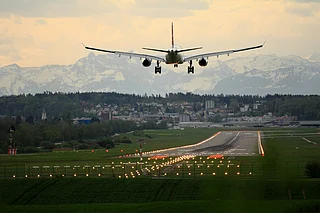
My husband, always open to any place that holds the promise of roast pork, and I landed close to midnight. I stepped out expecting the usual blanket of humidity — instead, there was a soft breeze, gently perfumed with rain and citrus. Our elderly driver smiled, pressed his palms together, and said Sawasdee kha and I found myself repeating it awkwardly, already softened by his warmth. As we drove through the near-empty streets, Bangkok looked suspended in a dream state — the horizon glittered with enormous skyscrapers while on the ground, street food shops were closing down – the vendors thoroughly cleaning their designated space, while carefully segregating the garbage, and packing away their carts, all bathed in cinematic neon lights.
By morning, as light spilt over the Chao Phraya River, our hotel - The Quarter – a minimalist Japandi-inspired boutique hotel that overlooked the river — the vast, shimmering artery of the city came alive with boats and ferries gliding past, distributing clusters of people to different parts of the city, and then perhaps, bringing them back home.

We walked to the nearest mall from our hotel’s back door – called the secret door for those who wished to saunter through the sois (side streets in Thai) – and reached ICONSIAM – one of the sprawling, glittering malls the city is famous for. It should’ve felt impersonal. But somehow it didn’t. Maybe it was the calm efficiency of it all, or the scent of grilled river prawns, fused with the earthy smell of galangal and lemongrass wafting from the indoor floating market. My cynicism began to melt quietly, like ice left on a windowsill.
The Flâneur Awakens
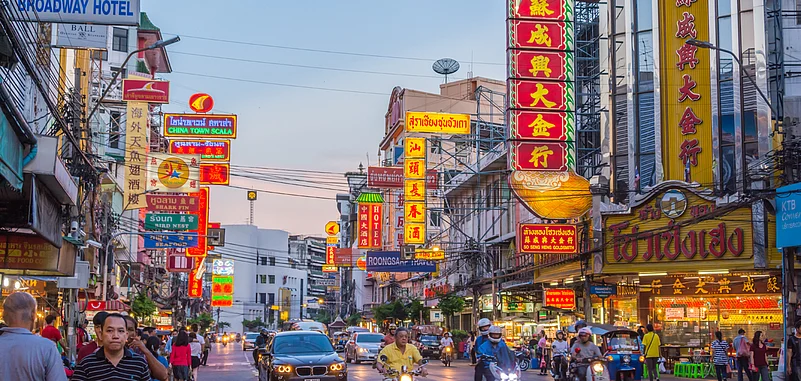
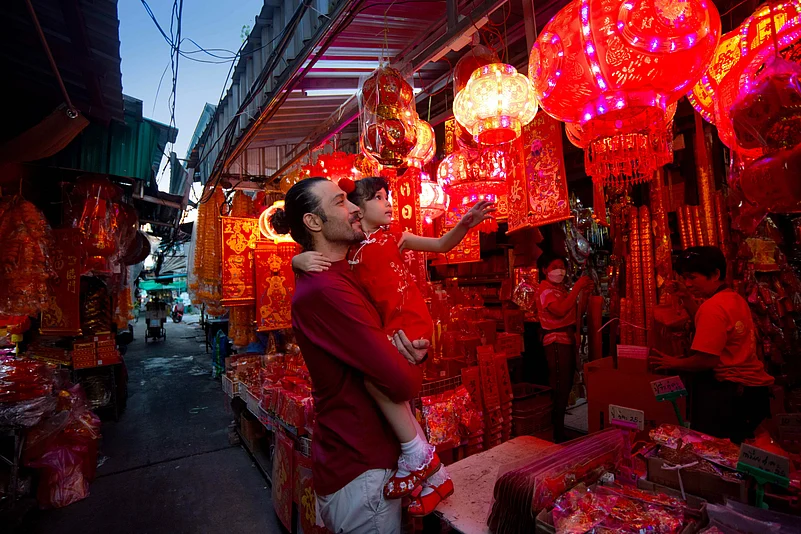
What makes Bangkok fascinating are the contradictions that exist in quiet harmony. Designer skyscrapers rub shoulders with colonial homes; monks queue at Tim Horton’s while the fashionable young stop to offer their prayers (and leave edible offering) at different shrines that dot the city – called San Phra Phum (spirit houses); futuristic skywalks that connect larger-than-life malls like Siam Paragon, Central World, and MBK Center, exist alongside sois packed with pop-and-mom shops selling all sorts of delicious delicacies, and of course, Yaowarat – one of the world’s oldest and biggest Chinatowns in the world, known specially for its gold shops, temples, and markets. A nocturnal juggernaut, it comes alive at night with street food stalls and tables spilling onto the streets, the air thick with the smell of grilled seafood — a fever dream for those who like to walk without an itinerary and discover hidden coffee shops and dessert parlours.
It’s impossible to talk about Bangkok without talking about its food — because here, food isn’t sustenance. It’s a never-ending conversation, it is culture on every plate, it’s what keeps the city nourished and thriving, and brimming with flavours.
My initiation began with a bowl of Tom Yum Goong — hot, sour, fragrant with lemongrass, kaffir lime, galangal, and shrimp: the spice sharp at first, then mellowing into citrus and heat. Next came Pad Kra Pow — minced pork tossed with basil and garlic, topped with a crunchy fried egg, each bite an explosion of flavour.
And Pad Thai, of course —noodles tossed in tamarind, fish sauce, and peanuts, a dish so familiar and yet so delicious, and the best thing is that no two Pad Thais in Bangkok will ever taste the same.

Then there is the ubiquitous Mango Sticky Rice, vibrant sliced fruit with coconut cream over a bed of soft, sweet rice; it is addictive to the core. And it’s not just Thai cuisine that comes in abundance. Bangkok is an Asian food map in motion — there are Japanese shabu-shabu and sushi restaurants, Korean BBQ joints, Vietnamese cafés serving fresh and translucent spring rolls that taste like summer. It’s as if the city, with its easy-going cosmopolitan heart, decided there’s room for everyone at its table.

Markets and Malls: Commerce with Character
If you want to see the Thai genius for balance, go shopping.
MBK Center is a sensory overload — six floors of stalls selling everything from fake sneakers to video game consoles, jewellery to the latest in electronics. Chaotic and utterly fascinating. And yet, if you have patience, you find gems: beautiful leather bags, original vintage dresses, shoes that rival designer ones, flash sales on cosmetics — all at prices that make you grin.
A short walk away through covered walkways that allow actual walking, the Siam Paragon and Siam Centre malls gleam like a glass palace, with too many floors to count. A pianist plays Mozart softly in the background as we dig into our bowls of deeply nourishing noodle soup. Across the river, ICONSIAM dazzles — and we take a ferry back to the hotel, and enjoy.

On weekends, Chatuchak Market becomes the city’s pulsating hot spot— about 35 acres of colour, music, and smoke. You can buy plants or accessories, designer clothing, vintage jeans, art to antiques, it’s all there. When it all becomes too much, there’s always a little café, a stool, a glass of coconut water or Thai iced tea, and a fan humming lazily above your head.
We took a taxi to Jodd’s Fair – a glittering night market in the midst of impossibly high skyscrapers. A bustling place that overwhelms with its sheer quantity of freshly-cooked food - from chargrilled seafood glistening with chilli and lime to endless skewers of smoky and caramelised pork. At every street stall, food is served with pride, precision, and dollops of warmth, making each dish impossibly satisfying.
After hours of walking, there’s nothing like surrendering to a foot massage. You sink into a soft leather chair, the air heavy with lemongrass oil, and as you watch the world go by, the masseuse kneads the soles of your feet with practised precision, coaxing the knots out of your calves and ankles. It’s not just a treatment for tired feet, but a small, grounding ceremony — a pause between wanderings that somehow makes you feel more human and reinvigorates your soul (and soles) for new adventures.
The Café Pause
Between the chaos and colour, Bangkok knows how to create pockets of calm.
The city’s cafés are small sanctuaries — cool, sun-dappled, and beautifully designed. Some look straight out of Studio Ghibli, all wood and minimalism; others bloom with plants and pastel terrazzo. You could spend days just wandering between them — sipping coconut cold brews, matcha lattes, the speciality dirty coffee – called so because of the way the coffee muddies the milk - served in handmade ceramics.
And when one has had enough of malls, the Bangkok Art and Culture Centre rises like a spiral of calm amidst the shopping district — all white curves and concentric galleries coiling upward around a central atrium that ends with a lovely little gift shop. Designed in a way that makes you drift rather than hurry, you follow the slow incline of the ramp, peering into open galleries that spill sound, light, and movement into the air. Artists, students, tourists, and elderly couples all share the same quiet awe, as if the structure itself has softened the edges of Bangkok’s noise just enough for art to breathe. And with a café on every floor, the centre allows you space to ruminate, and perhaps process the art you just saw.

These small pauses — that’s where the flâneur lives and
Bangkok, I realised, doesn’t try to seduce you. It seeps in — slowly, like tea, each sip adding to comfort and a sense of calm, but also constantly delighting the senses.
The River And The Temple

A short ferry ride away from our hotel was Wat Arun, the Temple of Dawn. Its porcelain mosaic work glittering in the sunlight like seashells. I stood in line to receive a blessing from a monk, and when he tied a sai sin — a simple white bracelet — around my wrist, I felt a strange calm. In that moment, I understood what I’d missed about Bangkok. It isn’t a country of extremes. It’s a country of balance — the sacred and the sensual existing side by side, effortlessly.
The Return

On the drive to the airport, I felt that quiet ache that comes from leaving a place that has, somehow, started to understand you.
Thailand doesn’t shout. It smiles. It doesn’t demand attention. It earns affection. It teaches you something you forget in the noise of everyday life — how to walk without rushing, how to look without judging, how to let the world unfold at its own pace.
I’d arrived in Thailand wary and judgmental, expecting gloss. What I found instead was grace — a country unbothered by who you are, but lets you be who you are.
Manjira Majumdar is an independent journalist and author
FAQs
1. What is the best way to explore Bangkok?
The best way to explore Bangkok is through slow travel—walking through neighbourhoods, exploring street food, markets, and local cafés.
2. What are the must-visit places in Bangkok?
Key highlights include Wat Arun, Chatuchak Market, ICONSIAM, and Yaowarat.
3. What food should you try in Bangkok?
Must-try dishes include Tom Yum Goong, Pad Thai, Pad Kra Pao, and mango sticky rice, all widely available across the city.
4. Is Bangkok good for shopping?
Yes, Bangkok offers a mix of high-end malls and local markets, from luxury shopping at Siam Paragon to bargains at Chatuchak Market.
5. What makes Bangkok unique for travellers?
Bangkok stands out for its balance—modern malls and ancient temples, street food and fine dining, chaos and calm all coexist in one city.