

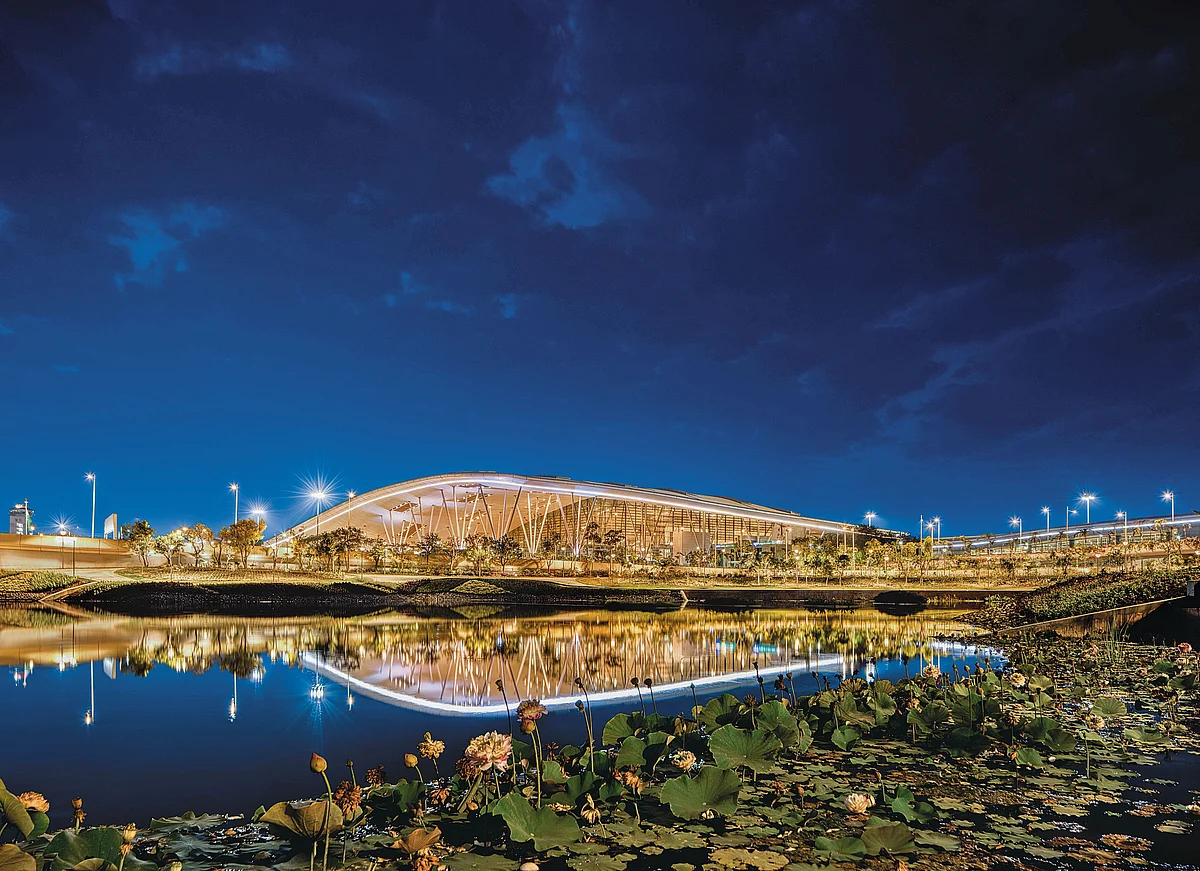
For generations of travellers, airports existed in the background of journeys—functional spaces designed to move people from one place to another with as little delay as possible. Airports were once designed to be passed through, not remembered. But that understanding has steadily evolved over the last decade.
Across the world, airports are becoming cultural and lifestyle spaces in their own right, reflecting the identity of the cities they belong to while shaping the future of travel itself.
Few Indian airports illustrate that transformation as vividly as Bengaluru’s Kempegowda International Airport (BLR Airport).
This year marks 18 years since the airport first opened its doors as India’s first greenfield airport developed under the Public-Private Partnership model. At the time, it represented a bold infrastructure experiment for a rapidly modernising country. Nearly two decades later, the airport has grown into one of South Asia’s most ambitious aviation ecosystems, having served over 400 million passengers since its inception. But scale alone does not define BLR Airport today. What sets it apart is the way it has steadily reimagined the airport experience itself.
More Than A Terminal
At BLR Airport, travel is designed as an experience.
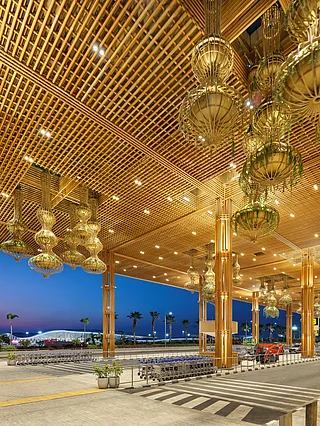
Nowhere is this transformation more evident than in Terminal 2, the airport’s acclaimed “Terminal in a Garden." Instead of the cold anonymity that often defines major aviation hubs, the terminal introduces passengers to a softer, slower atmosphere built around greenery, natural light, and open spaces. Greenery cascades from above, water flows alongside walkways, and sunlight filters through expansive open spaces, transforming the terminal into something closer to a garden than a conventional airport.


More than 6,20,000 plants and nearly 4,000 species are integrated into the terminal, alongside sunken gardens and landscaped spaces that attempt to blur the line between architecture and nature. One of the most striking elements is the “Tiger Wings” vertical garden by botanist Patrick Blanc, here thousands of plants rise along a towering green wall. Elsewhere, bronze veils with suspended foliage soften the building's scale, creating moments that feel closer to a botanical conservatory than a transport hub.
The design is deeply tied to Bengaluru’s identity as India’s historic “Garden City,” but it also reflects a broader shift in how airports now compete globally.
What To Experience At BLR Airport
Over the years, BLR Airport has quietly transformed dwell time—once considered the most frustrating part of flying—into one of the defining aspects of its experience. The airport’s retail and dining landscape has been curated less like a conventional terminal and more like an urban lifestyle destination. International restaurant brands such as Wolfgang Puck, PF Chang’s, and Carluccio’s sit alongside local favourites like CTR and Rameshwaram Café, allowing the airport to reflect Bengaluru’s cosmopolitan food culture rather than simply replicate generic global offerings.
The lounges, too, mirror this evolution in passenger expectations. The 080 Lounges, named after Bengaluru’s trunk dial code, move beyond the idea of a premium waiting room. With wellness spaces, sleeping pods, spa facilities, libraries, movie-viewing areas, and panoramic airfield views, they are designed to feel closer to boutique hospitality experiences. The airport’s approach increasingly acknowledges that modern travellers do not separate leisure, work and movement as rigidly as they once did. Airports are becoming temporary living spaces, places to pause, socialise, work or simply decompress.

This experiential thinking also sits behind BLR Airport’s “Feels Like BLR” philosophy, which makes passengers feel emotionally connected to the airport. The idea comes through not only in architecture and food, but also in sensory details: music, scent, art and atmosphere.
A bilingual airport anthem by Grammy-winning composer Ricky Kej, the “Rhythm of BLR” sonic identity, and a custom fragrance called “Dancing Bamboo” have all been used to create a sense of place that travellers can recognise before they even leave the terminal.
That hospitality-led thinking is perhaps most visible in QUAD by BLR, the airport’s retail and dining plaza located outside the terminal area. Conceived as a community-driven space, it hosts restaurants, cafés, retail outlets, flea markets, live performances and seasonal events. Importantly, it is designed not only for passengers but also for tourists, residents and passers-by alike, extending the airport experience beyond those actually travelling.
In doing so, BLR Airport expands its role beyond aviation infrastructure into something more urban and experiential—a destination in itself.
The Cultural Aspect
Art and culture have also become integral to how the airport defines contemporary travel.
Across Terminal 2, over 300 artworks by more than 100 artists explore themes ranging from Karnataka’s heritage to the Navarasas—the nine emotional states described in Bharata’s "Natya Shastra."
Among the most visible works is “Bengaluru’s Soul,” a monumental sculpture by Spanish artist Jaume Plensa at the Terminal 2 forecourt. Inside, the airport’s collaboration with the Museum of Art & Photography further reinforces its ambition to function as a cultural space rather than merely a logistical one. Yet BLR Airport’s evolution is not built on aesthetics alone. Underneath the experiential layer lies an enormous technological and operational transformation that has unfolded over 18 years.

The Infrastructure
In FY 2025–26, the airport handled 44.47 million passengers, including over 7.2 million international travellers. Nearly 16 per cent of passengers today are transfer travellers, underlining Bengaluru’s emergence as a major connectivity hub for South India. The airport now links travellers to more than 100 destinations, with growing connections to cities across Europe, Southeast Asia, and the Middle East.
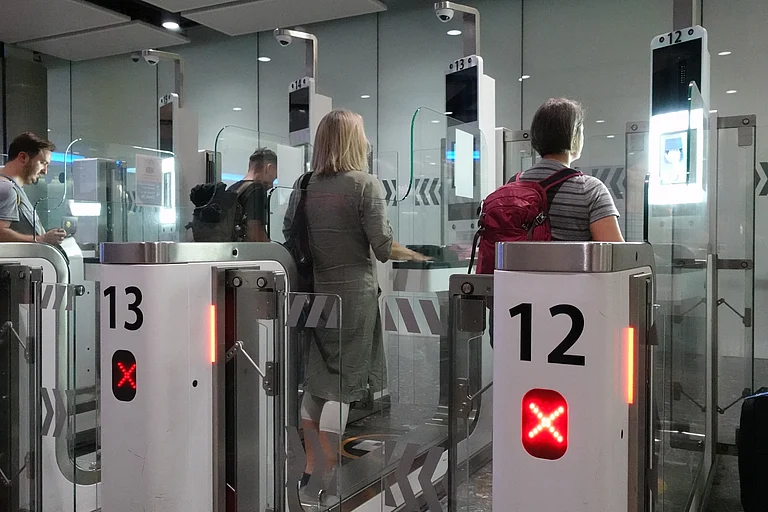
At the same time, the airport has continued investing heavily in frictionless travel infrastructure. BLR Airport was among the first in India to adopt DigiYatra, enabling facial recognition-based processing across parts of the passenger journey. Real-time baggage tracking, intuitive digital wayfinding, and integrated passenger information systems have been designed not as technological showpieces, but as practical tools that make travel smoother, simpler, and less stressful.
Sustainability, too, has increasingly become central to the airport’s identity. Water-sensitive landscaping, extensive green cover and the integration of natural ventilation and light reflect a larger attempt to rethink how aviation infrastructure can coexist with environmental responsibility.
This balance between scale and sensitivity perhaps defines the airport’s larger significance.
In less than two decades, BLR Airport has grown alongside Bengaluru itself—from a fast-expanding technology hub into a globally connected destination with its own cultural and economic identity. The airport today functions as both a gateway and a symbol: a representation of how India’s urban aspirations are evolving.
The modern airport is no longer simply where journeys begin or end. Increasingly, it shapes how those journeys are remembered.
At BLR Airport, that transformation is already well underway.