


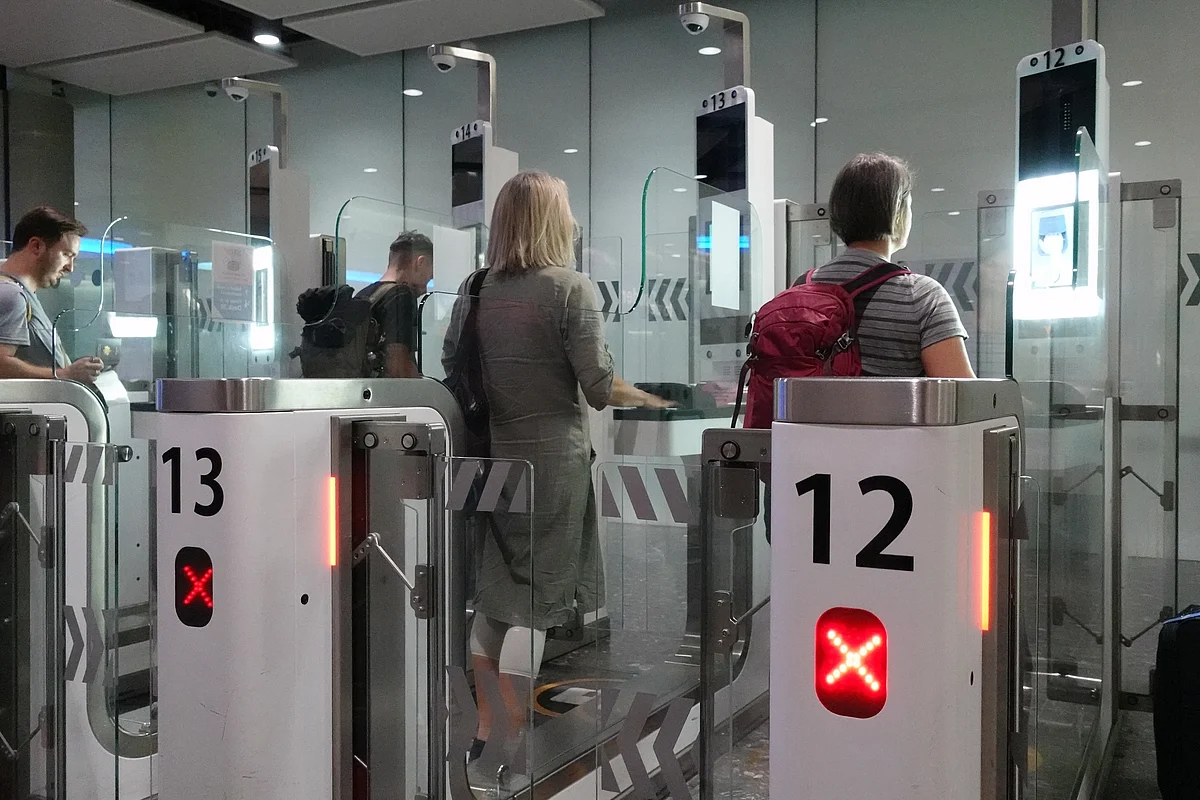
International air travel through some of India’s busiest airports is about to look very different. From June 1, 2026, passengers making international transfers through Delhi, Mumbai, Bengaluru, and Hyderabad airports will be required to use DigiYatra’s facial recognition-based biometric system, marking a significant shift in how travellers move through airport terminals.
For years, airports have relied on a familiar routine of boarding pass scans, passport checks, and repeated identity verification at multiple points. The latest move by the Ministry of Civil Aviation aims to replace much of that process with a single biometric identity. Under the DigiYatra framework, a traveller’s face becomes their digital token, allowing them to pass through designated checkpoints with minimal physical document handling.
The mandate is part of India’s larger push towards creating a paperless and contactless airport ecosystem. While DigiYatra has already been available to domestic travellers across several airports, its compulsory use for international transit passengers at these four major hubs marks a new phase in the programme’s expansion.
A Digital Journey
The process begins before passengers even reach the airport. Travellers are required to upload an Aadhaar-verified selfie along with their boarding pass to the DigiYatra application at least 48 hours before departure.
Once they arrive at Delhi’s Indira Gandhi International Airport, Mumbai’s Chhatrapati Shivaji Maharaj International Airport, Bengaluru’s Kempegowda International Airport, or Hyderabad’s Rajiv Gandhi International Airport, they can access dedicated biometric e-gates. Facial recognition cameras capture a live image and compare it with an encrypted biometric template linked to their DigiYatra profile. Upon successful verification, passengers are granted access to the designated international transit corridor without the need for repeated boarding pass scans.
The objective is straightforward: reduce bottlenecks at key checkpoints and enable faster movement through airport terminals. As passenger numbers continue to climb across India’s aviation network, airports are increasingly looking towards technology-led solutions to improve efficiency while maintaining security standards.
The system also reflects a broader global trend. Airports around the world have been experimenting with biometric identity verification for several years, using facial recognition technology to streamline processes ranging from baggage drop and security screening to immigration and boarding.
Airport Modernisation Drive


India’s aviation sector has been undergoing rapid transformation over the last decade. With air travel becoming more accessible and passenger volumes reaching record highs, infrastructure upgrades have become a central focus.
The government has indicated that DigiYatra’s reach will expand considerably over the next year, with plans to introduce the platform at 27 additional airports by 2027. The goal is to create a more standardised and seamless travel experience across the country’s growing airport network.
The rollout also aligns with wider efforts to digitise public services and reduce reliance on physical documentation. For airports, the technology promises shorter queues and more efficient passenger processing. For travellers, it potentially means fewer interruptions between check-in and boarding.
Airlines have already begun adapting to the change. Several Indian carriers, including IndiGo, Air India and Vistara, have updated their pre-departure communications to inform passengers about the mandatory biometric transit process. International airlines operating through India, including Emirates and Lufthansa, have also reportedly issued operational advisories to their ground teams to facilitate the transition.
What Travellers Should Know
While the move signals a major technological leap, it also places greater emphasis on advance preparation. Passengers travelling through the four designated airports will need to ensure that their DigiYatra profiles are set up correctly before departure and that required information has been uploaded within the specified timeframe.
According to official figures, DigiYatra has already recorded more than 10 crore passenger journeys since its introduction and is currently operational across numerous airports in India. Its growing adoption suggests that biometric travel is rapidly moving from being an optional convenience to becoming a core part of the airport experience.
As India continues investing in airport infrastructure and digital aviation systems, facial recognition technology is increasingly becoming embedded within the passenger journey. For international transit travellers passing through Delhi, Mumbai, Bengaluru, and Hyderabad, that future has already arrived—one where a glance at a camera could replace much of the paperwork traditionally associated with air travel.
FAQs
1. What is DigiYatra?
DigiYatra is a biometric travel platform that uses facial recognition technology to verify passengers at airports.
2. Which airports are covered under the new mandate?
The requirement currently applies to Delhi, Mumbai, Bengaluru, and Hyderabad airports.
3. Who must use DigiYatra?
All international transit passengers travelling through these four airports must use the system.
4. How do travellers register for DigiYatra?
Passengers need to upload an Aadhaar-verified selfie and their boarding pass through the DigiYatra app before travel.
5. What changes for passengers under the new system?
Facial recognition replaces repeated boarding pass checks at designated transit checkpoints, enabling a smoother journey through the airport.