Kenya boasts eight UNESCO World Heritage sites, comprising five cultural and three natural locations that celebrate its diverse history and biodiversity. Among the key sites are the historic coastal town of Lamu, Fort Jesus in Mombasa, the sacred Mijikenda Kaya Forests, and the ancient ruins of Gedi. These sites reflect Swahili trade, colonial heritage, and unique ecosystems, and are primarily managed by the National Museums of Kenya and the Kenya Wildlife Service.
Explore Kenya Through Its 8 UNESCO World Heritage Sites
Explore Kenya’s eight UNESCO World Heritage sites, from the coral-stone streets of Lamu to the flamingo-filled Rift Valley lakes and the glaciers of Mount Kenya. These sites celebrate a mix of culture, history, and natural beauty

Advertisement
Lamu Old Town
Living Heritage
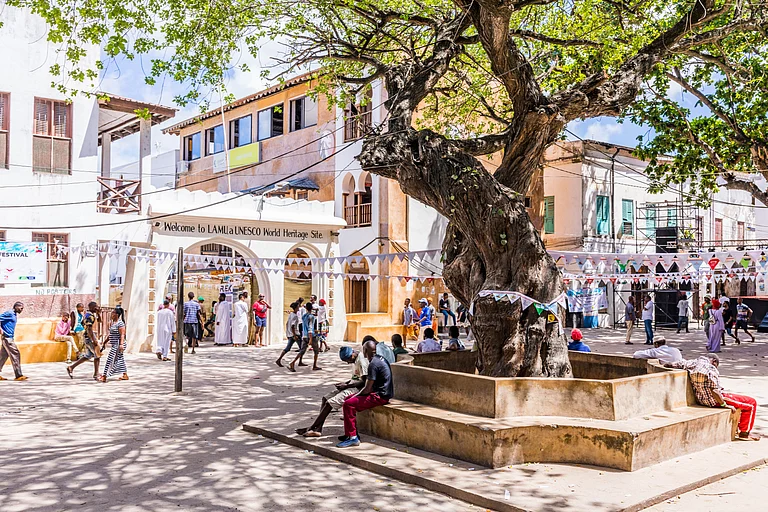
Lamu Old Town, a UNESCO World Heritage Site since 2001, is the oldest and best-preserved Swahili settlement in East Africa. Located on a sandy island off Kenya’s northern coast, it has over 700 years of Bantu, Arabic, Persian, Indian, and European influences.
Architecture & Culture
The town’s coral stone and mangrove timber buildings feature intricately carved doors, internal courtyards, and veranda-lined seafronts. While in Lamu, check out its narrow, car-free streets.
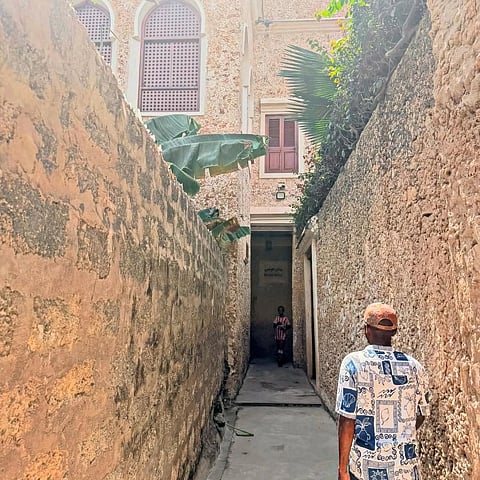
Lamu Old Town is renowned for its 13th-century Swahili stone houses mariamissoufouk/Instagram
The Information
There is no formal "entry fee" for the town itself, though specific museums like the Lamu Fort charge fees similar to NMK standards (approx. KES 1,200 for non-residents).
Guides: Local cultural guides are recommended to navigate the car-free, narrow streets and explain Swahili heritage.
Fort Jesus
Living Heritage
Built between 1593 and 1596 by the Portuguese on Mombasa Island, Fort Jesus is a UNESCO World Heritage Site since 2011. Designed by Italian architect Giovanni Battista Cairati, it is a mix of Renaissance military principles with local materials and a window into Kenya’s strategic role in Indian Ocean trade.
Advertisement
Architecture & Culture
The fort’s coral-rock walls, angled bastions, and geometric layout were built to withstand cannon fire. Fort Jesus also reflects centuries of cultural interchange, with Portuguese, Arab, and British influences evident in its design and history. Once a contested stronghold, it now functions as a museum, showcasing historical artefacts and the famous "Hall of the Mazrui," preserving Mombasa’s rich maritime past.

The fort’s coral-rock walls and angled bastions Zahra Abdulmajid/Wiki Commons
The Information
Open daily from 8 AM to 6 PM.
Entry Fees: KES 1,200 for non-resident adults, KES 400 for East African residents, and KES 200 for Kenyan citizens.
Guides: Registered NMK guides are available at the entrance for detailed historical context.
Sacred Mijikenda Kaya Forests
Living Heritage
The Sacred Mijikenda Kaya Forests in Kenya, inscribed as a UNESCO World Heritage Site in 2008, consist of 10–11 forest patches along Kenya’s coast. These were home to fortified villages, or kayas, of the Mijikenda people from the 16th century.
Architecture & Culture
Each kaya has forested paths, shrines, clearings, and burial grounds, reflecting the social and spiritual life of the nine Mijikenda groups. The dense, protected forests preserve both cultural practices and a unique coastal ecosystem. The kayas are a living cultural tradition, linking ancestral heritage with biodiversity. They shelter rare wildlife, including the endangered golden-rumped elephant shrew, and safeguard East Africa’s coastal forest mosaic.
Advertisement
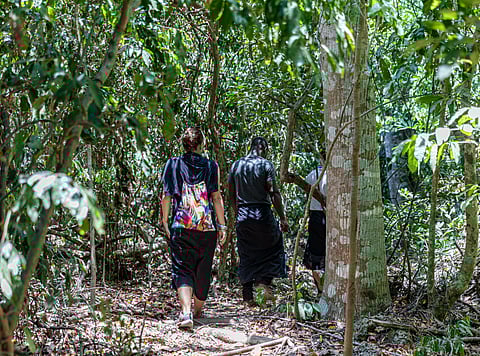
The Sacred Mijikenda Kaya Forests consist of 10–11 forest patches along Kenya’s coast Wiki Commons
The Information
These forests are managed by local community elders.
Permits: Visitors must seek permission from local councils of elders or through the NMK Coastal Forest Conservation Unit.
Guides: Mandatory local guides are required to ensure cultural protocols are followed.
Thimlich Ohinga Archaeological Site
Living Heritage
Thimlich Ohinga, inscribed as a UNESCO World Heritage Site in 2018, is a 16th-century dry-stone settlement in Migori County. The site preserves the largest and best-maintained stone enclosures in the Lake Victoria Basin, offering a window into early pastoral life and community organisation.
Architecture & Culture
Constructed without mortar, the massive walls formed defensive enclosures for people and livestock. The site includes four main enclosures and reflects traditional Luo social and economic structures. Thimlich Ohinga documents the region’s historical transitions, from early Bantu-speaking communities to the Luo people.

Thimlich Ohinga preserves the largest stone enclosures in the Lake Victoria Basin Wiki Commons
The Information
Located in Migori County, it is best accessed by a 4WD vehicle.
Entry Fees: Managed by NMK; fees are consistent with other archaeological sites (approx. KES 1,200 for non-residents).
Advertisement
Guides: Guided tours are essential due to the remote nature and historical complexity of the dry-stone structures.
The Historic Town and Archaeological Site of Gedi
Living Heritage
The Historic Town of Gedi, inscribed as a UNESCO World Heritage Site in 2024, is a 10th–17th century Swahili settlement on Kenya’s coast. Abandoned in the 17th century, it is located in a lush forest, and offers a glimpse into a once-thriving trading city connected to Asia, Arabia, and Persia.
Architecture & Culture
Gedi features advanced coral-stone and lime-mortar construction, with two rings of walls, pillar tombs, mosques, a sultan’s palace, and 28 wells highlighting sophisticated urban planning and water management. The site exemplifies Swahili civilisation along the Indian Ocean, showcasing trade, culture, and architectural innovation.

Ruins of a mosque in Gede, Kenya Wiki Commons
The Information
Open daily from 8:30 AM to 5:30 PM.
Entry Fees: Modest fees apply; typically around KES 1,200 for non-residents.
Guides: Licensed on-site guides are available to explain the complex ruins.
Advertisement
Kenya Lake System in the Great Rift Valley
Living Heritage
The Kenya Lake System, inscribed as a UNESCO World Heritage Site in 2011, comprises Lakes Bogoria, Nakuru, and Elementaita in the Great Rift Valley. These shallow, alkaline lakes are essential for wildlife. They are the primary foraging site for up to four million lesser flamingos.
Ecology & Wildlife
Set within a dramatic volcanic landscape of geysers, hot springs, and escarpments, the lakes host 13 globally threatened bird species and serve as a breeding ground for great white pelicans. The surrounding savannahs shelter black rhinos, Rothschild’s giraffes, lions, cheetahs, and wild dogs. As an important stop on the African-Eurasian flyway, the lake system is an example of ecological importance and biodiversity conservation.
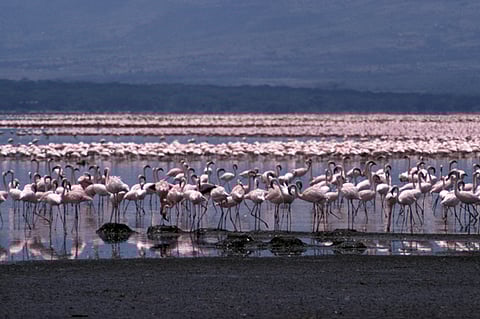
Lesser Flamingos nesting on the shoreline of Lake Bogoria in Kenya Bob Walker/Wiki Commons
The Information
Entry Fees: Lake Nakuru charges are around $60–$80 per day for non-residents. Lake Elementaita charges around $50 for non-residents.
Guides: KWS rangers offer guided game drives and walking tours.
Lake Turkana National Parks
Advertisement
Living Heritage
Lake Turkana National Parks, inscribed as a UNESCO World Heritage Site in 1997, include Sibiloi National Park and Central and South Islands. Located in Kenya’s remote northern desert, the “Jade Sea” is Africa’s largest permanent desert lake.
Ecology & Culture
The parks support Nile crocodiles, hippopotamuses, and migratory birds. The Central Island is known as “Crocodile Island”, and the South Island is known for its volcanic landscape. Sibiloi hosts the world-renowned Koobi Fora deposits, revealing fossils of Homo habilis and other early humans.
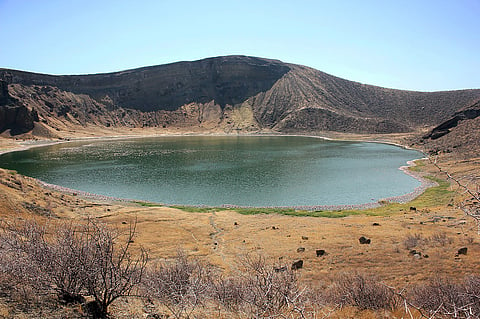
Lake Turkana National Parks are located in Kenya’s remote northern desert Phil H./Wiki Commons
The Information
These are the most remote sites, often requiring a 4WD or chartered flight.
Entry Fees: Higher fees apply to support conservation in remote areas; check the latest KWS rates as they vary by specific park (Sibiloi, Central Island, etc).
Permits: Central Island requires boat arrangements made in advance.
Mount Kenya National Park/Natural Forest
Living Heritage
Mount Kenya National Park, a UNESCO World Heritage Site since 1997, features Africa’s second-highest peak at 5,199 m. It is home to glaciers and afro-alpine moorlands. Covering 1,420 km², it includes a UNESCO Biosphere Reserve that protects a range of ecosystems from montane forests to high-altitude moorlands.
Advertisement
Ecology & Wildlife
The park’s rugged, glacial-sculpted peaks is an important water reservoir. It supports a variety of wildlife, including elephants, leopards, and black-and-white colobus monkeys. It is home to unique afro-alpine flora and ecological processes. Mount Kenya also offers adventure like climbing and hiking to bird watching. These are all done under strict conservation management.
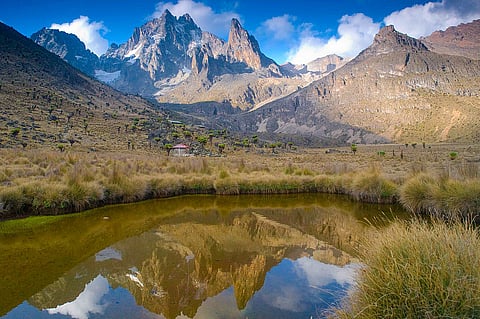
Mount Kenya National Park is home to glaciers and afro-alpine moorlands DavyKirii/Wiki Commons
The Information
Entry Fees (2026): Around $70 for non-residents, KES 1,100 for residents, and KES 800 for East African citizens.
Guides/Permits: Climbing permits are included in entry fees, but hiring a licensed guide and porters through recognized operators is mandatory for safety.
FAQs
How many UNESCO World Heritage sites are in Kenya?
As of 2024, Kenya has eight UNESCO World Heritage sites—five cultural and three natural.
Which are the cultural sites?
Lamu Old Town, Fort Jesus (Mombasa), Sacred Mijikenda Kaya Forests, Thimlich Ohinga, and Gedi Ruins.
Which are the natural sites?
Kenya Lake System in the Great Rift Valley, Lake Turkana National Parks, and Mount Kenya National Park/Natural Forest.
Advertisement
Why are these sites important?
They showcase Kenya’s rich cultural heritage, Swahili trade history, early human evolution, and extraordinary biodiversity.
Are the sites protected?
Yes. Management is led by the National Museums of Kenya, Kenya Wildlife Service, and local councils, with UNESCO providing international recognition and support.
Published At: