

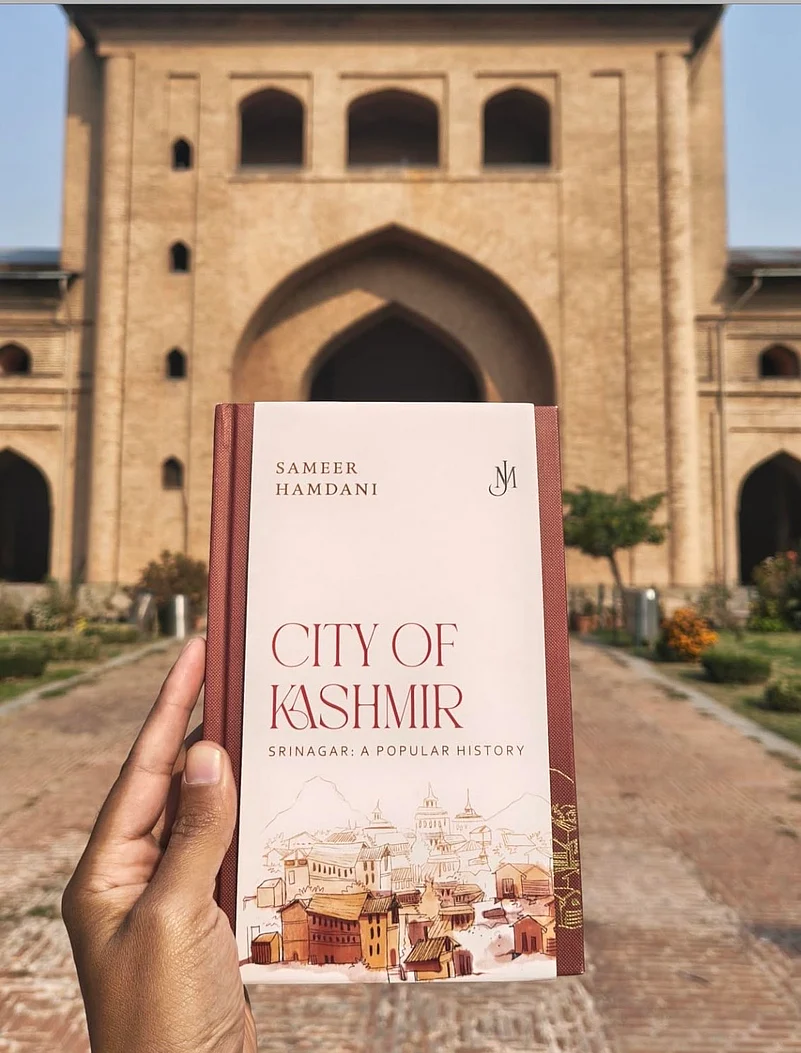
Recently, Hurst Publishers published 'City of Kashmir: Srinagar: A Popular History' by Sameer Hamdani, a landmark cultural history of Srinagar that traces over 2,000 years of the city’s lived past. Hamdani is an architectural historian based in Srinagar. His previous books include 'Shi’ism in Kashmir: A History of Shia Sunni Rivalry' and 'Reconciliation and The Syncretic Traditions of Islamic Religious Architecture of Kashmir.' Drawing on two decades of research as a heritage consultant, Hamdani weaves together geography, architecture, crafts, rituals, oral traditions, and poetry to present Srinagar as a living, breathing cultural organism.
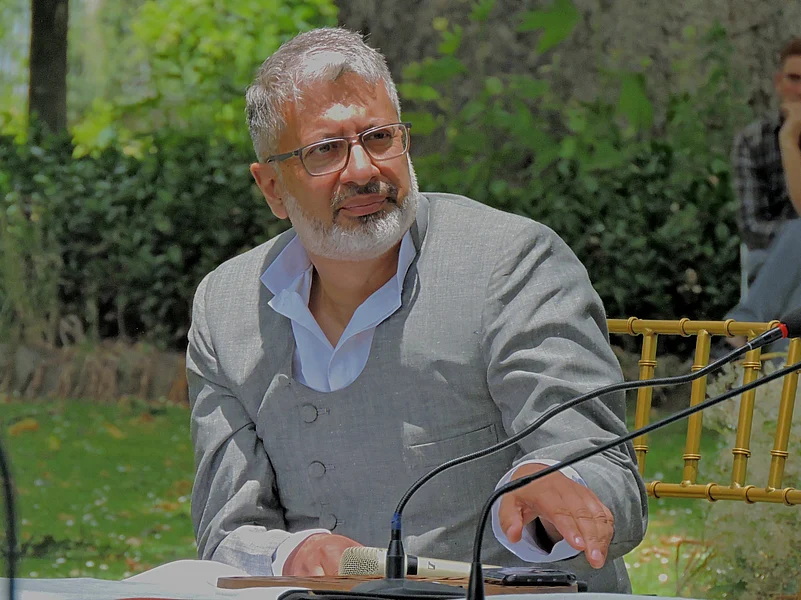

In a candid conversation with Outlook Traveller, Hamdani speaks on his remarkable work and architecture of Kashmir. The conversation explores how material culture and the built environment shape collective memory; how medieval Sanskrit, Persian, and Kashmiri sources speak to the present, and why documenting Srinagar’s cultural life is especially urgent today. At a time when regional histories and urban heritage in South Asia are under strain, this conversation offers rare insights into Srinagar’s syncretic past and enduring cultural resilience. Here are some edited excerpts from the interview.
Many historical accounts have portrayed Srinagar, and Kashmir at large, as having a Hindu origin. What does your research reveal about the birth of this marvelous historic city?
I would not suggest a Hindu origin for the city. Yes, Srinagar has multiple layers that evolved or rather were shaped under the rule of various Hindu dynasties during the medieval period. We have some accounts, including that of Kalhana which speaks about the foundation of the city under Ashoka, indicating that Srinagar’s oldest footprints are of Mauryan origin. But archeology does not support this claim. I believe that the cultural formations that led to the birth of Srinagar are more historically located in the Kushan period, and yes if you want to place it in a religious milieu then it would be Buddhist rather than Hindu.
In your book, you write that Srinagar has been plundered and burned many times by invaders, yet it has survived these assaults. What were the major determinants of this survival?
A simple basic desire for survival? A tenacity to life that has ensured that the people of this land outlived their oppressors, always. We faced not one but multiple Mongol invasions. The land was despoiled, wasted, almost rendered lifeless but Kashmir survived; not only survived but flourished. Again, earlier we had a ruler like Mihirakula who is our version of Emperor Nero. He killed and plundered, but Kashmir remained. While history may not have been kind to Kashmir, fate has at the very least bestowed the people with a resilient spirit that has ensured their survival.
Srinagar has long been celebrated for its marvelous architecture. As an authority on the region’s architectural heritage, how would you describe the distinctiveness of Srinagar’s architecture, and what were the main influences behind its evolution?
Kashmiri architecture is an assembly, a unique and carefully curated assembly of motifs, designs and traditions borrowed from multiple geographies, empires and cultures that have interacted with this land. If we look at the remains of medieval stone temples in the city or the Buddhist monastery at Harwan, they link us to the world of Gandhara through the Kushan empire, and the wider Indo-Greek traditions. There are traces of Achaemenian, Hellenic and Gupta court in the decoration of these medieval buildings. Similarly, the city is one of the greatest repositories of historic Kashmiri wooden architecture, an architecture in which we can see features and elements borrowed from the architectural vocabulary of the Timurid and Seljuk courts. The Mughals have left their imprint on our architecture as have the Afghans and even the Sikhs.
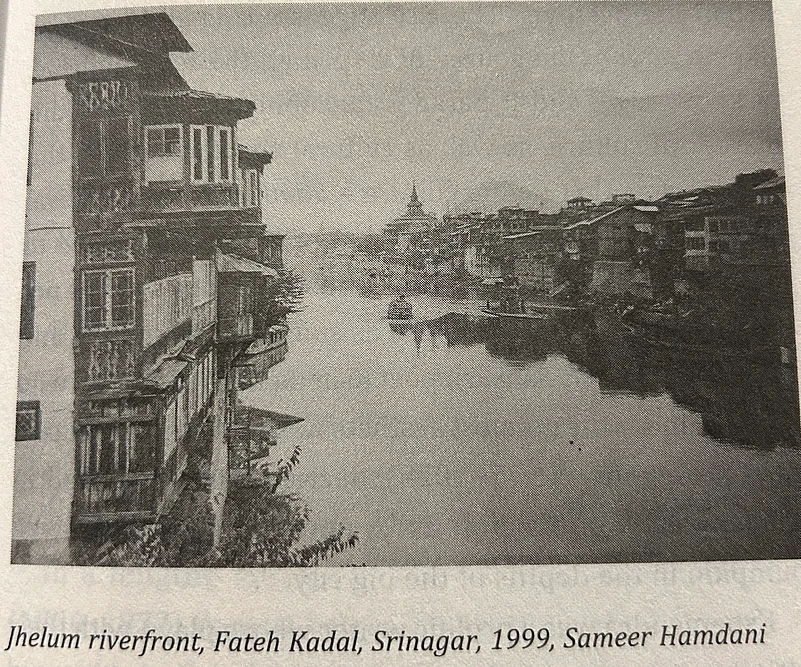
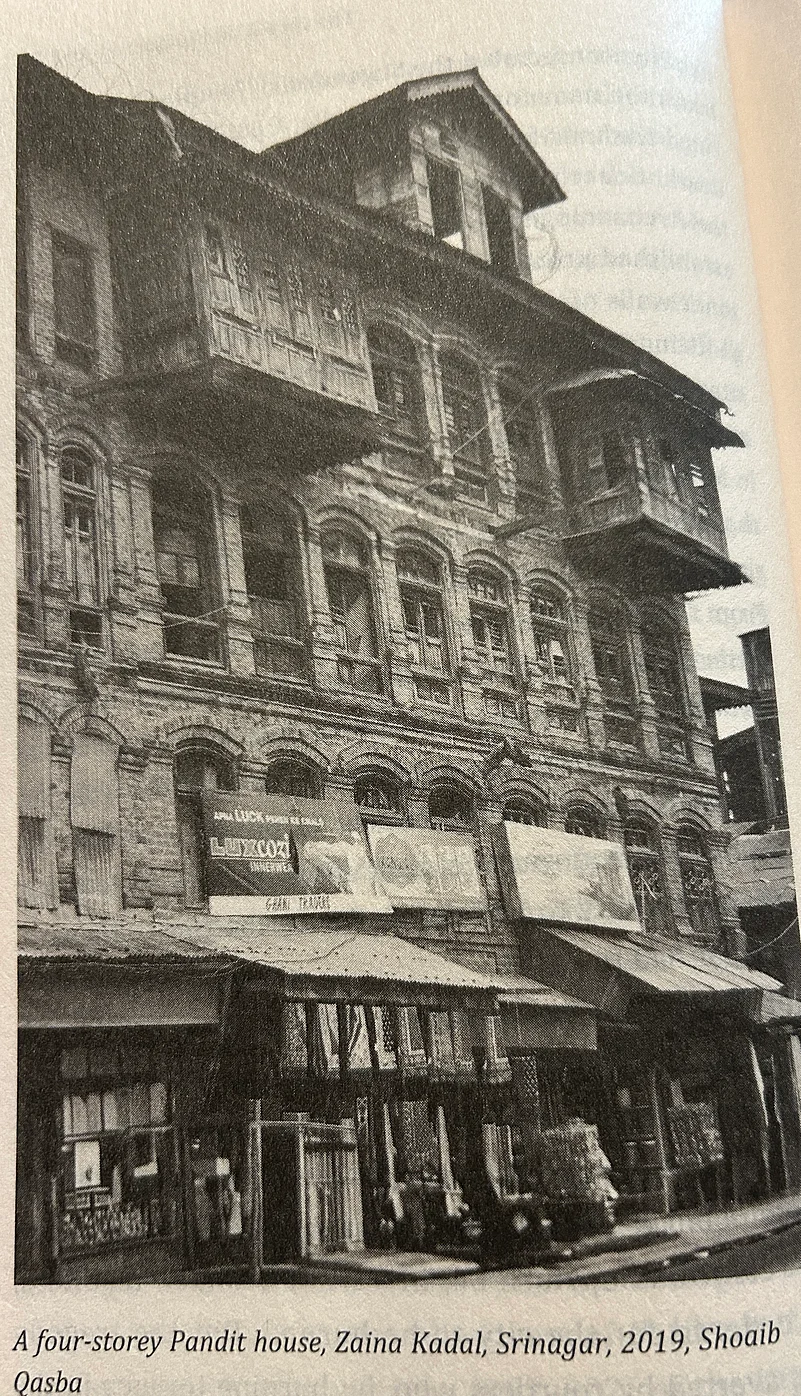
But a large part of Srinagar’s built heritage actually comprises houses belonging to the citizens which showcase a unique understanding of local climate and typography, building materials, and social and cultural practices. Most, if not all, are lived buildings even today and the oldest would date to somewhere say around the mid or late 19th-century. This genre of architecture, while borrowing from the monumental architecture of the regions, is primarily situated in the daily life of the people. It is built in the absence of designers and architects or engineers, catering to the needs of ordinary people and their need for a home.
Do you believe in the assertion that material culture and the built environment shapes the collective memory of a place?
Sure, there is no doubt about it. And the built environment is an integral part of the material culture of a society, any society. And increasingly material culture helps in providing a significant—at times alternative—insight into the past than what has been inherited by us through textual records alone. Let me give a small example. Most Persian historians who have written about Aali Masjid (Eidgah), mention that it was constructed by Sultan Ali Shah, the elder brother of Sultan Zain-al Abidin. However, an architectural epigraph located within the mosque clearly mentions that the construction came up during the reign of Zain-al Abidin’s grandson, Sultan Hassan Shah. Thus, material culture not only informs us about practices and traditions prevalent at a particular period of time but also, at times, helps in correcting a textual source.
Over the years, Srinagar’s architectural heritage has received international recognition, including UNESCO heritage status. However, this urban heritage is currently under strain. How can Srinagar preserve its rich heritage?
The UNESCO recognition was for the crafts of the city, and the city was successfully nominated on the UNESCO Creative Cities Network. It is also a World Craft City. We also have the Mughal Gardens of Kashmir on the UNESCO Tentative List; getting them on the World Heritage Site list would be a great boost for heritage preservation in not only Srinagar but the entire state. In 2008, the city was nominated on the 100 Most Endangered List of New York based World Monument Fund. Over the years there has been a significant understanding and awareness about the urban heritage of the city. Awareness that I would say is not limited to academic or heritage circles but one that has genuinely percolated to the people, the real caretakers of this heritage. So, yes— both domestically and internationally there is an appreciation for the unique built landscape of Srinagar. To preserve it we need legal protection from the state, which is missing especially for the vernacular architecture of the region. The state needs to step in and incentivise the owners of historic buildings. The upkeep and maintenance of old buildings does, in the end, need money.
Your book 'City of Kashmir,' like your earlier books, proclaims that documenting Srinagar’s cultural life is urgent today. Why is that?
I won’t say that I proclaim it but, yes, as an individual, as someone who is in the field of research and also as a conservationist I would say there is a need to map our past. A good amount of work has been done but there are significant aspects of our cultural life which need to be explored, understood and mapped better. This is not a task but rather a responsibility which we bear to both our past and future.
(Bilal Gani is an independent journalist and writer, based in Kashmir.)