Just a few days ago, while I was having a conversation with MK Ranjitsinh Jhala, the chief architect of India’s Wildlife (Protection) Act, 1972, who has spent decades studying the country’s tigers and their prey, about wildlife safaris and the big cats, he made a point that stuck with me. Hardly anyone cares about the deer, he said. The prey—if they go extinct, what will the carnivores eat? What will the big cats eat? He pointed to the hog deer in Corbett—once more numerous than spotted deer when he first visited the reserve in 1962, now down to barely two dozen—as proof that a species nobody photographs can vanish without anyone noticing.
India's Tiger Conservation Faces A New Threat: Vanishing Prey
India has more wild tigers than any other country, but a new NTCA roadmap warns that prey is disappearing, habitats are degrading, and entire reserves are falling silent. The crisis, it argues, begins long before the tiger vanishes

Advertisement
It turns out Jhala’s private worry has just become an official government finding.
A new report by the National Tiger Conservation Authority (NTCA), titled “Roadmap for Active Management of Tigers in India,” has confirmed what conservationists like Jhala have been warning about for years: India’s tiger success story is standing on shakier ground than the headline numbers suggest. The report was released as a booklet by Union environment minister Bhupender Yadav at a workshop in Alwar, Rajasthan, marking the 18th anniversary of tiger reintroduction at Sariska Tiger Reserve, and was prepared jointly with the Wildlife Institute of India (WII).
On paper, the picture looks triumphant. India is home to an estimated 3,682 wild tigers—around 70 per cent of the world’s wild tiger population—spread across 58 tiger reserves in 18 states. These figures have been held up as proof that India remains the world’s leading nation for tiger conservation, framing the growing count as a sign of healthy, well-managed forests.
Advertisement
The NTCA’s own report tells a more complicated story.
The Prey Problem
Nearly two-thirds of India’s 58 tiger reserves have either a declining prey base, degraded or inadequate habitat, or both, according to the report. Of the 58 reserves, 38 have a problem with prey numbers, habitat quality, or both; 17 of those have deficiencies in both. Only 20 reserves score positively on both prey availability and habitat quality, the two conditions the report identifies as essential for tiger populations to hold steady or grow.
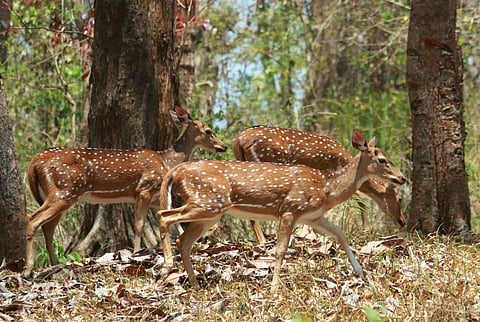
A herd of spotted deer Wikimedia Commons
Tigers cannot exist without a stable base of deer, wild pig, gaur, nilgai, and other ungulates to hunt. When prey populations shrink through habitat loss, competition with livestock, poaching, or simply the degradation of grasslands and marshes that species like hog deer depend on, tiger numbers eventually follow, whatever the census currently shows. Jhala’s hog deer, found in Corbett’s marshy chaurs and largely ignored by camera-toting tourists chasing tiger sightings, are exactly the kind of quiet indicator species the report is now catching up to.
Advertisement
Reserves In trouble
The report’s most striking numbers concern the reserves where tigers have effectively disappeared. Nine reserves have zero or critically low resident tiger populations, and a further 25 reserves have been identified as priority landscapes requiring active management to recover tiger populations, habitat quality, and prey availability.
Five reserves—Dampa in Mizoram, Kawal in Telangana, Satkosia in Odisha, Sahyadri in Maharashtra, and Kamlang in Arunachal Pradesh—recorded zero resident tigers. Jharkhand’s Palamu and West Bengal’s Buxa were found to have “critically low presence,” meaning one or fewer tigers: a single individual caught on camera trap in Palamu, and a single photograph in Buxa—widely believed to be a dispersing tiger from Bhutan. Chhattisgarh’s Indravati, Udanti-Sitanadi, and Guru Ghasidas-Tamor Pingla reserves are believed to hold extremely few tigers, if any.

Inside Satkosia Tiger Reserve satkosia.org
The distribution of India’s tigers is also far more concentrated than the national total suggests. Of the 3,682 tigers, 2,338 occur inside tiger reserves, while another 1,344 live outside the tiger reserve network, often in territorial forests and other multiple-use landscapes where risks from conflict and habitat fragmentation are greater. And within the reserve network itself, the concentration is stark: 1,318 tigers—well over a third of the reserve population—are found in just 10 of the 58 reserves, leaving the remaining tigers thinly spread across the other 48.
Advertisement
Why This Happened
Part of the explanation lies in how some reserves were created in the first place. Wildlife administrators familiar with the ground realities have long noted that several reserves carried habitat problems from the moment they were notified. Some reserves inherited degraded habitats, low prey densities, or fragmented landscapes when they were notified, making recovery a much longer ecological process. Rebuilding habitat and prey to a workable threshold is also a slow process, typically taking well over a decade, and only once the human pressures degrading that land are brought under control.
There is a flip side to the story: the reserves and states where the NTCA-WII roadmap approach has clearly worked. The roadmap identifies landscapes in Madhya Pradesh, Karnataka, Maharashtra, Tamil Nadu, Kerala, Uttarakhand, Bihar, Assam, and the Sundarbans as examples where strong protection, habitat management and prey recovery have sustained healthy tiger populations. But roughly half of India’s reserves still require active intervention—clearing invasive species, restoring degraded habitat, rebuilding ungulate populations through recovery and augmentation programmes, and strengthening on-the-ground protection. Funding also needs to rise, and interventions need to be driven by evidence rather than habit.
Advertisement

Nilgai at Bor Shutterstock
Recognising and safeguarding wildlife corridors is just as critical, since these are the links connecting not just one reserve to another but the entire network of protected areas. Without functioning corridors, tigers cannot disperse naturally from source populations into areas where numbers have collapsed, which sits at the heart of the roadmap’s proposed fix.
The Roadmap’s Fix: Source And Sink
The NTCA-WII framework leans heavily on the ecological concept of “source” and “sink” reserves. Strong reserves with high prey density and quality habitat—Ranthambore in Rajasthan is held up as a flagship example, with a tiger density of around 9.6 per 100 square kilometres sustained by healthy sambar, chital, nilgai and wild pig populations—are expected to produce a surplus of tigers that can disperse naturally into neighbouring “recipient landscapes.” For Ranthambore, the NTCA has identified Ramgarh Vishdhari, Mukundara Hills, and Dholpur-Karauli as future recipient sites for this natural spillover.
Where natural dispersal isn’t feasible, the roadmap calls for active, planned intervention: augmenting prey through translocation of species like gaur and barasingha to rebuild a stable food base, and, in some cases, actively reintroducing tigers themselves. A companion document released alongside the roadmap examines the successes and setbacks of tiger reintroduction efforts already carried out across a dozen reserves, including Sariska, Panna, Satkosia, Simlipal, Rajaji, Sahyadri, and Navegaon-Nagzira.
Advertisement
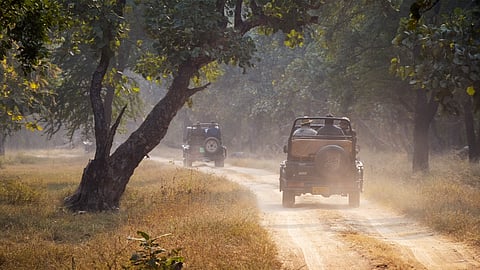
Panna Jungle Safari Sarai at Toria website
25 reserves have been flagged as priority sites for this kind of intervention, based on an index that the NTCA and WII built, assessing each of the 58 reserves on tiger population, prey base, and habitat quality. The Central Indian and Eastern Ghats landscape has the largest concentration of reserves flagged for urgent attention. By contrast, the report identifies the North Eastern Hills and Brahmaputra floodplains—extensive, relatively intact forests—as having strong recovery potential if prey and protection can be strengthened.
Underlying all of this is a shift in what “success” is even supposed to mean. The roadmap argues that conservation in India needs to stop treating the national tiger count as the only scorecard, and instead focus on nursing individual struggling reserves back to health, because a rising national total can comfortably coexist with entire reserves quietly emptying out, exactly as this report has found.
A Number That’s Gone Quiet
Advertisement
One detail underlines how far behind the data curve India’s conservation planning currently is: the entire analysis in this report is based on the national tiger estimation exercise from 2022. A fresh count was due in 2026, but the deadline has now been pushed back by a year. Until it arrives, the roadmap and the nine empty or near-empty reserves it describes remain the most current official word on the state of India’s tigers.
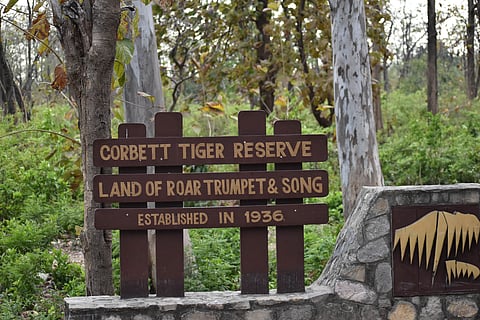
Entrance to the Corbett Tiger Reserve in Jim Corbett National Park Shutterstock
Which brings the story back to where it started. The government’s own scientists are now saying, in a formal document, roughly what MK Jhala was saying over a conversation about wildlife safaris: that the tiger census makes headlines, but the health of a reserve is written in its prey. Corbett’s hog deer—down from abundant to barely two dozen since Jhala first walked that landscape in 1962—were never going to make a Global Tiger Day speech. But they may turn out to have predicted this report more accurately than the number 3,682 ever did.
Advertisement
FAQs
1. Why are prey animals important for tiger conservation?
Tigers depend on healthy populations of prey such as spotted deer, sambar, wild pig, gaur, nilgai, and barasingha. When prey declines because of habitat loss, poaching, or degradation, tiger populations eventually decline as well.
2. What does the NTCA-WII roadmap say about India's tiger reserves?
The report found that 38 of India's 58 tiger reserves have declining prey populations, degraded habitat, or both. It also identified 25 reserves as priority landscapes needing active ecological restoration.
3. Which tiger reserves currently have no resident tigers?
According to the NTCA-WII roadmap, Dampa (Mizoram), Kawal (Telangana), Satkosia (Odisha), Sahyadri (Maharashtra), and Kamlang (Arunachal Pradesh) have no resident tiger populations, while others such as Palamu and Buxa have critically low numbers.
4. What are 'source' and 'sink' tiger reserves?
Source reserves have abundant prey, healthy habitats, and breeding tiger populations that produce dispersing animals. Sink or recipient reserves have suitable habitat but low tiger numbers and require natural dispersal or conservation interventions to recover.
Advertisement
5. How can India's struggling tiger reserves recover?
The NTCA recommends restoring degraded habitats, rebuilding prey populations through species recovery and translocation, protecting wildlife corridors, strengthening anti-poaching measures, and, where necessary, reintroducing tigers into suitable landscapes.
Published At: