A moderate earthquake measuring 5.7 on the Richter scale jolted the Ladakh region on Monday, briefly unsettling residents in and around Leh and triggering tremors across parts of Jammu and Kashmir. Authorities said there were no immediate reports of loss of life or major damage.
5.7 Magnitude Earthquake Strikes Near Leh In Ladakh, Tremors Felt Across Kashmir
A 5.7 magnitude earthquake hit near Leh in Ladakh on Monday morning, sending tremors across parts of Ladakh and Jammu and Kashmir. No casualties or major damage have been reported so far

Advertisement
Earthquake Details – Time, Epicentre & Depth
The earthquake occurred on January 19 at around 11.50 am, with its epicentre located near Leh in the Union Territory of Ladakh. According to seismological data, the quake originated deep beneath the Earth’s surface, at a depth of over 170 kilometres, which reduced its destructive potential despite its moderate strength.
Residents in Leh and nearby areas reported feeling sudden shaking, with doors and windows rattling for a few seconds. In some places, people stepped out of homes and offices as a precaution, while others described a brief but noticeable tremor.
Tremors Felt Across Himalayan Areas
The impact of the earthquake was not limited to Ladakh alone. Mild tremors were felt in parts of Jammu and Kashmir, including areas of the Kashmir Valley. Given the depth of the quake, the vibrations travelled across a wide region but did not cause intense surface shaking.
Local administrations in Ladakh and Jammu and Kashmir said they were closely monitoring the situation and remained in touch with district officials to assess any potential impact in remote or high-altitude areas.
Advertisement
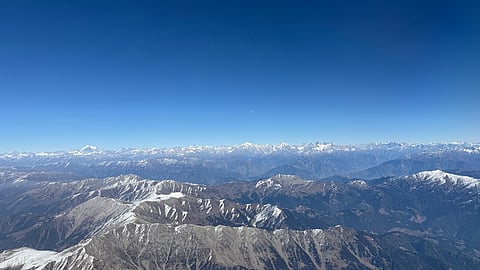
Minimal snow seen from above in Kashmir in January Altaf Chapri
No Casualties Or Major Damage Reported
Although there were no reports yet of injuries, loss of life, or major destruction of buildings from this last earthquake, officials stated that they have no reason at this time to expect any damages occurring to roads, bridges or other vital infrastructure within the near future. Disaster preparedness teams will continue to remain vigilant for potential aftershocks or any delayed notification of damages from remote communities.
Officials have encouraged residents to stay calm and vigilant, but will also need to continue following standard safety procedures if there are other earthquakes or aftershocks in the coming hours or days.
Why Ladakh Experiences Earthquakes
Ladakh is located within a portion of the Himalayan mountain range that experiences frequent seismic activity as a result of the continuing convergence of the Indian and Eurasian tectonic plates. The tectonic activity in this region results in both minor tremors and moderate-sized earthquakes being felt throughout the region.
Advertisement
The majority of earthquakes occurring in this portion of the world have an origin that is at great depth. Therefore, although surface destruction is typically kept to a minimum, the large area in which vibration can be felt continues to expand.

At Nubra Valley in Leh district Dr Mitali Baruah/Shutterstock
This most recent earthquake adds to the already recorded list of seismic activity occurring in both Ladakh and the surrounding areas during the past several years. In that period, the Ladakh region has had numerous low- to moderate-magnitude earthquakes that have generally not caused any physical harm to persons or structural losses. It is believed that observed seismic activity continues to demonstrate the geological instability that exists here and that there is an ongoing need to be prepared for earthquakes.
Officials said monitoring will continue over the coming hours to track any aftershocks, while residents have been urged to rely on official updates and avoid panic.
Earthquake Safety Tips (Quick Guide)
Advertisement
Get your heavy furniture, shelving and appliances affixed to the wall, so they're not knocked over during shaking. Have an emergency kit packed, with enough water, dry food, a flashlight, basic medications, and important documents. You'll want to find all the safe places in each of the rooms, like underneath a heavy table or against an interior wall that's away from windows.
During An Earthquake
When the earthquake occurs, take a deep breath and remember that you need to drop to the ground. Find some shelter underneath a solid surface, like the table or desk you just pictured, and hold on tight until the shaking is over. For those of you inside buildings, stay there and try to find a place away from windows, glass and heavy items. If you're outside, get to a clear space away from structures (including buildings), trees and tall utility poles. If you're in a car, just pull off to the side and remain in your vehicle.
Advertisement
After An Earthquake
When the earthquake is over, make sure that everyone is okay and provide first aid if necessary. Be ready for aftershocks anywhere from a few minutes to several hours after the main quake. Stay away from any structures or places that are damaged and follow the instructions from local officials. Only use your telephone for emergency purposes, and watch for information and updates from local authorities.
FAQs
When did the earthquake near Leh occur?
The earthquake struck on January 19 at around 11.50 am, with its epicentre located near Leh in the Union Territory of Ladakh.What was the magnitude and depth of the Ladakh earthquake?
The quake measured 5.7 on the Richter scale and originated at a depth of over 170 kilometres, which significantly reduced surface-level damage.Which areas felt tremors from the earthquake?
Tremors were felt across Ladakh and parts of Jammu and Kashmir, including areas of the Kashmir Valley.Were there any casualties or damage reported?
No casualties or major damage to infrastructure were reported. Authorities continue to monitor the situation for aftershocks.Why is Ladakh prone to earthquakes?
Ladakh lies in a seismically active Himalayan zone where the Indian and Eurasian tectonic plates converge, leading to frequent deep-origin earthquakes.
Advertisement
Published At: