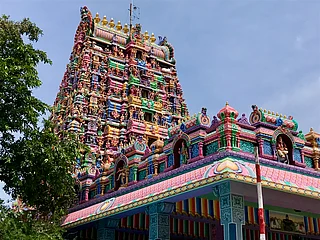


The Ashmolean Museum at the University of Oxford has sent back to India a 16th-century bronze idol that will now make its way to the temple in Tamil Nadu from which it came. The return means the sculpture, once part of temple worship, is set to be restored to its original religious home after years in a British museum collection.
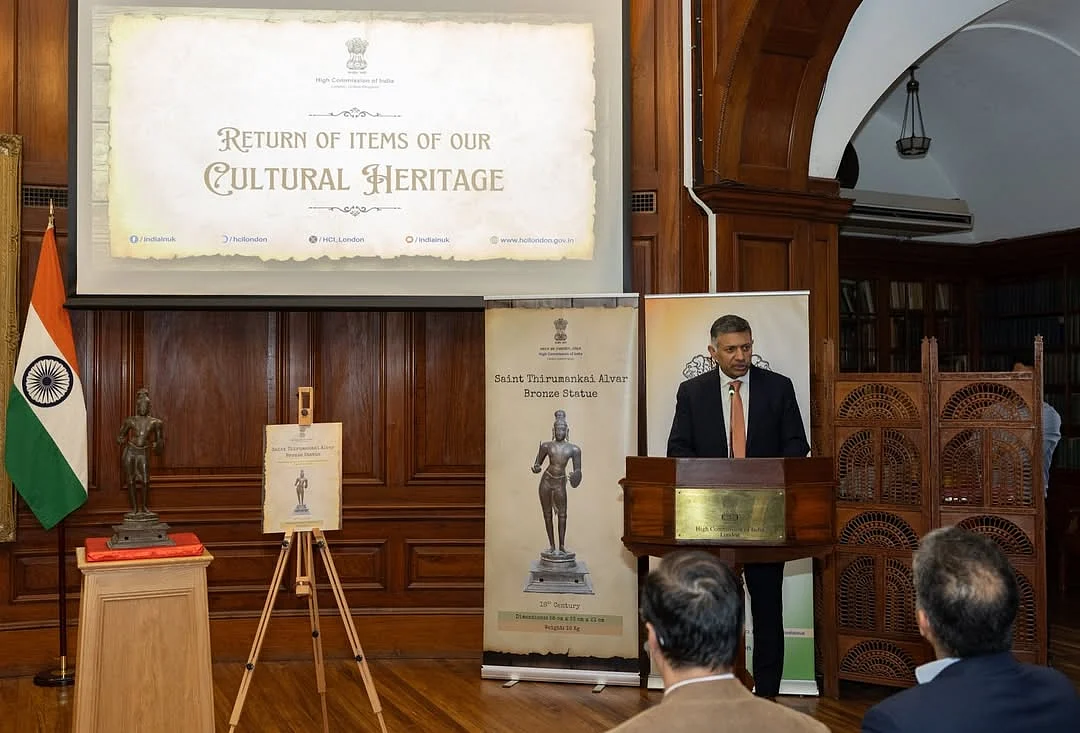
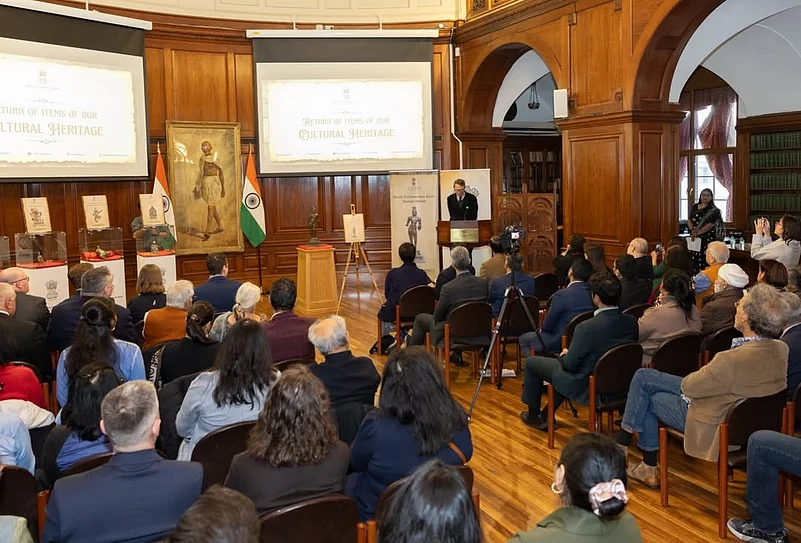
An event held on Tuesday (March 3, 2026) at the High Commission of India, London marked the formal return of the sculpture. Among those in attendance were Xa Sturgis, director of the Ashmolean Museum, and Mallica Kumbera Landrus, who heads the museum’s Department of Eastern Art.
A Significant Moment
Sturgis — regarded as Britain’s first public museum, founded in the 17th century — described the return as a “really significant moment” for the institution. He said the museum first learned more than five years ago that there was evidence the bronze had been photographed in a temple in Tamil Nadu, which made it clear that there had been no legitimate way for it to have left India.
“At that point it became evident that there was no legitimate way in which it could have left India,” he said. Although the museum had acquired the bronze in 1967 in good faith, Sturgis added that it subsequently began discussions with the High Commission of India, London about returning the object to India.

How It Happened
The sacred image of Thirumankai Alvar entered the collection of the Ashmolean Museum after it was purchased at a Sotheby’s auction in 1967. Its earlier history came to light decades later, when an independent researcher alerted the museum in November 2019 that the bronze was linked to the Shri Soundararaja Perumal Temple.
Following the discovery, the museum asked the High Commission of India, London to verify the object’s provenance. The process eventually culminated in a formal handover ceremony at India House on Tuesday evening.
The bronze sculpture, thought to have been taken from the temple and replaced with a modern copy, is now finally returning to India. Staff from the Ashmolean Museum travelled to the country to trace its history, meeting with the Archaeological Survey of India, Tamil Nadu officials, and the temple authorities to confirm where it originally belonged.
The Process
“The process of getting an artefact returned to where it comes from, in this case a deity at the Soundararaja Perumal temple in Tamil Nadu, we had to be able to prove provenance without really getting into how it got out of India,” said Vikram Doraiswami, Indian High Commissioner to the UK. ”Really, credit to the Ashmolean Museum who took this seriously and worked with us so patiently. This is the first time, I understand, they have actually returned anything. It is a major step for the museum to recognise that while being a repository of the art heritage of the world, integrity requires that items have been reached in the right way,” he said. “After the transfer deed was approved by the Indian Ministry of Culture and signed off by the High Commission, the bronze is now ready to be shipped to India for the ASI to undertake due diligence and work with the state government on restoring it to its former glory.”
“I am really excited that this statue is on its way home to Tamil Nadu, the part of India where my dad’s from. Particularly important is the difference between just seeing it as a beautiful work of art, which it is, but also as a sacred object from a living temple,” said Baroness Thangam Debbonnaire, House of Lords peer and cultural strategist.
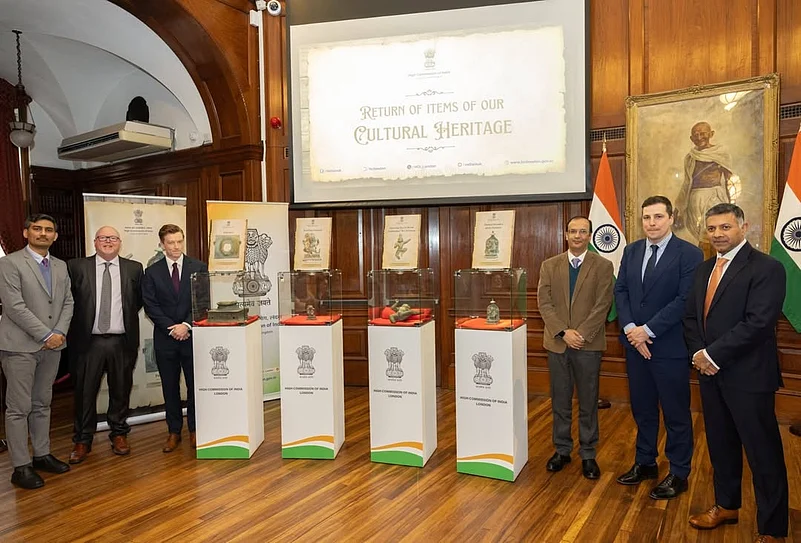
The ceremony also saw the return of four other historic Indian artefacts, which had been stolen and taken abroad. Their recovery was made possible through collaboration between the Home Security Investigation (HSI) in the US, the Metropolitan Police Art and Antiques Unit, and India’s Directorate of Revenue Intelligence
With a growing number of cultural treasures returning home, another milestone has been reached. After more than a century abroad, the Piprahwa Gems of the Historical Buddha—hundreds of precious stones of immense historical and cultural value—have returned to India. Scheduled for auction at Sotheby’s this May, the sale was blocked after the Indian government raised objections.
(With inputs from PTI.)
FAQs
What artefact did the Ashmolean Museum return to India?
The museum returned a 16th-century bronze idol of Thirumankai Alvar, originally from the Shri Soundararaja Perumal Temple.
When did the museum acquire the idol?
The bronze sculpture was purchased at a Sotheby’s auction in 1967.
How was the idol’s origin confirmed?
Independent research suggested its connection to the temple. Museum experts then collaborated with the Archaeological Survey of India, Tamil Nadu officials, and temple authorities to verify its provenance.
Why is the return significant?
It represents a step forward in returning cultural heritage items to their countries of origin.
When and where was the handover ceremony?
The ceremony took place on March 3, 2026, at the High Commission of India, London.