

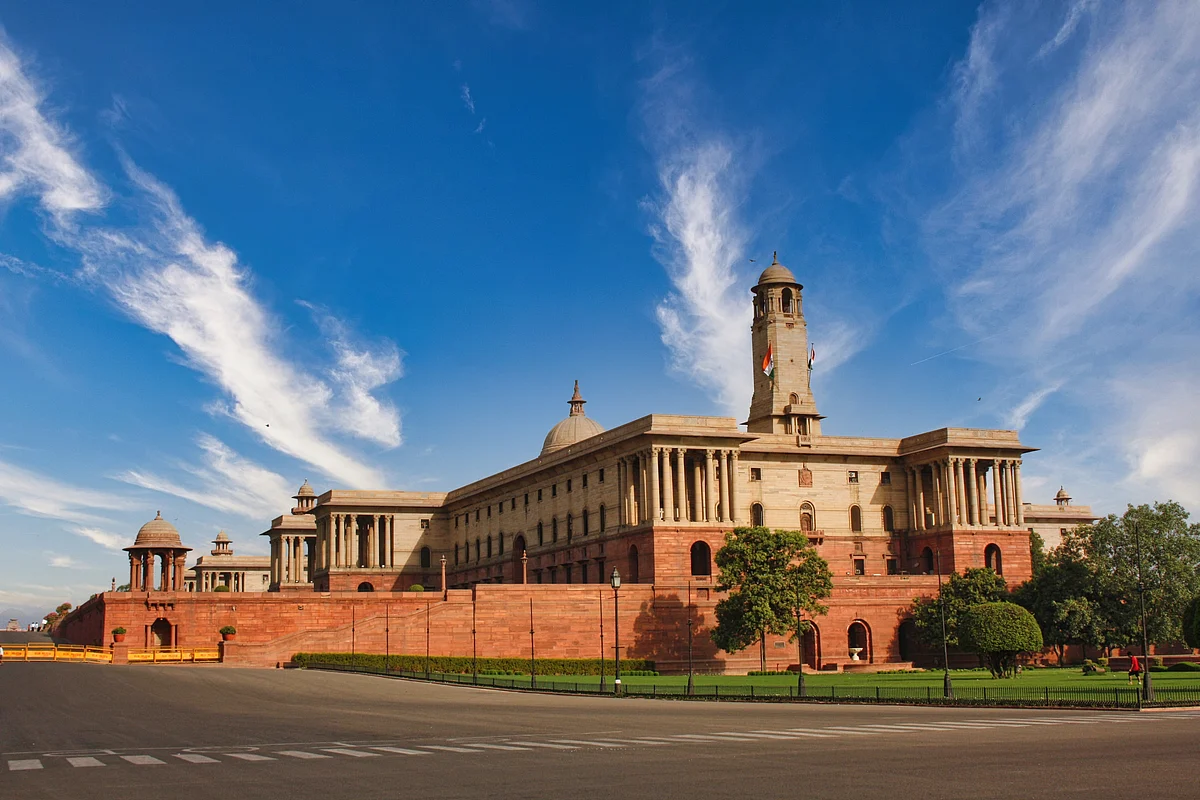
Delhi's historic North and South Block buildings, which have served as the nerve centre of India's administration for decades, are preparing for a new chapter. Once associated with government offices and policymaking, the iconic structures on Raisina Hill will be transformed into the Yuge Yugeen Bharat Museum, a major cultural institution dedicated to showcasing India's civilisational journey.
The Cabinet Committee on Economic Affairs (CCEA), chaired by Prime Minister Narendra Modi, approved the INR 3,230-crore project on November 11, 2026. Envisioned as a museum with the world's largest display area, it will bring together India's tangible and intangible heritage through thematic galleries, exhibitions, conservation facilities, and immersive visitor experiences. The project will be developed by the Ministry of Culture through the adaptive reuse of the North and South Block complex, retaining the architectural character of the historic buildings while giving them a new public purpose.
A New Chapter
Spread across a proposed built-up area of approximately 1,78,509 square metres, the Yuge Yugeen Bharat Museum will combine contemporary museum practices with technology-led interpretation and visitor-focused exhibition spaces. Its proposed display area will exceed one lakh square metres, placing it among the largest museum projects in the world.
The transformation also marks a significant shift in the purpose of the two buildings. Designed by British architect Herbert Baker and completed in 1931, North and South Block have been central to India's administrative history. Following the relocation of government offices to Seva Teerth and Kartavya Bhavans in February 2026, the buildings became available for adaptive reuse. The museum project will preserve their architectural and heritage significance while opening them up to visitors as a public cultural space.
First announced by the Prime Minister on May 18, 2023, during the International Museum Expo, the proposal was subsequently appraised by the Public Investment Board on July 27, 2026, before receiving Cabinet approval. The project will be implemented in phases between the financial years 2026-27 and 2030-31.
Exploring India's Heritage


The museum will present India's civilisational journey through curated galleries covering its cultural traditions, knowledge systems, artistic practices, and historical connections. Rather than limiting the experience to conventional historical displays, the proposed themes will explore different aspects of India's development and its contributions to the wider world.
Among the galleries planned are Architecture and Cityscapes, Mathematics and Astronomy, Languages and Scripts, Faith and Spirituality, and Bharat Connects: Trade and Ideas. These will offer visitors an opportunity to explore the evolution of Indian architecture, scientific knowledge, linguistic traditions, religious practices, and exchanges with other civilisations.
The collection will be another significant part of the project. Approximately 1.8 million objects have been identified for potential display, drawing from the National Museum, other museums under the Ministry of Culture, 52 Archaeological Survey of India (ASI) site museums, state museums, and private collections. The project will also include dedicated facilities for collection storage and conservation, ensuring that artefacts can be preserved alongside their public display.
The first gallery, titled "Adornment," is expected to open to visitors in North Block in the latter half of 2027. Subsequent galleries will be introduced in phases through a modular development approach. The wider project will include exhibition infrastructure, landscaping, intelligent building systems, visitor amenities, and immersive technological installations.
Planning The Experience
With an estimated capacity of up to one crore visitors annually, the museum is being planned as a major destination for domestic and international travellers. It is also expected to accommodate approximately 30,000 visitors a day, making visitor management, accessibility, and the overall exhibition experience important aspects of its development.
Beyond tourism, the institution is expected to support education, academic research, cultural engagement, and knowledge exchange. Students, researchers, scholars, cultural practitioners, and visitors from across India will have access to a shared platform for exploring the country's heritage.
The project is also expected to create employment opportunities during its construction and operational phases. Artisans, craftspeople, conservation specialists, museologists, researchers, designers, performers, and tourism professionals are among those who could benefit. Through the Make in India initiative, the development will also encourage domestic manufacturing of museum materials and products, creating opportunities for Indian manufacturers, technology providers, and skilled craftspeople.
Revenue is expected to come from several sources, including ticket sales, guided tours, retail outlets, food and beverage services, events, venue rentals, and digital experiences.
Once completed, the Yuge Yugeen Bharat Museum will give two of New Delhi's most recognisable government buildings a different role in public life. Its phased development, running until 2031, will gradually turn the former administrative centre into a space where visitors can engage with India's history, cultural diversity, and civilisational legacy.
FAQs
1. Where will the Yuge Yugeen Bharat Museum come up?
The museum will be developed in Delhi's historic North and South Block buildings on Raisina Hill.
2. What is the total cost of the Yuge Yugeen Bharat Museum?
The project has an estimated cost of INR 3,230 crore.
3. When will the Yuge Yugeen Bharat Museum open?
The first gallery, titled Adornment, is expected to open in North Block in the latter half of 2027.
4. What will the Yuge Yugeen Bharat Museum showcase?
It will showcase India's civilisational heritage through galleries exploring architecture, mathematics, astronomy, languages, spirituality, trade, and artistic traditions.
5. How many artefacts will the museum display?
Approximately 1.8 million objects have been identified from national, state, and ASI museums, as well as private collections, for potential display.