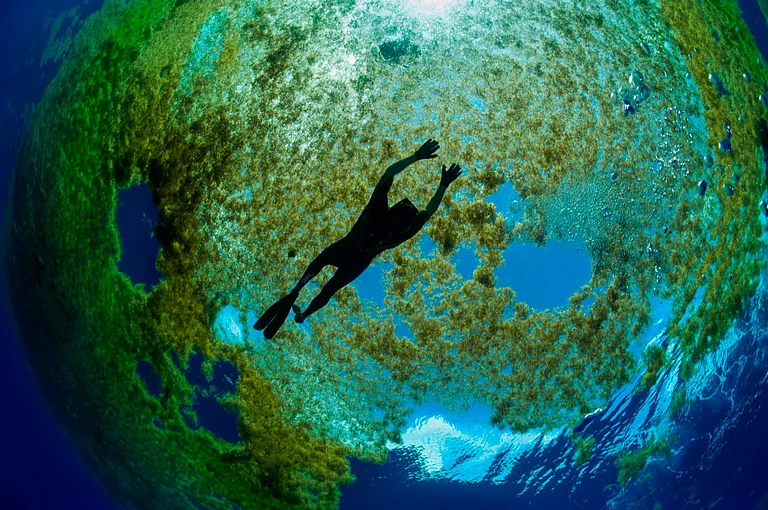
Far out in the Atlantic, where the Canary and Guinea currents meet, the ocean begins to behave differently. Cold, nutrient-rich waters rise from the depths, colliding with warmer surface flows and setting off a chain reaction that shapes everything from microscopic life to migrating whales. It is this dynamic, life-generating system that West African nations now want to protect through one of the world’s first high seas marine protected areas.
The push follows the coming into force of the High Seas Treaty, formally known as the Biodiversity Beyond National Jurisdiction agreement. For the first time, countries have a global mechanism to conserve marine biodiversity in waters beyond national jurisdiction—regions that cover nearly half the Earth’s surface but have long remained difficult to regulate.
Leading this effort is the Economic Community of West African States (ECOWAS), which is working to designate a protected area stretching from Senegal to Nigeria. The proposed zone includes the convergence of two major ocean currents and is recognised as an ecologically or biologically significant marine area—one of the most productive ocean systems in the Atlantic.
At the centre of the region’s biodiversity is a mechanism that operates largely out of sight.
When the Canary and Guinea currents meet, they push cold, nutrient-heavy waters up from the depths. Those nutrients feed large blooms of phytoplankton—microscopic organisms that underpin the entire marine food chain. The response is immediate and structured: zooplankton feed on the plankton, small fish move in behind them, and larger predators follow in predictable succession.

Researchers point to this chain reaction as the reason the area consistently ranks among the most productive marine systems in the world. It supports fisheries that land millions of tonnes annually and underwrites food security and livelihoods for more than 300 million people along the West African coast.
This is not a single ecosystem but a connected network. Open ocean waters, seafloor features, and coastal habitats constantly exchange energy and species, keeping the system in motion.
In the pelagic zone, migratory fish and marine mammals travel long distances. Below, seamounts and deep-sea areas act as biodiversity hotspots, while the continental shelf supports key spawning and feeding grounds for fisheries.
Closer to shore, these offshore systems link with mangroves, estuaries, seagrass beds and coral habitats, forming a continuous ecological chain.
A Spectrum Of Life
The biodiversity here spans every level of the food web.
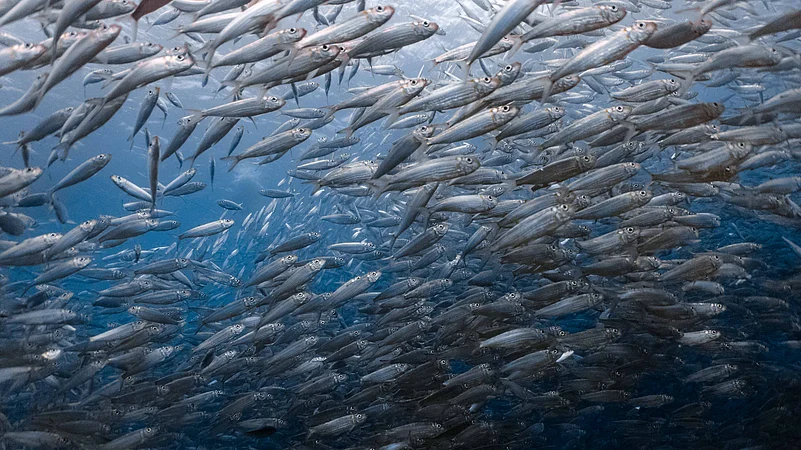
Commercially important fish such as sardines, anchovies, mackerel and multiple tuna species—skipjack, yellowfin, albacore, and bigeye—form dense populations in these waters. Crustaceans like shrimp and lobsters, along with molluscs, add to the region’s ecological and economic importance.
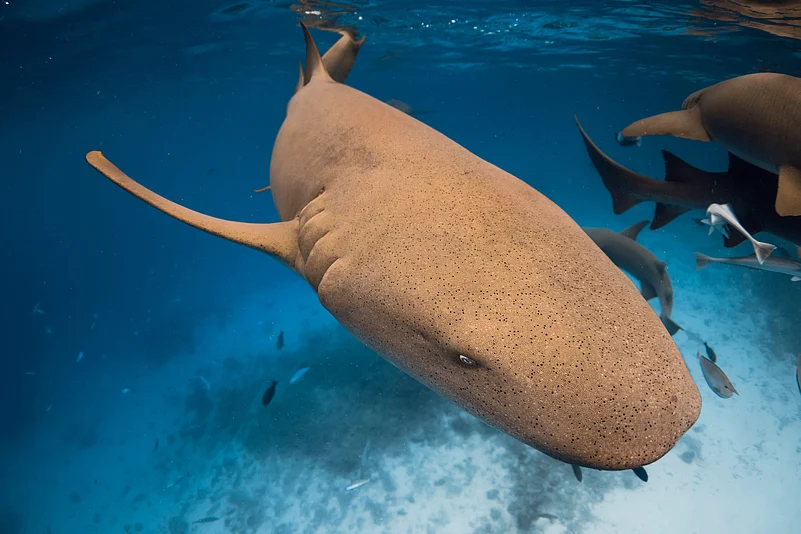
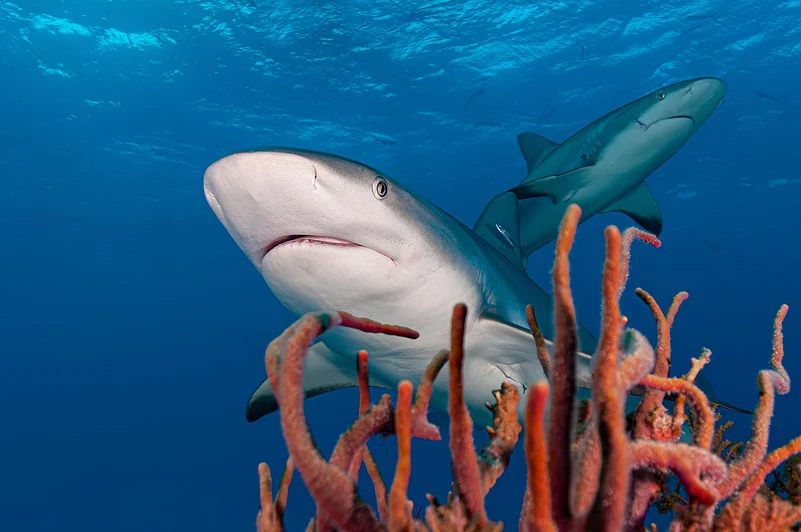
At the same time, the area functions as a major migration corridor. Large fish, sharks and rays move through it for feeding and spawning, while long-distance migratory species travel between the North and South Atlantic along these routes.
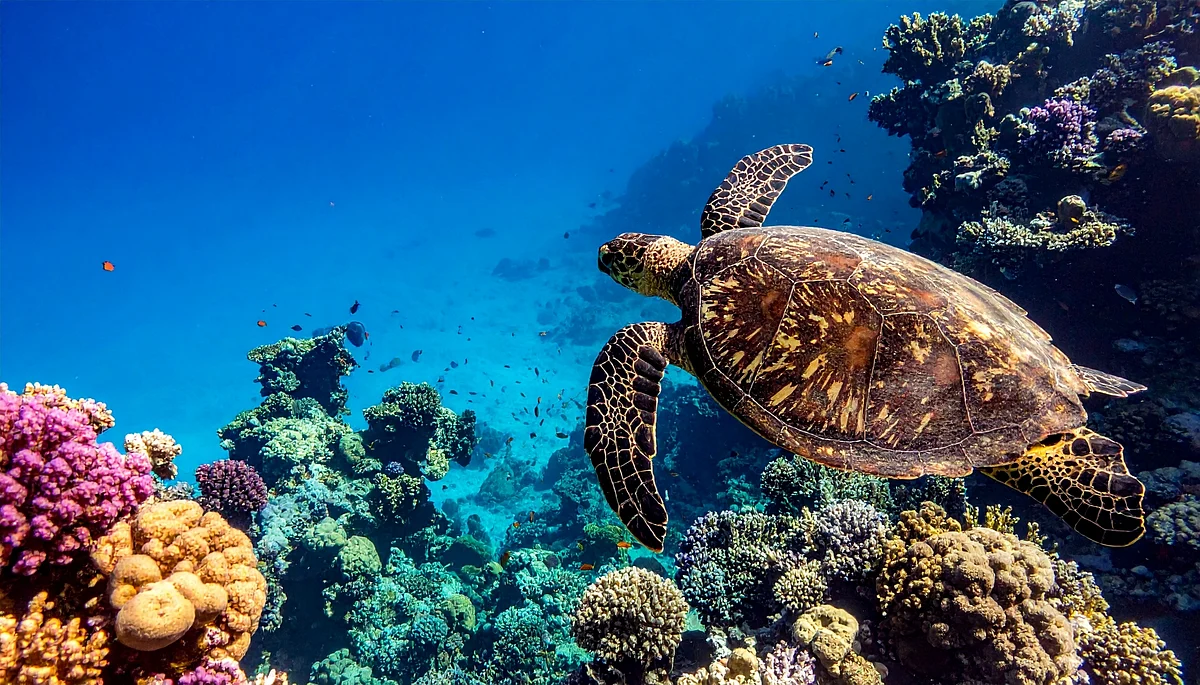
Some of the region’s most recognisable species signal just how much is at stake. Threatened animals such as the hawksbill sea turtle and the sei whale rely on these waters at key points in their life cycles—whether for feeding, migration or breeding. Alongside them is the far less familiar sawback angelshark, a species that rarely features in public conversations but is just as tied to the health of this ecosystem.
The Unseen Majority
Much of what drives this ecosystem isn’t visible—and rarely enters policy conversations.
Zooplankton drift in vast numbers, rising and falling with seasons and subtle shifts in temperature and currents. When their numbers dip, the impact ripples upward—fewer small fish and less food for larger predators.
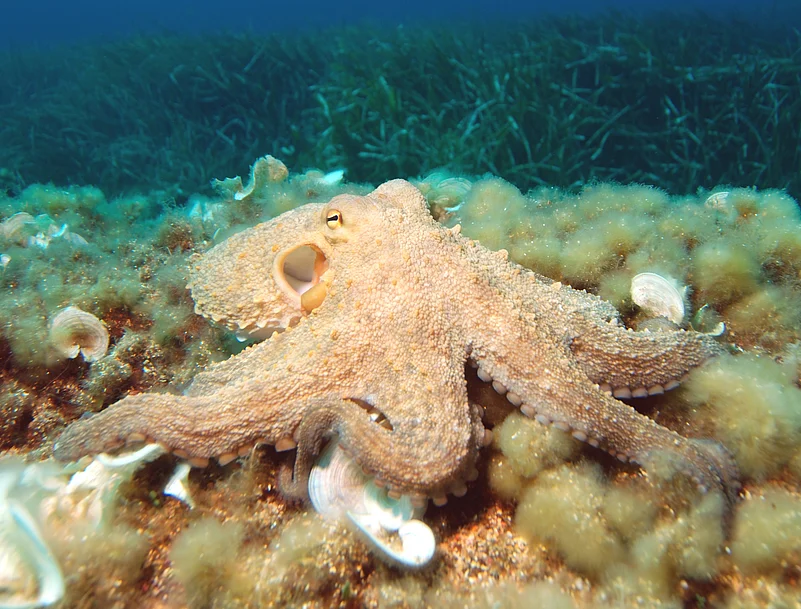
Squid and octopus move with these changing waters, constantly adjusting as both hunters and prey, often reflecting broader shifts in the system.
Below it all, microbial communities do the essential work—breaking down organic matter, recycling nutrients and maintaining balance. Without them, the entire food web would stall.
Why This Region Matters And What Threatens It
Researchers classify this convergence zone as a biodiversity hotspot based on a combination of factors: high productivity, a wide range of species across the food chain, and its role as a breeding, spawning and migration corridor. The mixing of major ocean currents creates conditions that are both rare and highly influential.
In operational terms, this is a system that produces life at scale and sustains it over time.
That balance is under strain.
Industrial fishing fleets—many operating outside regulations—have reduced fish stocks across the region. Governments in West Africa lose billions of dollars each year to illegal, unreported and unregulated fishing, while local communities face shrinking catches.
Pollution has become a steady, compounding problem. Plastic waste is building up across the region, moving through currents and entering the food chain in ways that are still being tracked. At the same time, rising ocean temperatures are beginning to shift habitats, forcing species to move or adapt, often with uneven consequences across the ecosystem.
Industrial activity is expanding alongside these changes. Oil and gas exploration has picked up pace, bringing more vessels, infrastructure and the risk of spills into waters that are already under pressure. Further offshore, deep-sea mining is moving from theory to possibility. Scientists monitoring the sector say the concern is not just extraction, but the lack of baseline data—large parts of the seabed remain poorly studied, making it difficult to predict the full extent of damage.
The Challenge Of Protection
Turning this stretch of ocean into a protected area is not simply a matter of drawing boundaries on a map.
These waters lie outside national jurisdiction, so no single country can enforce rules. Monitoring is already difficult, and West African nations face capacity limits even within their own zones. Extending control into the high seas would require coordinated systems—satellites, AI and large-scale data tracking—to detect illegal activity, all of which demand funding and technical support that the region cannot provide alone.
Without enforcement, the protected area risks existing only on paper. While West African governments are leading the proposal, its success will depend on international backing—from organisations, researchers and conservation groups. The High Seas Treaty provides a framework for this kind of cooperation, but many of its mechanisms are still being built.
Similar efforts are underway elsewhere, including Chile’s proposal to protect the Salas y Gómez and Nazca ridges in the Pacific, and plans around the Saya de Malha bank in the Indian Ocean, managed by Seychelles and Mauritius.
The Economic Community of West African States aims to finalise its draft by year-end, ahead of the treaty’s first Conference of Parties. The process involves bringing in scientific partners, identifying capacity gaps and coordinating across countries.
If the proposal moves forward, it will mark one of the first attempts to apply the treaty in practice—testing whether large, shared ocean spaces can be managed collectively, and whether protection can be enforced where no single nation is in charge.
(With inputs from various sources.)