


Travelling to Europe is becoming a little more digital. The European Union (EU) has introduced a new entry-exit system for non-EU travellers, while another travel authorisation system, ETIAS, is expected to follow. Together, the two systems will change how many visitors enter the Schengen area, with biometric checks replacing traditional passport stamps and, eventually, visa-free travellers needing prior travel authorisation.
What Is The EES?
The EU Entry/Exit System (EES) is an automated system that records non-EU and non-Schengen travellers entering and leaving the Schengen area for short stays. It replaces manual passport stamping.
EES began its phased rollout on October 12, 2025, after several delays, and became fully operational at participating external border crossings on April 10, 2026. However, as per reports, some border crossings have since faced technical and operational problems.
The system covers 29 countries — 25 EU countries, excluding Cyprus and Ireland, and four non-EU Schengen countries: Norway, Iceland, Switzerland, and Liechtenstein.


When travellers first use the system, their passport details, fingerprints and facial image are registered. On subsequent journeys, their biometric information can be checked against their existing record.
Children under 12 do not have to provide fingerprints. Travellers who are legally resident in an EU country or hold a long-stay visa are also exempt.
For Indian travellers, the EES is relevant because Indian passport holders generally require a Schengen visa for short visits. Their fingerprints are already collected during the visa application process, so they will not be collected again through EES. Their entry and exit details will still be recorded in the system.
Why Was EES Introduced?
The system is designed to create a more accurate electronic record of when non-EU travellers enter and leave the Schengen area. It will also help authorities identify overstayers and detect identity fraud.
For short stays, travellers from outside the EU and Schengen area are generally allowed to stay for up to 90 days in any 180-day period, subject to the conditions of their visa or visa exemption. EES will automatically record these movements and flag people who exceed the permitted period. Refusing to provide the required biometric information, where it is required, can result in a traveller being denied entry.
Why Are Travellers Facing Delays?
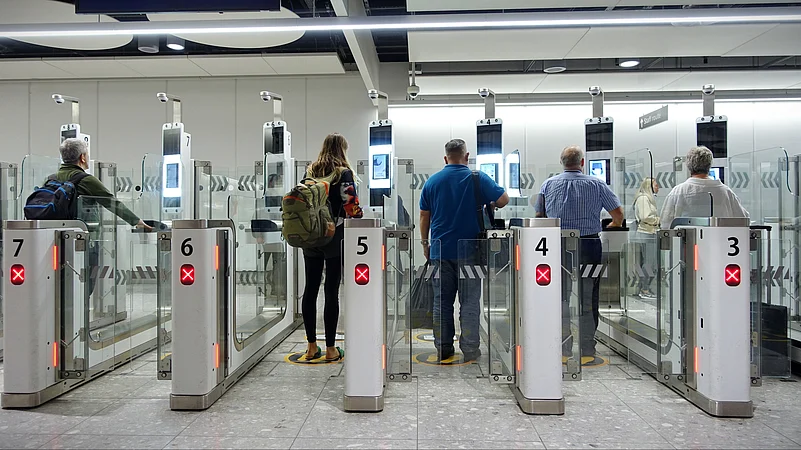
The rollout has not been as smooth as planned. According to reports, some airports and border crossings have experienced long queues due to technical problems, equipment issues, staffing pressures, and difficulties connecting national border systems.
During peak periods, reported waiting times have reached several hours. Some airports have temporarily returned to manual processing or suspended parts of the biometric registration process to manage congestion.
The European Commission has allowed certain border crossings to temporarily suspend EES processing in exceptional circumstances. Nine countries — Belgium, France, Germany, Greece, Italy, Malta, the Netherlands, Portugal, and Switzerland—have also called for greater flexibility.
The system is still mandatory, but its implementation can be adjusted temporarily at congested crossings under the rules.
What Is ETIAS?
The European Travel Information and Authorisation System (ETIAS) is different and separate from EES but is designed to work alongside it. ETIAS will apply to citizens of countries whose nationals can currently visit the EU and Schengen area without a visa for short stays. This includes UK citizens. Ireland is excluded from the system.
Indian passport holders who require a Schengen visa for short visits will not need an ETIAS authorisation.
Travellers who do require ETIAS will need to apply online or through a mobile app before travelling. Applications will be checked against EU information systems, and most authorisations are expected to be issued within minutes. Some applications may require additional checks and take up to 30 days to complete.
The authorisation will be valid for three years, or until the passport expires, whichever comes first.
When Will ETIAS Start?
ETIAS was originally expected to launch earlier but has been repeatedly delayed. The system is now expected to become operational in the last quarter of 2026, although a specific start date has not yet been announced. The EU will communicate the exact date months before the system begins.
The fee will be EUR 20 for travellers aged 18 to 70. It will be free for those under 18 and over 70.
UK nationals who have the right to reside in an EU country under the Withdrawal Agreement will be exempt, provided they have the necessary documents to prove their status. For other visa-exempt travellers, ETIAS will eventually be an additional step before travelling to Europe.
What Indian Travellers Need To Know

For Indian passport holders, EES and ETIAS will work differently depending on the type of visa they hold. Indian citizens generally need a Schengen visa for short visits to the EU, so they will not be required to provide fingerprints again through EES if those fingerprints have already been collected as part of their visa application. However, their entry and exit details will still be recorded through the EES.
ETIAS, meanwhile, is aimed at travellers from countries whose citizens can visit the EU without a visa. Since Indian passport holders require a visa for short visits to the Schengen area, they will not need an ETIAS authorisation.
For Indian travellers planning a European holiday, the main change to be aware of is therefore the EES registration process at the border, rather than an additional travel authorisation before the trip.
(With inputs from various sources)
FAQs
1. What is the EES?
The Entry/Exit System (EES) is the EU's digital border system for non-EU nationals making short stays in the Schengen area. It records travel document details, entry and exit information, fingerprints and facial images, replacing manual passport stamping. EES has been fully operational since April 10, 2026.
2. Do Indian travellers need to register for EES?
Indian passport holders travelling to the Schengen area for short stays are generally covered by EES. Their entry and exit details are recorded, and biometric checks form part of the system. However, people holding qualifying long-stay visas or residence permits are among those exempt from EES registration.
3. Do Indian travellers need ETIAS?
No. ETIAS is for nationals of visa-exempt countries travelling to participating European countries for short stays. Indian passport holders generally require a Schengen visa for short visits, so they do not need an ETIAS travel authorisation.
4. When will ETIAS start?
ETIAS is scheduled to start in the last quarter of 2026, but the EU has not yet announced a specific launch date. The European Commission says the date will be communicated several months before the system begins.
5. How much will ETIAS cost?
The ETIAS application fee will be EUR 20. Applicants under 18 and over 70 will not have to pay the fee.


